Pseudojuloides cerasinus
A 6cm wrasse most reliably logged around Hawaii's reefs in 24-28C water, easy to miss if you don't know the colour cue.
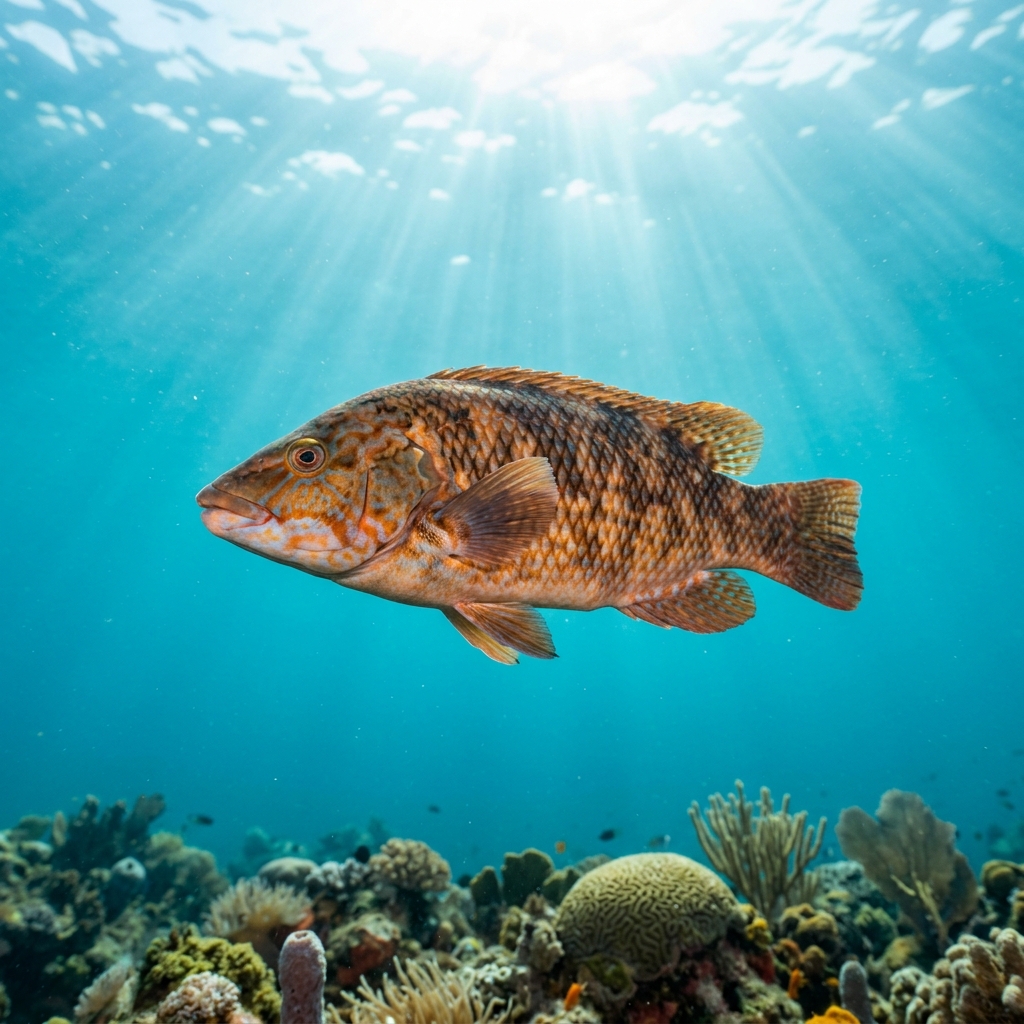
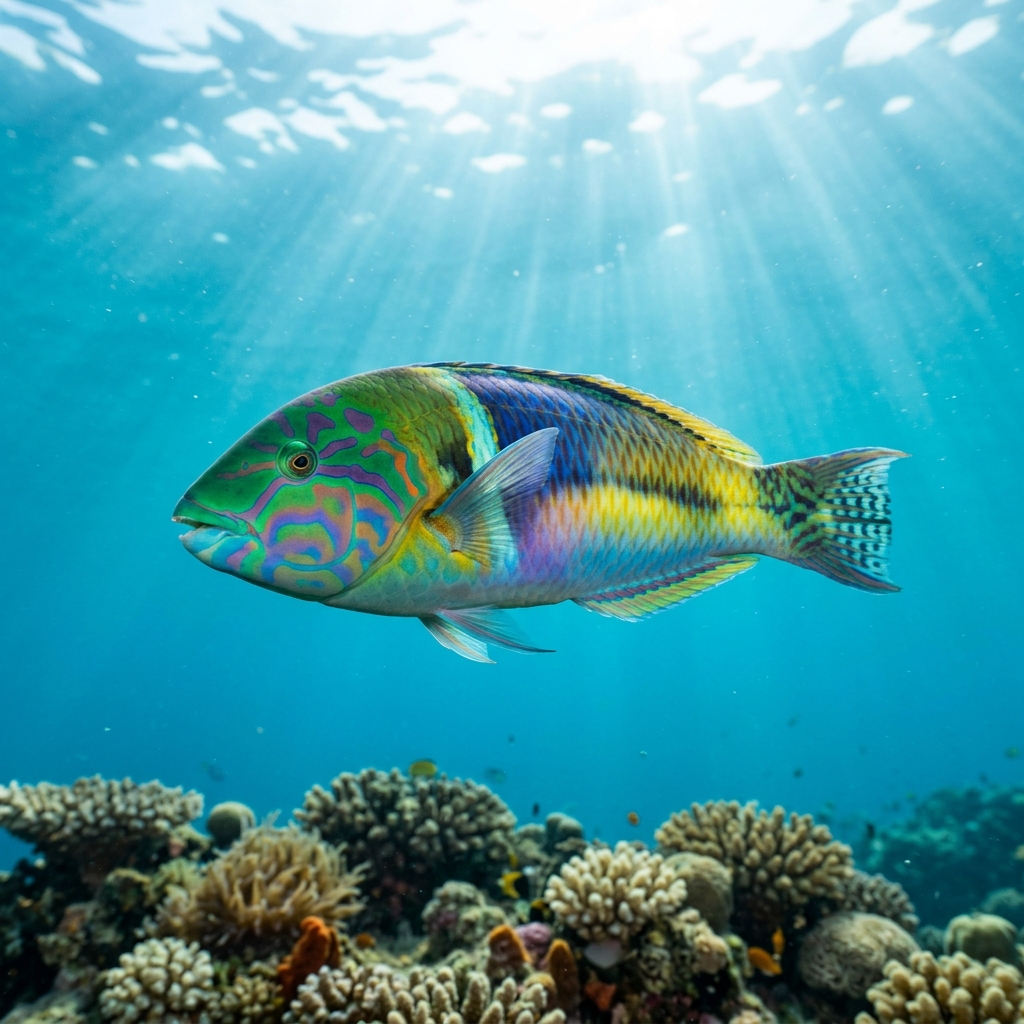
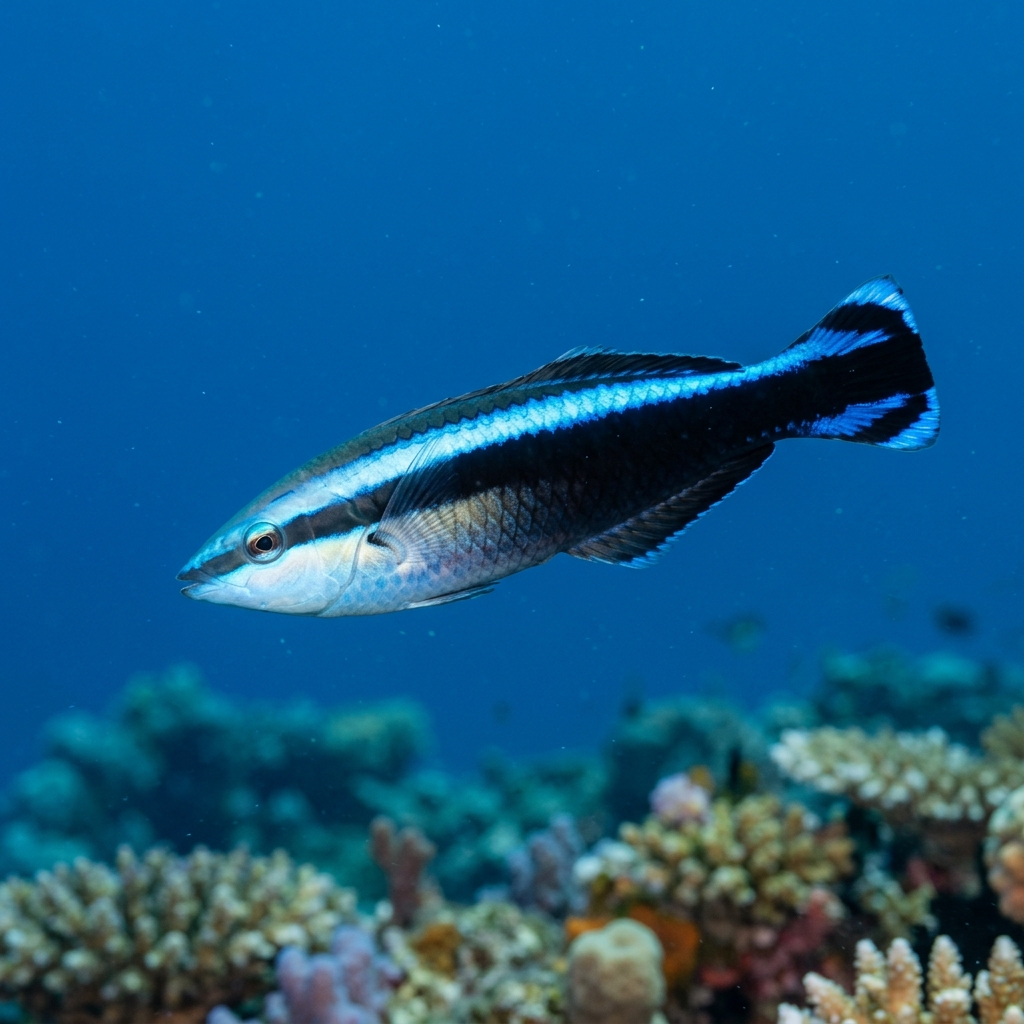
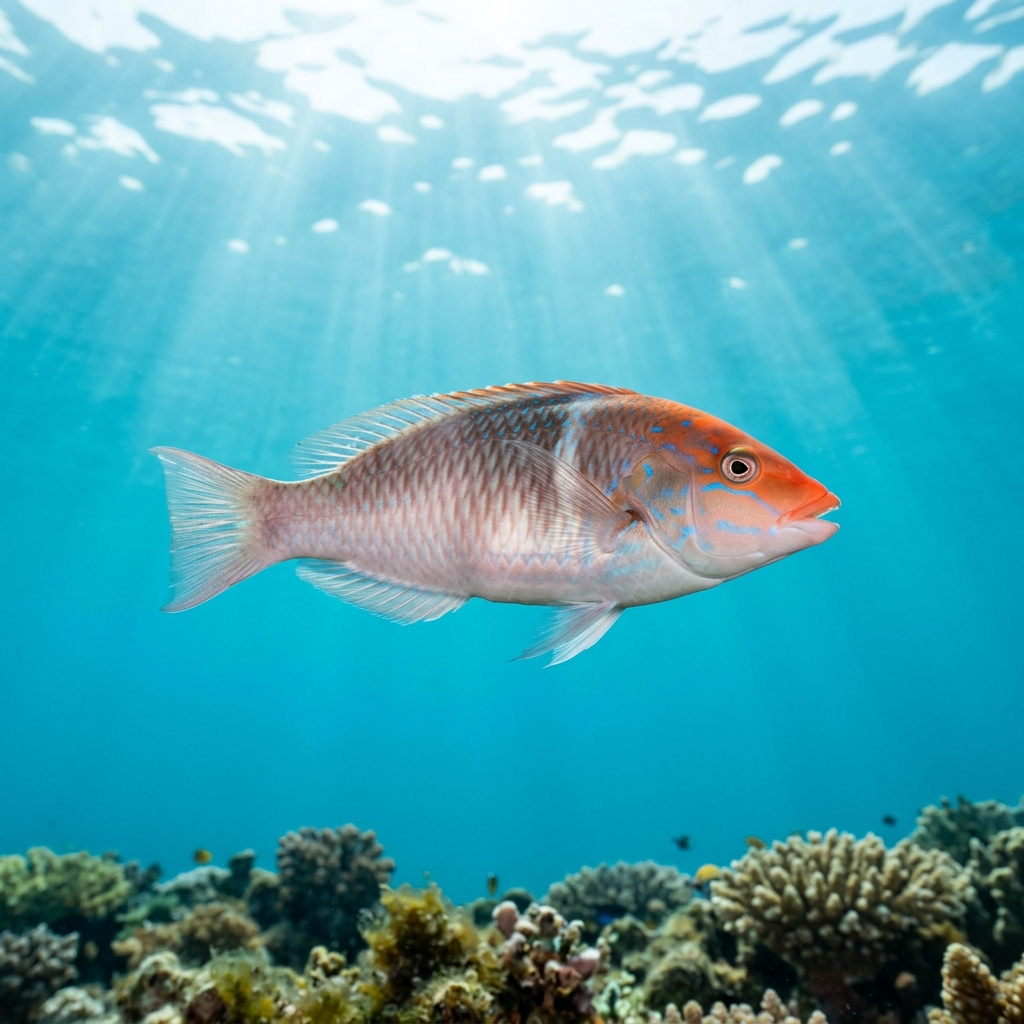
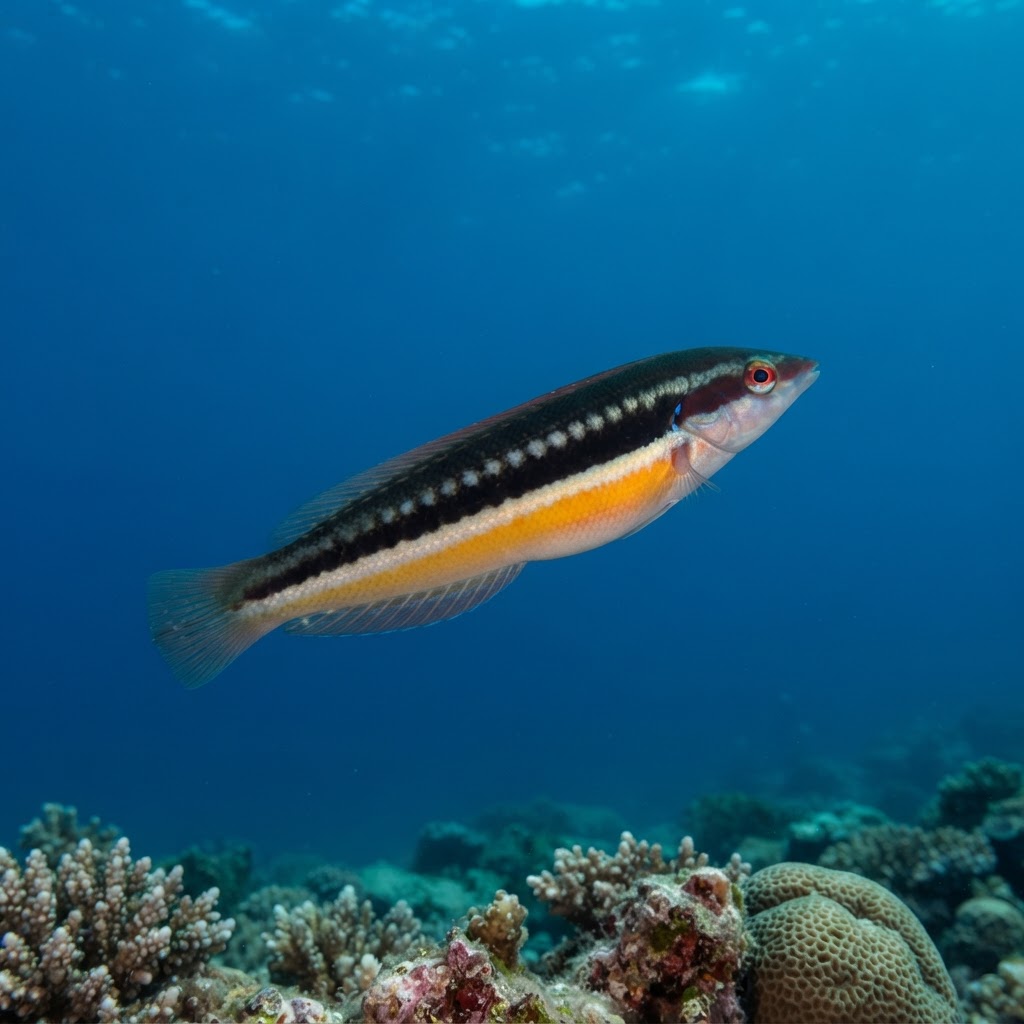
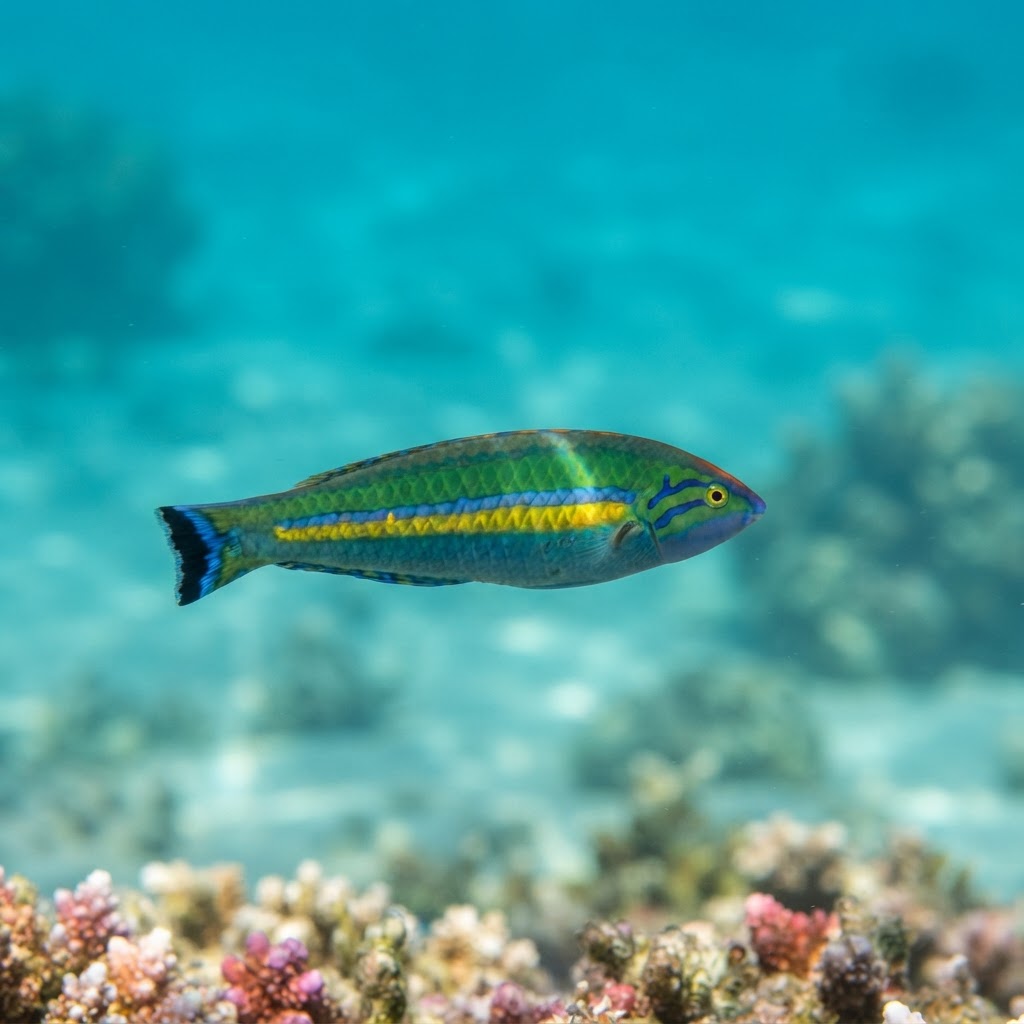
A slim, pencil-shaped wrasse that tops out around 6cm, so most divers spot it as a quick flash of colour over rubble or sand patches rather than a fish they get a long look at. Adults show a reddish to pinkish body with a contrasting blue-green head and faint stripe, a pattern that separates it from the bulkier reef wrasses nearby. Its small size and constant darting motion, rather than any single bold marking, is usually the giveaway.
Divers usually see it darting low over rubble, sand patches, or reef edges, often solitary or loosely associating with other small wrasses rather than schooling. It's an uncommon sight even at sites where it's known to occur, so patience and a slow scan of the substrate pays off more than searching open water. It shows little reaction to divers beyond staying at a distance, more shy than curious.
Like many small wrasses, pencil wrasse are protogynous hermaphrodites, meaning individuals can start life as female and later change to male, which is part of why colour can vary between individuals you spot on the same dive.
No clear season shows up in the sighting data, and the water temperature range it's found in, roughly 24 to 28C, spans most of the year on Hawaiian reefs, so it's reasonable to look for it any month you're diving there.
Logged almost exclusively around Hawaii, where it's the strongest and most consistent record in the data, making Hawaiian reefs the reliable place to look for this species. Outside Hawaii there isn't enough logged data yet to point divers anywhere else.
Mapping where Pencil Wrasse is logged…
Hawaii is by far the most reliable place, with sightings logged across numerous sites there. Data from other regions is too sparse to recommend specific alternative locations right now.
There's no detected seasonal pattern, and the species turns up across a wide temperature range typical of Hawaiian reefs year-round, so any month is a reasonable bet.
Look for a small, slender wrasse around 6cm long with a pinkish-red body and a blue-green head, darting low over sand or rubble. Its tiny size and quick movements are often the first clue before any colour detail registers.
They're a small species, typically reaching only about 6cm in length, so they're easy to overlook on a reef unless you're scanning closely.
No, they pose no danger to divers. They're a small, shy fish that keeps its distance and has no defensive or aggressive behaviours toward people.
They're protogynous hermaphrodites, capable of switching from female to male during their lifetime, which can explain colour variation between individuals seen on the same reef.
Site and sighting data is aggregated from diver logs, iNaturalist and GBIF. For taxonomy and conservation status:
Bird Wrasse
3,632 sites