Sphyraena idiastes
Silver schools of Pelican Barracuda pack Malpelo's currents and Galápagos walls in water around 20 to 28 C, year-round.
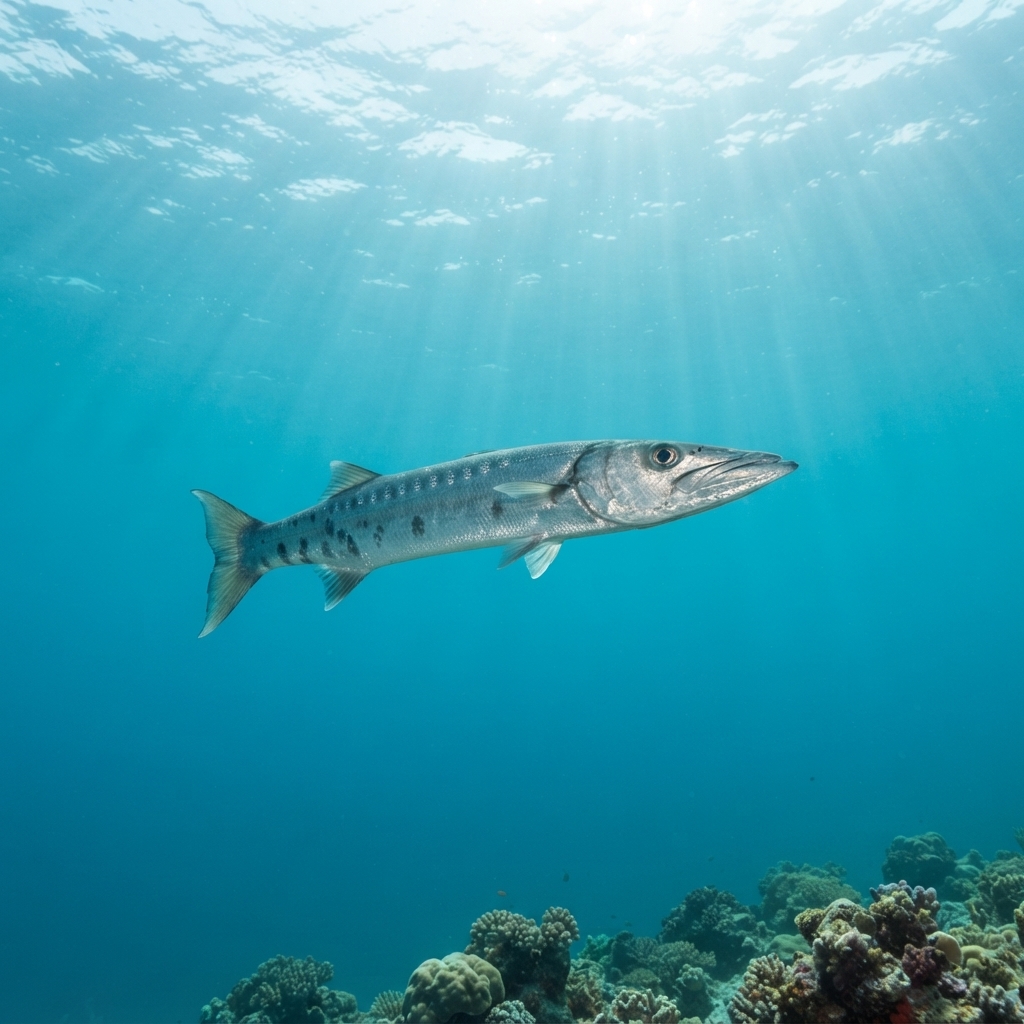
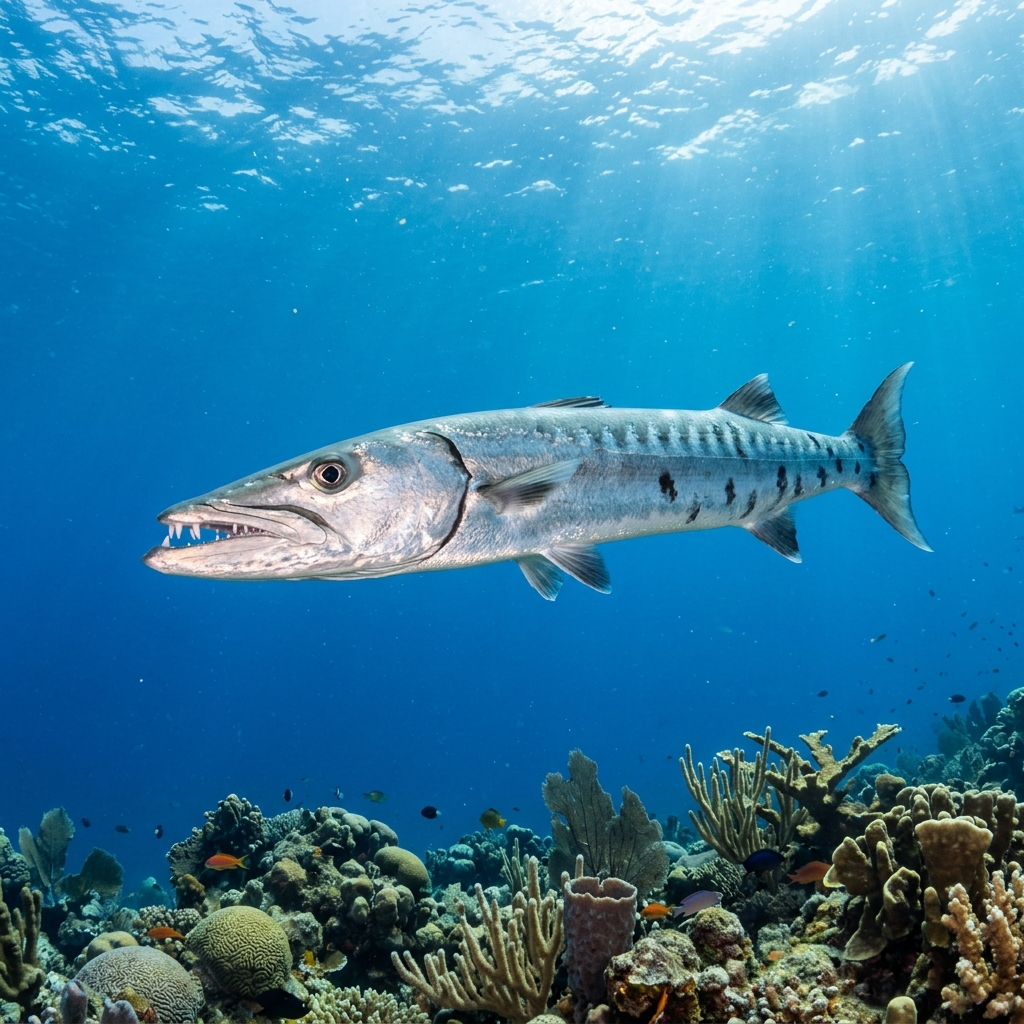
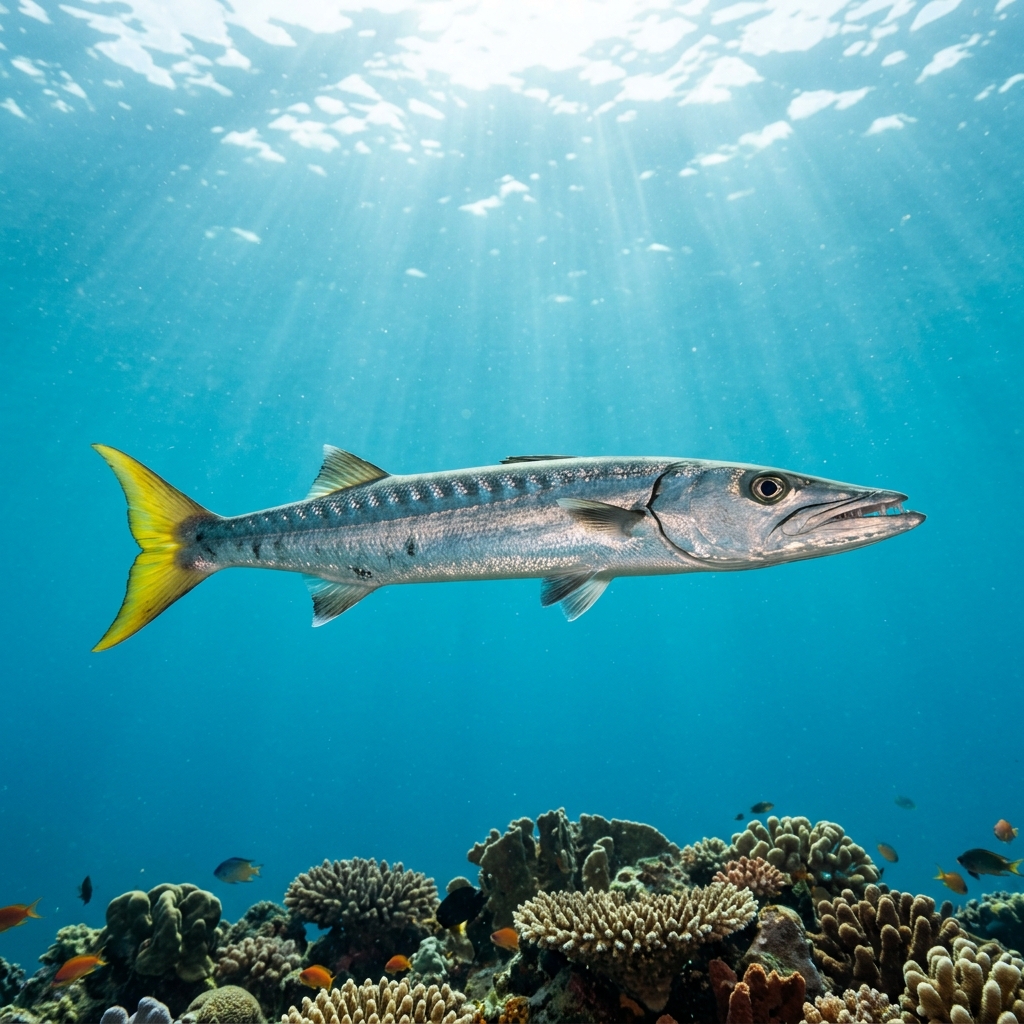
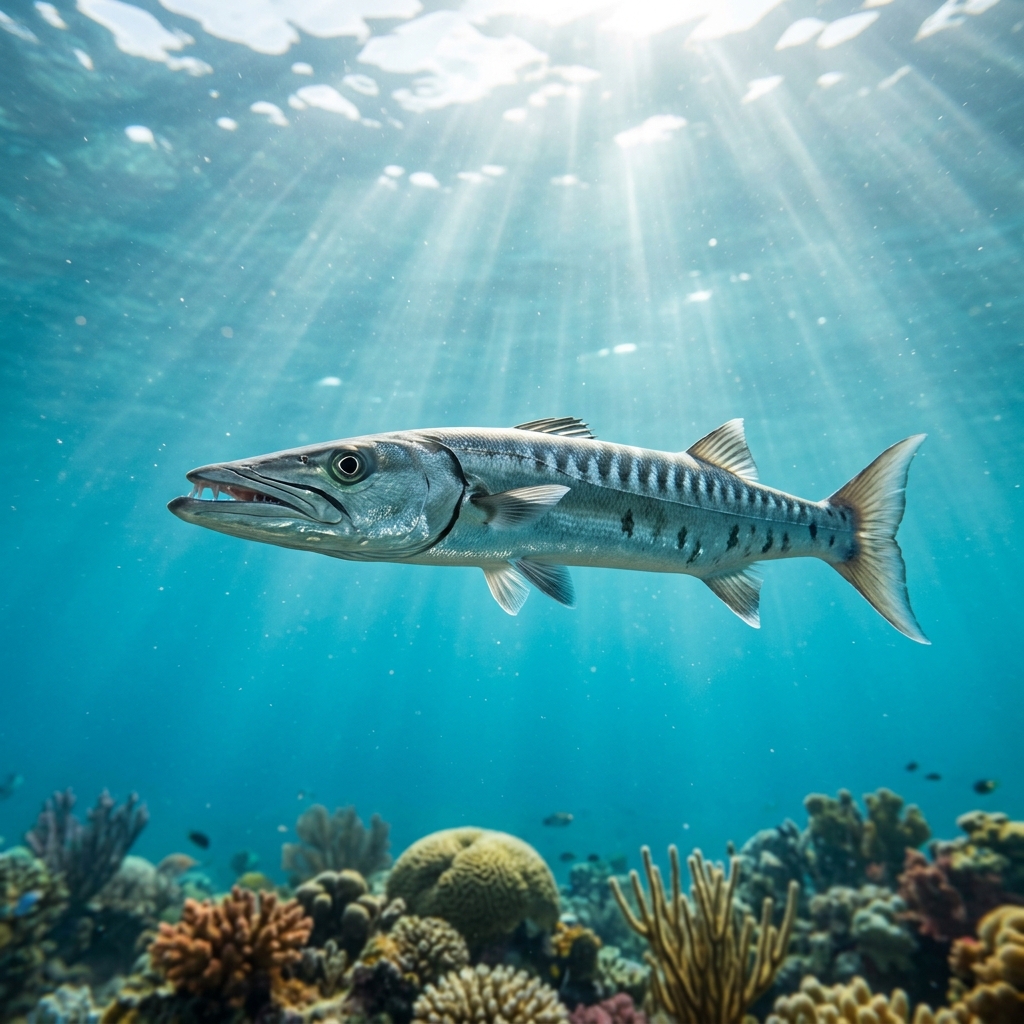
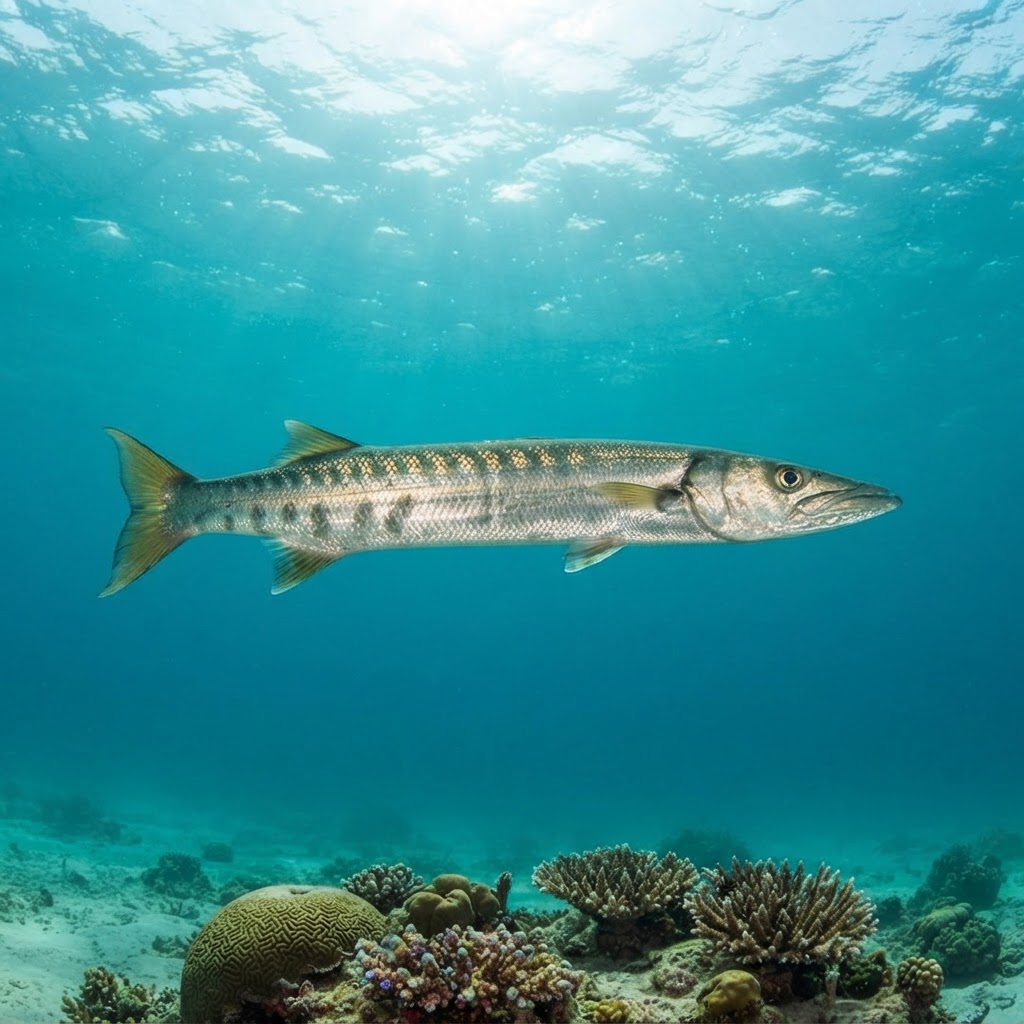
A slender, torpedo-shaped fish around 64 cm long with a chrome-silver flank and a faint yellowish or olive wash along the back. Divers usually meet it as a dense, wheeling school rather than a lone fish, the whole mass flashing silver as it turns in unison. Look for the long, pointed jaw and the two widely separated dorsal fins typical of barracudas, with no strong bars or blotches breaking up the body.
Divers typically drop onto open water or rocky slopes and find this species holding as a tight, slow-circling school, sometimes hanging almost motionless in current before wheeling as a unit. It shows little interest in divers, generally keeping its distance and continuing to school rather than scattering or approaching. Schools are often encountered in the same current-exposed terrain that draws other big pelagics, making it a common backdrop fish on drift dives at both Malpelo and Galápagos.
Barracuda schooling is thought to be largely about safety in numbers for juveniles and sub-adults, with fish loosening into looser, more solitary hunting behaviour as they grow larger, which is why a mixed school can show a range of sizes moving together.
Sightings run year-round at both Malpelo and Galápagos, with no strong seasonal gap in the data. Water temperatures logged with this species span roughly 20 to 28 C, wide enough that schools are present across the diving calendar rather than tied to one season.
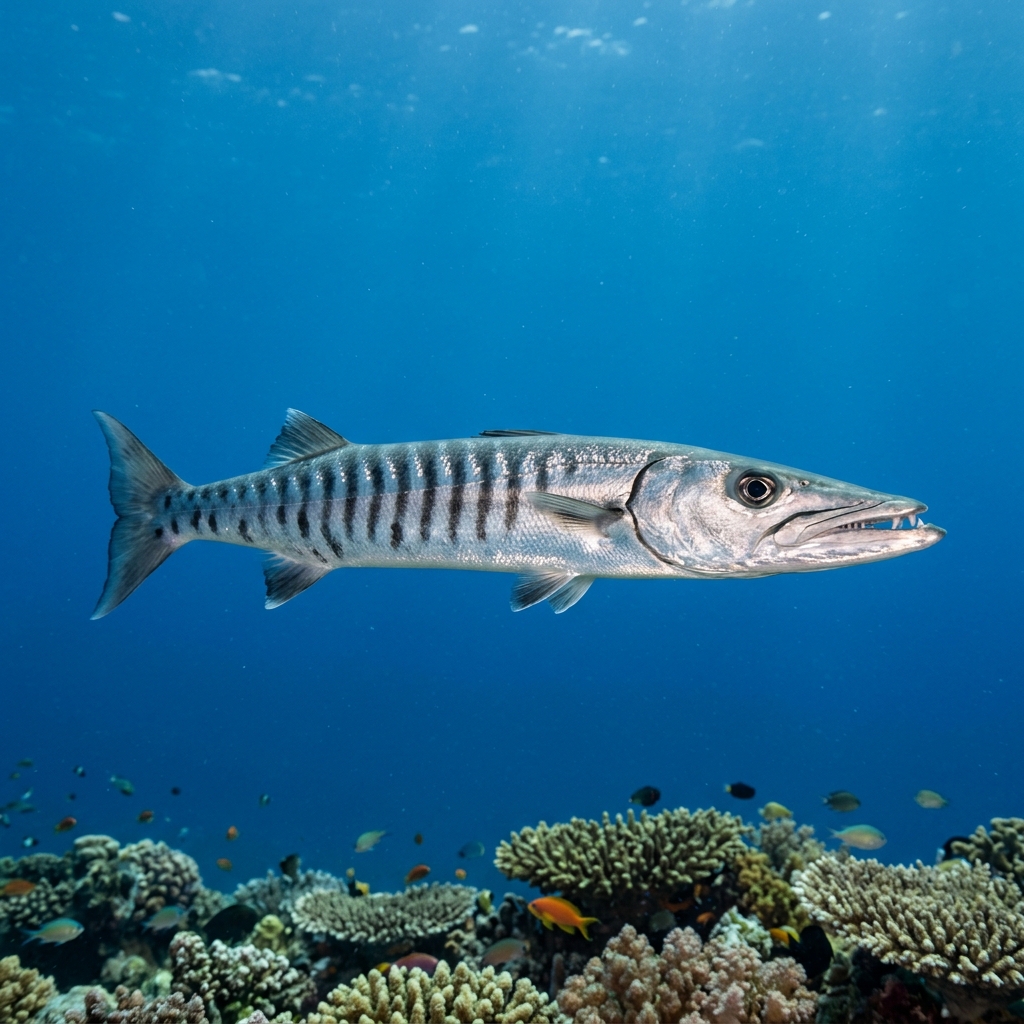
Reef neighbours a diver could mistake it for. Use the identification notes above to tell them apart.
This is a Pacific species most reliably found around Malpelo in Colombia and the Galápagos Islands in Ecuador, where it turns up at a wide spread of sites. Malpelo carries the deeper concentration of records, but Galápagos dive sites see it regularly too, often in the same current-swept terrain favoured by hammerheads and other pelagics.
Mapping where Pelican Barracuda is logged…
The strongest sightings come from Malpelo in Colombia and the Galápagos Islands in Ecuador, both known for current-driven pelagic diving. It shows up across a wide spread of sites in both destinations rather than being confined to one or two spots.
There is no clear seasonal gap in the sightings, so it is effectively a year-round fish at Malpelo and Galápagos. Water temperatures where it is logged range from about 20 to 28 C, covering most of the diving calendar at both sites.
Look for a silver, torpedo-shaped fish around 64 cm long, usually seen as part of a tight schooling mass rather than alone. It has a long pointed jaw, two separated dorsal fins, and lacks the strong dark bars or blotches some other barracudas show.
Adults reach roughly 64 cm in length, making them a mid-sized member of the barracuda family. Divers most often see them at or near this size, schooling together rather than as scattered individuals of very different sizes.
No, they are not considered dangerous to divers. Schools typically hold their distance and continue circling or drifting in current, showing no interest in approaching or interacting with people in the water.
Site and sighting data is aggregated from diver logs, iNaturalist and GBIF. For taxonomy and conservation status:
Pickhandle Barracuda
1,020 sites