Sphyraena forsteri
Bigeye barracuda cruise Palau's Rock Islands and Peleliu year-round in warm 24-28C water, often solo or in loose groups.
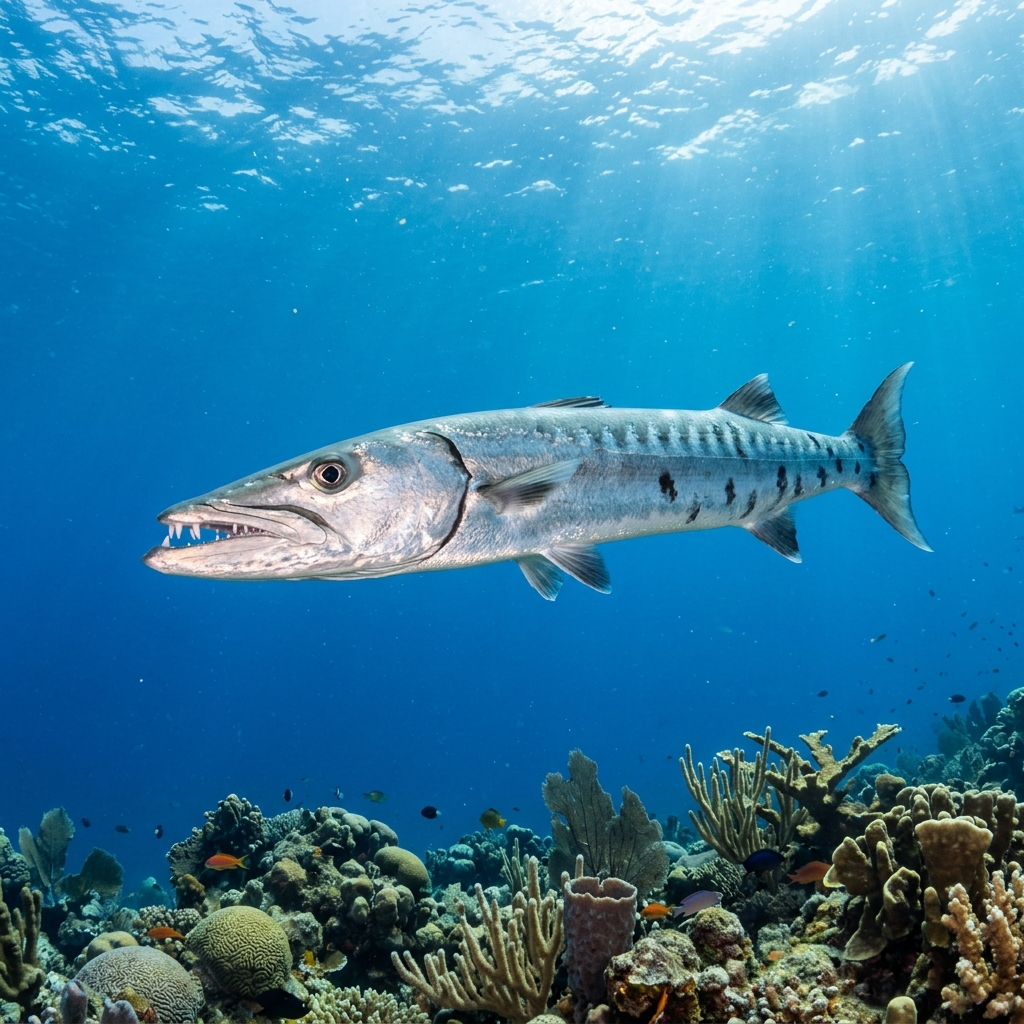
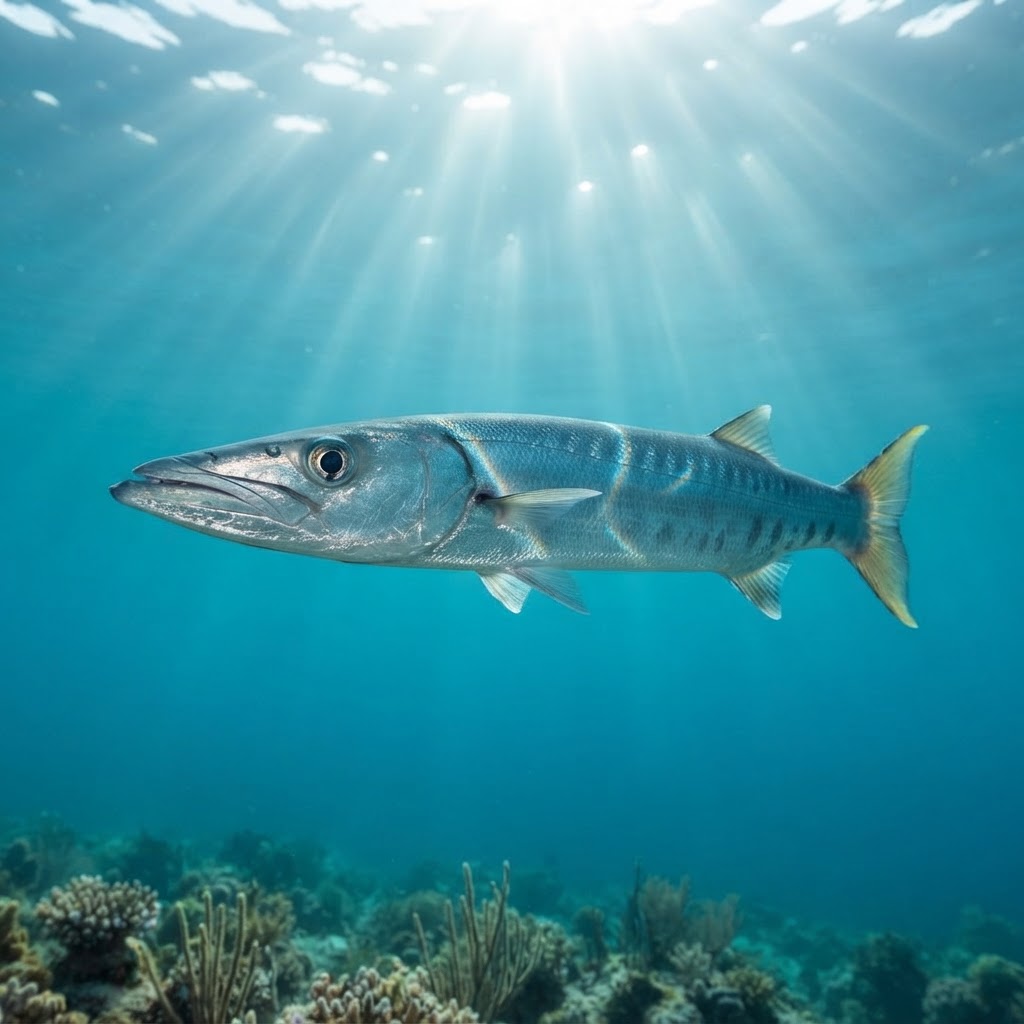
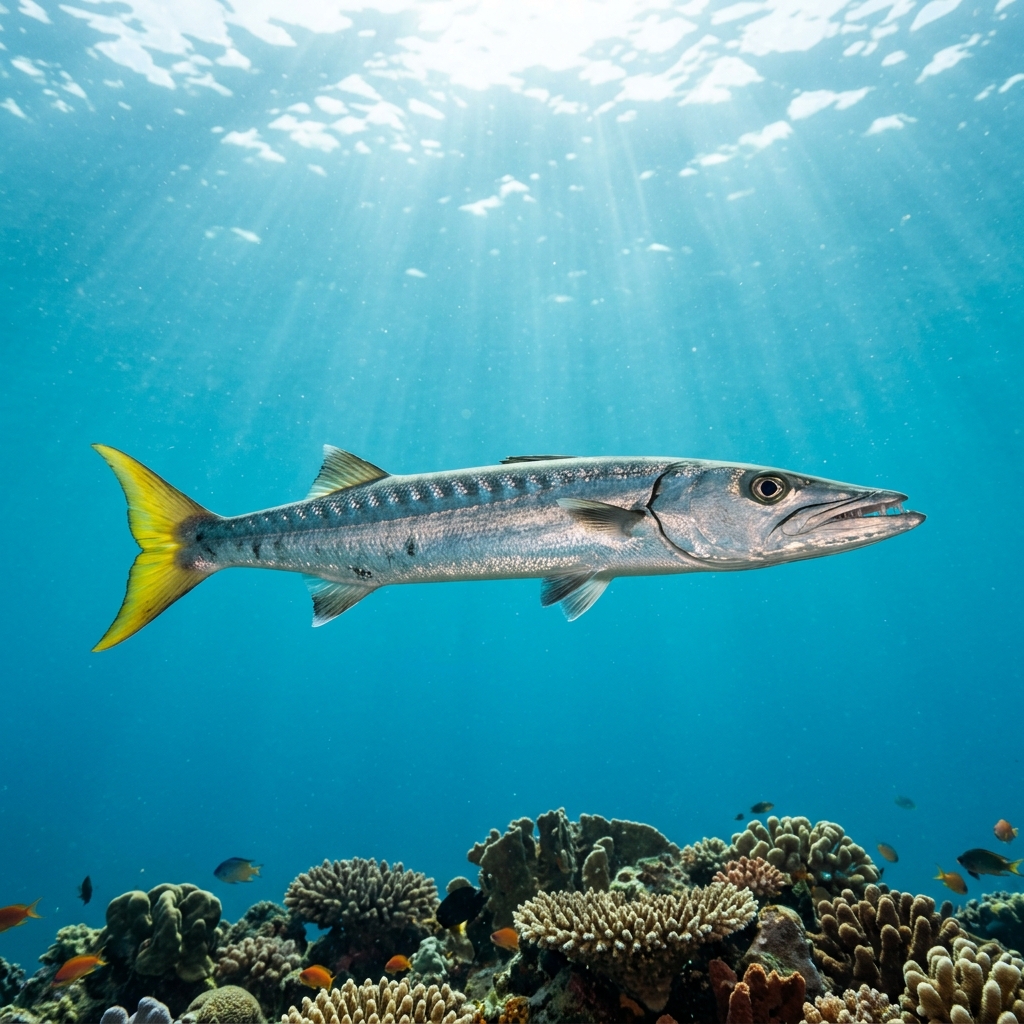
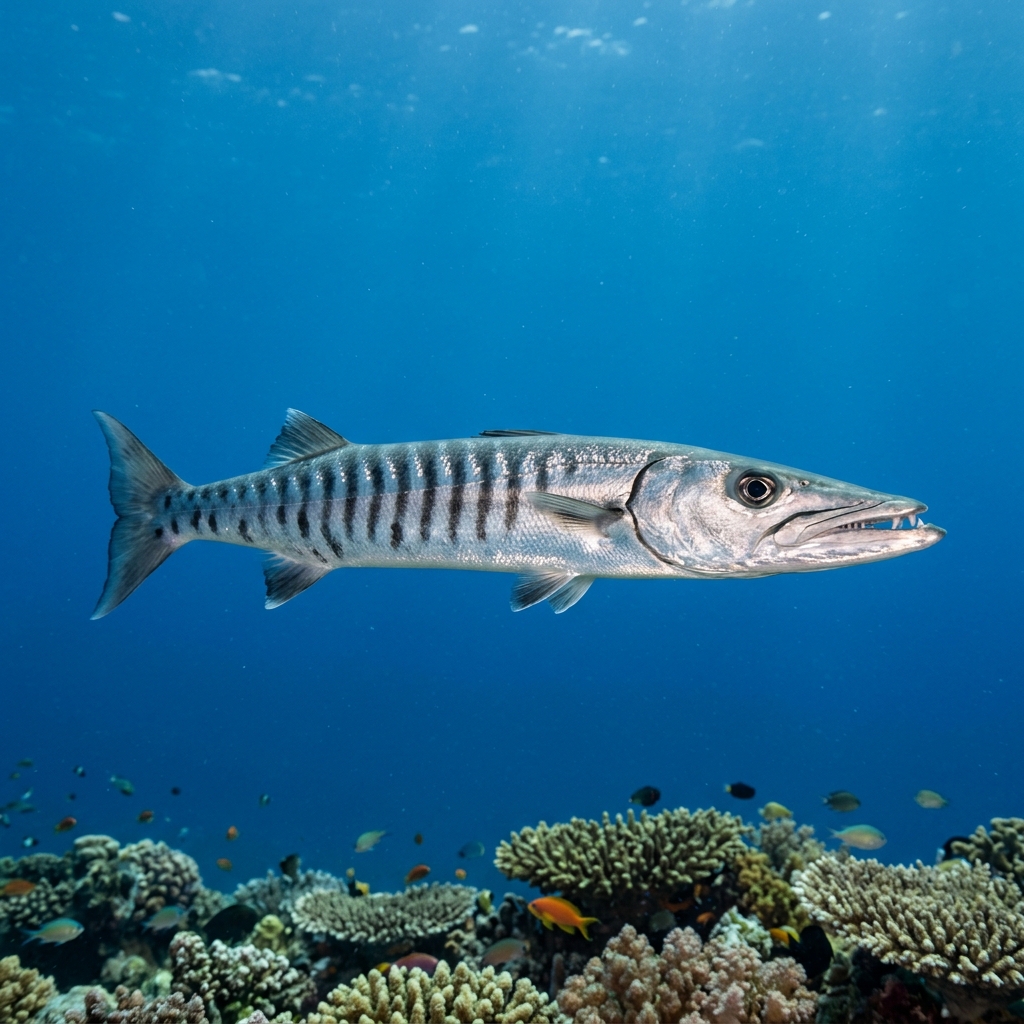
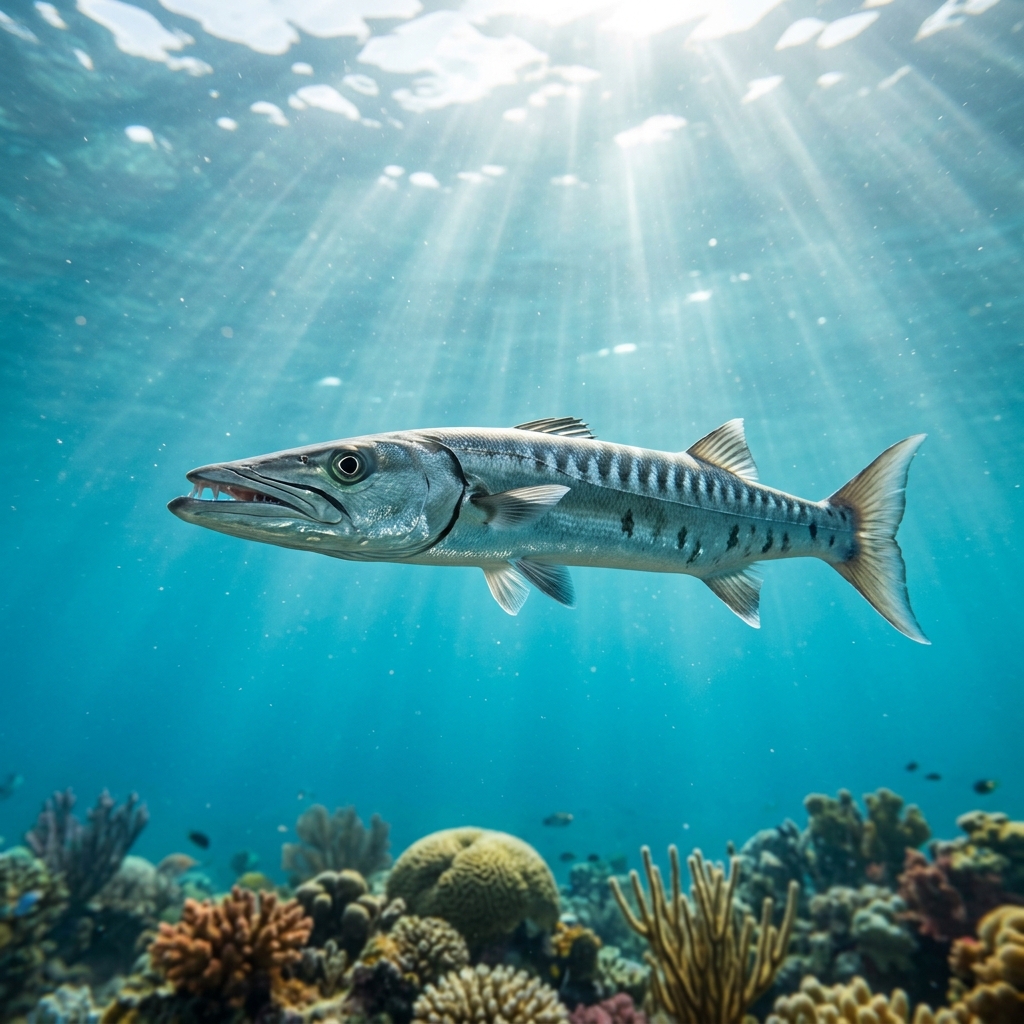
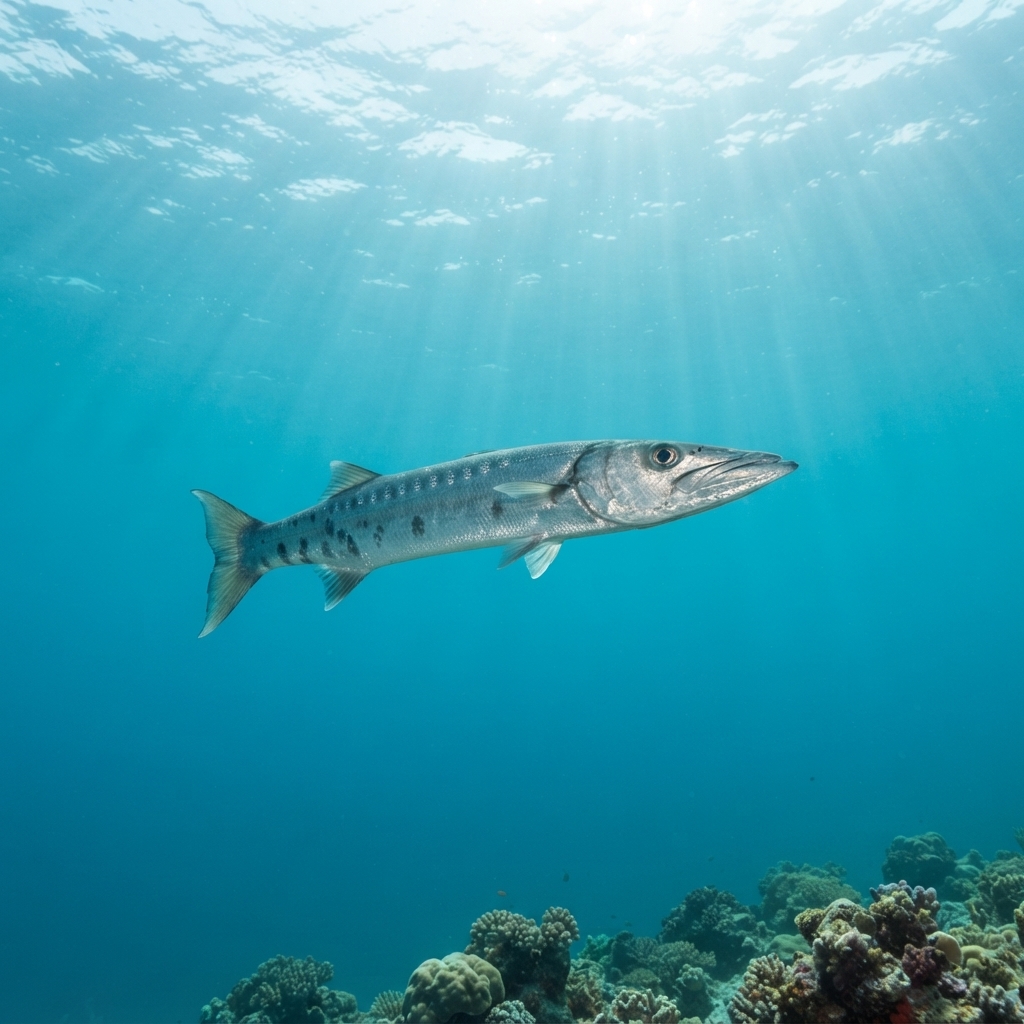
A slim, silver, torpedo-shaped fish to around 64cm with a noticeably large eye relative to its head, which is the easiest field mark against other barracuda. Look for faint dark chevron-like bars along the upper flanks and a slightly forked tail; it often holds mid-water in a stationary, head-into-current posture rather than darting about.
Divers most often find them holding steady in open water off a wall or drop-off, facing into the current with barely a tail-beat, rather than schooling tightly like some of their relatives. They are generally unbothered by divers and will let you approach for a look before drifting off, and they are logged as uncommon at most sites but reliably common at a smaller number of Rock Islands locations.
That oversized eye is a real adaptation for low-light hunting, letting them ambush baitfish at dawn, dusk and in the murkier water where visibility drops.
Sightings show no clear seasonal pattern, and the observed temperature range of 19.4 to 28.2C spans most of the diving year in these regions, so plan around Palau's or Fiji's general dive season rather than a barracuda-specific window.
Reef neighbours a diver could mistake it for. Use the identification notes above to tell them apart.
Palau is by far the most reliable place to find them, especially around the Rock Islands and off Peleliu, where they turn up at a solid run of sites. Smaller but real populations are logged in Bali, Indonesia, and around Lomaiviti in Fiji, so it is worth asking local operators in all three destinations.
Mapping where Bigeye Barracuda is logged…
Palau is the standout destination, particularly the Rock Islands and Peleliu, where they show up at a wide spread of sites. They are also seen in Bali, Indonesia, and in Fiji's Lomaiviti region.
There is no strong season in the data, they are logged across the year within a 19.4 to 28.2C range, so any time you would normally dive Palau or Fiji works.
Check the eye first, it is unusually large for a barracuda of its size. Combine that with a slim silver body, faint dark bars on the upper flanks, and a habit of hanging motionless in the current rather than schooling tightly.
They typically reach around 64cm, noticeably smaller and slimmer than a Great Barracuda.
No, they are not considered dangerous to divers. They tend to hold their position in open water and let divers approach rather than showing any defensive behaviour.
Site and sighting data is aggregated from diver logs, iNaturalist and GBIF. For taxonomy and conservation status:
Pickhandle Barracuda
1,020 sites