Carapus acus
Pearlfish turn up uncommonly around Occitanie, France, in waters from 15 to 28C. Here's how to spot one and what it's hiding in.
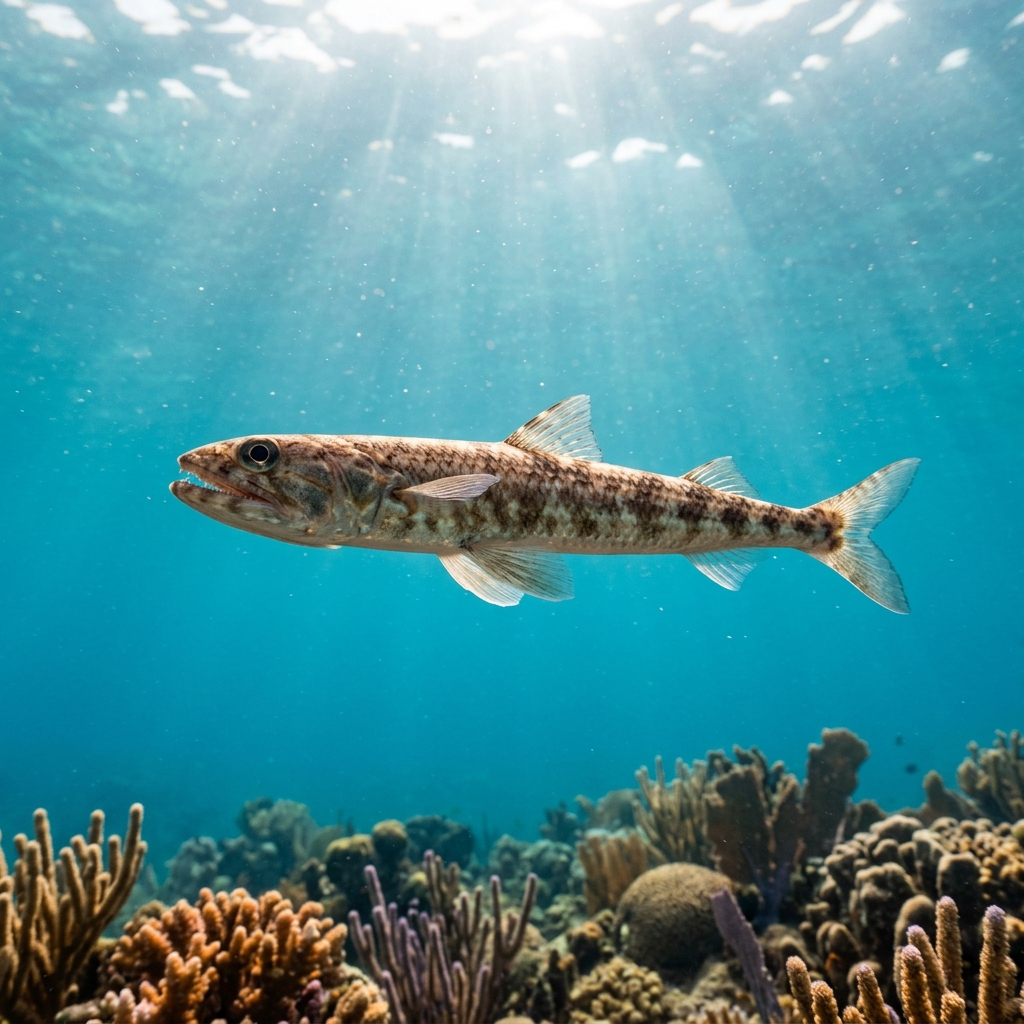
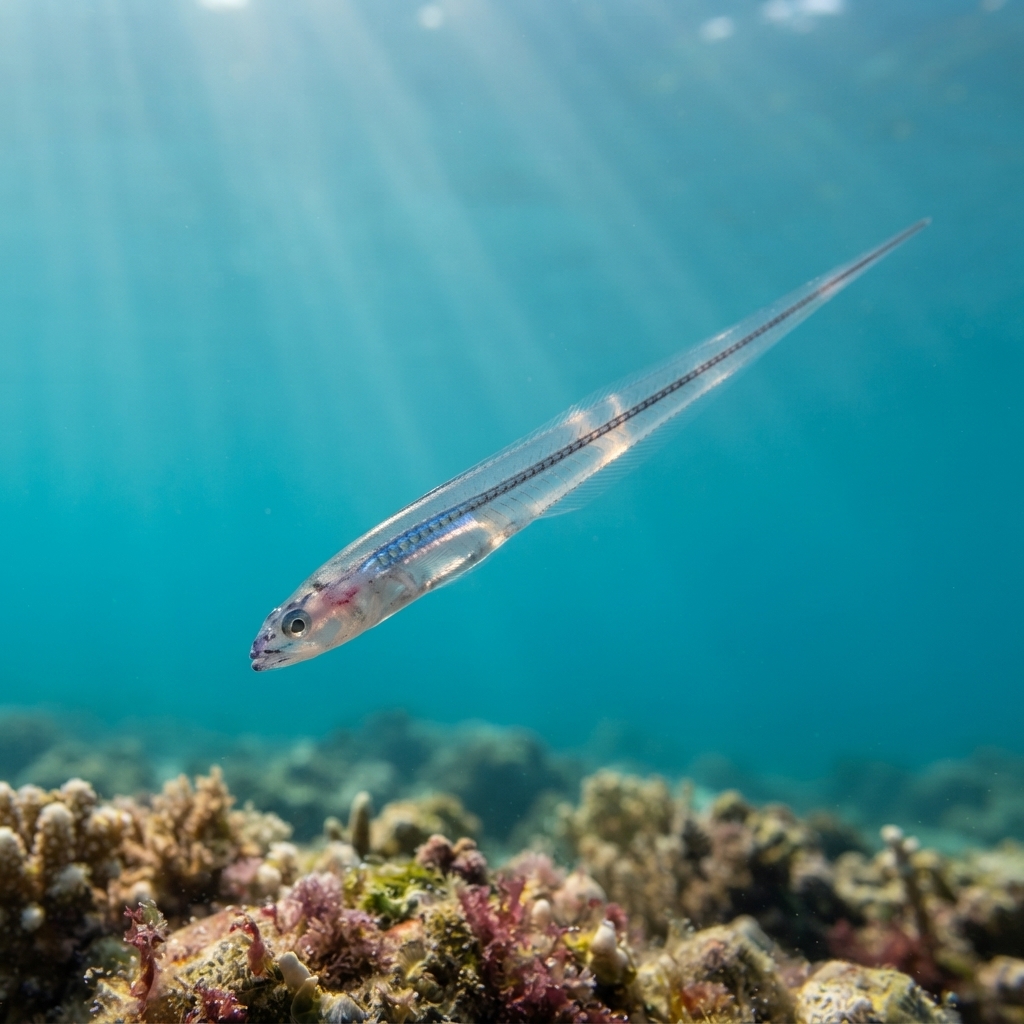
A slim, translucent, eel-shaped body around 15 cm long with no scales, giving it an almost glassy or silvery look underwater. The tail tapers to a fine point rather than a fin, and there's no obvious dorsal fin running along the back like you'd see on a true eel. Look for it poking its head out of the excurrent opening of a sea cucumber or lounging near one on the seabed rather than swimming openly over the reef.
Divers mostly find pearlfish tucked partway into a sea cucumber, often with just the head or a few centimetres of body visible at the animal's rear opening. They're not shy swimmers by nature, they're homebodies that rely on that host for shelter and tend to retreat further in if disturbed. Slow, close looks at sea cucumbers on sand or rubble patches are how most sightings happen, rather than spotting one cruising in open water.
Pearlfish are famous for living inside the body cavity of sea cucumbers, entering tail-first through the host's anus and using it as a hiding spot during the day, only leaving to feed at night.
There isn't a clear seasonal pattern in the sightings, and with a wide observed temperature range of roughly 15 to 28C it seems to tolerate both cooler and warmer water, so treat it as a year-round possibility rather than a seasonal target.
Logged sightings for this one cluster almost entirely around France, with Occitanie standing out as the strongest region reported. It's a species best hunted for on a slow, careful reef or rocky-bottom dive rather than something you'll stumble across on a drift.
Mapping where Pearlfish is logged…
The strongest logged sightings come from France, particularly the Occitanie region, where several dive sites have recorded them, though they're considered uncommon even there.
There's no clear season in the sighting data, and they've been recorded across a wide temperature range from about 15 to 28C, so they can turn up at any time of year.
Look for a slender, translucent, eel-like body around 15 cm long, usually seen partially emerging from a sea cucumber rather than swimming freely. Its lack of scales and pointed, finless tail help separate it from small eels or blennies.
They typically reach around 15 cm in length, staying slim and eel-shaped throughout their life.
They shelter inside the body cavity of sea cucumbers by day, entering tail-first through the host's rear opening, and slip out at night to feed. It's an unusual but well-documented survival strategy that makes them tricky to spot unless you check sea cucumbers closely.
Site and sighting data is aggregated from diver logs, iNaturalist and GBIF. For taxonomy and conservation status:
Soldierfish
3,612 sites