Pardachirus pavoninus
Spotted, disc-shaped and easy to miss on sand flats from Phuket to Bali. Uncommon at 24.8-29C year-round, and it can secrete toxin if handled.
Safety warning
Not aggressive and poses no threat if simply observed, but its skin secretion can irritate skin or eyes and is unpleasant if a diver handles it or lets it near their mask. Best practice is to look, photograph from a short distance, and leave it undisturbed on the sand.
Handle with care
Toxic skin secretionGeneral first-aid guidance, not a substitute for professional medical care. In an emergency, call your local emergency number.
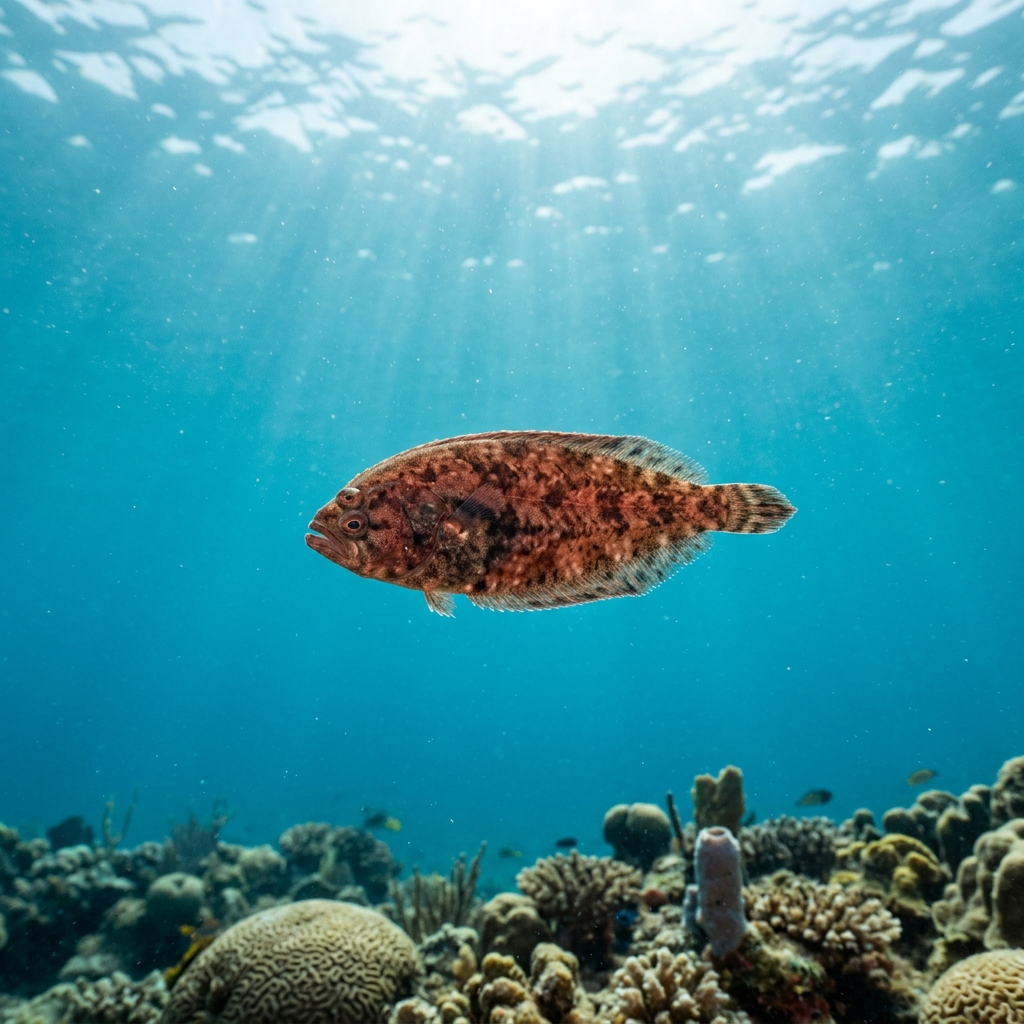
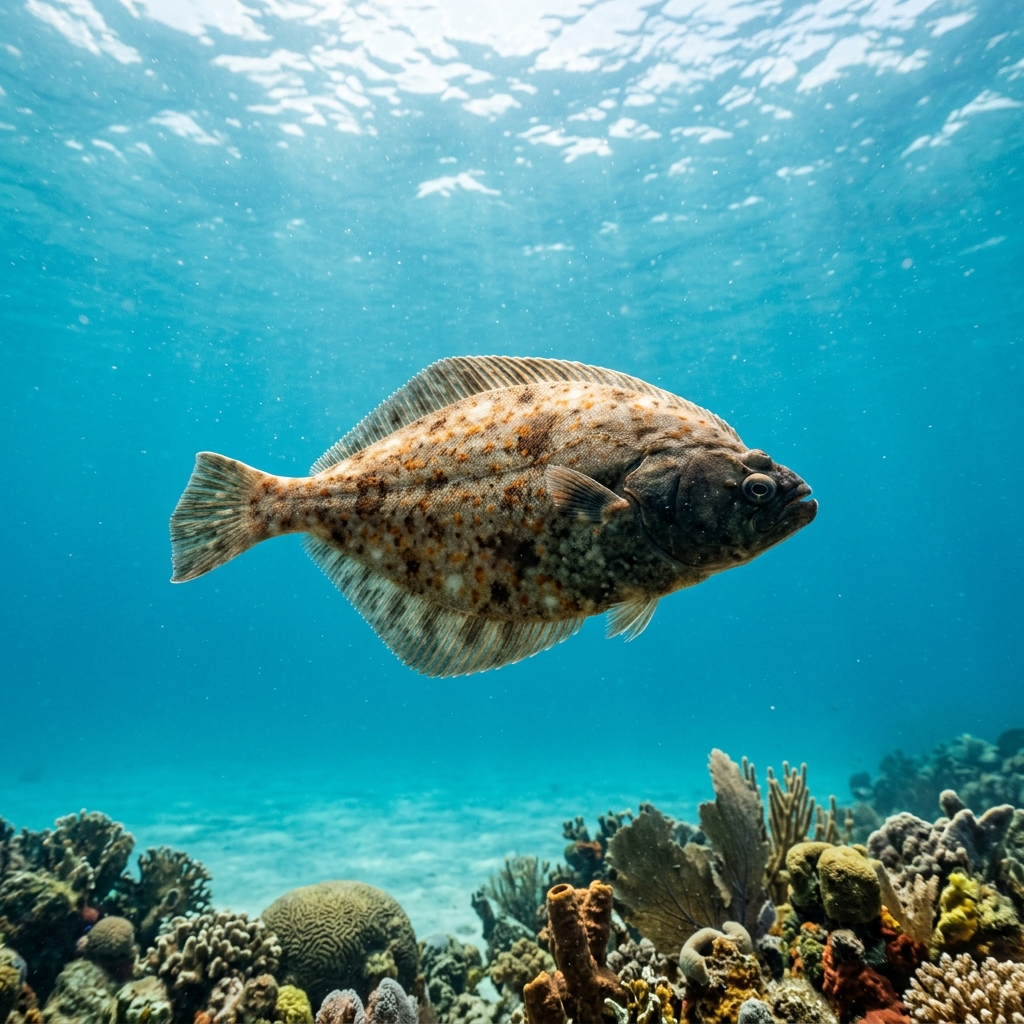
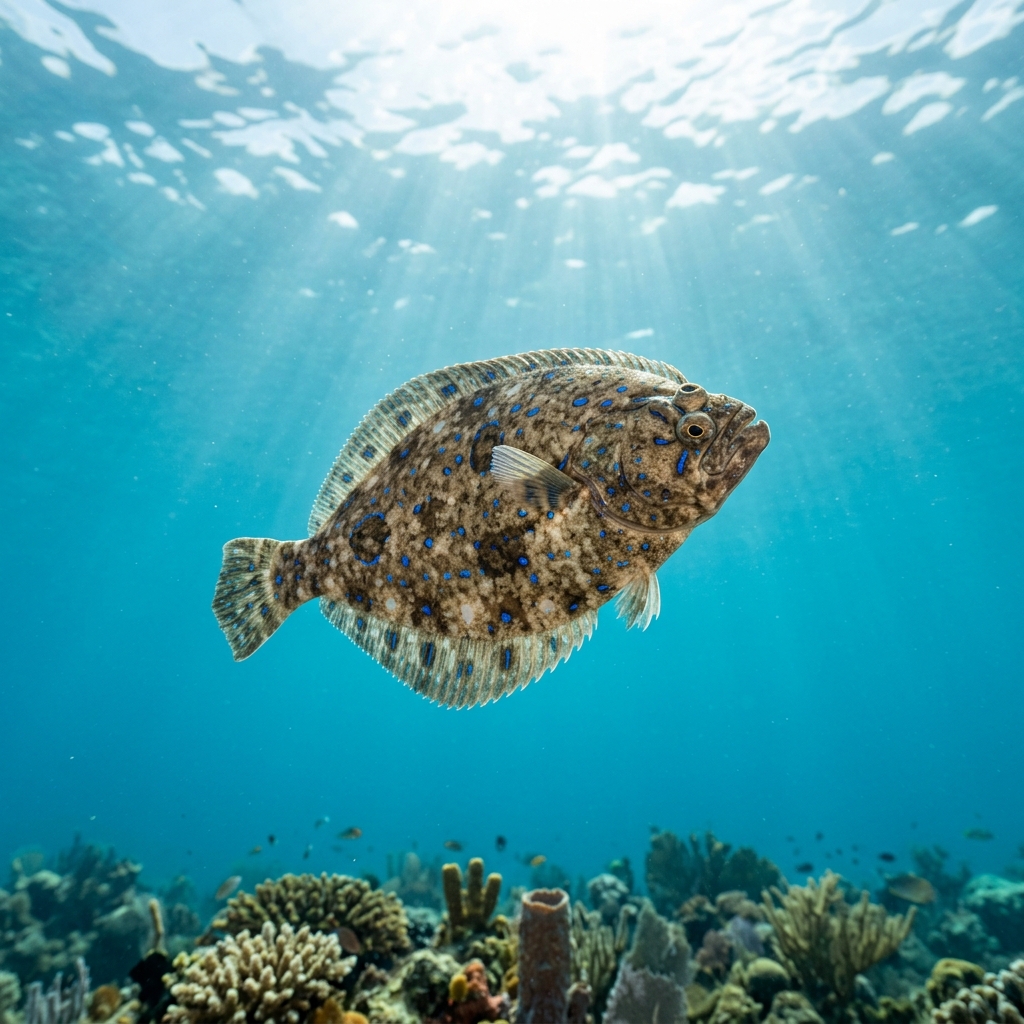
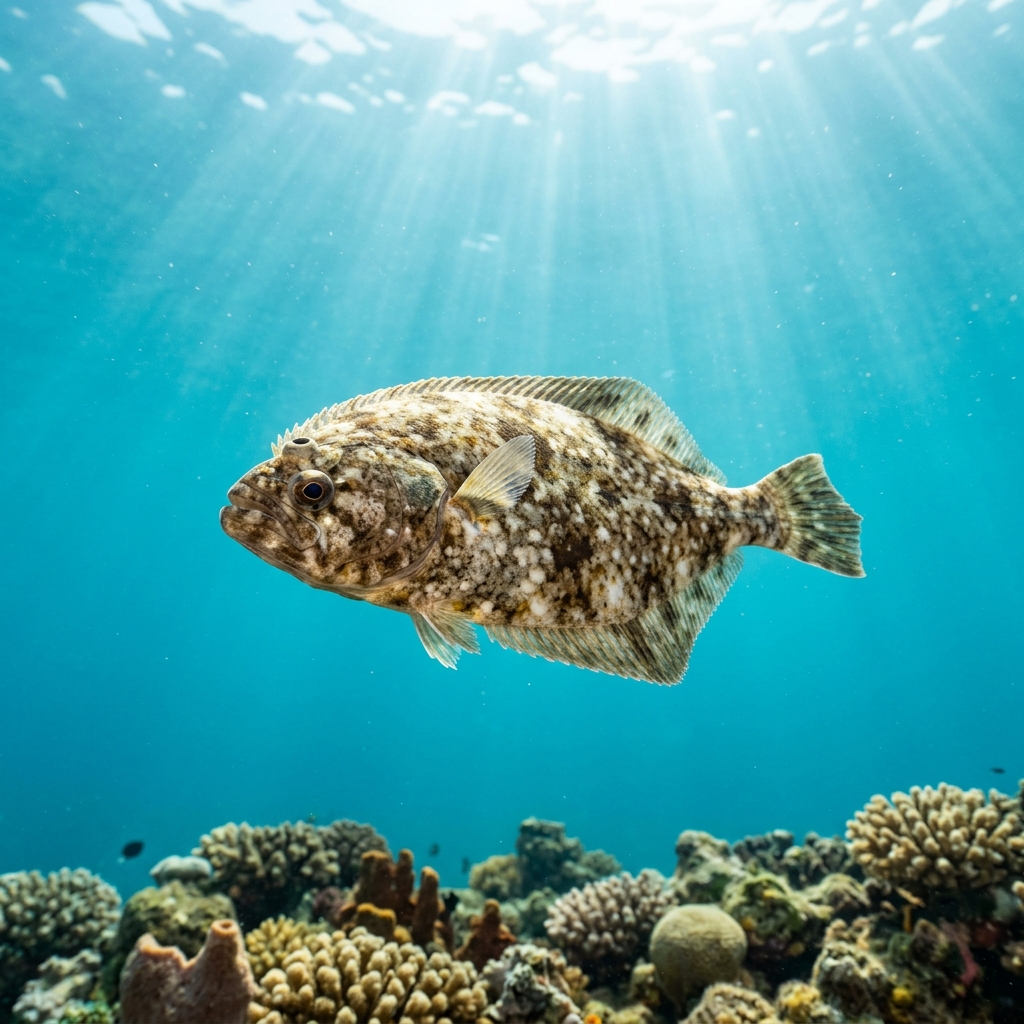
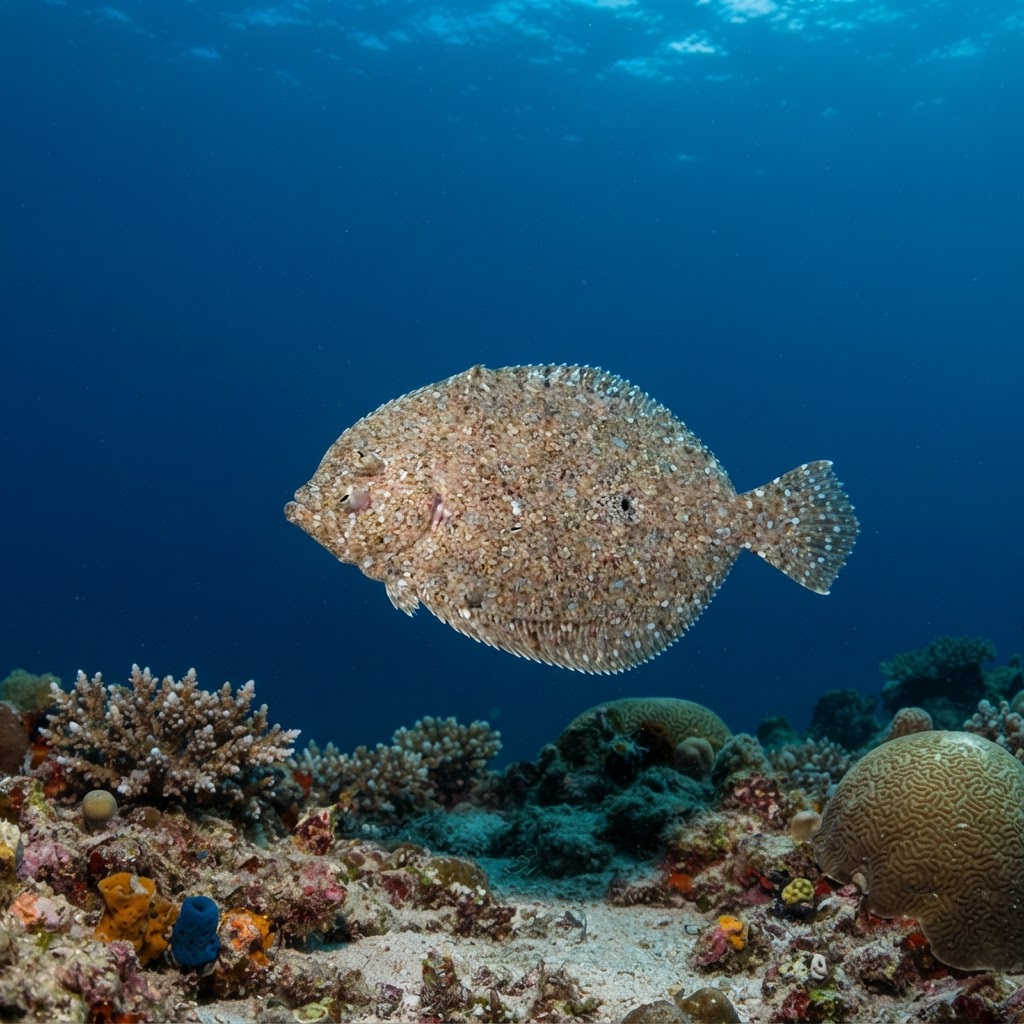
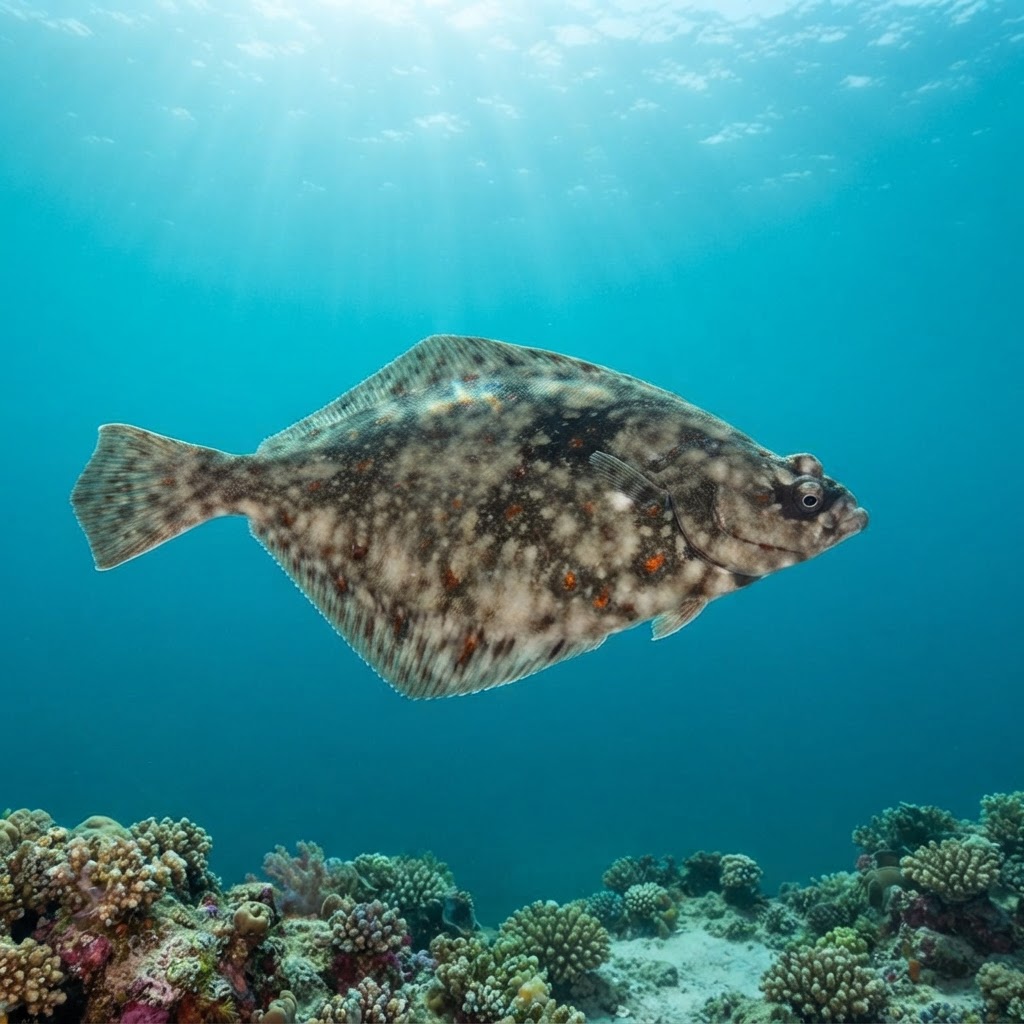
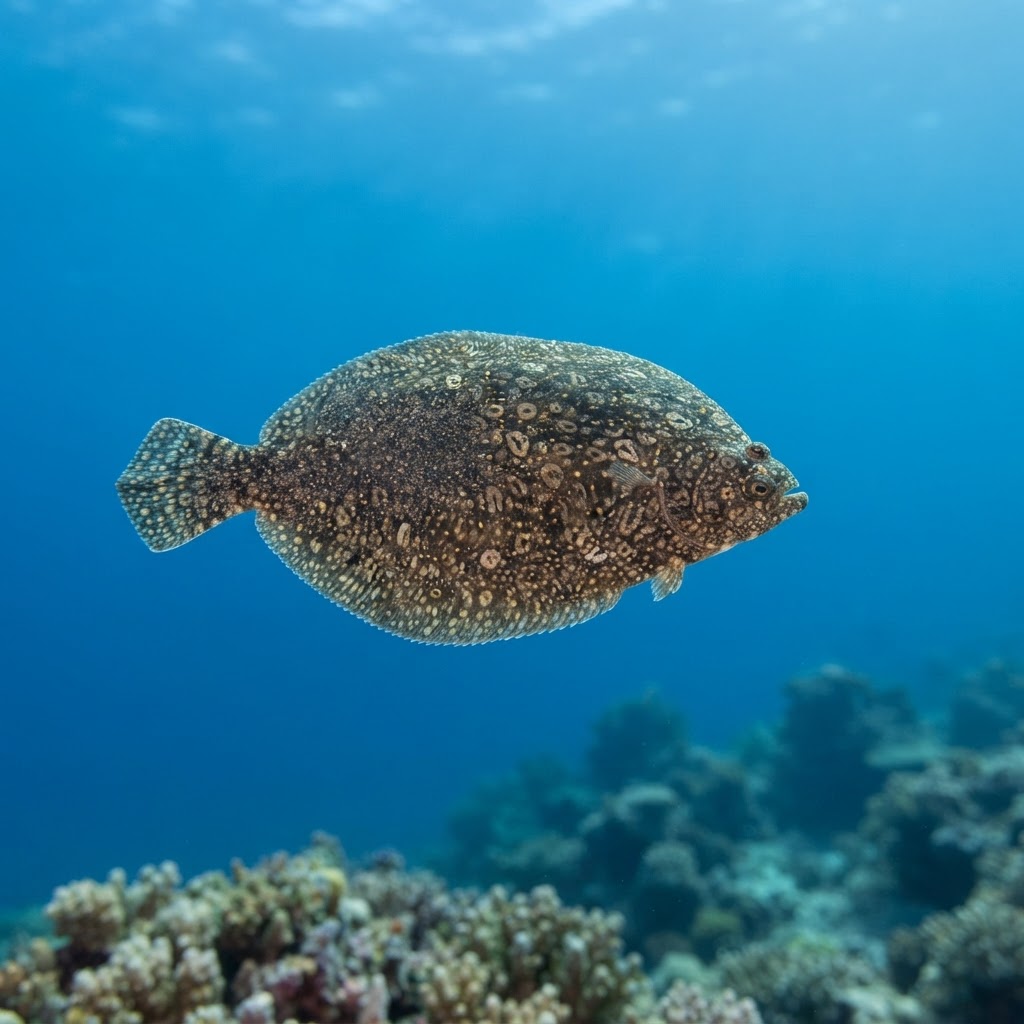
Flat, oval body lying directly on sand or rubble, usually around 17 cm, with both eyes on the upper right side of the head as in all soles. Skin is pale brown to grey scattered with dark spots and faint blue-ringed rings (ocelli), giving a mottled, almost leopard-print look that breaks up its outline against the seabed. It swims with an undulating, ribbon-like motion low over the bottom rather than darting like a typical reef fish, and often lies half-buried with just the eyes exposed.
Spends most of the day resting flat on sand or rubble patches near reef edges, often half-covered in sediment and easy to swim straight past. Divers who spot one usually do so by chance on a slow, close look at the bottom rather than in open water, and it tends to glide off in a low, wavy retreat rather than bolt when approached.
Its skin secretes a shark-repellent toxin from glands along the fins, a defence thought to deter predatory sharks that would otherwise hunt it on open sand.
No clear seasonal pattern shows up in the data, and its comfort range of 24.8 to 29C matches tropical reefs year-round, so it turns up on sand flats in any month you dive these regions.
Most reliably logged across Indonesia, particularly Bali, Maluku and Sulawesi, and a strong presence in Malaysia's Peninsular East Coast sites. Also a steady find in Thailand around Phuket, the Philippines in Luzon and the Visayas, and on sand patches off Hong Kong's Sai Kung.
Mapping where Peacock Sole is logged…
Best logged in Indonesia (Bali, Maluku, Sulawesi), Malaysia's Peninsular East Coast, Thailand's Phuket, the Philippines' Luzon and Visayas regions, and Hong Kong's Sai Kung. It sits camouflaged on sand and rubble patches at most of these sites rather than on the reef itself.
There's no strong seasonal signal in sighting data, and it favours water between 24.8 and 29C, which describes these tropical dive regions all year. Expect a similar chance of finding one on the sand whenever you dive.
They're not aggressive, but their skin releases a toxic secretion that can irritate skin or eyes if handled. Observe and photograph from a short distance rather than touching one.
Look for a flat, oval fish lying on sand, mottled brown-grey with dark spots and faint blue-ringed markings. Both eyes sit on the upper side of the head, and it moves with a low, undulating glide rather than swimming upright.
They typically reach around 17 cm, a small, flat profile that keeps them easy to overlook against sand and rubble.
It secretes a natural toxin from its skin that's thought to repel sharks, giving this small, slow flatfish a defence against much larger predators.
Site and sighting data is aggregated from diver logs, iNaturalist and GBIF. For taxonomy and conservation status:
Wide Eyed Flounder
1,624 sites