Iniistius pavo
Sandy-bottom diver reliably logged around Cocos Island, Bali, and Hawaii's reefs in 24-29C water, active year-round.
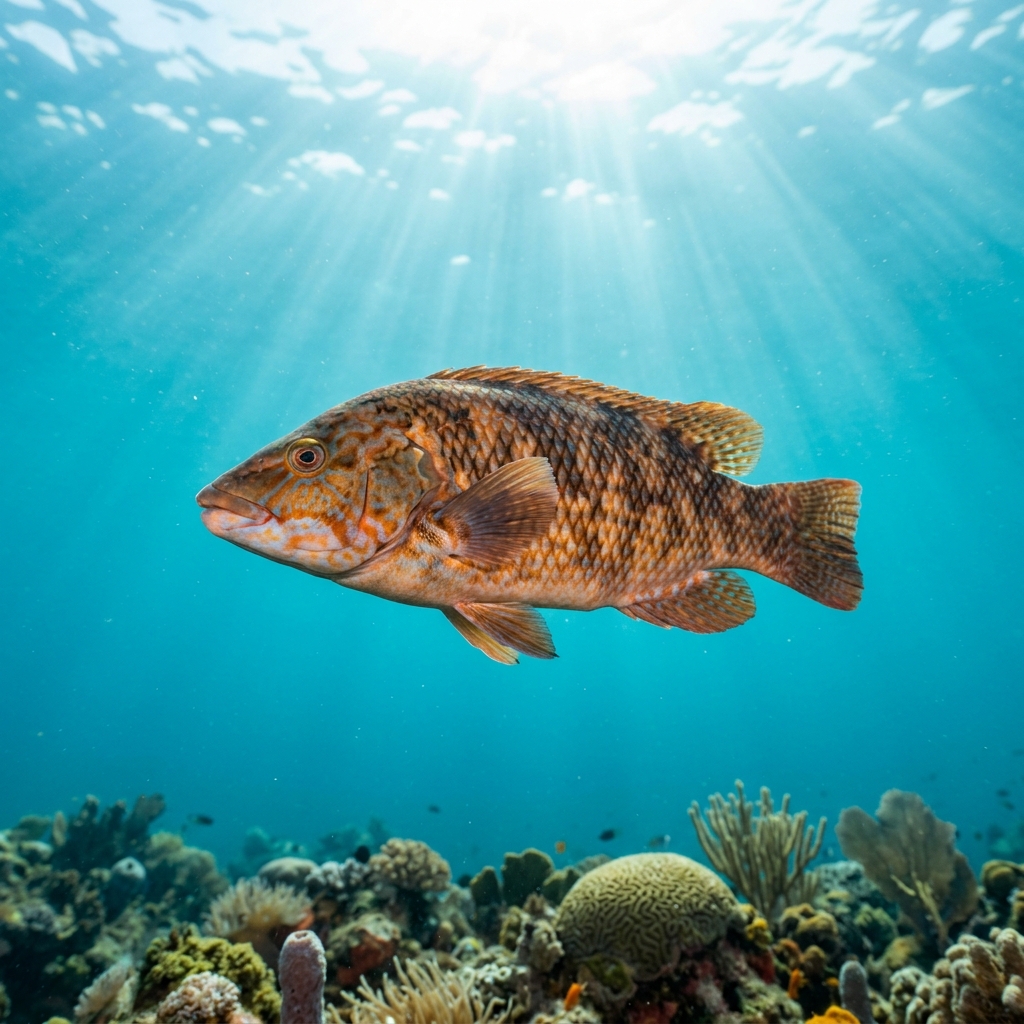
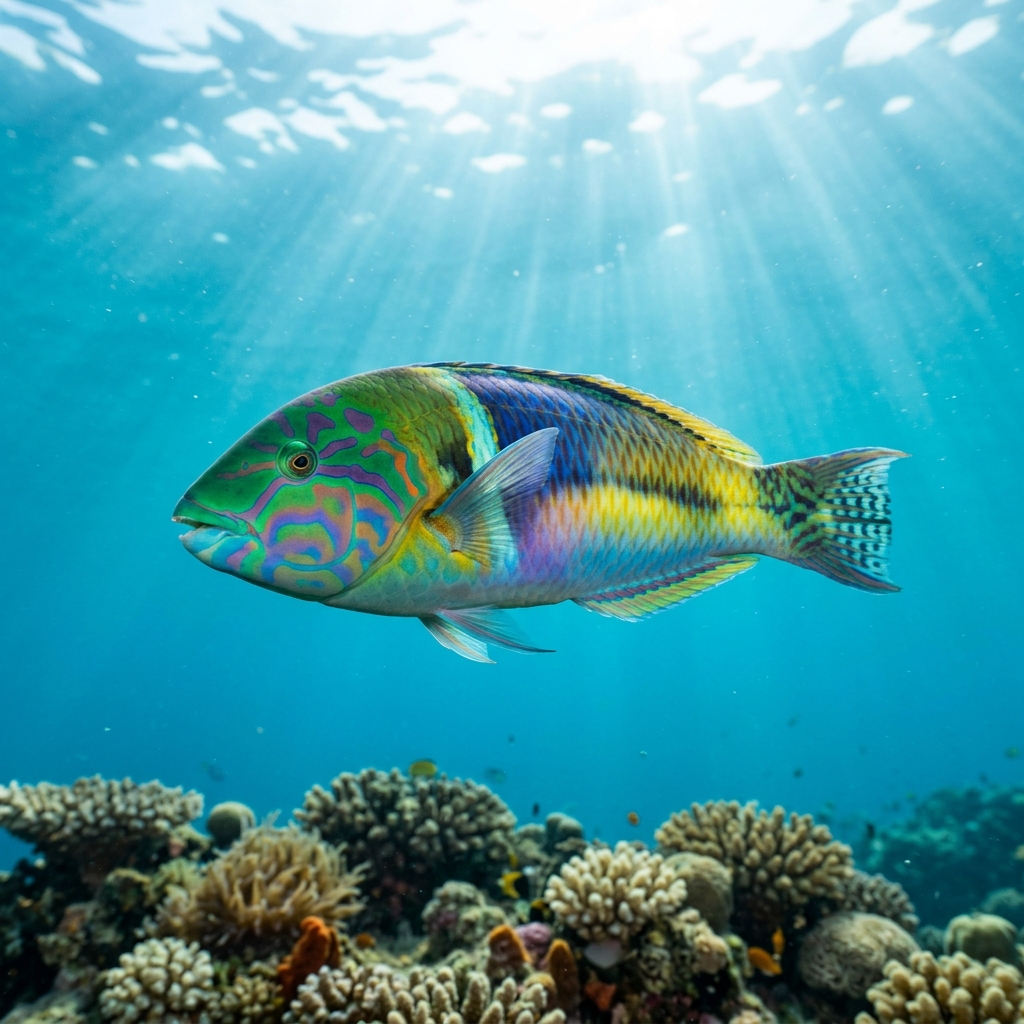
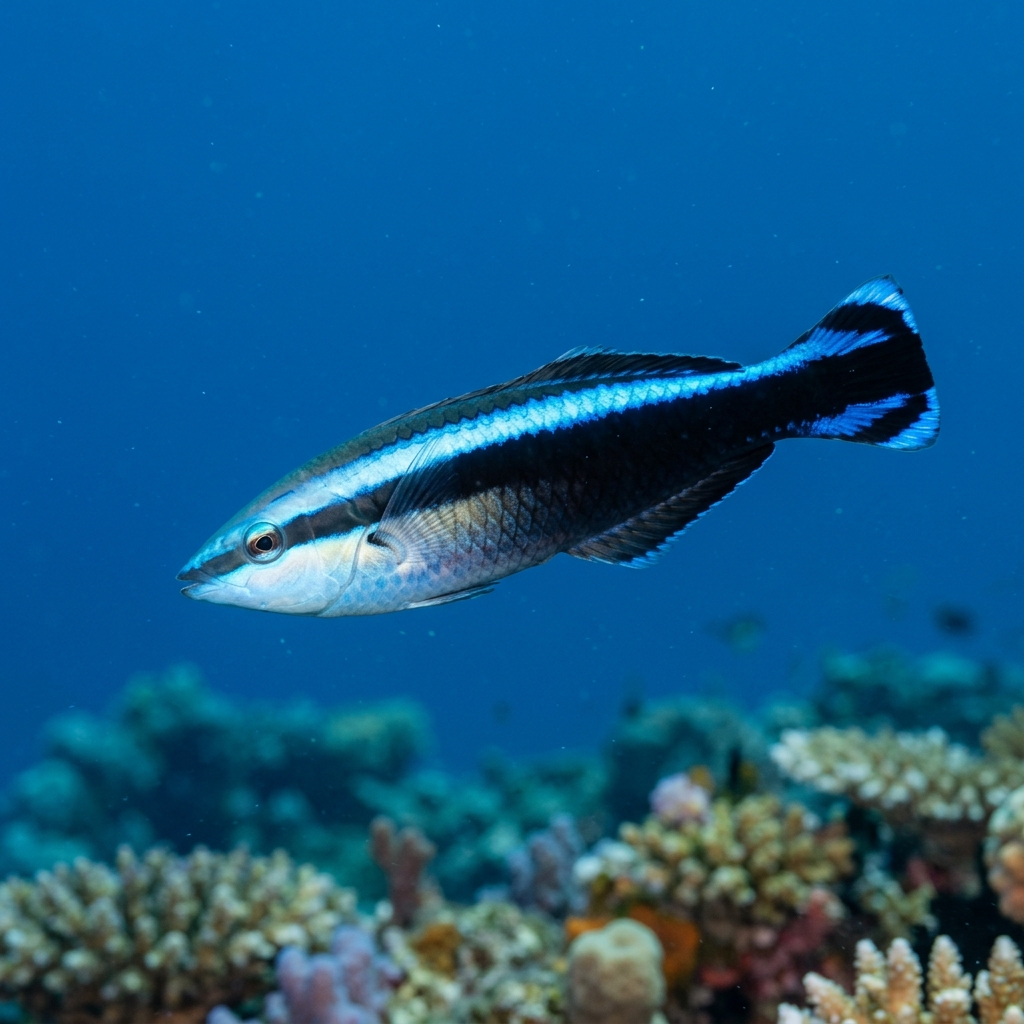
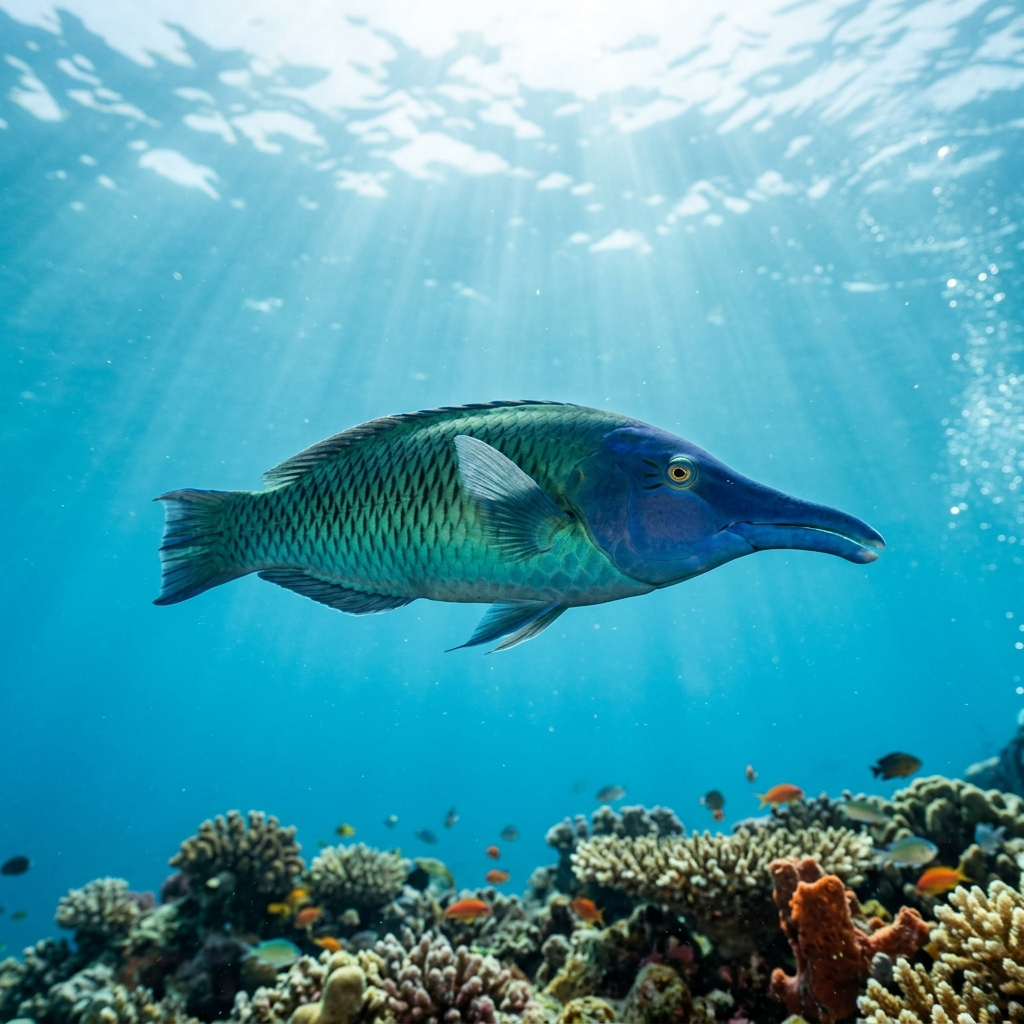
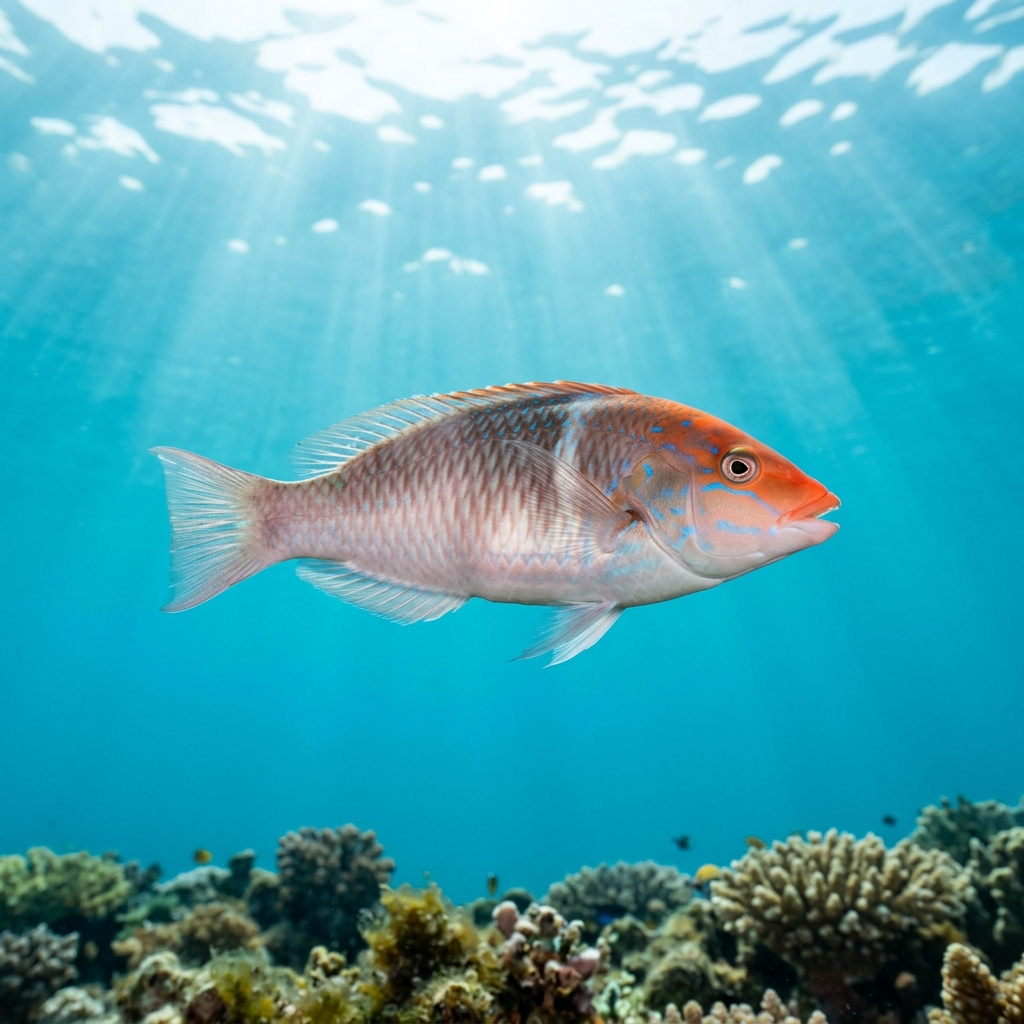
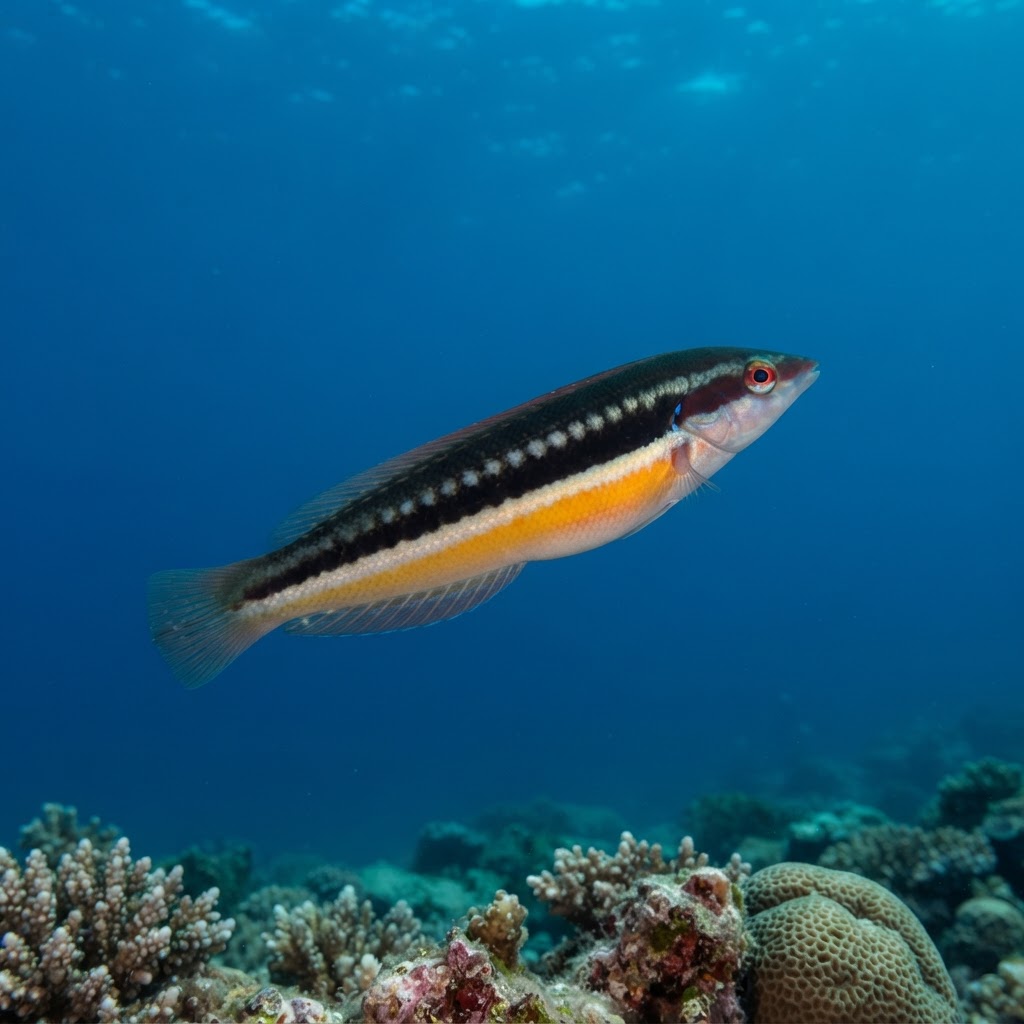
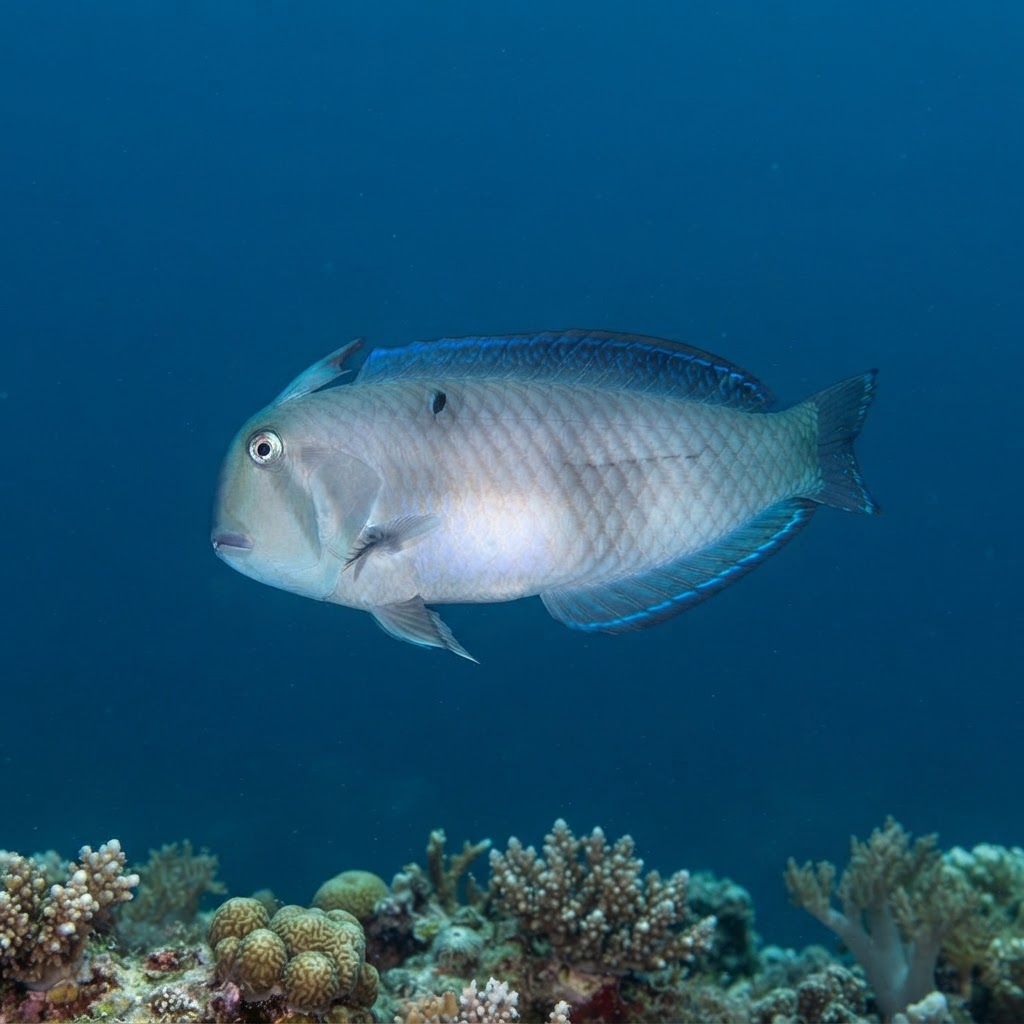
A slim, laterally compressed body around 29 cm with a distinctly steep, almost vertical forehead gives this wrasse an odd, wedge-shaped profile underwater. Look for a scattering of blue spots and streaks over a pale to olive body, often with a dark blotch near the base of the tail. It tends to hover just above sand or rubble patches rather than tight against reef structure, and will dive headfirst into the sand in a flash if startled.
Divers usually find it cruising low over open sand or rubble beside the reef, picking through the substrate for small invertebrates. It is generally wary and keeps its distance, and if pressed will bolt and bury itself in the sand within a second, a trick worth watching for if you approach slowly. Most sightings are single fish rather than groups, and it turns up across a wide depth range from the shallows down well past recreational limits.
Like several razorfish relatives, it can vanish into loose sand almost instantly when threatened, using its compressed body to slip under the surface rather than fleeing across open water.
Sightings show no detectable seasonal pattern, and with a comfortable range of 24.2 to 29.0C this wrasse is present on tropical reefs through the year. Plan around good visibility and calm sand-flat conditions rather than a particular month.
Most reliably logged around the Pacific Coast of Mexico and the Visayas in the Philippines, with strong showings in Hawaii and along Panama's Pacific coast. Cocos Island in Costa Rica, Atauro Island in Timor-Leste, and Bali in Indonesia also produce regular sightings, usually on sand-and-rubble patches adjacent to reef.
Mapping where Peacock Razorfish is logged…
They are most consistently reported along Mexico's Pacific coast and the Philippines' Visayas region, with reliable sightings in Hawaii, Panama's Pacific coast, Cocos Island in Costa Rica, and Bali. Look over sand and rubble patches next to reef rather than on the reef structure itself.
There is no strong seasonal pattern in the sightings data, so they are considered a year-round find on tropical reefs. Their comfortable temperature range of roughly 24 to 29C matches conditions typical of most of the year at their dive sites.
Check for a slim, flattened body with a steep, almost vertical forehead and blue spots scattered across a pale to olive base colour. It usually hovers just above sand rather than clinging to coral, and will dart into the sand if you get too close.
They typically reach around 29 cm in length, a moderate size for a wrasse, making them easy to spot cruising over open sand patches despite their slim profile.
They can dive headfirst into loose sand to disappear almost instantly when startled, a defence shared with other razorfish species. This makes brief, surprising encounters common rather than long, relaxed observations.
No, they pose no threat to divers and are not considered dangerous. They are shy and tend to flee or bury themselves in sand rather than react aggressively.
Site and sighting data is aggregated from diver logs, iNaturalist and GBIF. For taxonomy and conservation status:
Bird Wrasses
3,632 sites