Cephalopholis argus
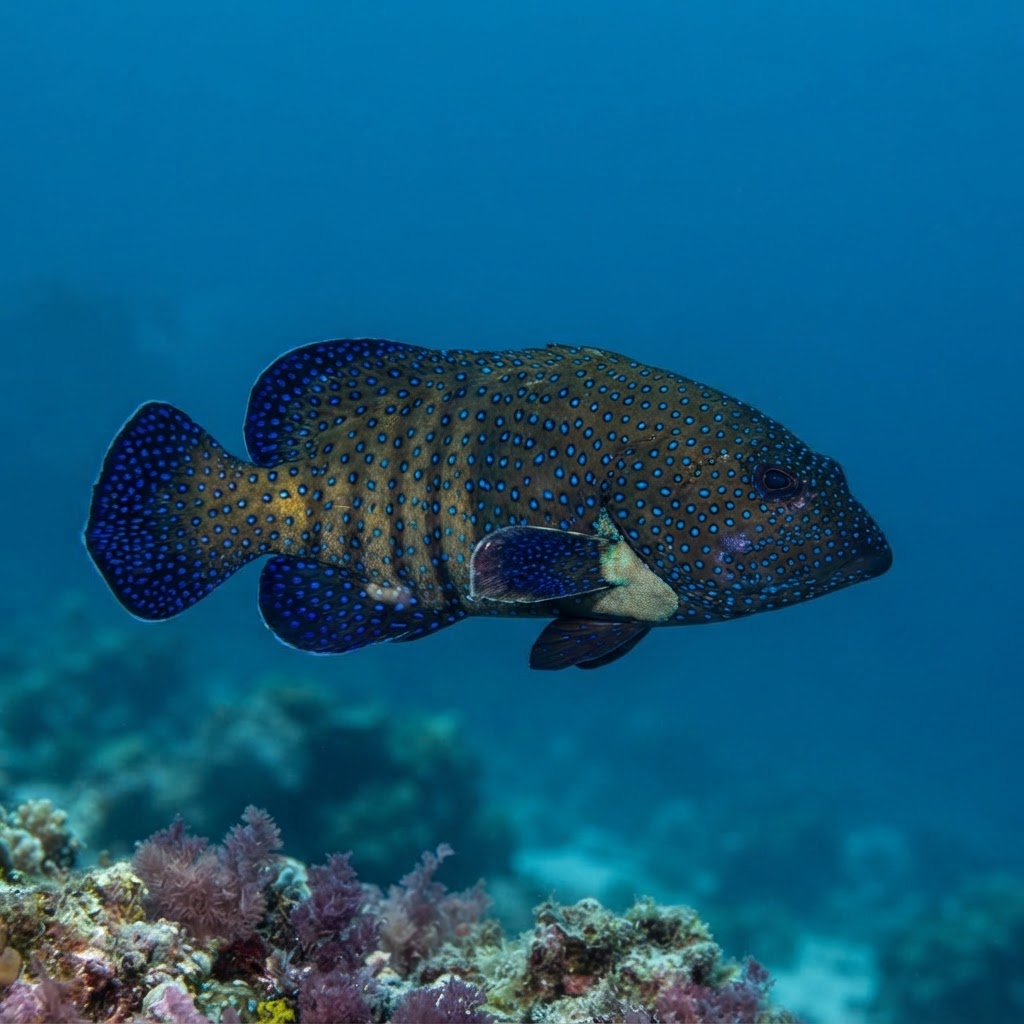
Dark body dotted with electric-blue spots, seen year-round on reefs from the Central Atolls to South Sinai in 24-29C water.
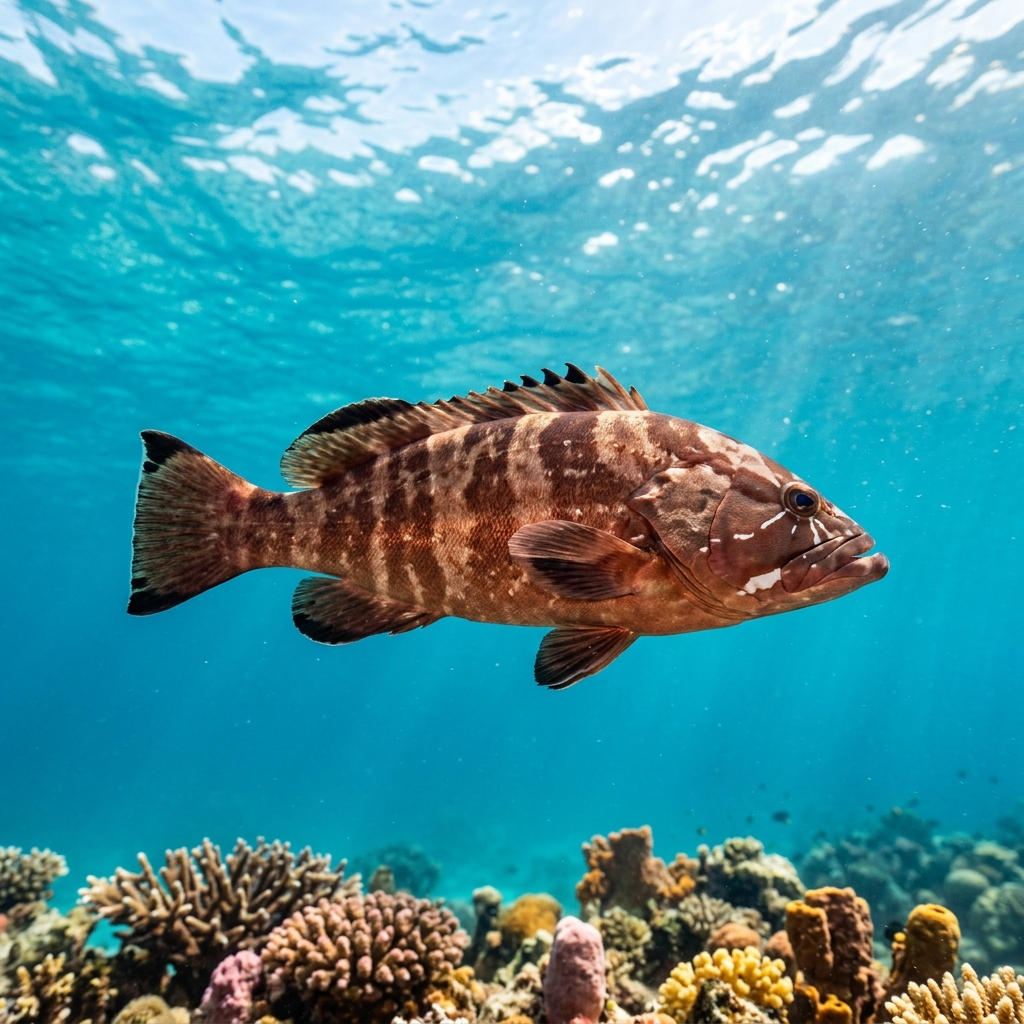
A stocky, thick-bodied grouper up to about 42 cm, dark brown to almost black with electric-blue spots scattered across the head, body and fins. Two pale saddle-like blotches often show near the base of the tail. It tends to hover close to the reef structure rather than swim in open water, which combined with the blue polka-dot pattern makes it hard to mistake for anything else on an Indo-Pacific or Red Sea reef.
Usually seen parked motionless beside a coral head or under a ledge, watching the reef rather than patrolling it, then making a short, fast dash to grab a passing fish or crustacean. Divers rate it uncommon to common at most sites, so it is a nice reef find rather than a guaranteed tick, and it generally holds its ground or retreats a short distance into cover rather than fleeing the area outright.
Introduced to Hawaii in the 1950s to boost local fishing, it has since become one of the most frequently logged reef predators there, well outside its native Indo-Pacific and Red Sea range.
No clear season shows up in the sightings data, and with a comfortable range of about 25 to 29C it stays active on tropical reefs year-round, so any month works for a dive trip.
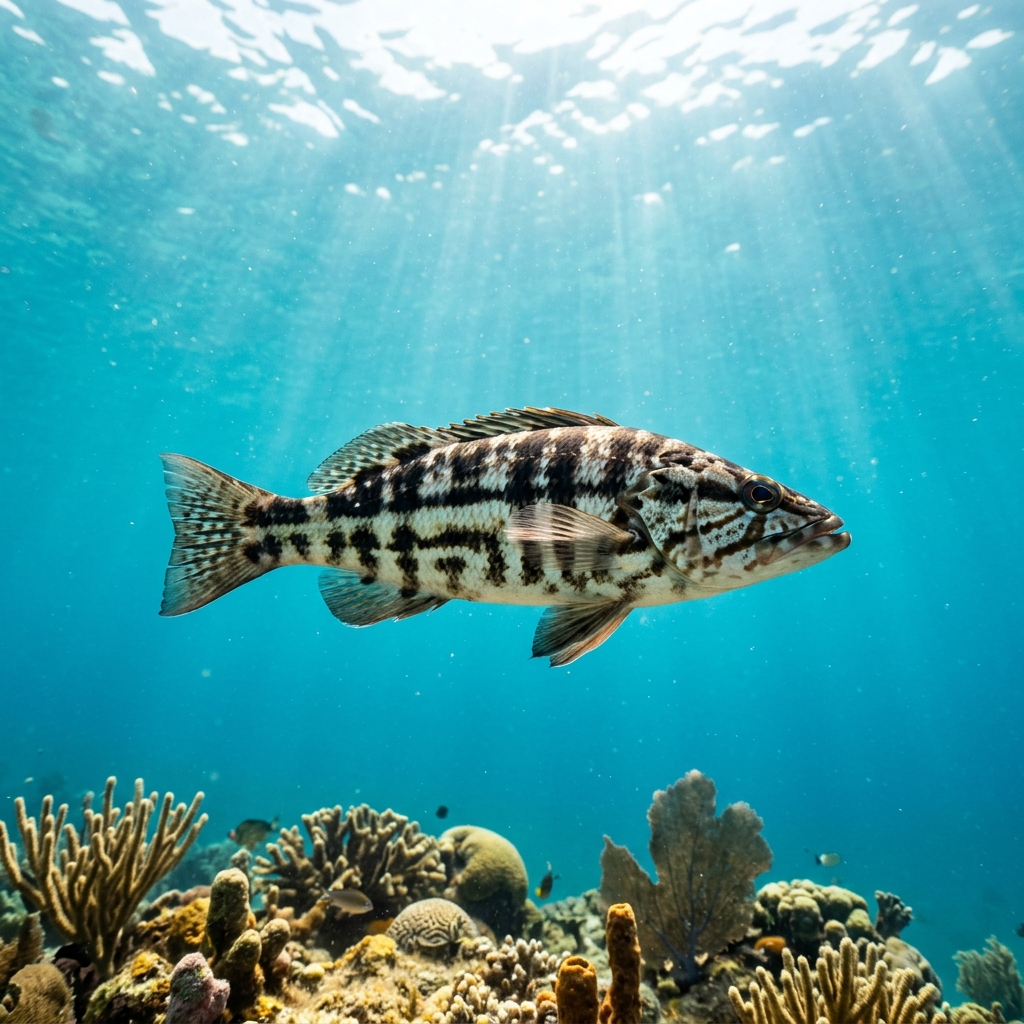
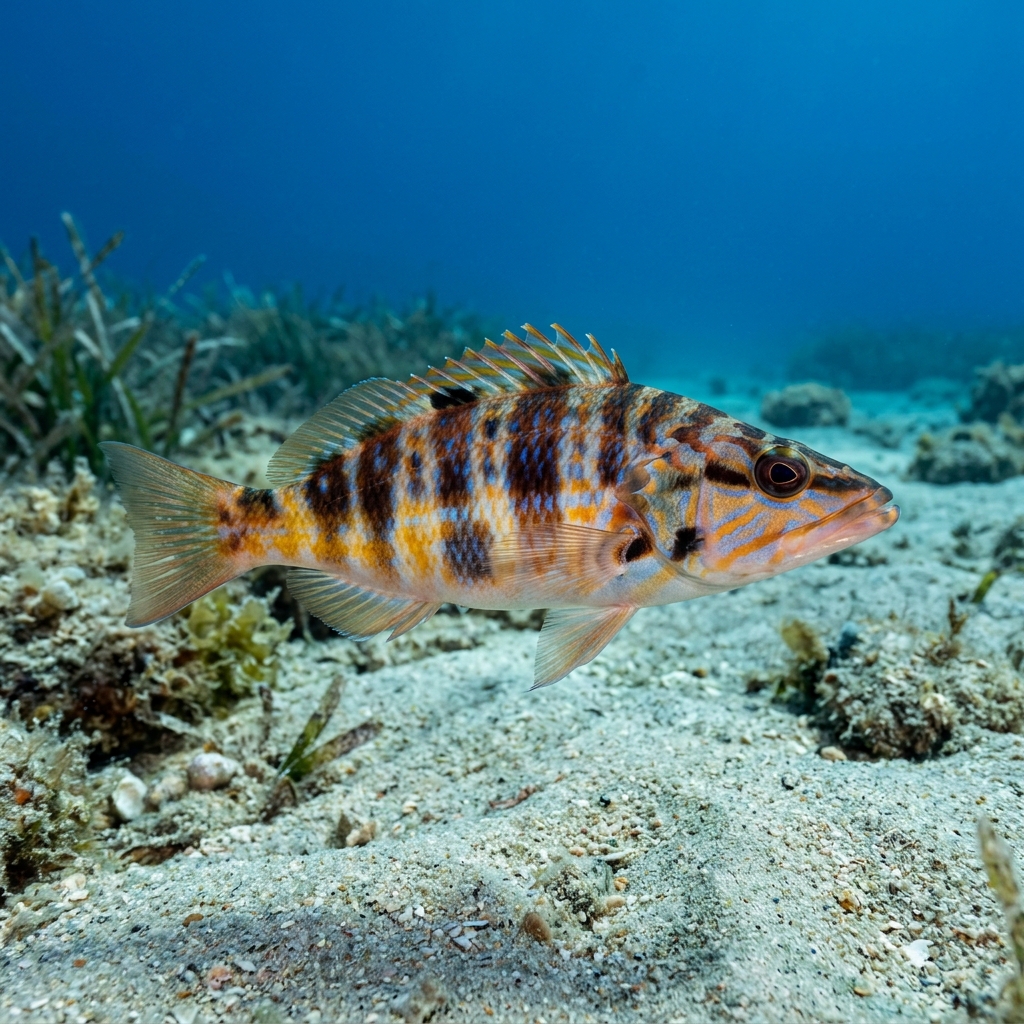
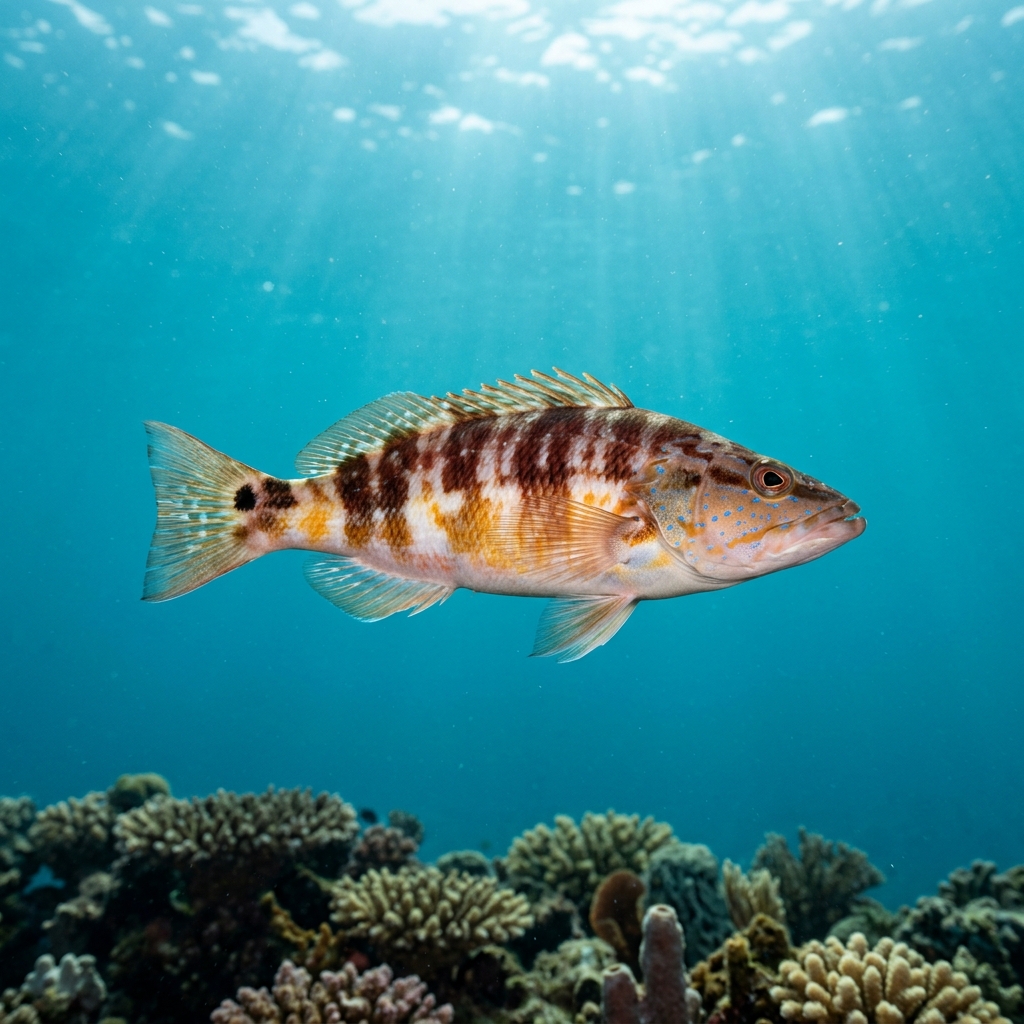
Reef neighbours a diver could mistake it for. Use the identification notes above to tell them apart.
Most reliably logged in the Maldives, especially the Central Atolls, and across the Egyptian Red Sea in South Sinai, Marsa Alam and the Deep South, and the Red Sea Riviera. Also a regular find in Indonesia (Sulawesi), Thailand, the Philippines (Visayas), French Polynesia's Society Islands, Hawaii and Seychelles.
Mapping where Peacock Grouper is logged…
Best odds are in the Maldives, particularly the Central Atolls, and across the Egyptian Red Sea in South Sinai and Marsa Alam. It is also commonly logged in Indonesia, Thailand, the Philippines, French Polynesia and Hawaii.
There is no strong seasonal pattern in sightings, and it tolerates a wide tropical temperature range, so it is seen on reefs throughout the year rather than during a specific window.
Look for a dark brown to blackish, thick-bodied grouper covered in small bright blue spots, usually hovering close to coral rather than swimming in the open. It grows to around 42 cm and often sits still near cover before darting out to feed.
They typically reach about 42 cm in length, a solidly built mid-sized grouper rather than one of the giant reef predators.
No, they pose no threat to divers and will generally hold position or retreat into the reef if approached.
It was deliberately introduced to Hawaiian waters in the 1950s to support local fishing and has since become an established, frequently sighted reef fish there far from its native Indo-Pacific and Red Sea range.
Site and sighting data is aggregated from diver logs, iNaturalist and GBIF. For taxonomy and conservation status:
Blacktip Grouper
2,726 sites