Paracheilinus carpenteri
Pink Flasher sightings are rare and concentrated in the Philippines. Here's how to spot and ID this vivid wrasse on Luzon reefs.
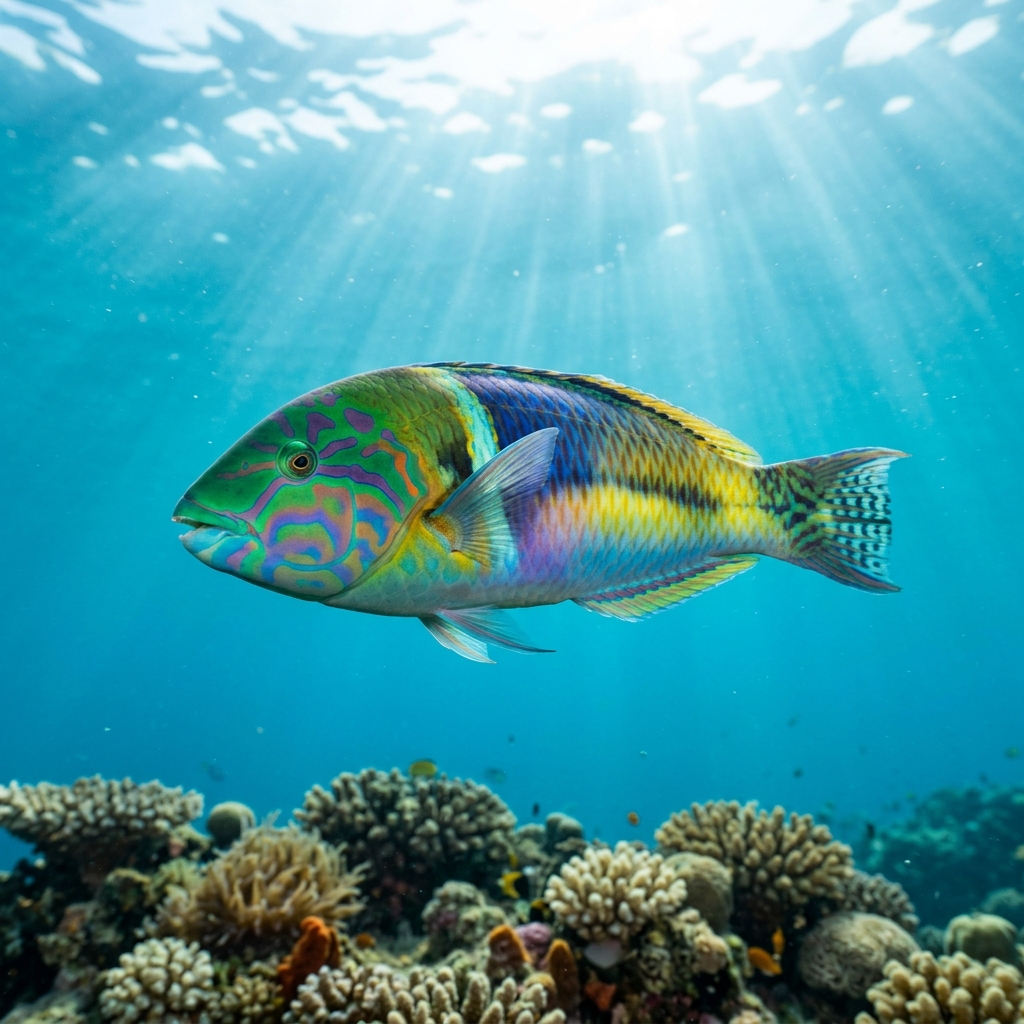
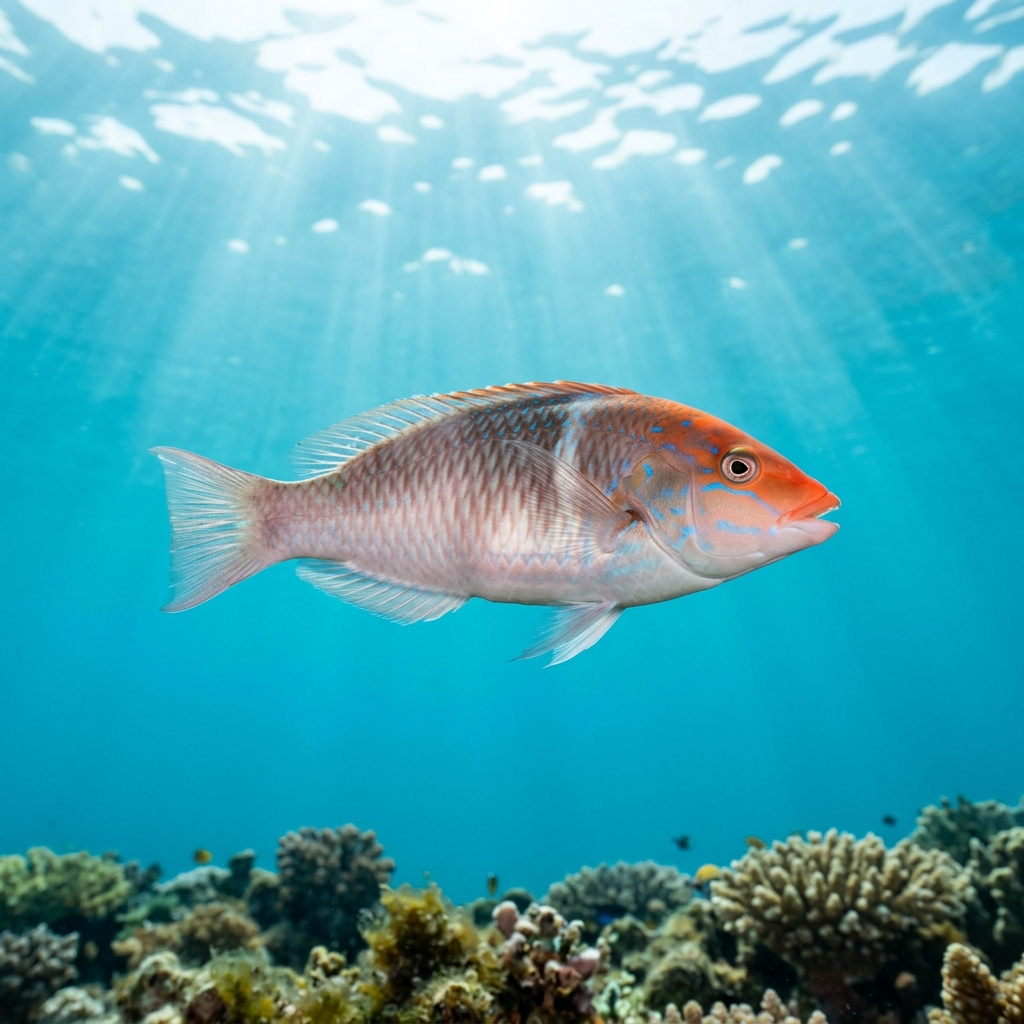
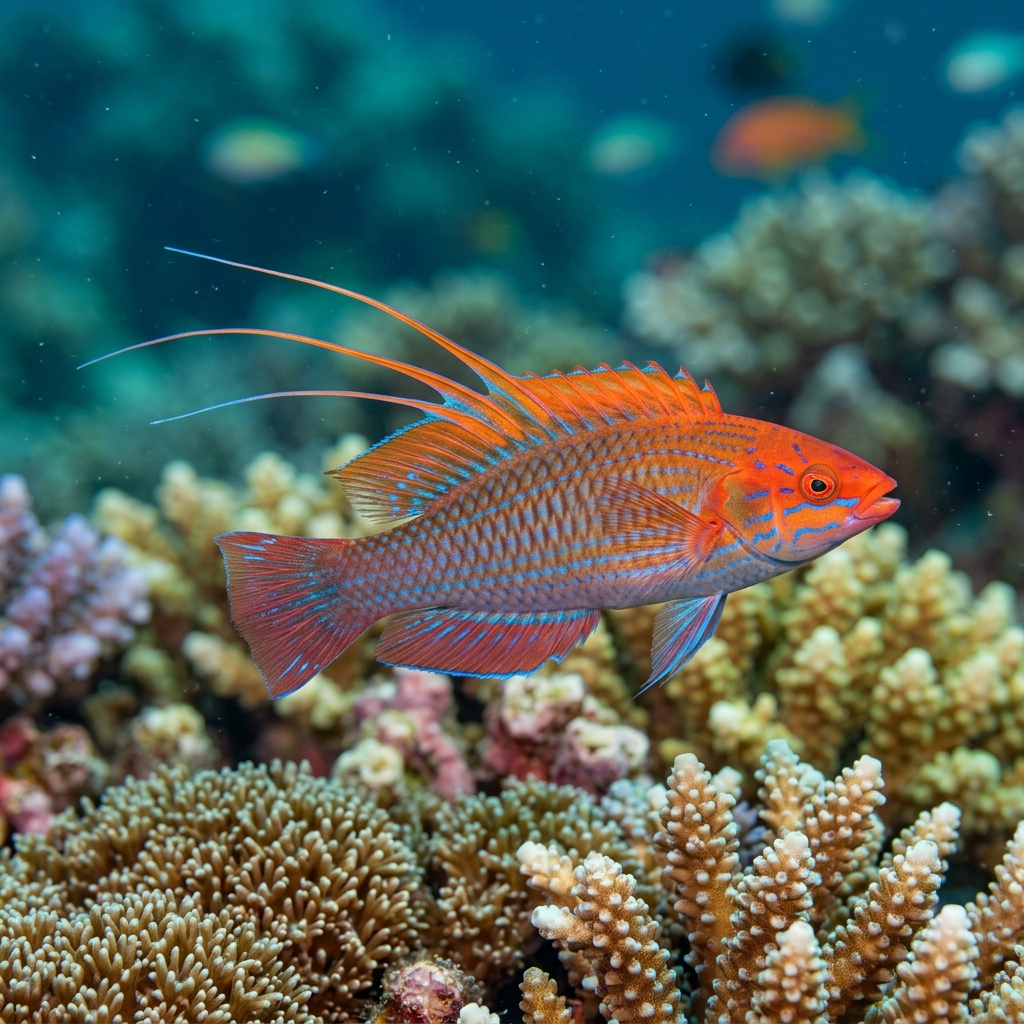
Vivid pink-to-magenta body colouration makes this small wrasse stand out on the reef, with flashes of orange and iridescent blue-green markings visible when males display. Males extend elongated dorsal and tail-fin filaments during courtship, which is often the clearest field clue. It belongs to the flasher wrasse group, whose members share a habit of brief, dazzling colour-burst displays, then retreating quickly into rubble or coral. The relatively small body size and those streamer-like fin extensions separate it from the larger wrasses sharing the reef.
Like other flasher wrasses, males perform rapid, spiralling display rises above the reef, briefly lighting up their full colours before dropping back into cover. They are shy and fast-moving, so divers who hover quietly at a distance and wait for natural activity are far more likely to catch a display than those who approach directly. Look for them over rubble slopes and mixed coral-rubble areas, typically in the mid-water column just above the substrate.
The dazzling colour displays that give flasher wrasses their name are competitive male behaviour: a male flares his fins and intensifies his colours to attract females and warn rival males, making early morning dives the best window to witness it.
There is not enough sighting data to identify a peak season, so treat it as potentially present year-round. Observed water temperatures run from around 27 to 29 °C, consistent with warm Philippine reef conditions throughout the year.
All logged sightings come from the Philippines, specifically in the Luzon and North region. If you are targeting this species, Philippine reef sites in that northern zone are your best starting point. It has not been widely recorded elsewhere, so expect a focused search rather than a casual encounter.
Mapping where Pink Flasher is logged…
All confirmed sightings are from the Philippines, in the Luzon and North region. It is a rare find even there, so dive sites in that area give you the best realistic chance of an encounter.
There is no identified peak season based on current data, so year-round diving in Philippine reef sites is the practical approach. Warm water temperatures in the 27 to 29 °C range persist across the year in this region. Early morning dives improve your odds of catching male display behaviour.
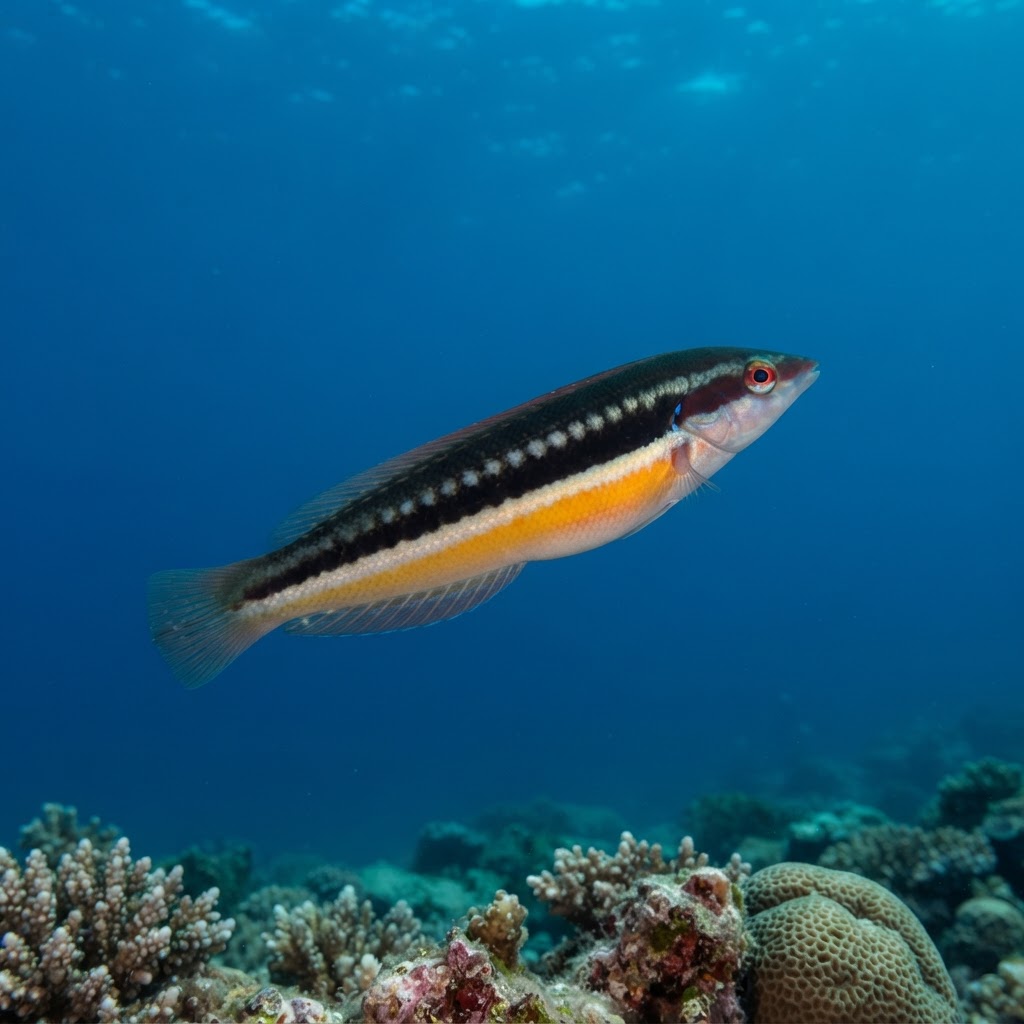
Look for a small wrasse with intense pink-to-magenta colouration and iridescent highlights. Males have distinctive elongated dorsal and caudal fin filaments and perform brief spiralling colour displays above the reef. Females are much plainer and smaller-looking, lacking the fin extensions.
The colour-burst displays are a male behaviour used to compete for females and establish dominance over rival males. A displaying male rapidly extends his fins, intensifies his colours, and spirals upward before retreating. These displays are short-lived, so patience and stillness are key to witnessing one.
Site and sighting data is aggregated from diver logs, iNaturalist and GBIF. For taxonomy and conservation status:
Bird Wrasse
3,632 sites