Argonauta spp.
An uncommon find off New South Wales and the Azores, this drifting octopus builds a paper-thin shell you won't want to miss.
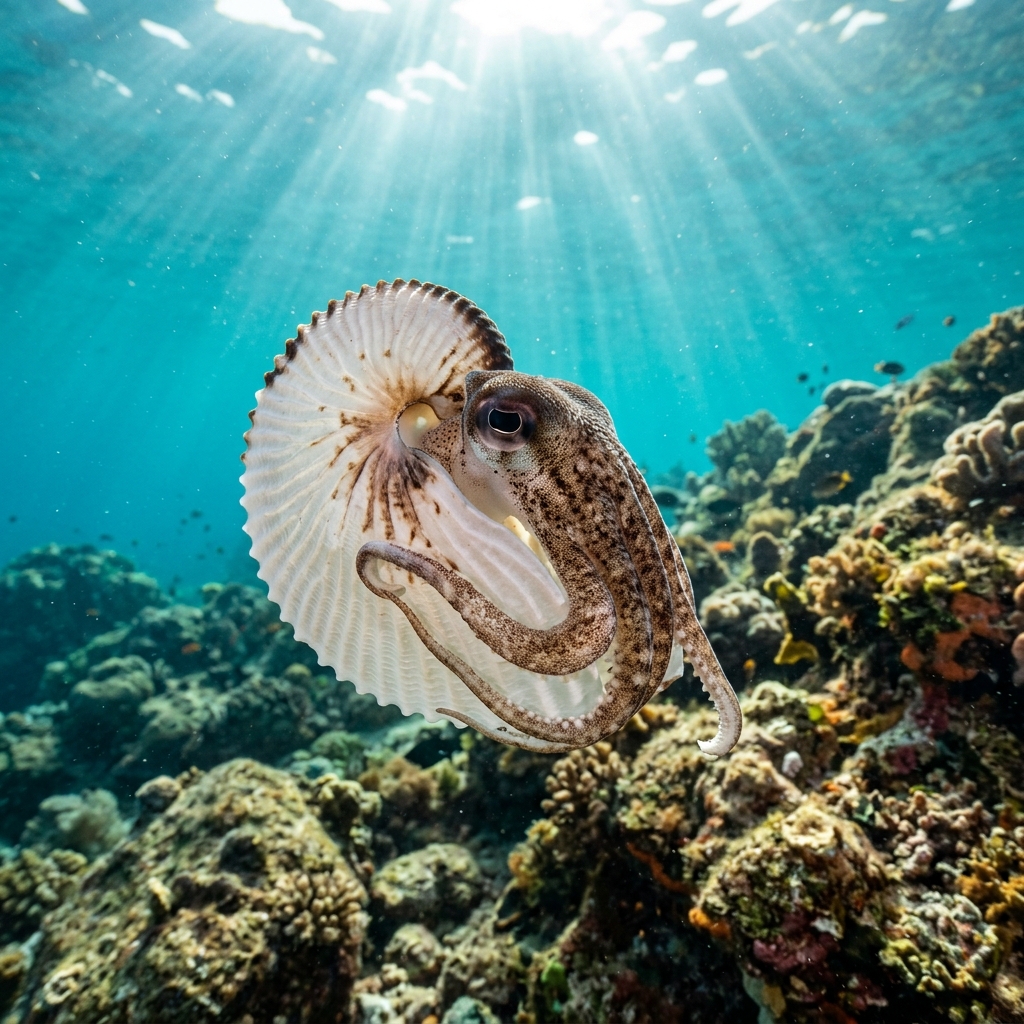
Look for a small, pale octopus drifting in open water rather than clinging to reef, often tucked partly inside a fragile, translucent, ribbed white shell that looks almost like a paper cup. Only females build and carry this shell, using it as an egg case; males are far smaller, shell-less, and rarely seen by divers. Body colour runs from milky white to mottled brown, and the whole animal is easy to miss against blue water since it rarely sits still on a reef wall.
Divers usually encounter it drifting in open water on blue-water dives rather than perched on the reef itself, sometimes near the surface where currents concentrate plankton. It tends to be slow and unbothered by divers, floating rather than jetting away, which gives a good window for a careful look before it drifts off into deeper blue. Because it favours open water over structure, sightings often happen unexpectedly during a safety stop or a dedicated blackwater or drift dive rather than on a typical reef circuit.
The female's shell isn't a true mollusc shell at all; she secretes it herself from her arms purely to house her eggs and shelter her own soft body, making her one of the only octopuses known to build a protective structure rather than simply hide in one.
Sightings don't show a clear seasonal pattern, and with a temperature comfort range of roughly 16.4 to 25.1 C it can turn up across a wide span of the year in both temperate and warmer waters. Treat any encounter as an uncommon, luck-based bonus rather than a targetable season.
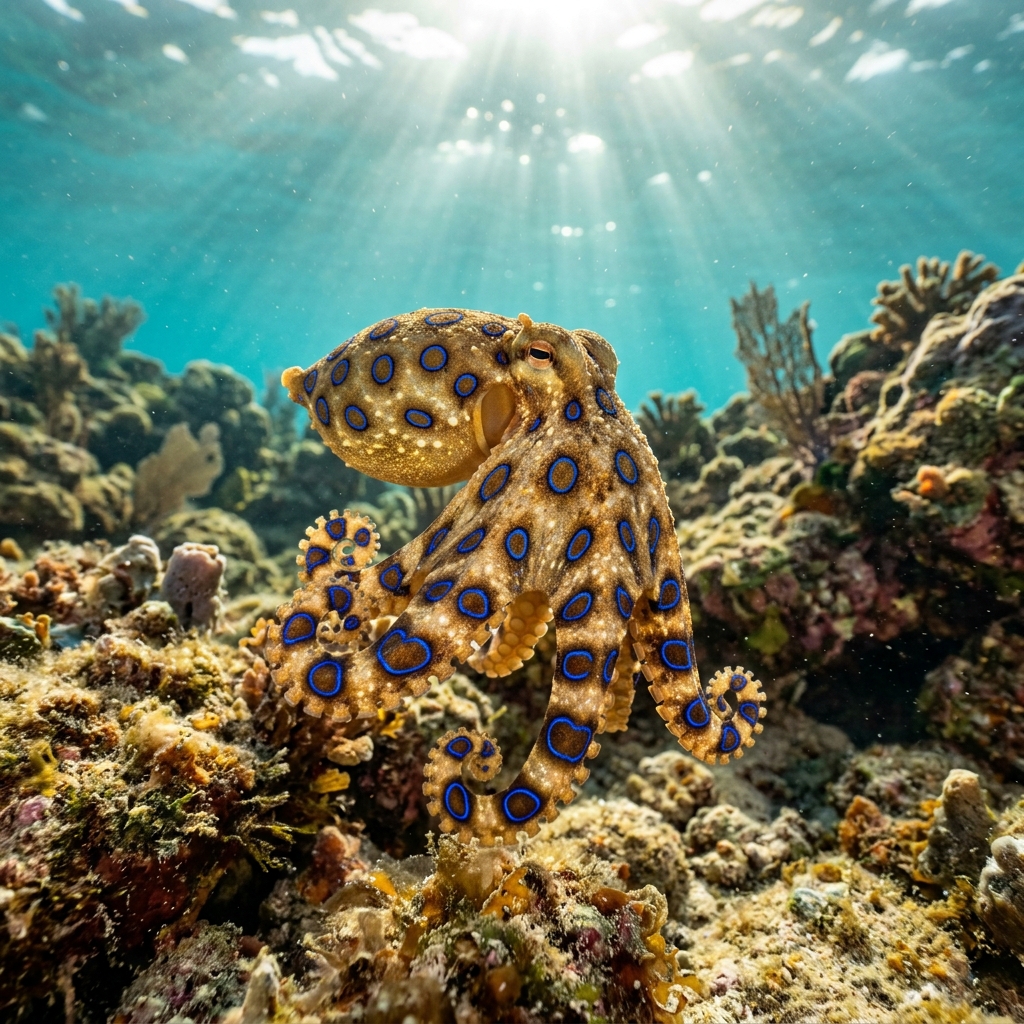
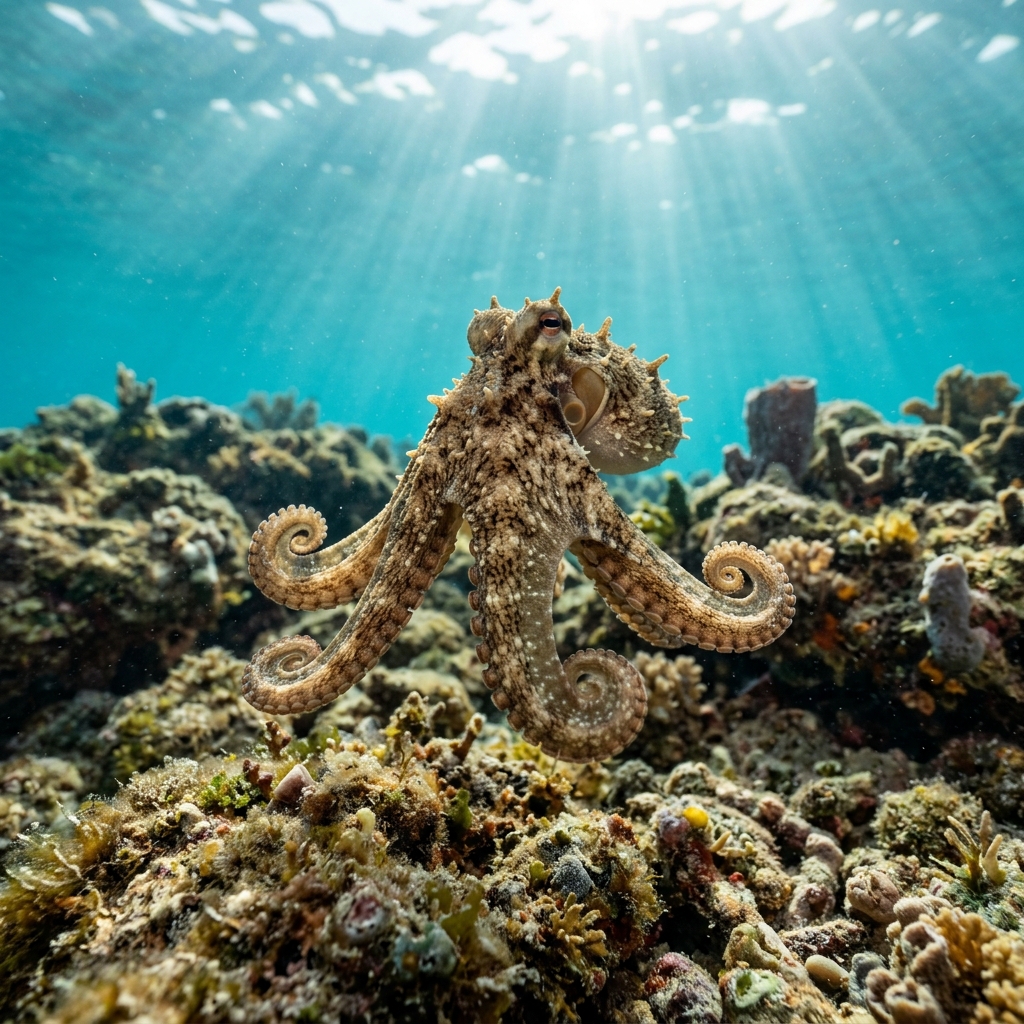
Reef neighbours a diver could mistake it for. Use the identification notes above to tell them apart.
Australia is the strongest bet by far, with sightings concentrated in New South Wales and Queensland, particularly around blue-water and drift-style dives rather than fixed reef. Outside Australia, it turns up as a rarer but real find in the Azores, especially around Faial and Sao Jorge, and in the Philippines, notably Luzon.
Mapping where Paper Nautilus is logged…
The most reliable region is Australia, particularly New South Wales and Queensland, usually on blue-water or drift dives rather than reef dives. It's also been logged in the Azores around Faial and Sao Jorge, and in the Philippines around Luzon.
There's no clear season in the sighting data, so treat it as a year-round possibility rather than a seasonal target. Its comfort range spans roughly 16.4 to 25.1 C, wide enough to appear in both cooler Azorean waters and warmer Australian and Philippine seas.
Look for a small, pale octopus in open water rather than on the reef, often paired with a thin, ribbed, translucent white shell in females. It drifts slowly and tends not to flee immediately, giving divers a brief but real look.
Exact size data isn't confirmed here, but females are notably larger than males across the group, since only females grow the shell that houses their eggs. Males remain tiny and are rarely encountered by divers.
Only the female builds a delicate, self-secreted shell used purely as an egg case, not as a hiding place, making this genus one of the few octopus groups that constructs its own protective structure rather than borrowing one.
No, they pose no danger to divers. They're small, slow-moving, and encountered drifting in open water rather than displaying any defensive or aggressive behaviour.
Site and sighting data is aggregated from diver logs, iNaturalist and GBIF. For taxonomy and conservation status:
Brazilian Reef Octopus
1,142 sites