Bathygobius ramosus
A speckled 14cm goby hugging rocks in Baja California and Costa Rica's Central Pacific, in water from 19.5 to 29C, year-round.
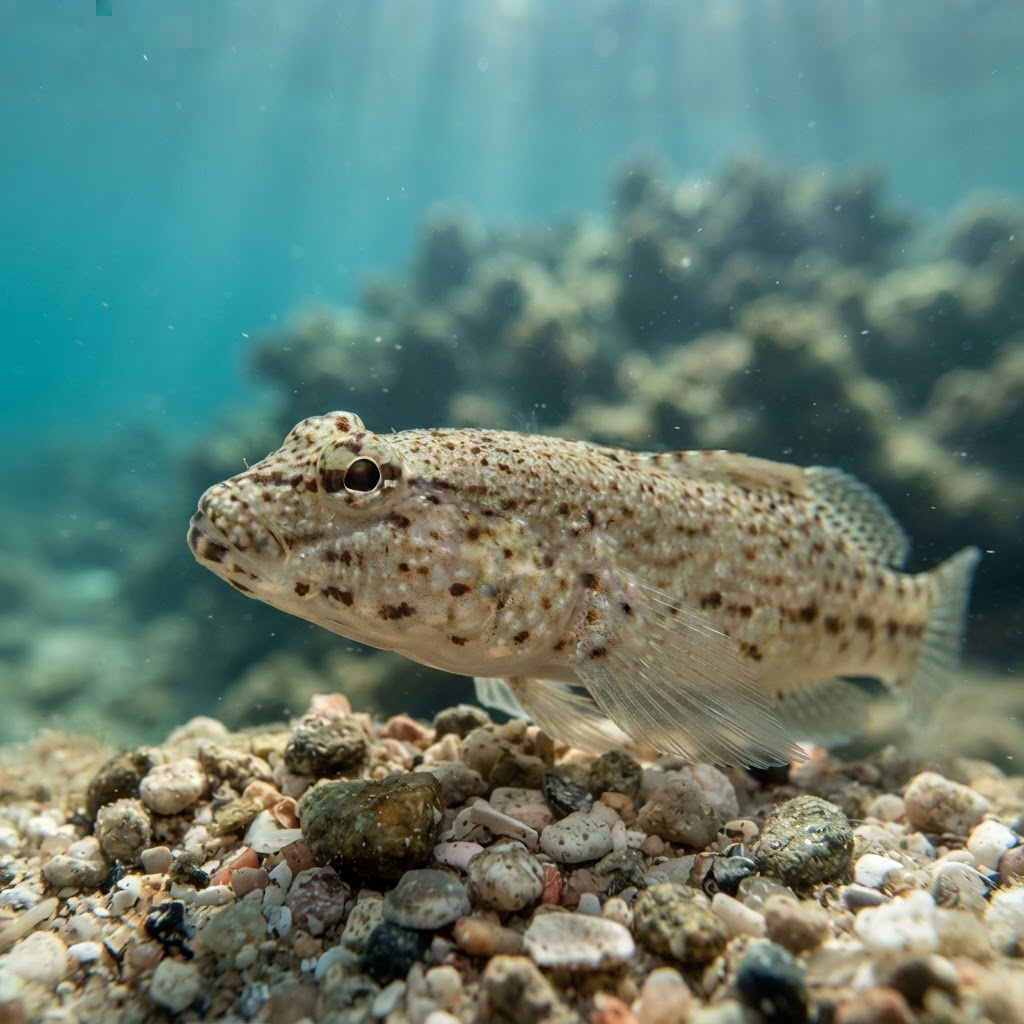
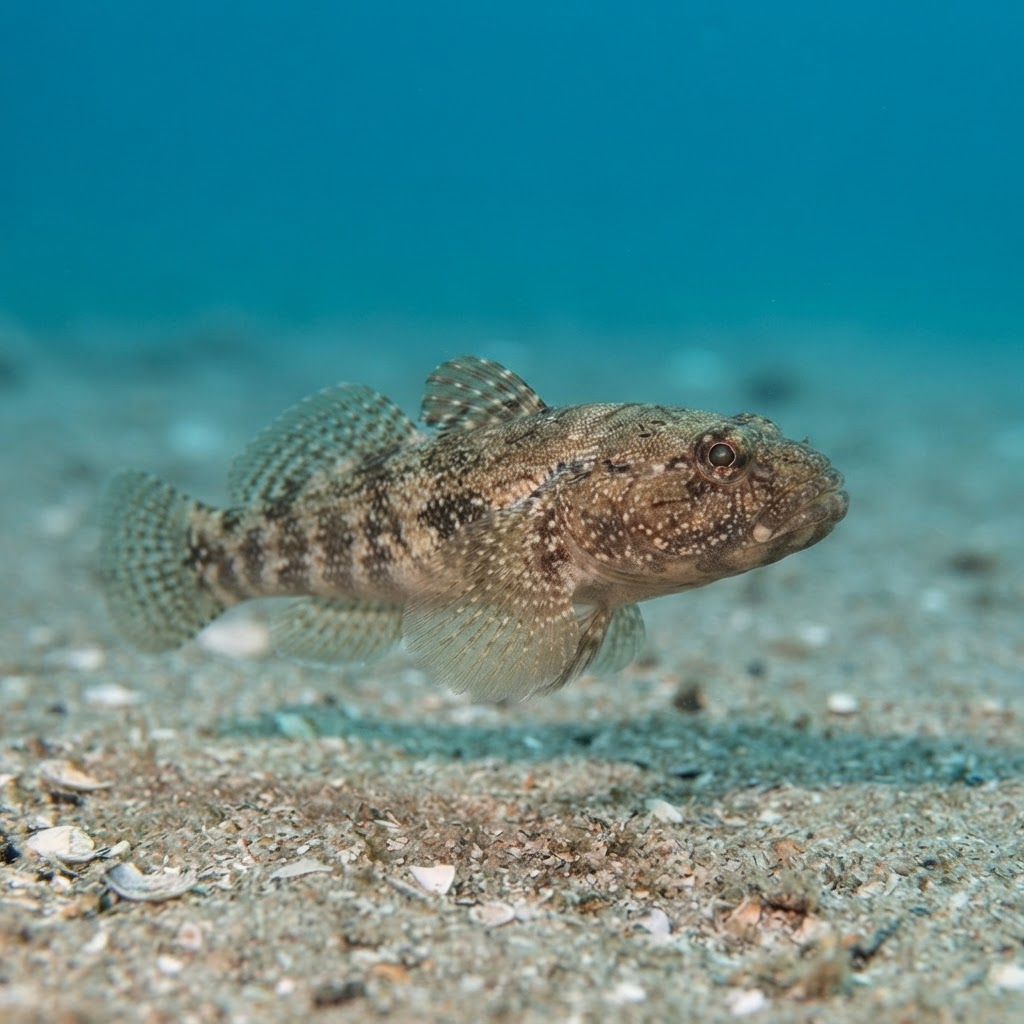
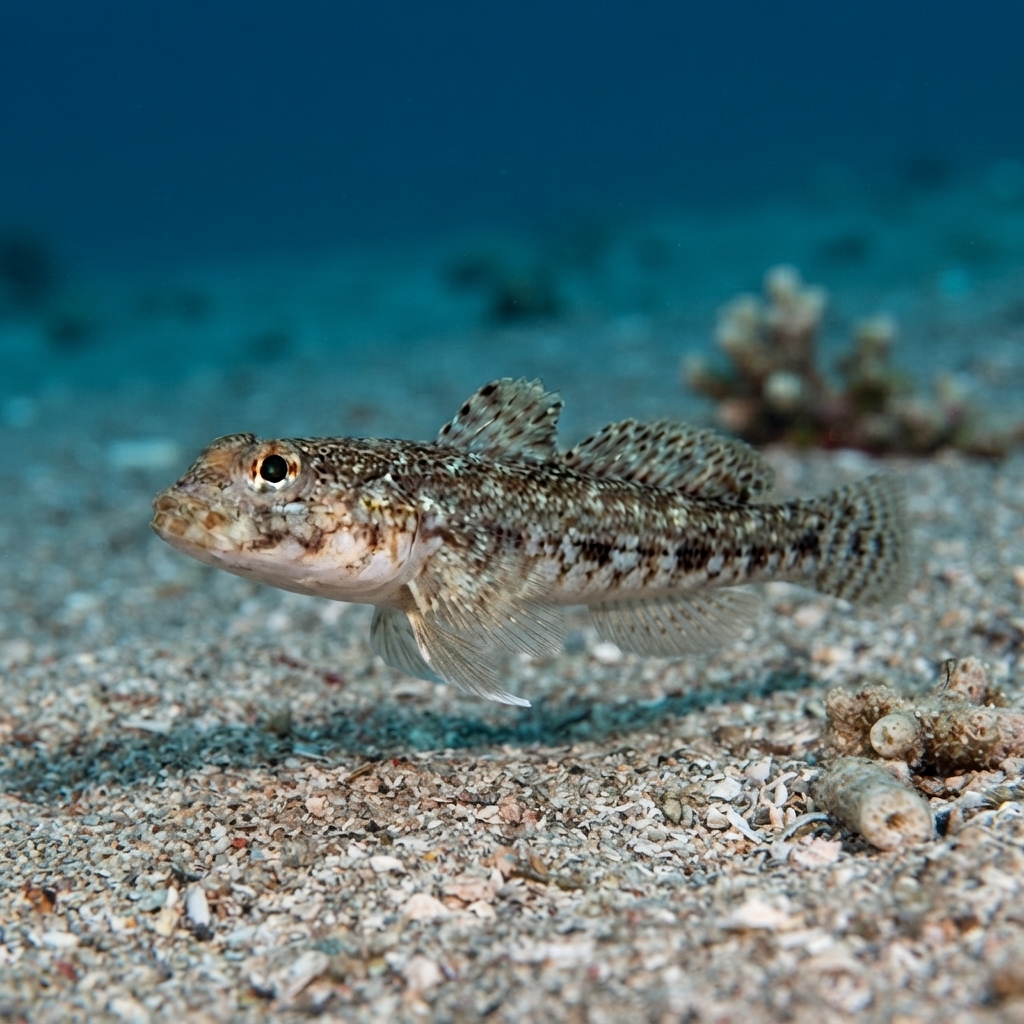
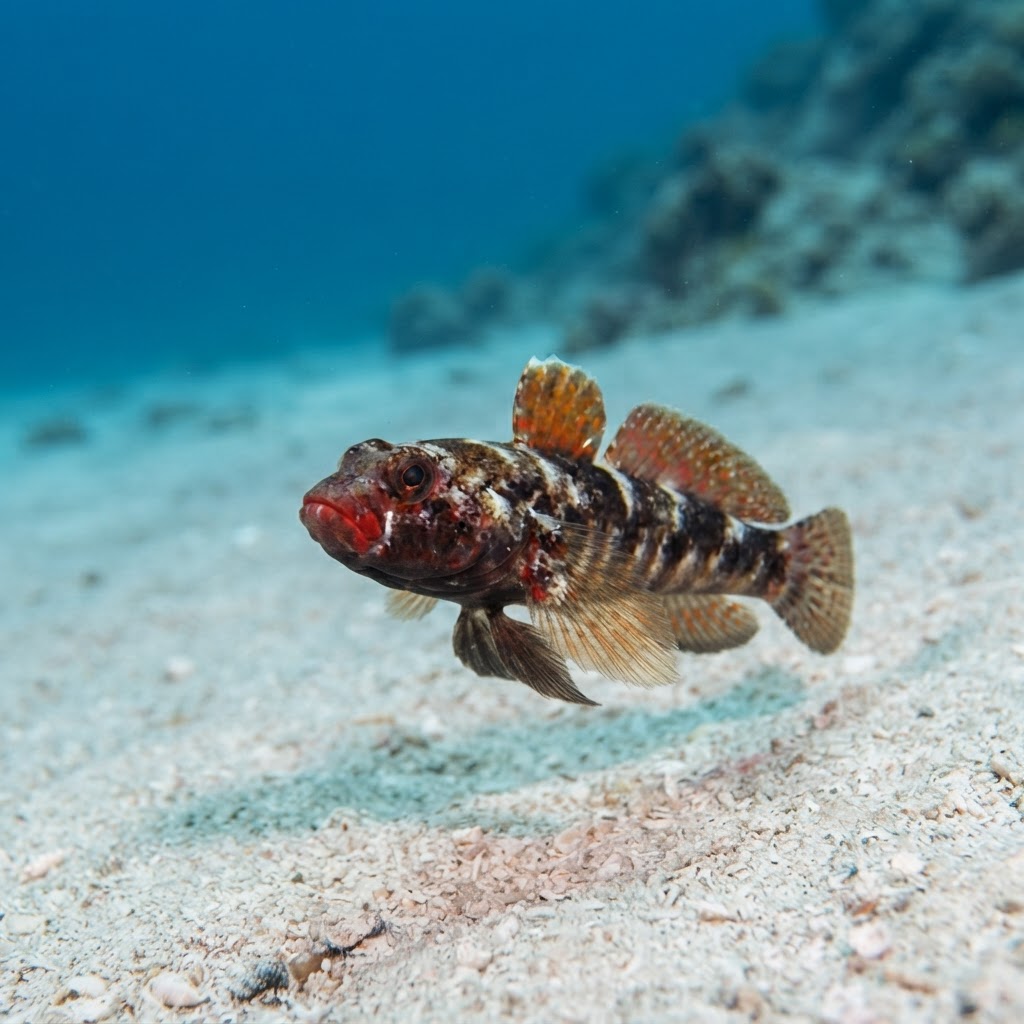
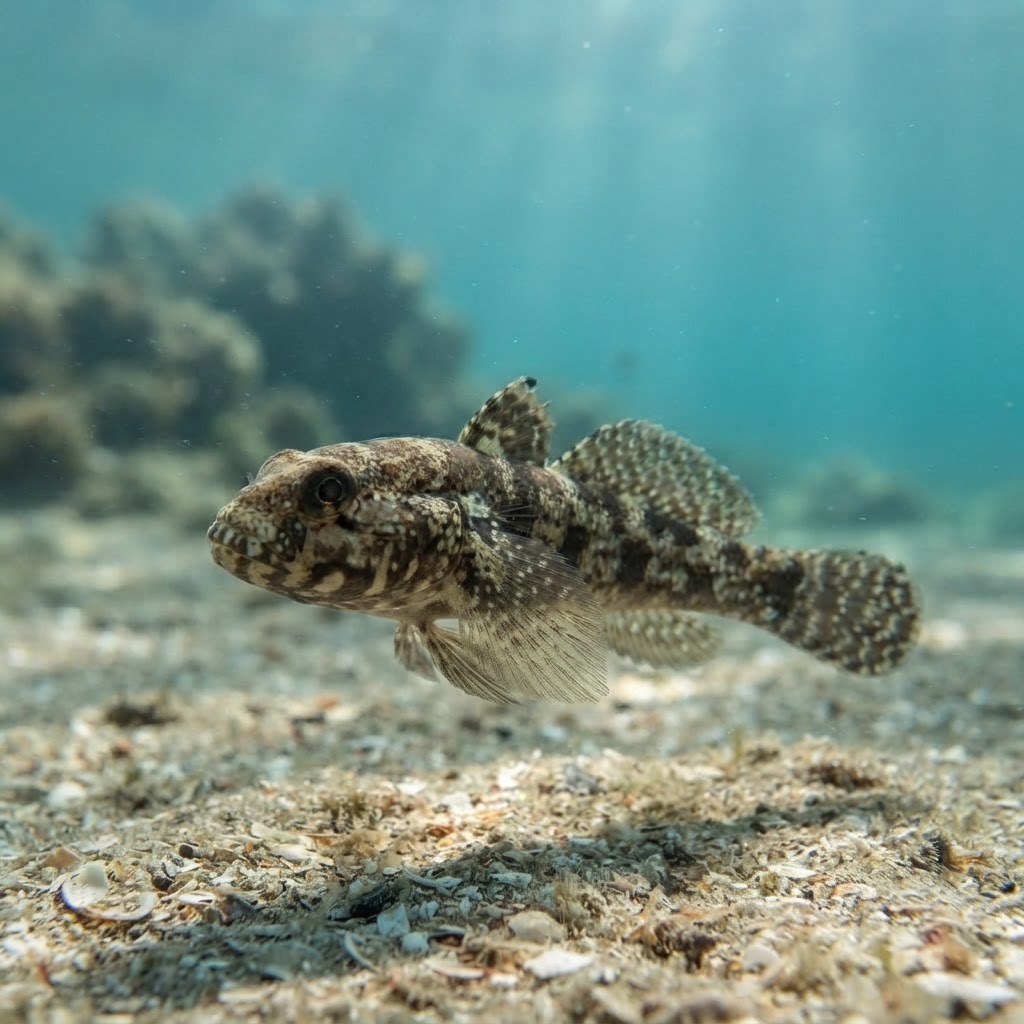
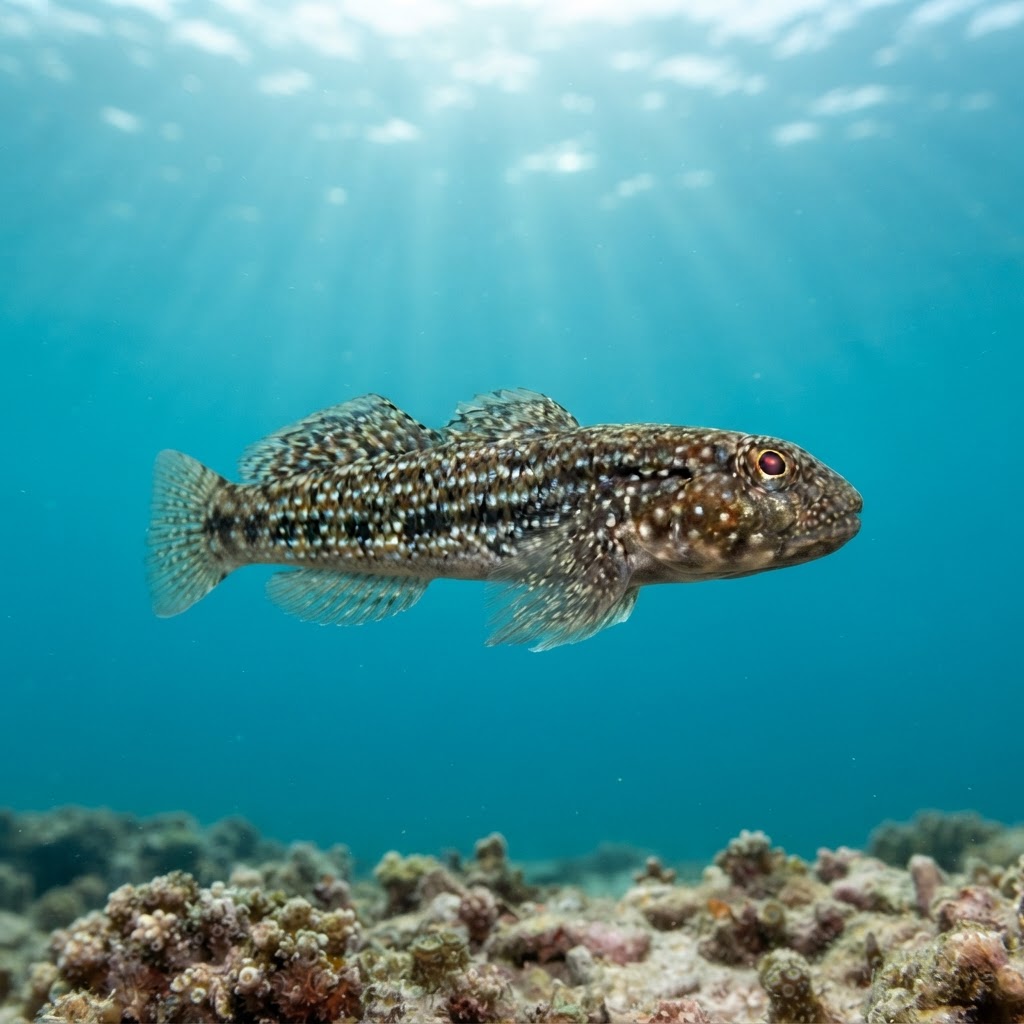
Small and mottled, rarely more than 14 cm, with a brownish-grey body covered in dark speckles and blotches that break up its outline against rock. It has the classic goby shape: a blunt head, large eyes set high, and pelvic fins fused into a small sucker disc that lets it perch motionless on rock rather than swim in the open. Look for it sitting propped on a ledge or wedged in a crevice rather than cruising midwater.
Expect to find it parked still on a rock ledge or tucked into a crevice rather than actively swimming, using that sucker-disc fin to hold position even in surge. It's logged as rare to uncommon almost everywhere it turns up, so divers tend to spot one or two individuals per dive rather than groups, usually while scanning rocky bottom and reef rubble at close range.
Like other gobies in the genus Bathygobius, it relies on camouflage and stillness rather than flight, only darting a short distance to the next crevice when directly disturbed.
No clear seasonal pattern shows up in the sighting data, and its temperature niche of roughly 19.5 to 28.9C spans both cooler upwelling months and warmer summer conditions, so it's a fair year-round find at these sites.
Most consistently logged along Mexico's Baja California and Pacific Coast regions, with a second strong cluster in Costa Rica's Central Pacific and a smaller showing in Guanacaste. Sites in these two countries account for nearly all logged sightings, making Mexico's Pacific side the more reliable bet.
Mapping where Panamic Frillfin is logged…
It's most often reported from Baja California and the Pacific Coast of Mexico, plus Costa Rica's Central Pacific region. Both countries together make up nearly every logged sighting, so rocky Pacific-facing dive sites are your best shot.
There's no detected seasonal pattern, and it tolerates water from about 19.5 to 28.9C, so it turns up year-round at the sites where divers already find it.
Look for a small, speckled brown-grey goby around 14 cm long, sitting still on rock rather than swimming freely. Its mottled pattern and habit of perching on a fused fin disc are the main giveaways underwater.
They top out around 14 cm, making them one of the smaller reef fish you're likely to notice, and usually only when you're looking closely at rock surfaces.
No. They're small, sedentary, and pose no threat to divers, simply retreating into a crevice if approached too closely.
At most sites where it's been recorded, divers log it as rare, with a smaller number of sites rating it uncommon. It's not a fish you'll see in numbers, but patient scanning of rocky bottoms in Baja California or Costa Rica's Central Pacific can turn one up.
Site and sighting data is aggregated from diver logs, iNaturalist and GBIF. For taxonomy and conservation status:
Slender Goby
806 sites