Chromis xanthura
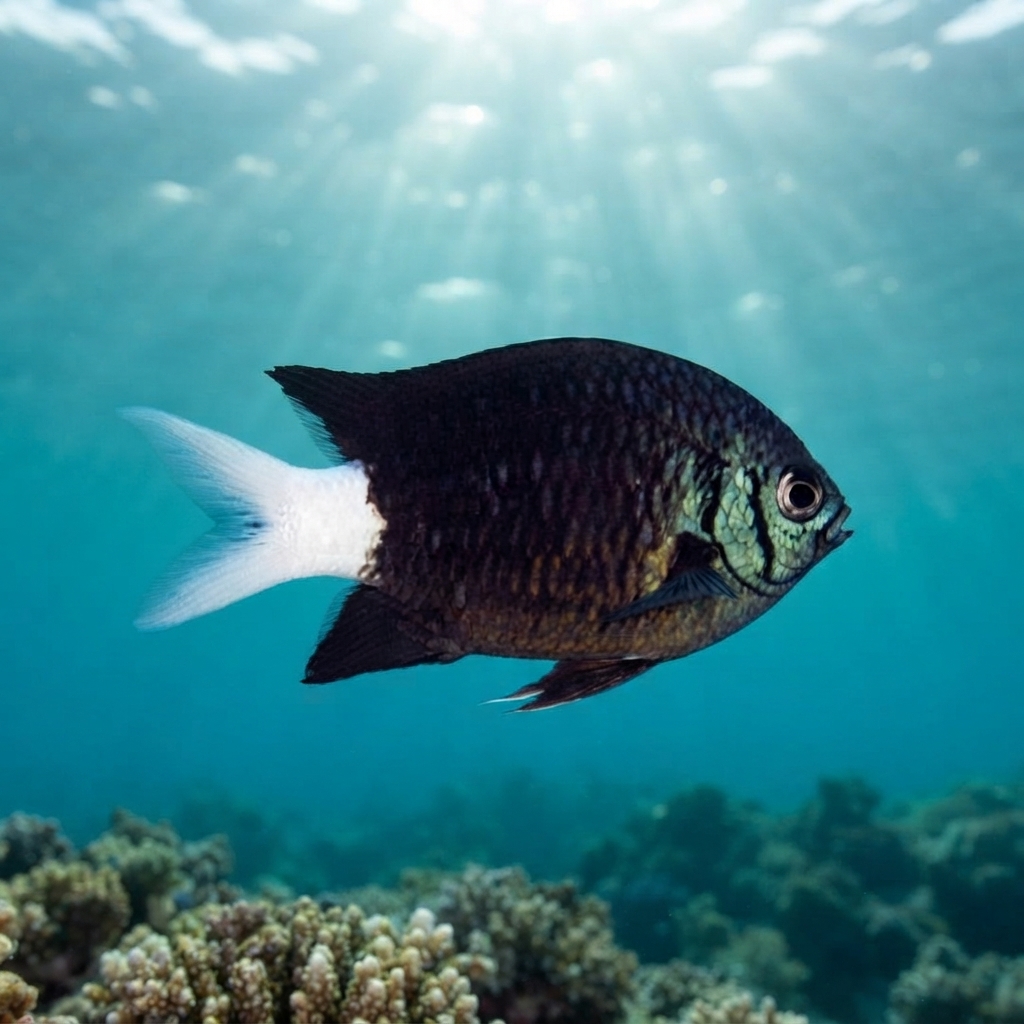
Small blue-grey damselfish with a pale tail, most reliably logged around Raja Ampat and Bali reefs in 25-29C water.
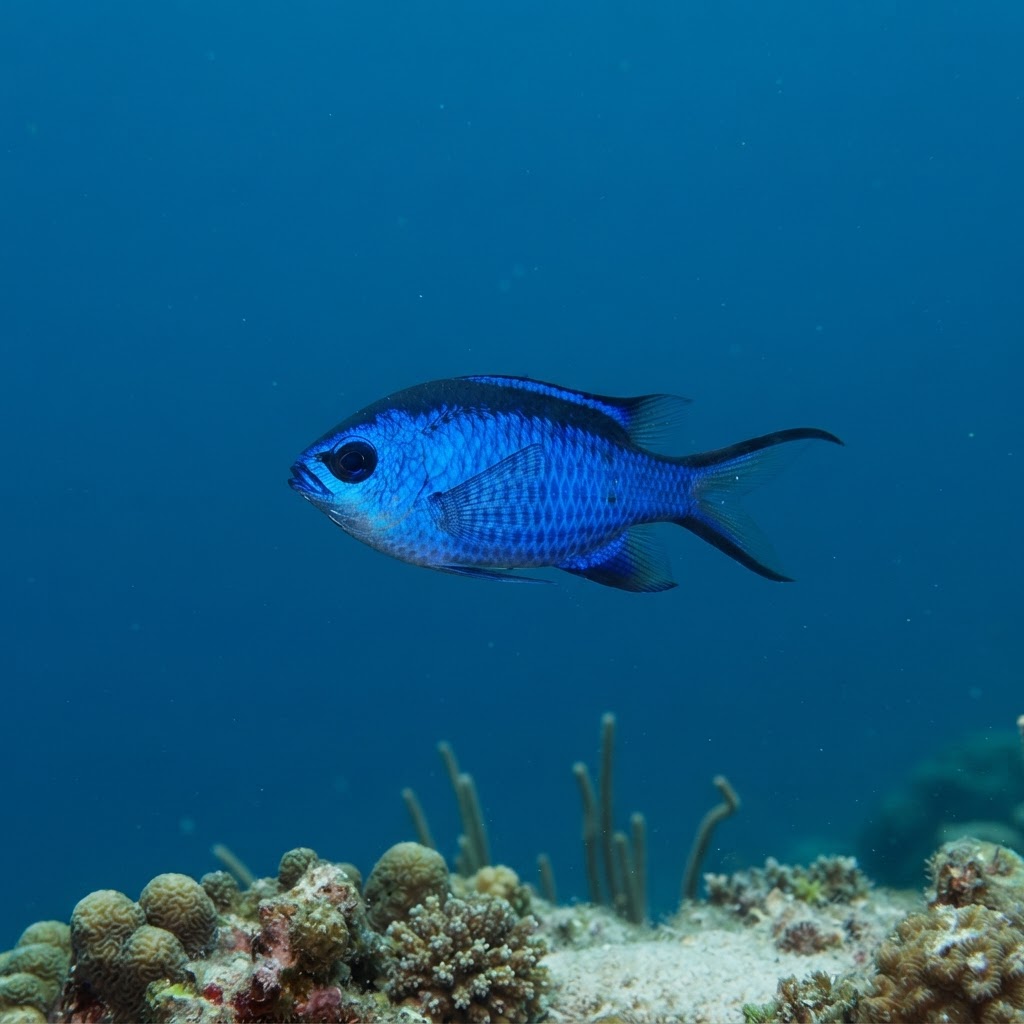
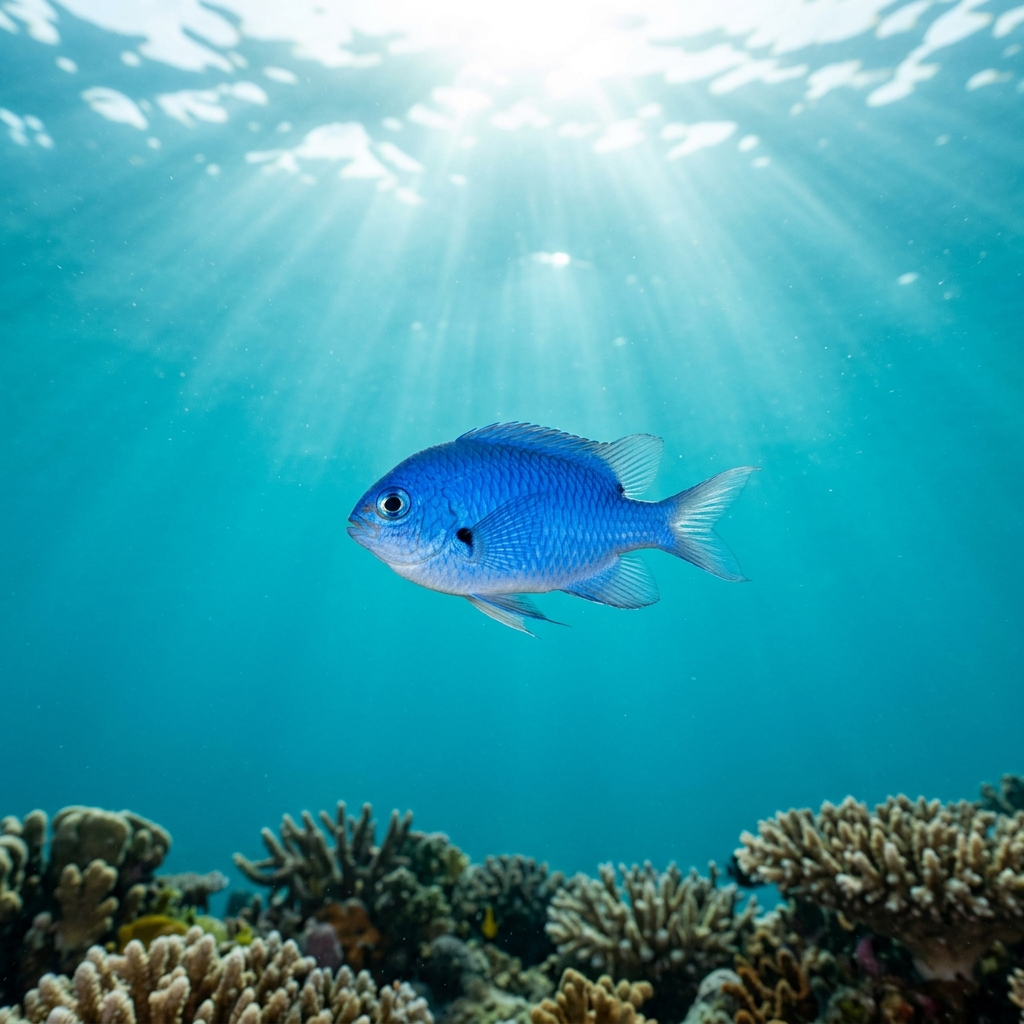
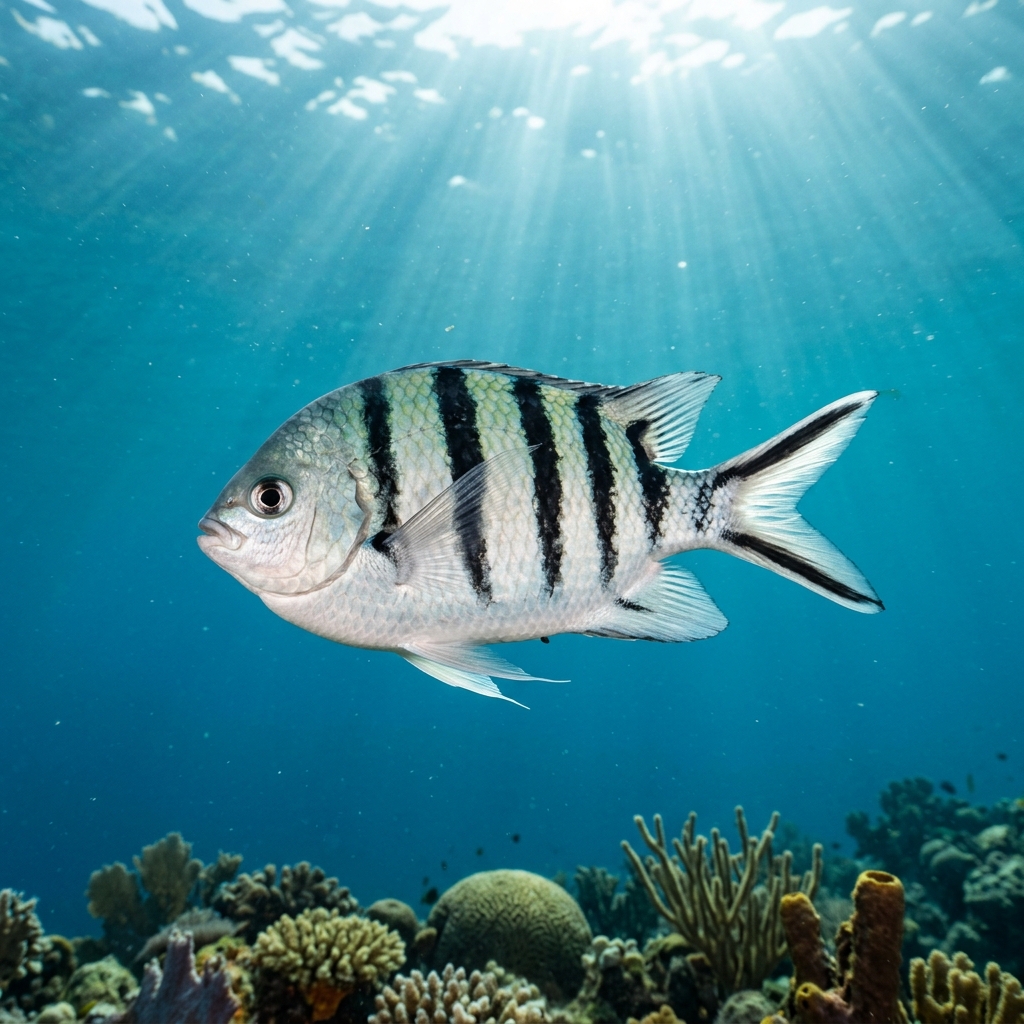
Small, deep-bodied damselfish around 12 cm, with a dusky blue-grey to charcoal body that fades sharply into a pale, almost translucent tail, giving the species its name. The tail fork is the quickest cue underwater, especially when a loose group hovers over a coral head and catches the light differently front to back. Body shape is the classic damselfish oval, slightly compressed, with a small mouth and a single continuous dorsal fin.
Typically seen hovering in loose aggregations just above coral heads or along reef slopes, picking plankton out of the water column rather than feeding off the substrate. It keeps a modest distance from divers but doesn't bolt for cover the way more skittish damselfish do, so a calm approach usually gets you a decent look. Most sightings are on daytime dives over structure with some current, where plankton-feeding damselfish tend to concentrate.
Like most Chromis, it feeds by picking zooplankton straight out of mid-water, which is why you'll often spot loose clouds of them stationed just off the reef rather than tucked into it.
No clear seasonal pattern shows up in the sightings, and the water it's found in ranges a comfortable 24.7 to 28.9C, so it's a year-round reef resident wherever it occurs rather than a seasonal visitor.
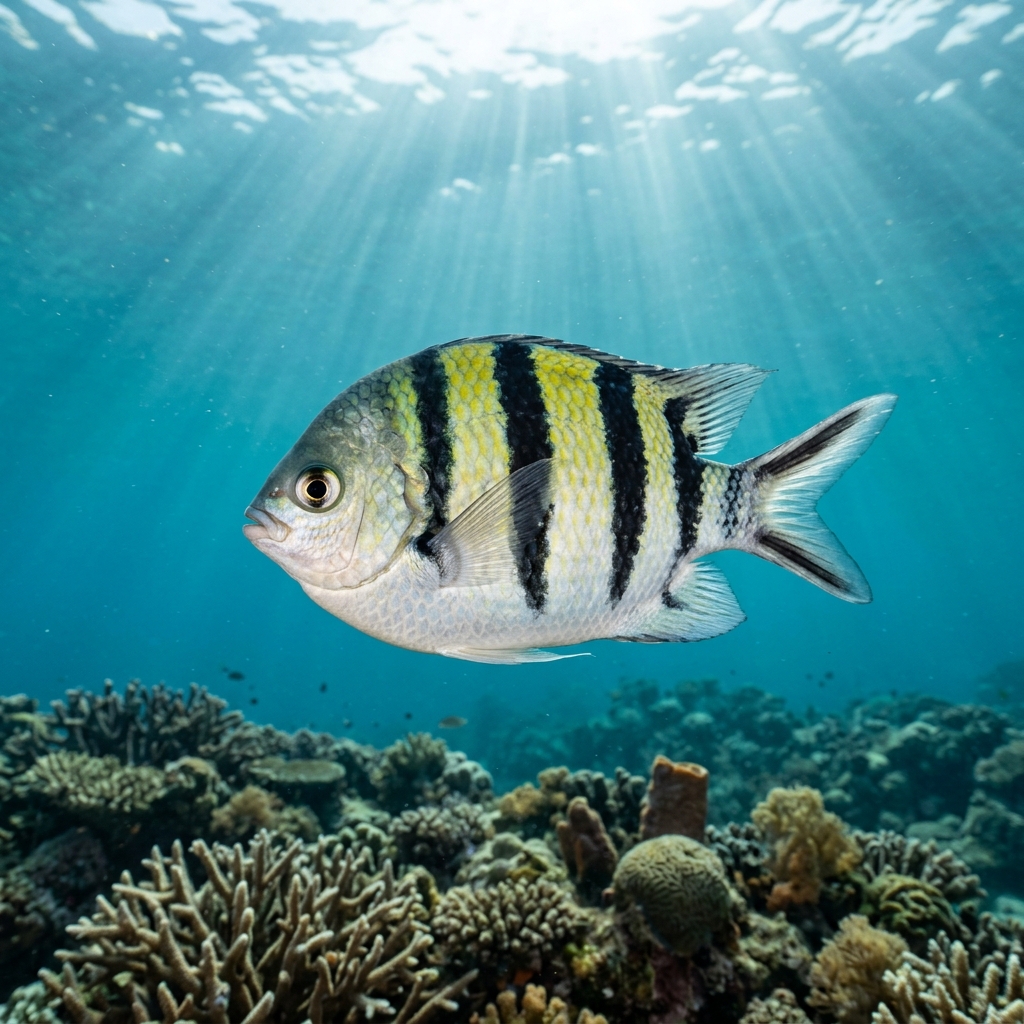
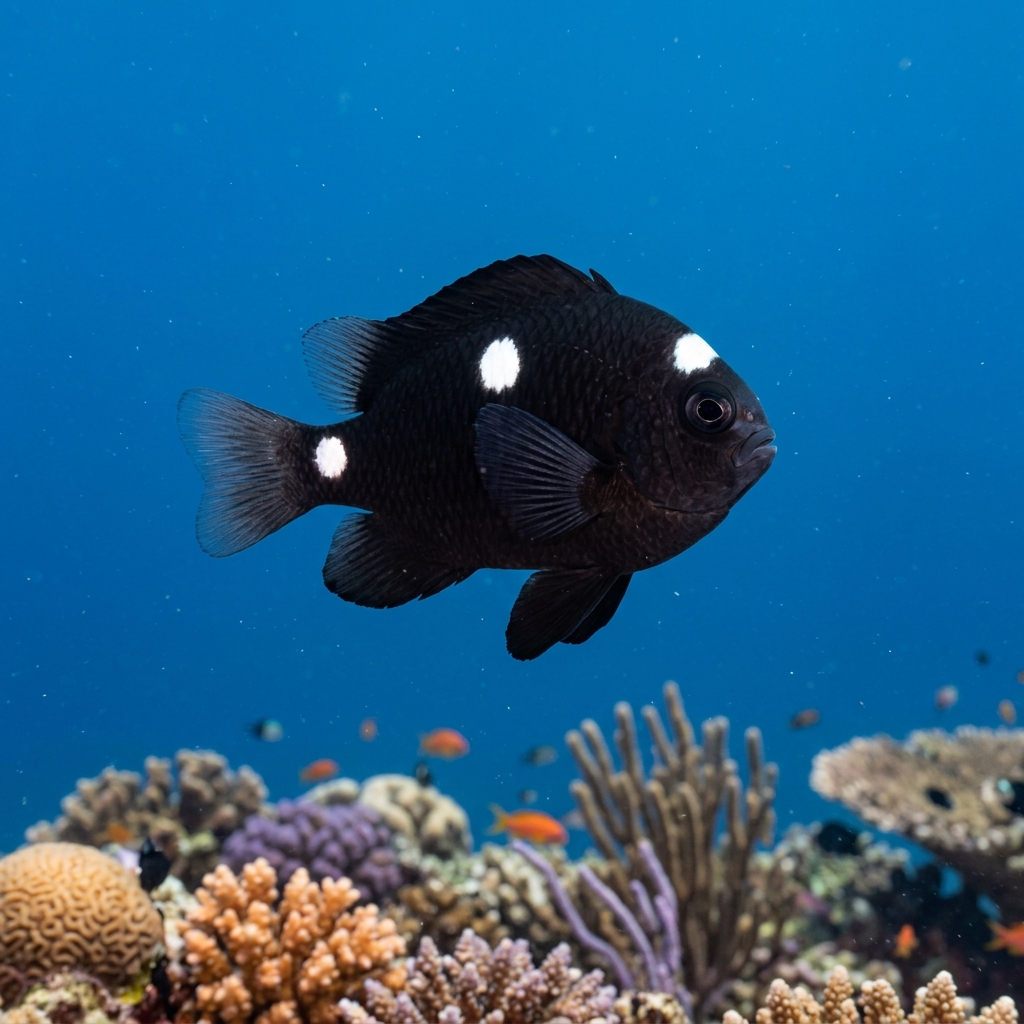
Reef neighbours a diver could mistake it for. Use the identification notes above to tell them apart.
Most reliably logged in Indonesia, with sites spread across Raja Ampat and Bali, and also turns up around Nouméa in New Caledonia and in Fiji's Lomaiviti region. Across all these sites divers rate it an uncommon find rather than a guaranteed one, so it rewards a slower look at coral heads and reef slopes rather than open water.
Mapping where Pale-tail Chromis is logged…
Best chances are in Indonesia, particularly Raja Ampat and Bali, with additional sightings around Nouméa in New Caledonia and Fiji's Lomaiviti region.
There's no strong season in the data, and it favours reef water between roughly 25 and 29C, so it can turn up on any dive across the year.
Look for a small, blue-grey damselfish around 12 cm with a noticeably pale, almost see-through tail that contrasts with its darker body, usually hovering in a loose group over coral.
They max out around 12 cm, putting them firmly in the small-damselfish category you'd expect to see in groups rather than alone.
No, they're harmless plankton feeders with no risk to divers and no reason to keep a distance beyond normal reef etiquette.
They feed by picking zooplankton directly from the water column, which is why you'll spot them stationed in loose clusters just above the reef rather than grazing on it.
Site and sighting data is aggregated from diver logs, iNaturalist and GBIF. For taxonomy and conservation status:
Dascyllus
3,697 sites