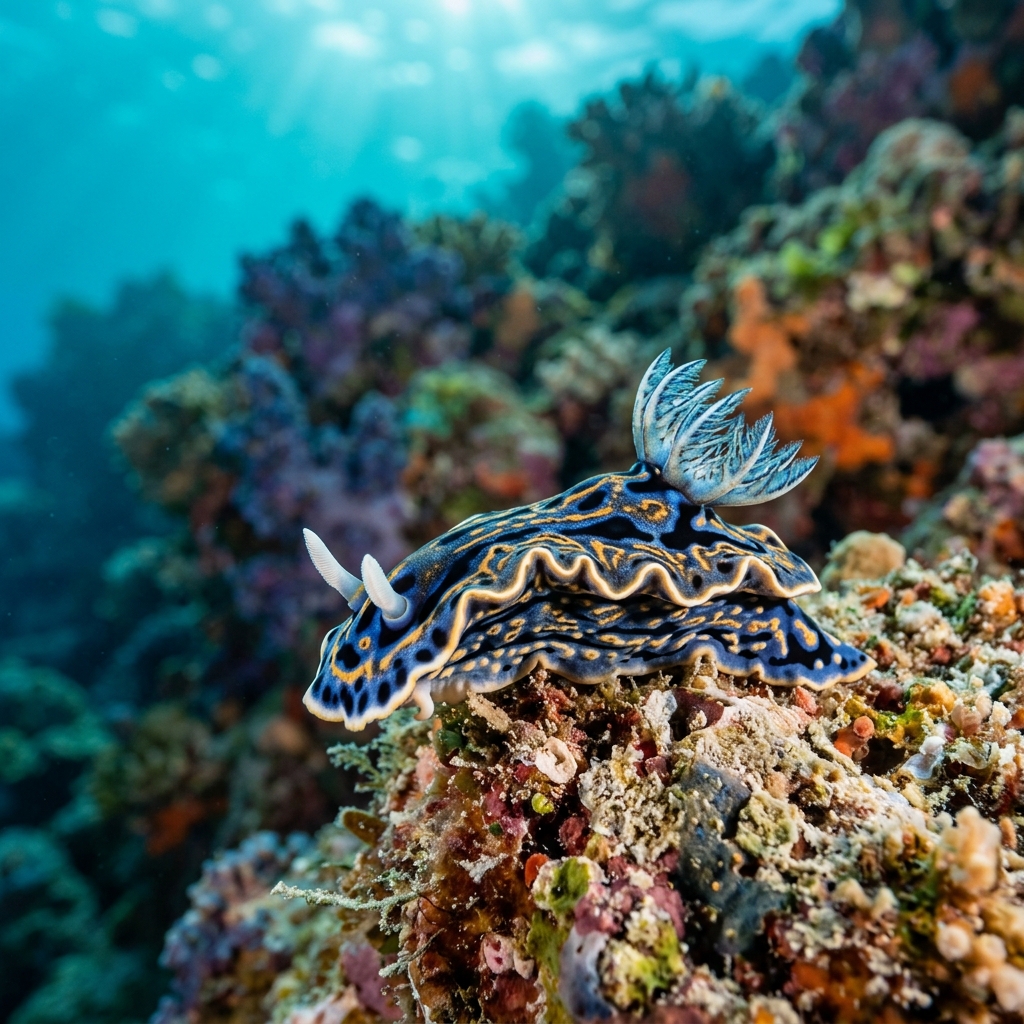
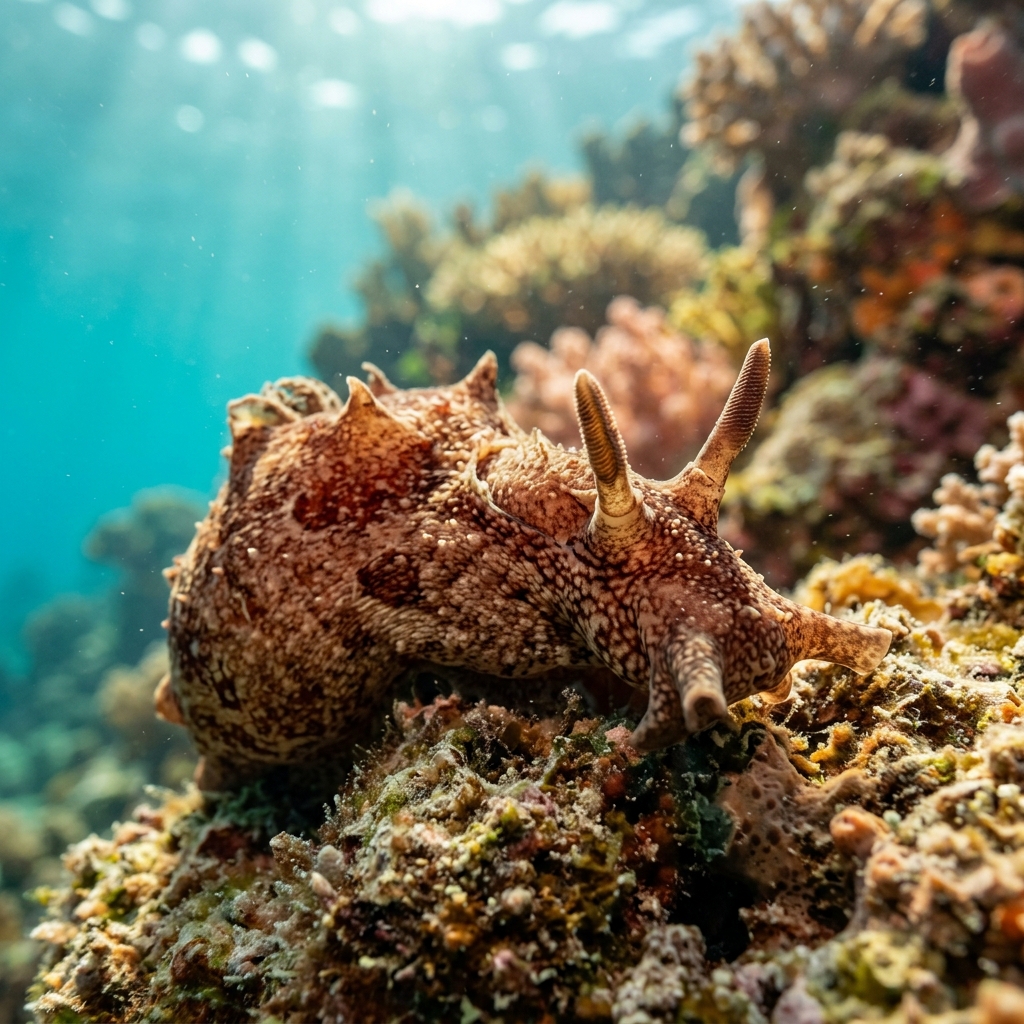
Phyllidia picta
A warty, white-and-black nudibranch of Indo-Pacific reefs, most reliably spotted around the Visayas and Sulawesi in 24-30C water.
Small, elongated body covered in raised bumps (tubercles) arranged in an irregular black-and-white pattern down the back, with a pale underside and rhinophores (the paired sensory horns) poking up at the front. Look for the leathery, almost warty texture of the mantle rather than the smooth gill-plumed look of most other nudibranchs. It moves slowly and stays close to the substrate, so size in the water reads modest, easy to miss unless you are scanning rubble and sponge-covered rock closely.
Found crawling slowly over reef rubble, sponge-encrusted rock, and low-relief benthic ground, usually during the day when divers are out looking. It shows no real reaction to divers, no darting or hiding, since it relies on its unappetising chemical defences rather than flight. Most sightings come from divers running a slow macro pass over reef substrate rather than mid-water spotting.
Like other Phyllidiidae, it carries no external gills, breathing instead through its skin and secreting distasteful chemical compounds through the mantle, which is why it can sit exposed on open reef in daylight without predators bothering it.
No clear seasonal pattern shows up in the data, and it sits comfortably in water from about 23.6 to 29.5C, so it turns up year-round on tropical Indo-Pacific reefs.
Reef neighbours a diver could mistake it for. Use the identification notes above to tell them apart.
Most commonly logged across the Philippines, especially the Visayas, Luzon, and Palawan, with strong numbers also coming out of Sulawesi in Indonesia and Queensland in Australia. Divers in Malaysia (Peninsular Malaysia's east coast), Japan's Okinawa and Ryukyu Islands, Thailand, Vietnam, and Micronesia also log it regularly, making it a broad Indo-Pacific reef find rather than a regional specialty.
Mapping where Painted Phyllidia is logged…
It is most reliably logged in the Philippines, particularly the Visayas, Luzon, and Palawan, and also turns up strongly in Sulawesi, Indonesia, and Queensland, Australia. Malaysia, Japan's Ryukyu Islands, Thailand, and Vietnam are other solid spots.
There is no strong seasonal pattern in sightings, and it tolerates a wide tropical range of roughly 23.6 to 29.5C, so it can be found on Indo-Pacific reefs at any time of year.
Look for a small, warty-textured body with an irregular black-and-white pattern along the back and a pale belly, moving slowly over rubble or sponge-covered reef. Its bumpy, leathery mantle sets it apart from smoother, brightly gilled nudibranchs.
No, it poses no threat to divers. Its chemical defences are aimed at predators, not humans, so it is entirely safe to observe and photograph at close range.
It belongs to the family Phyllidiidae, which breathes through the skin rather than through exposed gill plumes on the back, a key reason its body looks warty and solid rather than feathery.
Site and sighting data is aggregated from diver logs, iNaturalist and GBIF. For taxonomy and conservation status:
Light-spotted Aegires
3,168 sites