Pomatoschistus pictus
A 4cm reef sprite most often found in Brittany and Northern Ireland, in cool water 8-15C, year-round if you know where to look on the sand.
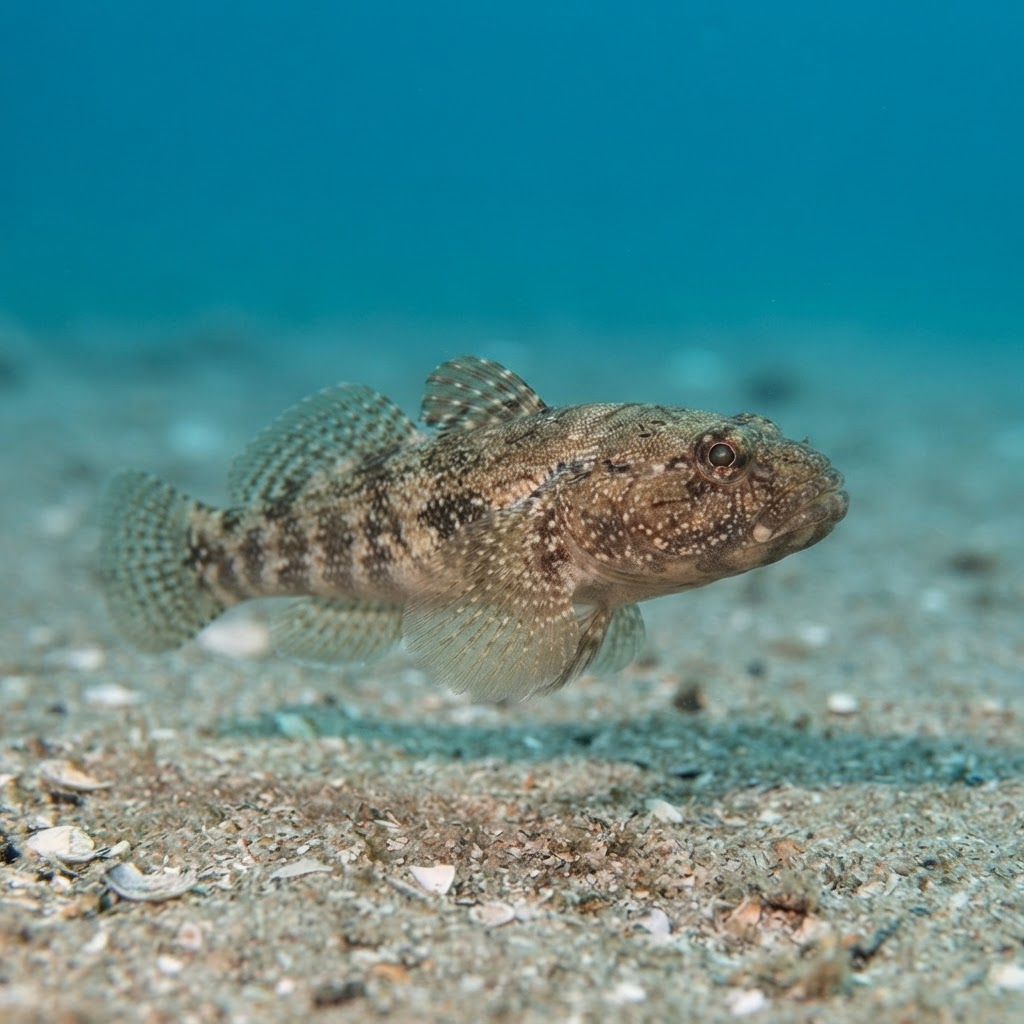
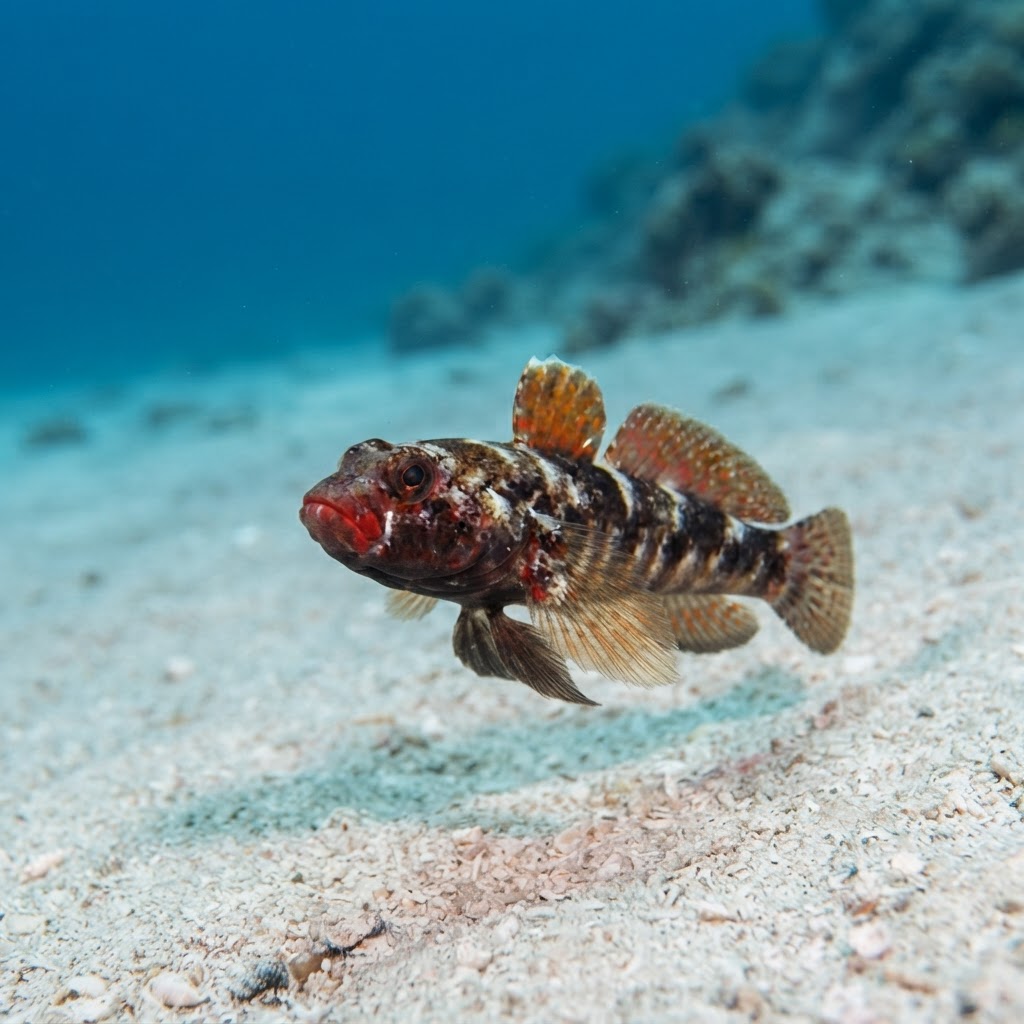
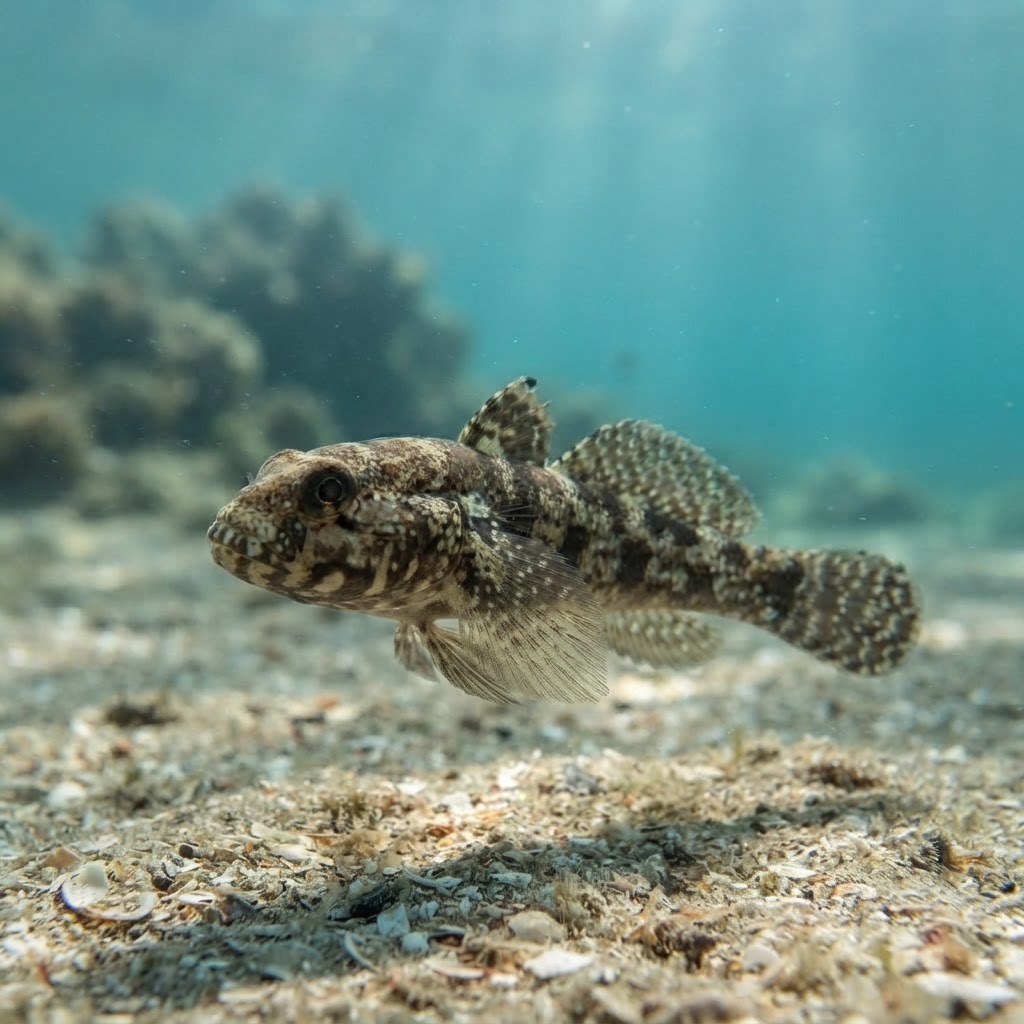
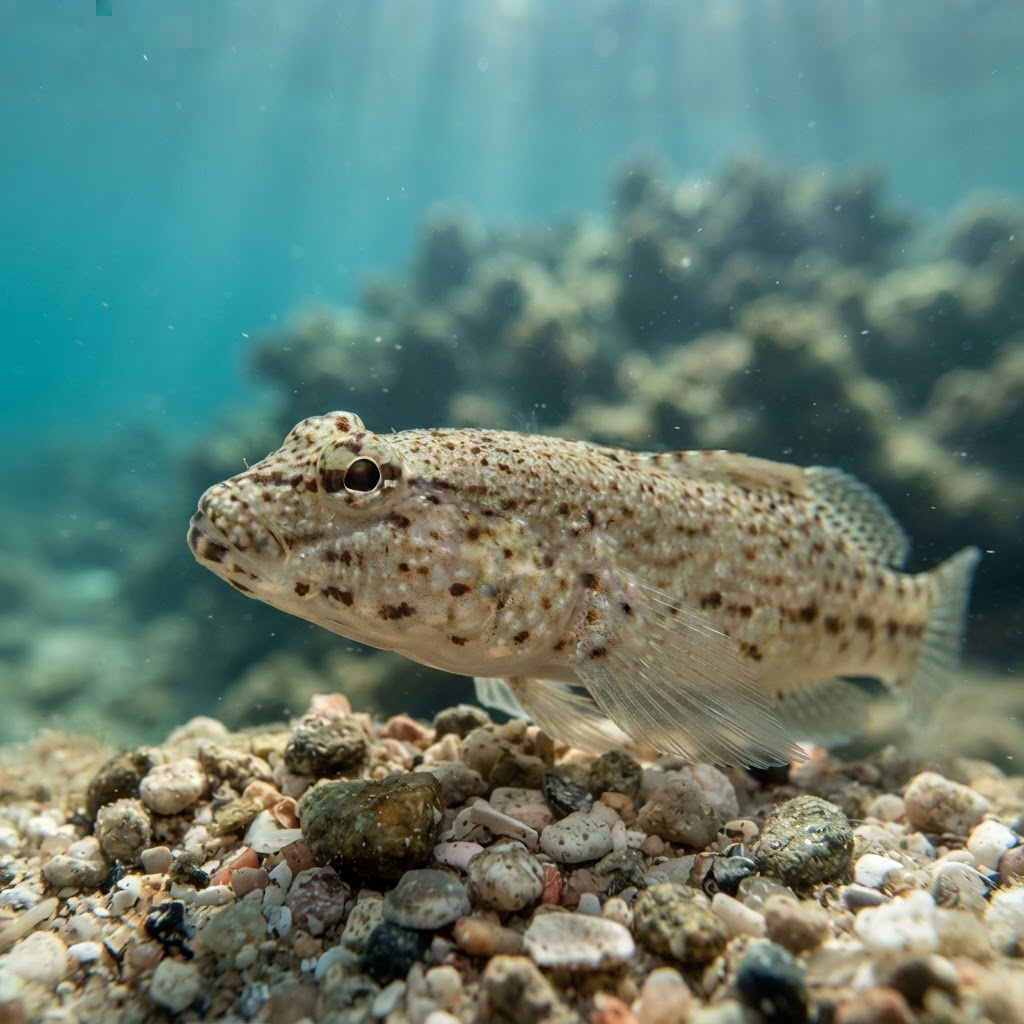
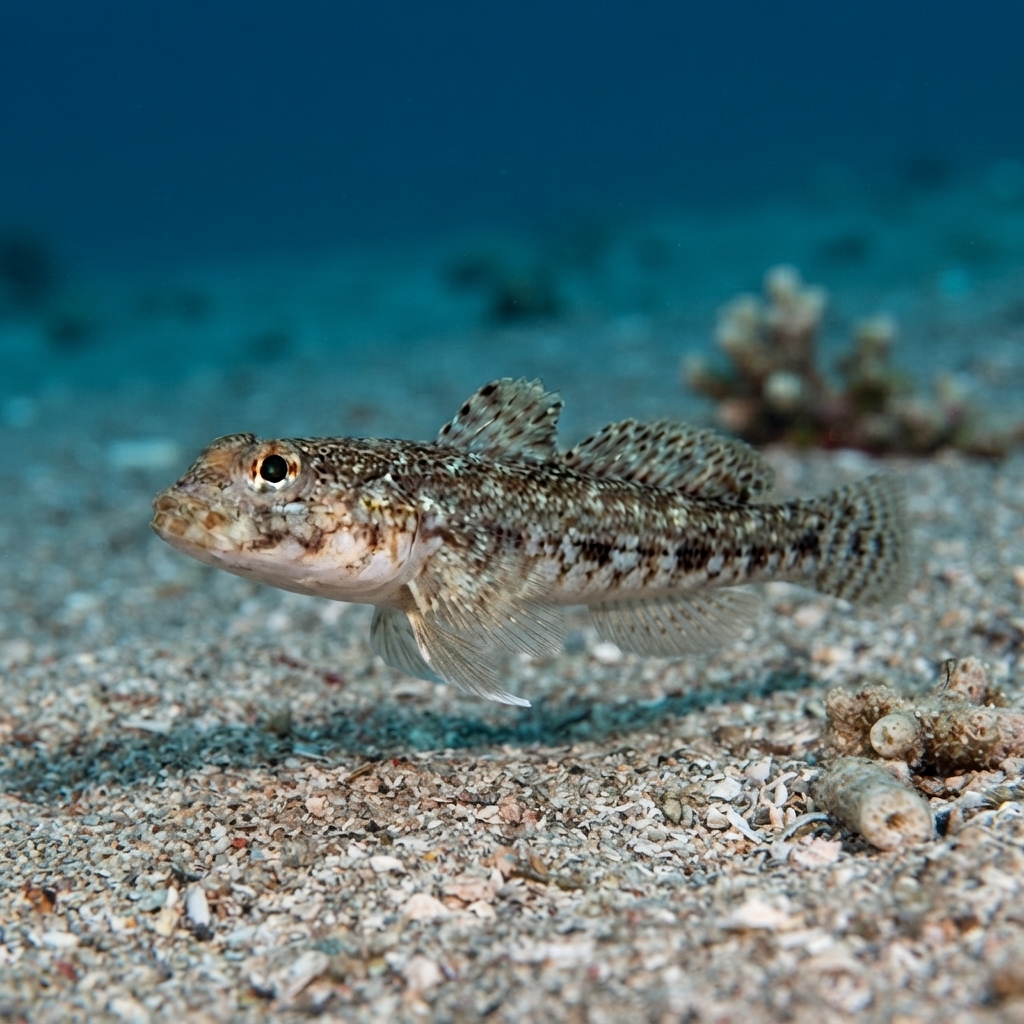
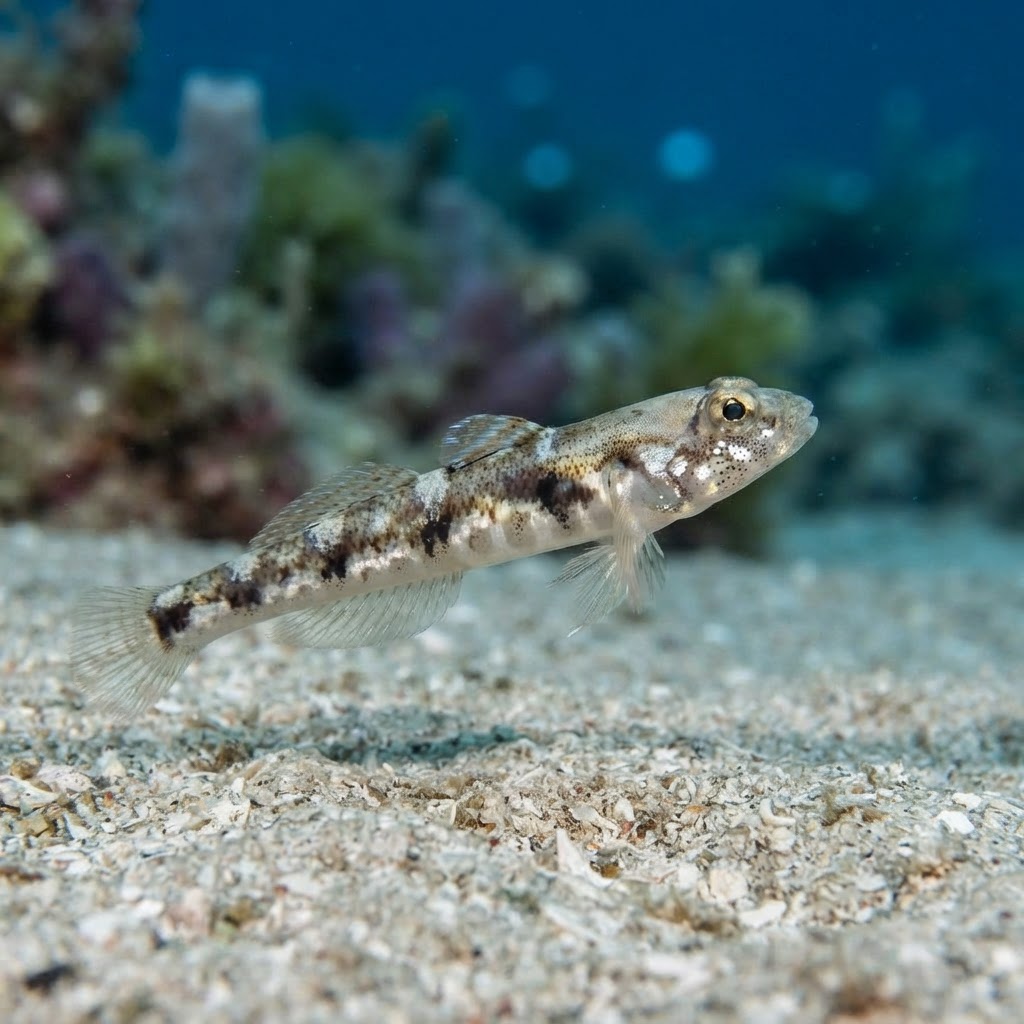
A tiny, slender fish barely 4cm long, usually seen perched motionless on sand or gravel rather than swimming in open water. Look for a mottled pattern of brown, orange and pale blotches along the flanks, which breaks up its outline against the seabed. The body is slim and tapers to a small, rounded head with two close-set dorsal fins, a shape shared by most small gobies but combined here with that speckled, painted look that gives the species its name.
Spend most of a dive sitting still on sand, gravel or fine shell debris, often close to rock or weed edges where it can dart for cover. It relies on its mottled camouflage rather than distance to avoid divers, so a slow approach and a careful eye on the substrate is the way to find one. Look for short, low darts across open sand rather than any real swimming in the water column.
Like other small gobies it lives fast and short, typically only a year or two, spending that time close to the seabed rather than roaming the reef.
Sightings are spread through the year with no strong seasonal pattern in the data, so treat it as a year-round find wherever it occurs. Its comfort range of roughly 8 to 15C matches cool temperate water for most of the year across its range, from Brittany to Scotland.
Reef neighbours a diver could mistake it for. Use the identification notes above to tell them apart.
Most reliably logged in Brittany in France, which accounts for the bulk of sightings, with further strongholds in Northern Ireland and Scotland in the UK. Good numbers also turn up along the Cantabrian Coast and Bay of Biscay in Spain and France, the Lisbon Coast and Algarve in Portugal, and Schleswig-Holstein in Germany, with a smaller presence in the Azores and Ireland. It favours cool Atlantic and Channel waters rather than warm southern seas.
Mapping where Painted Goby is logged…
Brittany in France is the strongest area, followed by Northern Ireland and Scotland in the UK, the Cantabrian Coast in Spain, and the Lisbon Coast and Algarve in Portugal. It also turns up in Schleswig-Holstein, Germany, the Azores, and Ireland.
There is no strong season in the sightings data, so it is best treated as a year-round find in cool Atlantic and Channel waters, roughly 8 to 15C.
Look for a slim 4cm fish sitting still on sand or gravel, with a mottled brown, orange and pale pattern that breaks up its outline. It moves in short darts across the seabed rather than swimming freely in the water.
They stay small, reaching around 4cm as adults, which puts them among the tiniest fish a diver is likely to spot on a sandy patch.
No. They are small, harmless bottom-dwellers with no interest in divers beyond darting for cover if approached too fast.
Site and sighting data is aggregated from diver logs, iNaturalist and GBIF. For taxonomy and conservation status:
Slender Goby
806 sites