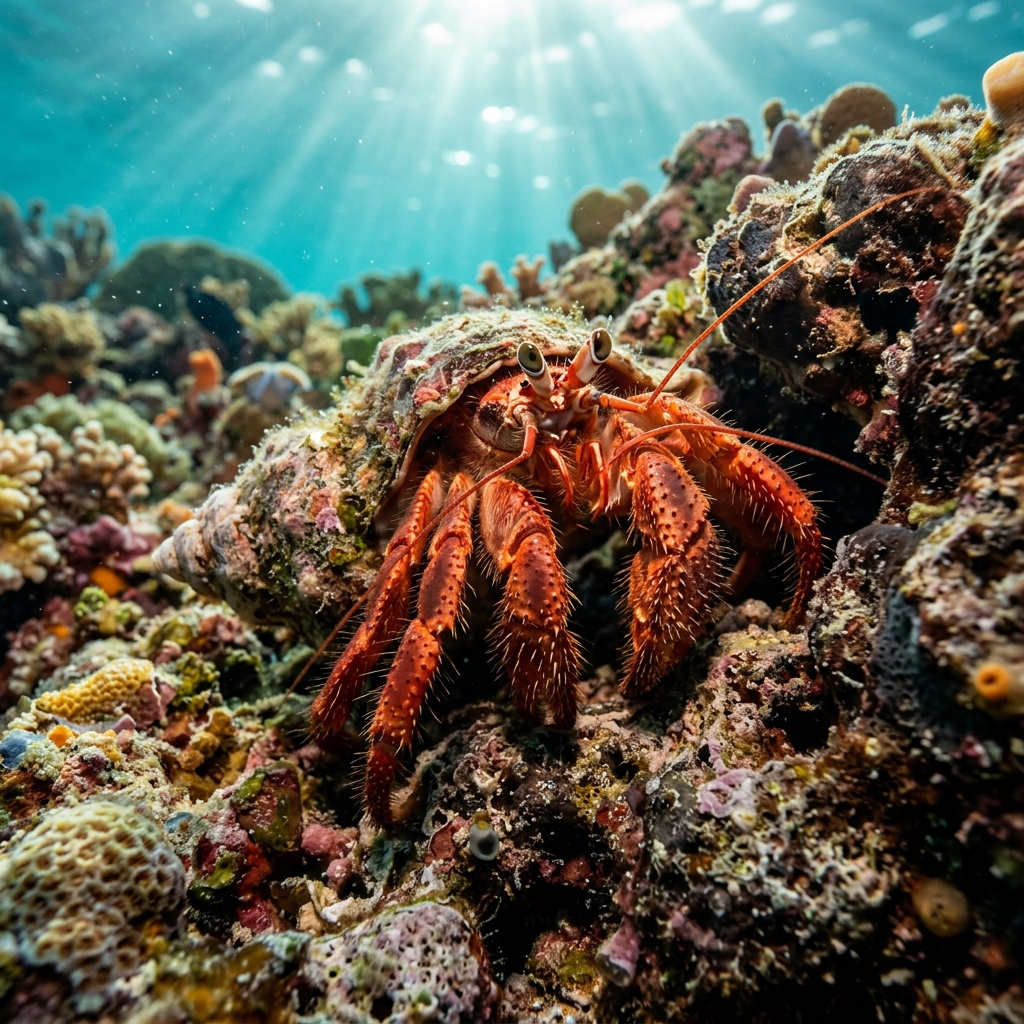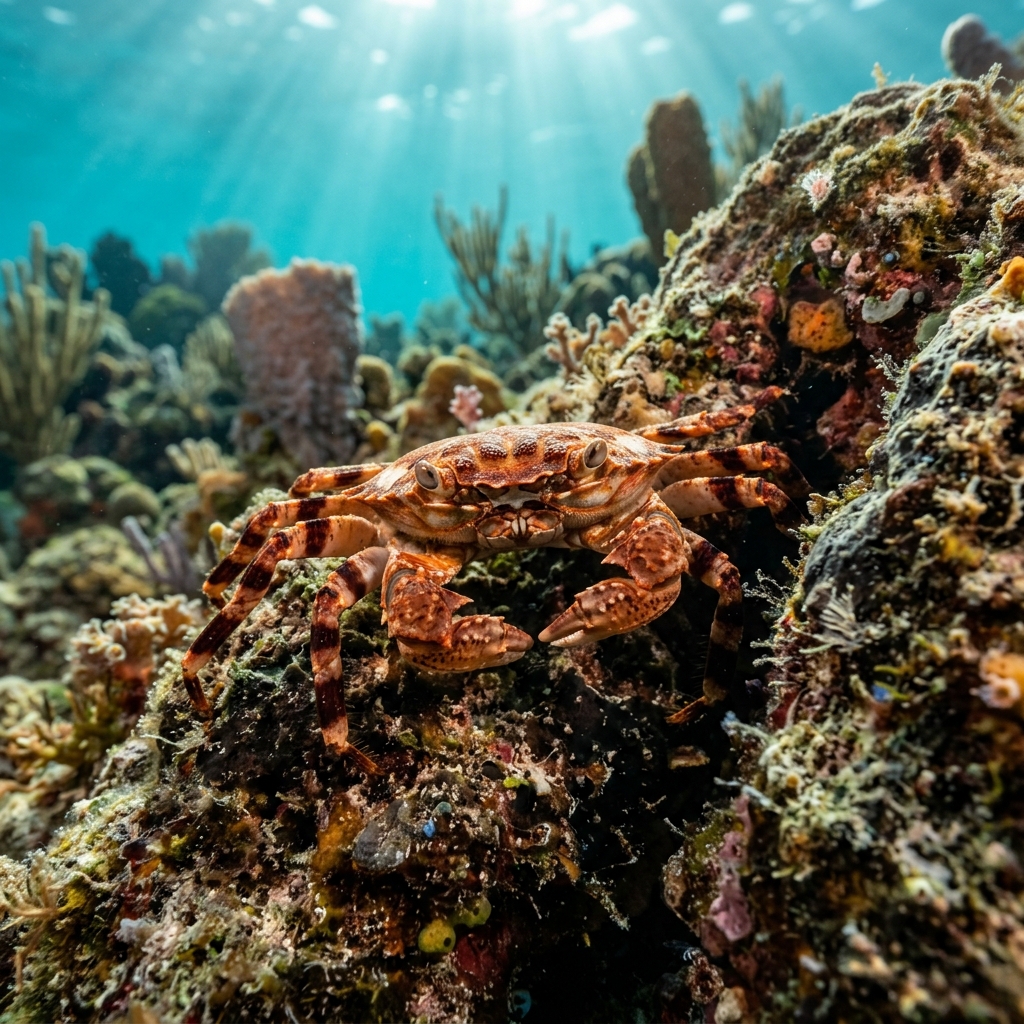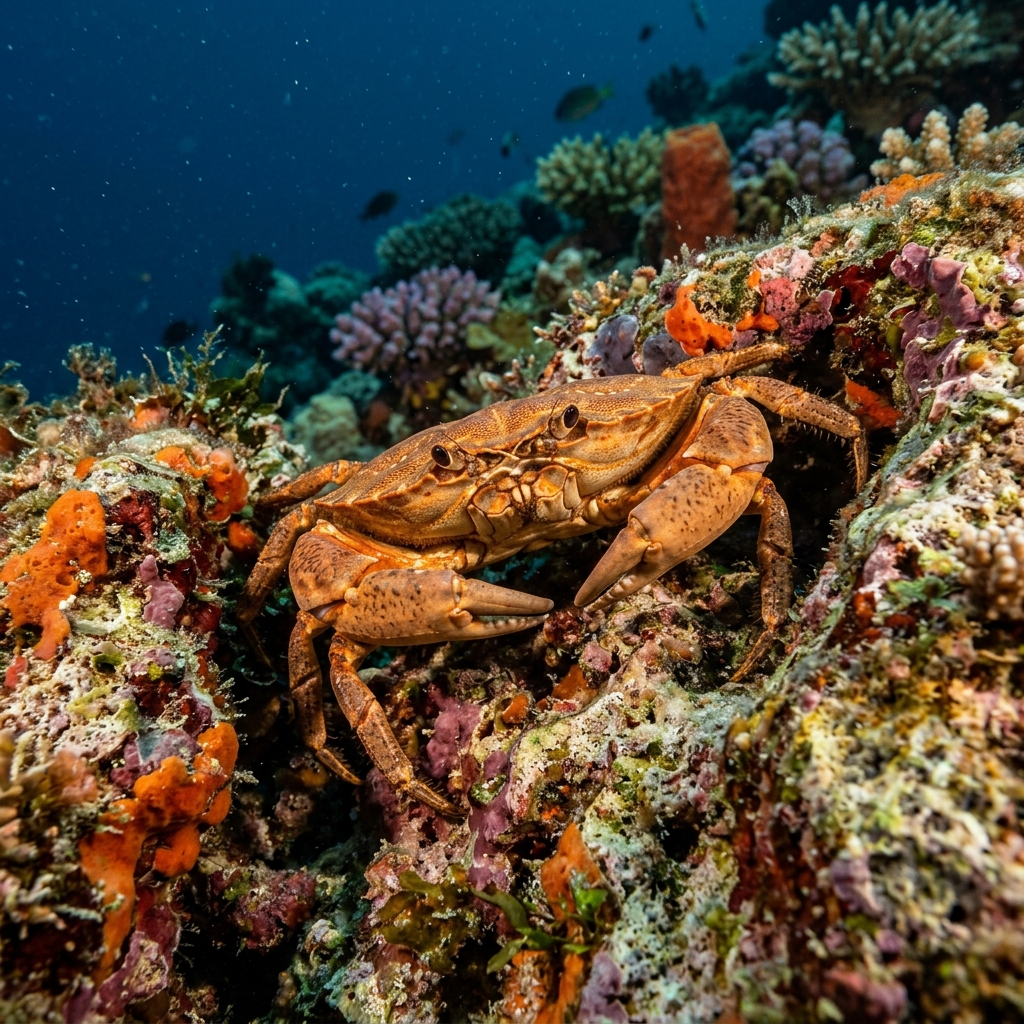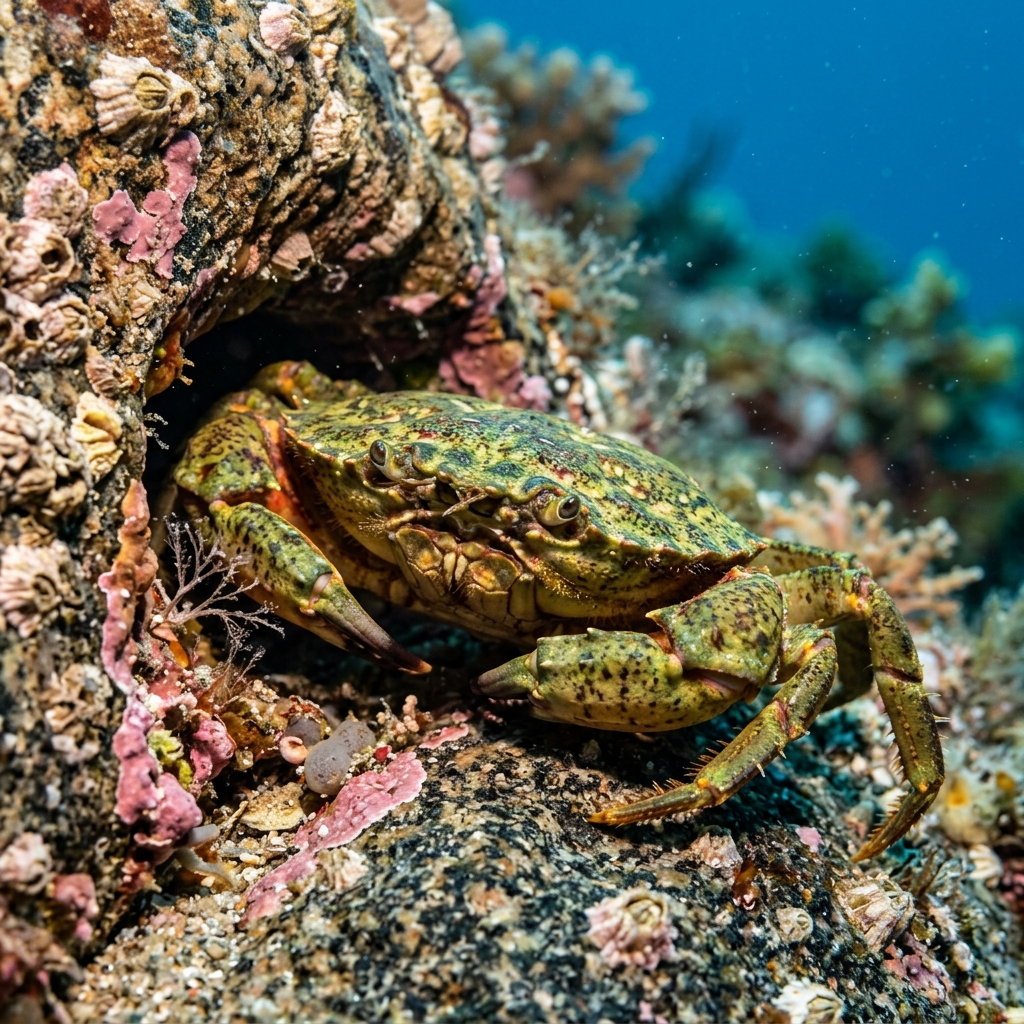
Ovalipes catharus
A rare but real find on New Zealand dives, this fast-swimming crab turns up in cool water from 10.9 to 18.6°C across both islands.
Safety warning
It's listed as dangerous to divers, and the reason is simple: it has a strong pinch and can be defensive when cornered or handled. Give it space, don't try to pick it up, and use a torch or fin to nudge sand away rather than your bare hand if you want a closer look.
If you're pinched
Strong pinchGeneral first-aid guidance, not a substitute for professional medical care. In an emergency, call your local emergency number.
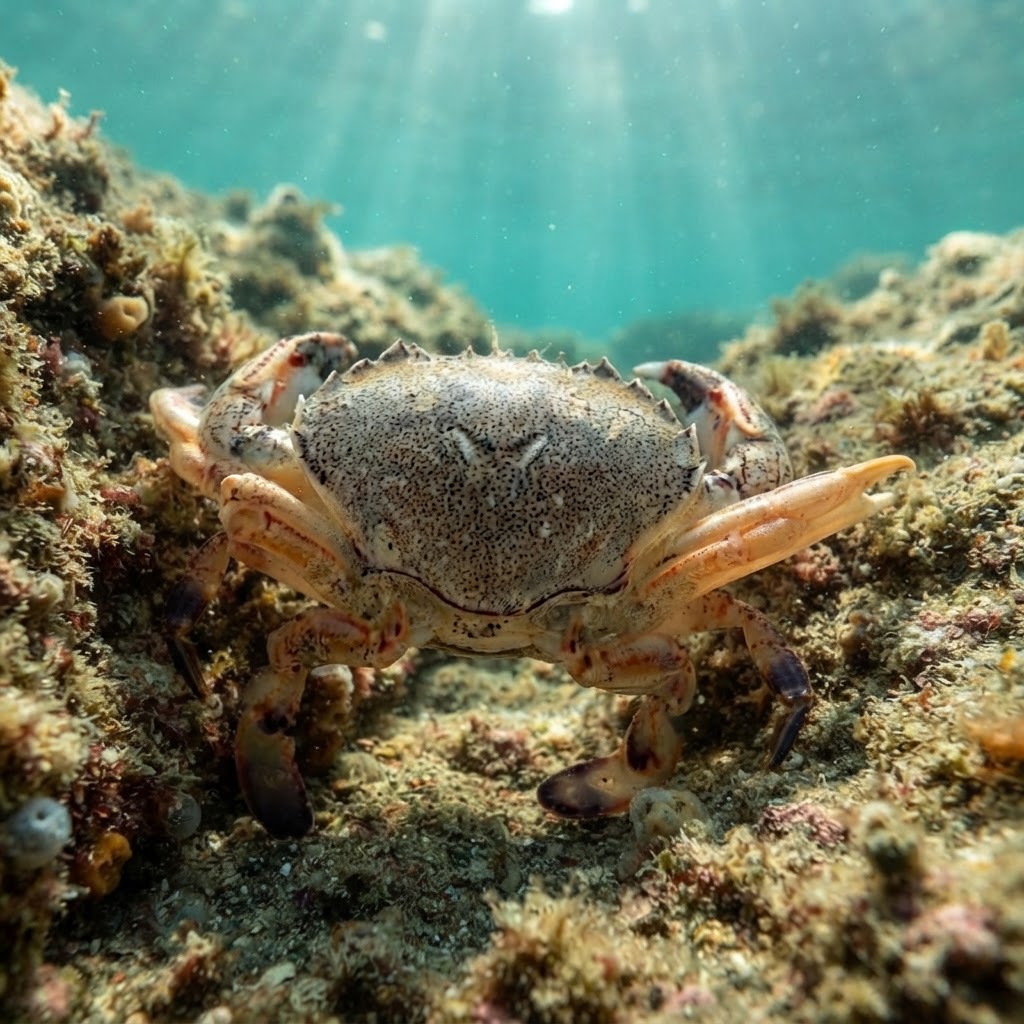
Look for a broad, purple-to-grey mottled shell with a fan of pointed spikes along the front edge, and flattened, paddle-shaped last legs used for swimming rather than walking. It sits low and wide on sand or gravel, usually with just the eyes and antennae visible if it has dug in. The paddle-like rear legs are the giveaway that separates it from typical walking crabs on the same seabed.
Divers usually find it partly buried in sand or gravel, using those paddle-shaped back legs to burrow down quickly when disturbed. It's an active hunter over open seabed rather than a reef-dweller, and when uncovered it tends to scuttle sideways and dig back in rather than stand and fight. Most encounters are brief, low-visibility, sandy-bottom moments rather than a lingering photo opportunity.
Those paddle-shaped hind legs aren't just for burrowing: they make it a capable swimmer, letting it move through open water in short bursts instead of relying purely on scuttling across the bottom like most shore crabs.
Sighting records don't show a clear season, so treat this as a year-round possibility on New Zealand dives. Its comfort range of roughly 11 to 19°C spans the cooler and milder ends of local conditions, which likely explains the lack of a strong seasonal pattern.
Logged across both main islands of New Zealand, with a slight edge in numbers from the North Island over the South Island. Sightings come from sandy and gravel seabeds rather than reef, so it's a species you find on the flatter stretches between dive sites rather than on the wall or drop-off itself.
Mapping where Paddle Crab is logged…
It's recorded on dive sites across New Zealand, with sightings spread fairly evenly between the North Island and South Island. Look for it on sandy or gravel seabed sections rather than on reef structure.
There's no strong seasonal pattern in the sightings, so it's considered a year-round possibility. It's been recorded in water from about 11°C to nearly 19°C, covering most of New Zealand's typical diving conditions.
They can be, mainly through a firm pinch if handled or cornered. The safest approach is to observe from a short distance and avoid picking one up.
Check for a mottled purple-grey shell edged with sharp spikes and flattened, paddle-like rear legs. Those paddle legs are the clearest underwater clue, since most other crabs on the same sand have simple walking legs.
Sightings are logged as rare at most dive sites where it appears, with only a couple of spots reporting it as uncommon. It's a species you might get lucky with rather than one you can count on seeing.
Site and sighting data is aggregated from diver logs, iNaturalist and GBIF. For taxonomy and conservation status:
European Green Crab
2,469 sites