Artedius fenestralis
Small mottled bottom-dweller common on cold-water dives in British Columbia, sitting still on rock and rubble in 9 to 12C water.
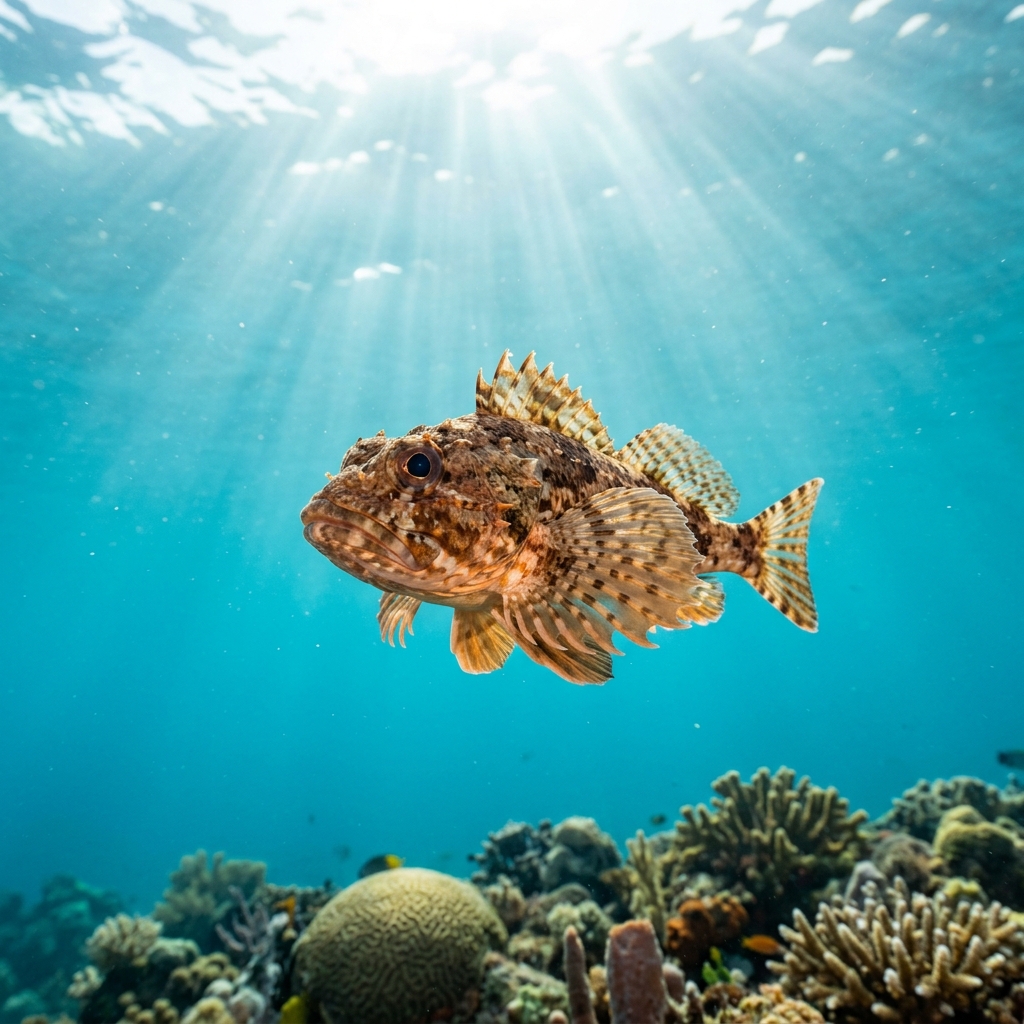
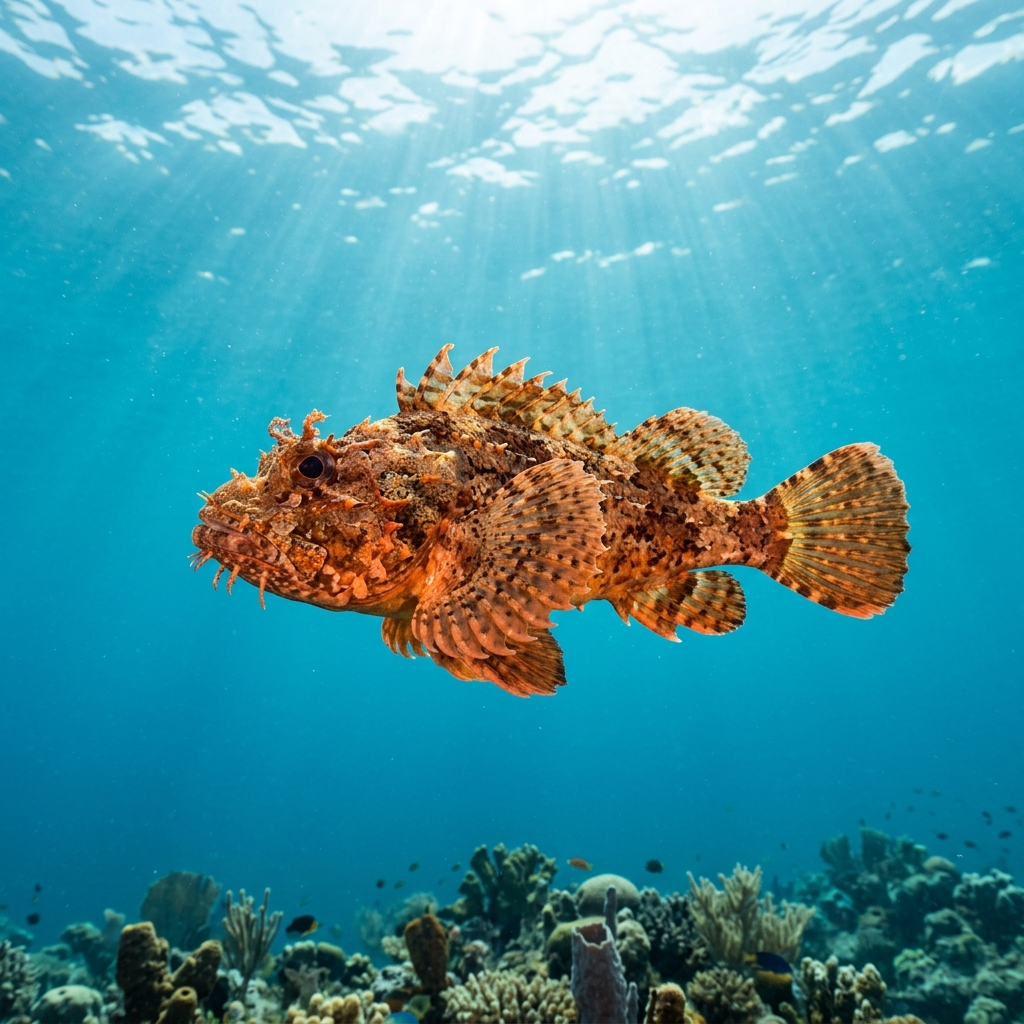
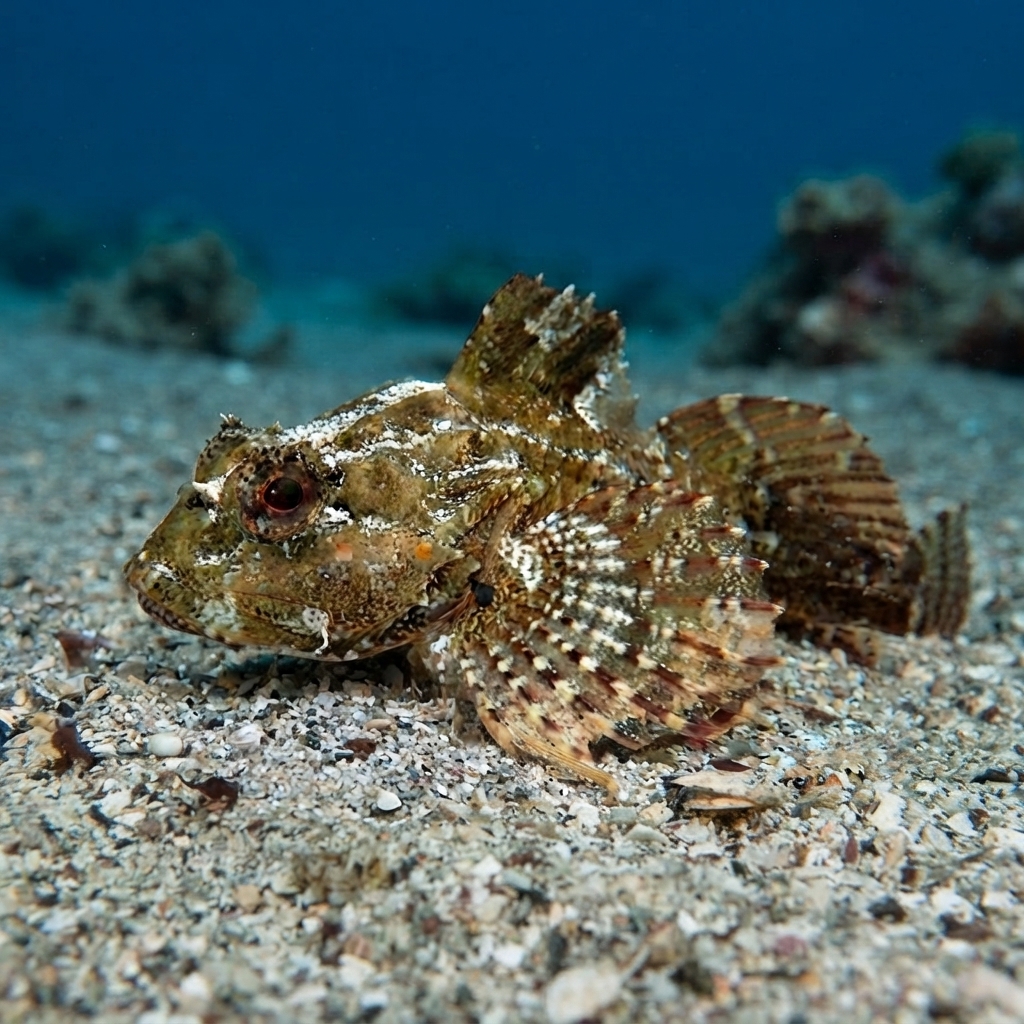
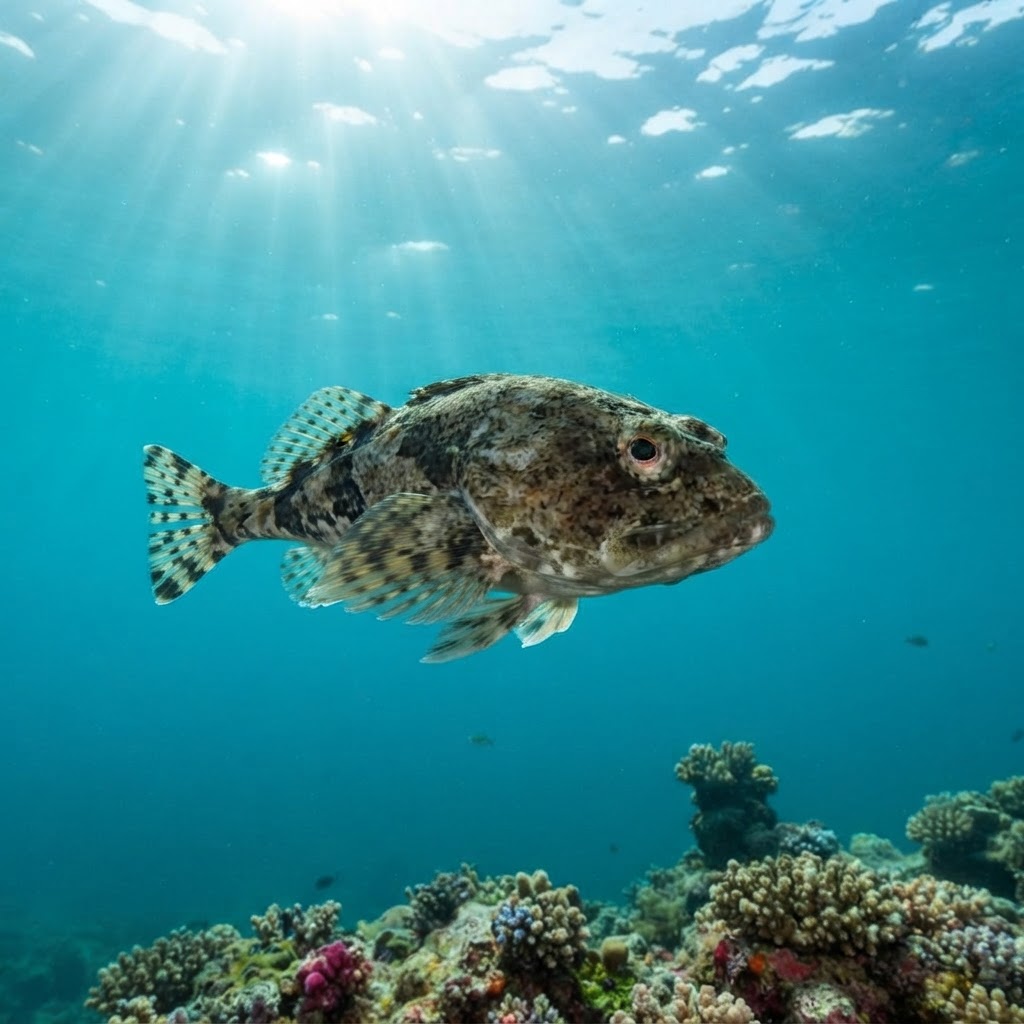
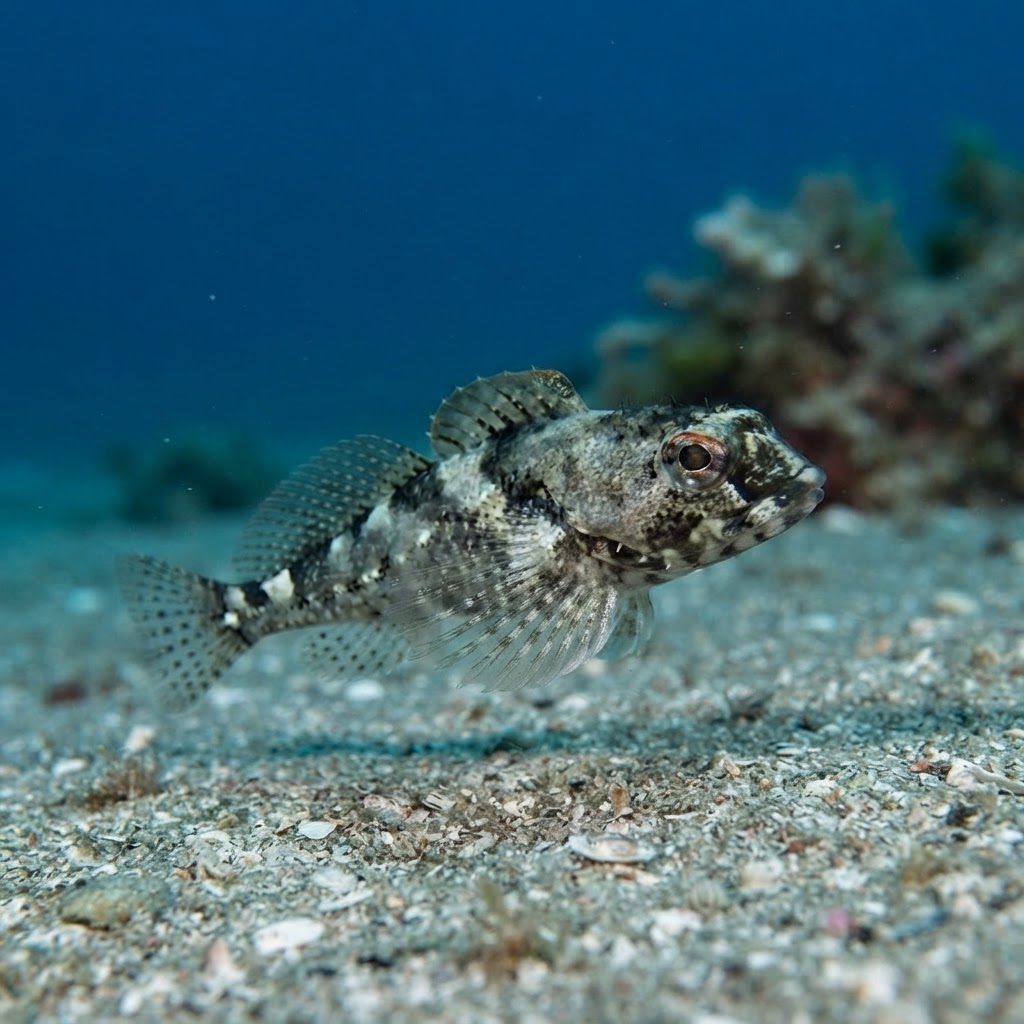
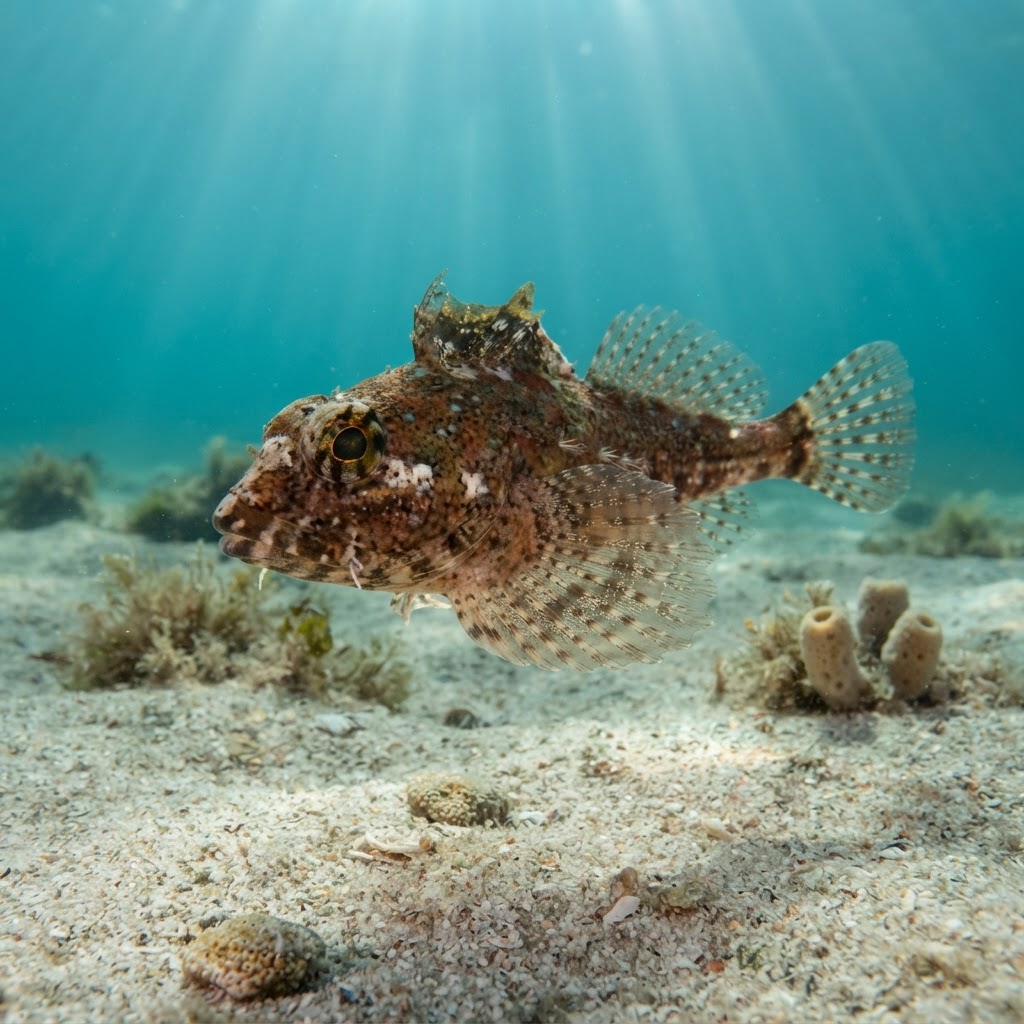
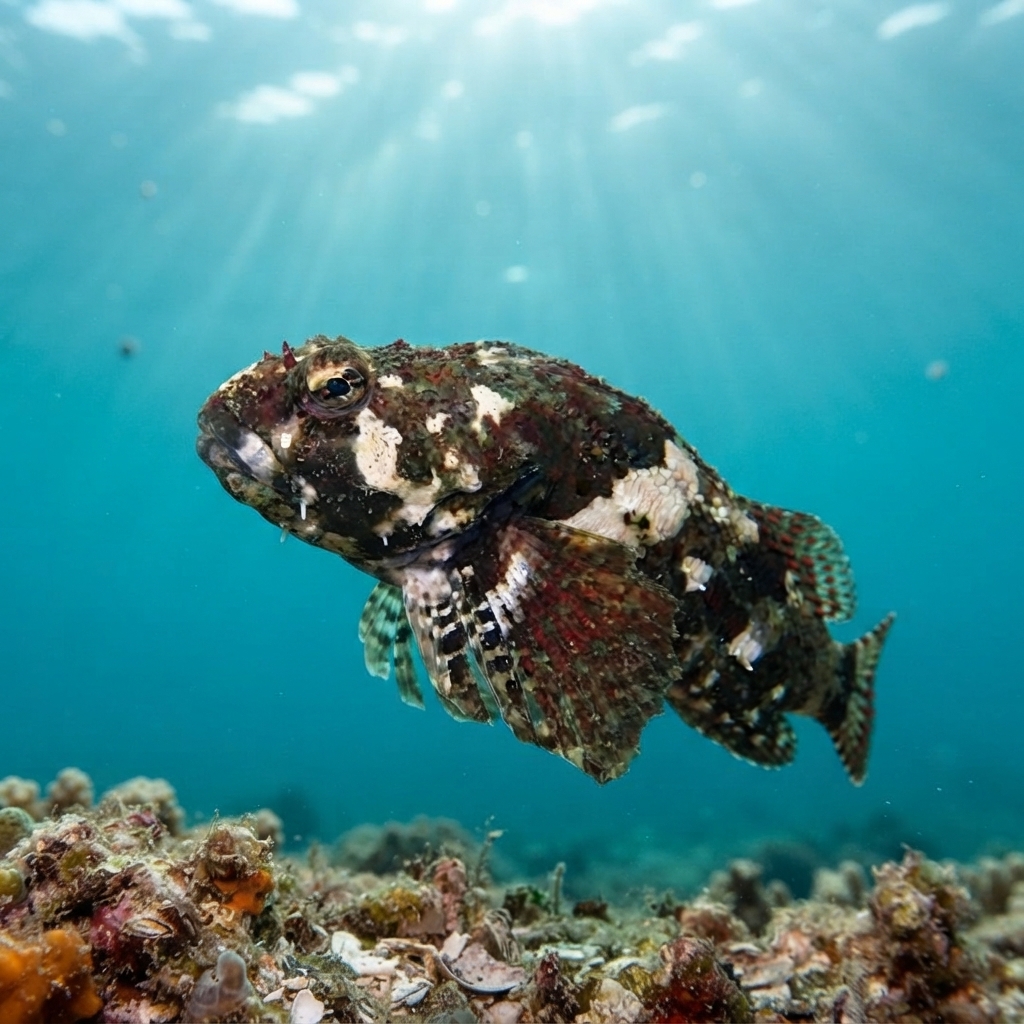
A stubby, big-headed little fish that rarely tops 10cm, blending into rock and algae with mottled brown, grey and rust patterning. Look for the bumpy, slightly ridged skin texture and the way it perches motionless on rock or rubble rather than swimming freely. Its pectoral fins are broad and fanned, propping it up like a small tripod when it settles on the bottom.
Expect to find it parked motionless on rock, rubble or among algae rather than out swimming in open water, relying on its camouflage to sit tight as divers pass. It is not a fish that flees readily; a slow approach and a careful eye scanning the substrate is usually how divers spot one rather than the other way round.
Despite the name, sculpins like this one lack a swim bladder, so they spend their time resting on the bottom rather than hovering mid-water like most reef fish.
Sightings show no clear seasonal pattern, and with a temperature niche of roughly 8.6 to 11.7C, this fish is likely present on these cold-water reefs year-round. Divers log it across the seasons rather than during any one window.
This is a cold-water Pacific species, most reliably logged around British Columbia, Canada, which accounts for the bulk of recorded sightings. It also turns up along the Pacific Northwest coast of the United States and further north into Alaska, though at lower rates.
Mapping where Padded Sculpin is logged…
British Columbia in Canada is the strongest area for sightings, with additional records from the Pacific Northwest coast and Alaska in the United States.
There is no strong seasonal pattern in the sighting data, and its cold-water temperature niche suggests it can be found year-round on these dive sites.
Look for a small, stocky fish under 10cm with mottled brown and grey camouflage, resting still on rock or rubble rather than swimming in open water. Its broad pectoral fins and bumpy skin texture help distinguish it from smoother-bodied fish nearby.
They are small fish, typically reaching around 10cm in length, so divers need to look closely at rock and rubble bottoms to spot them.
No, they pose no danger to divers and simply rest on the substrate as you swim past.
Like other sculpins, this species has no swim bladder, which is why it stays settled on the bottom instead of hovering in the water column like typical reef fish.
Site and sighting data is aggregated from diver logs, iNaturalist and GBIF. For taxonomy and conservation status:
Shorthorn Sculpin
228 sites