Citharichthys sordidus
A mottled, sand-coloured flatfish logged from British Columbia to Baja California, usually spotted lying still on the seabed in cold water.
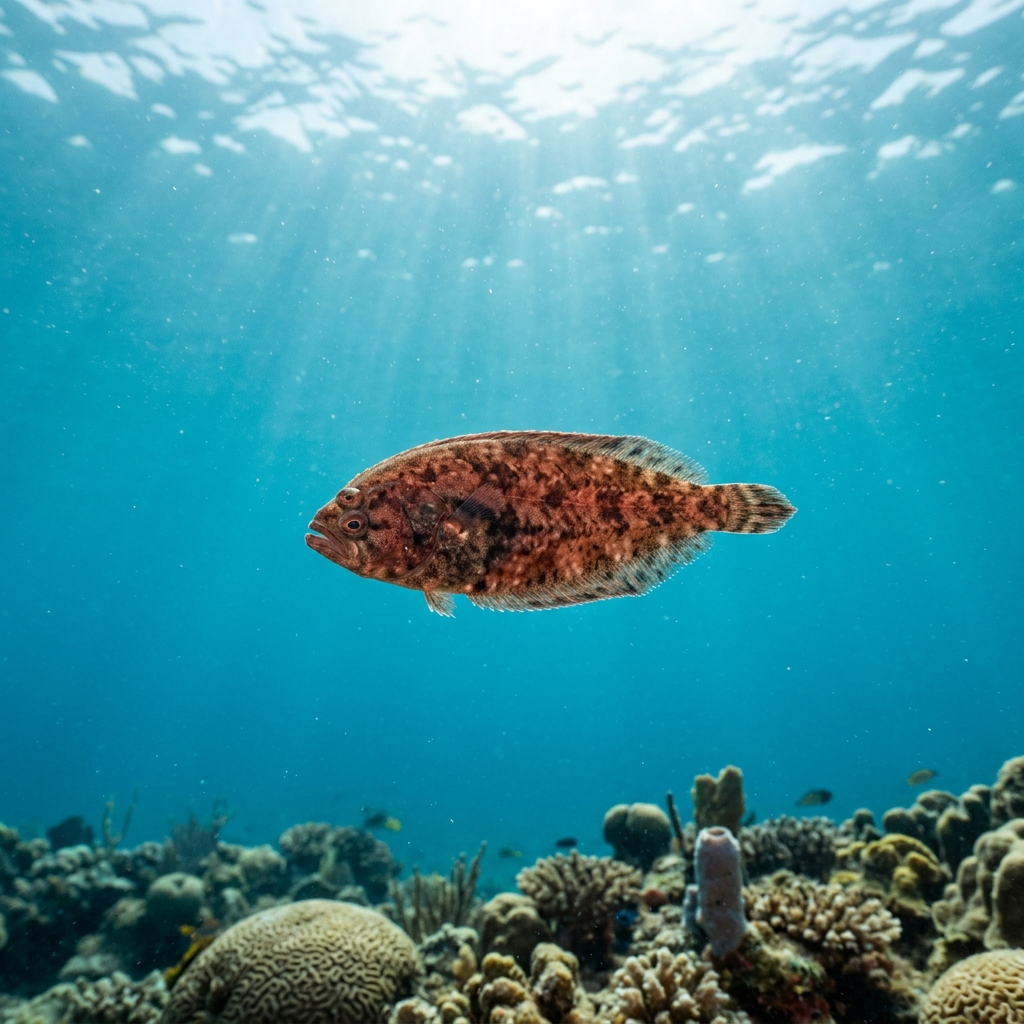
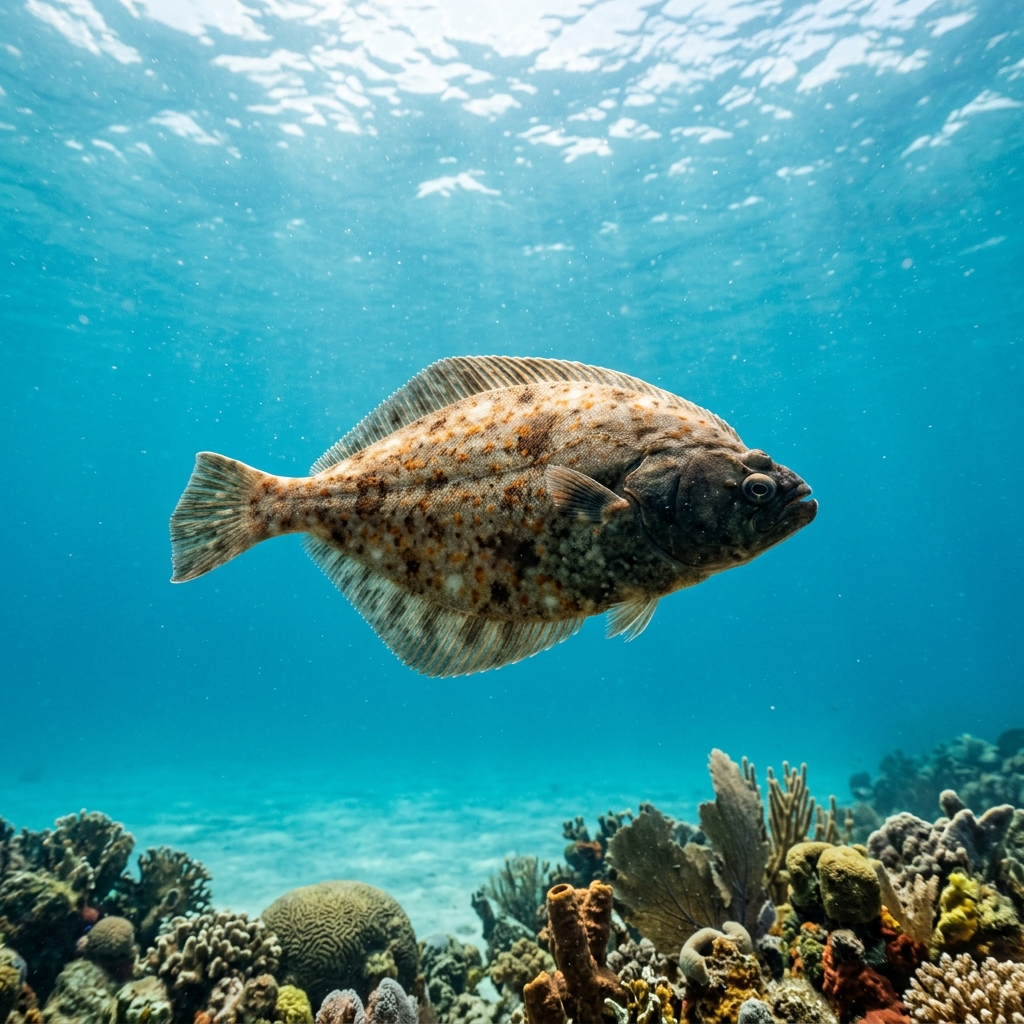
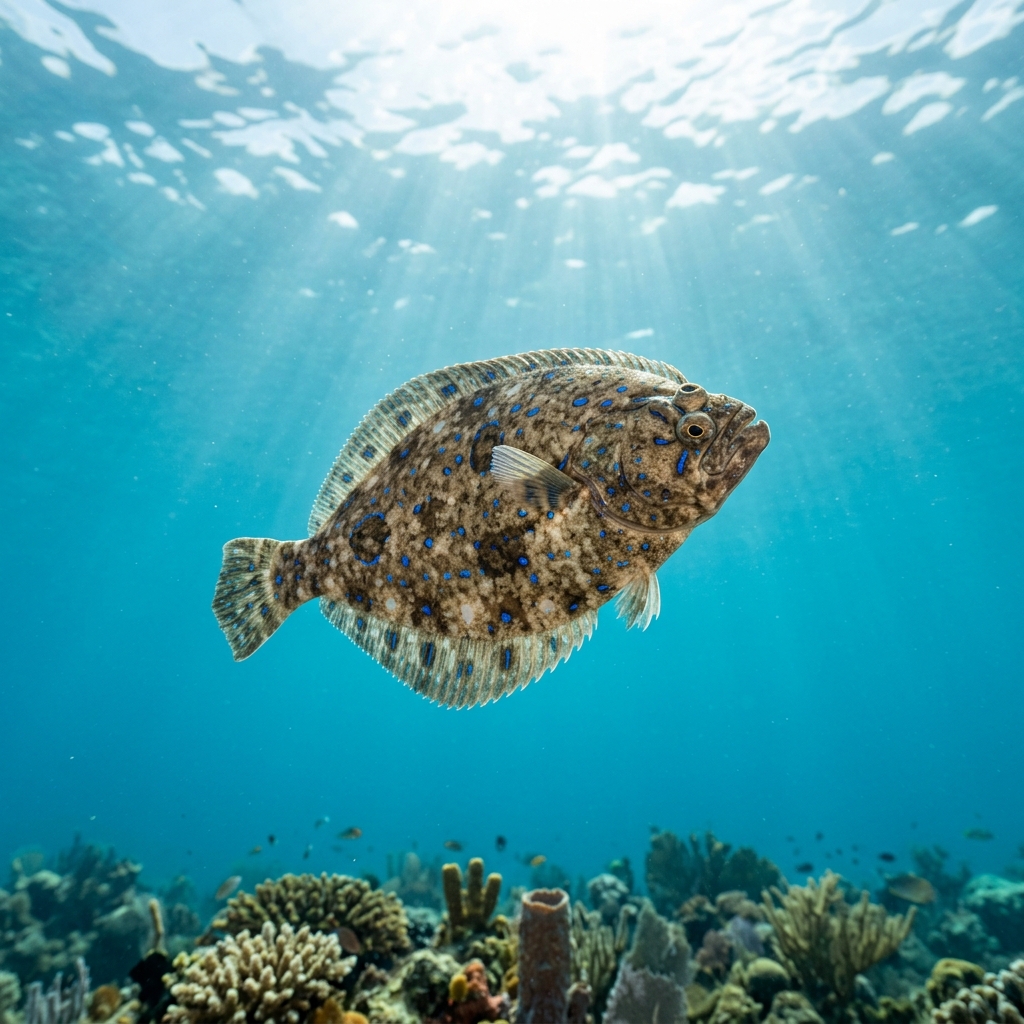
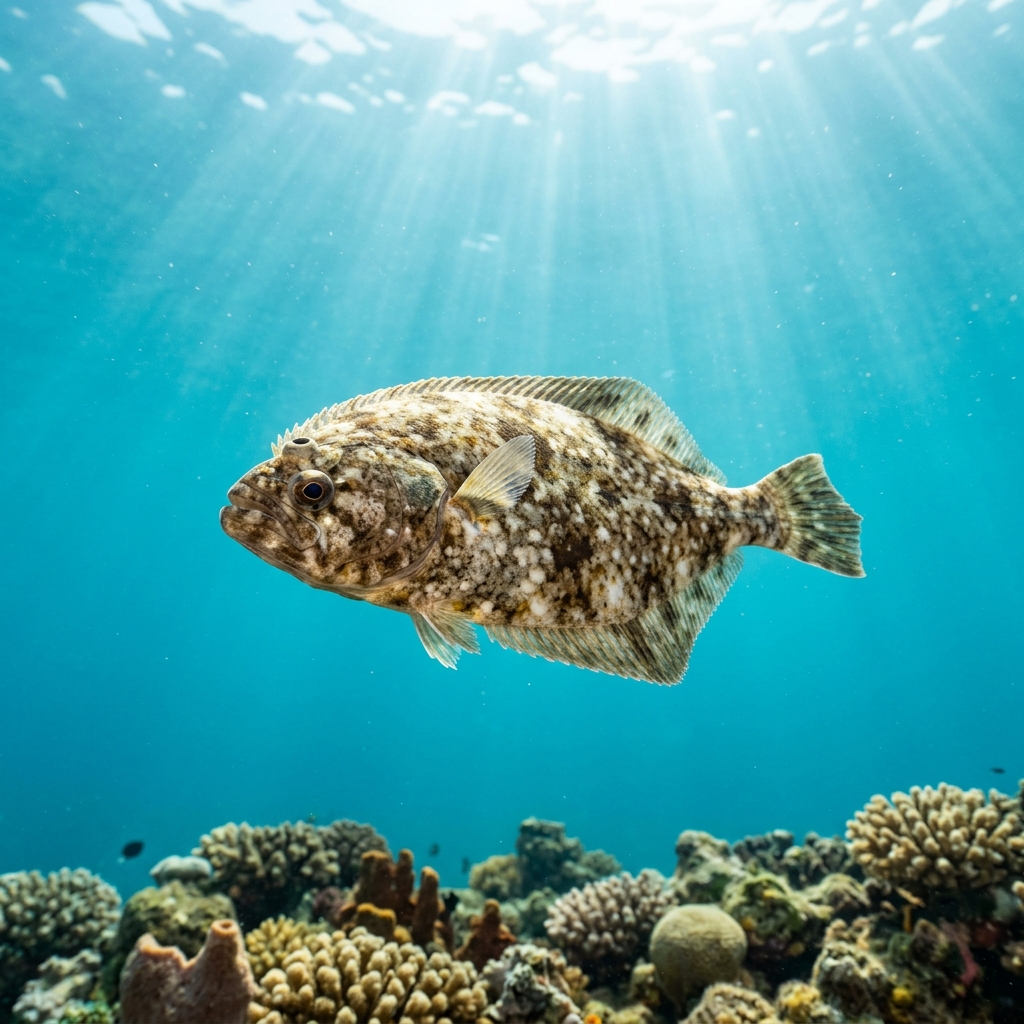
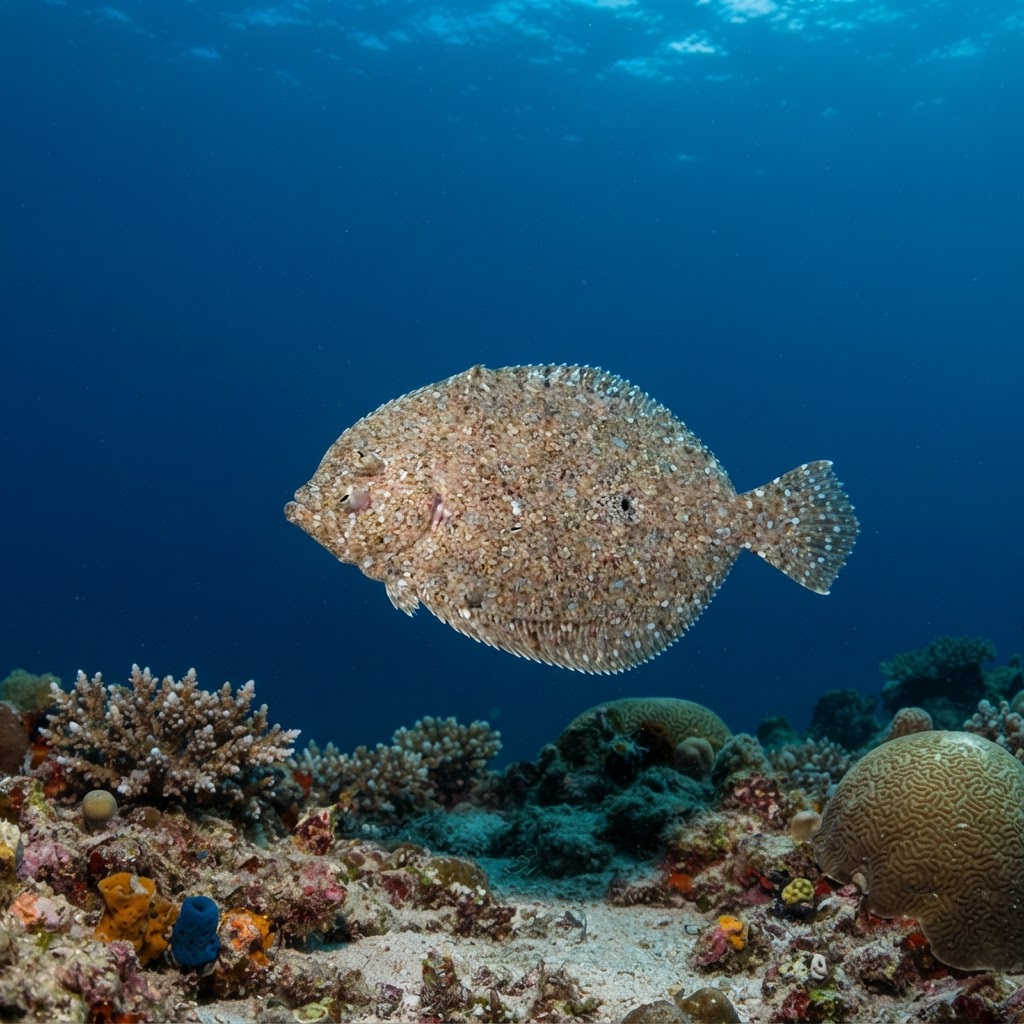
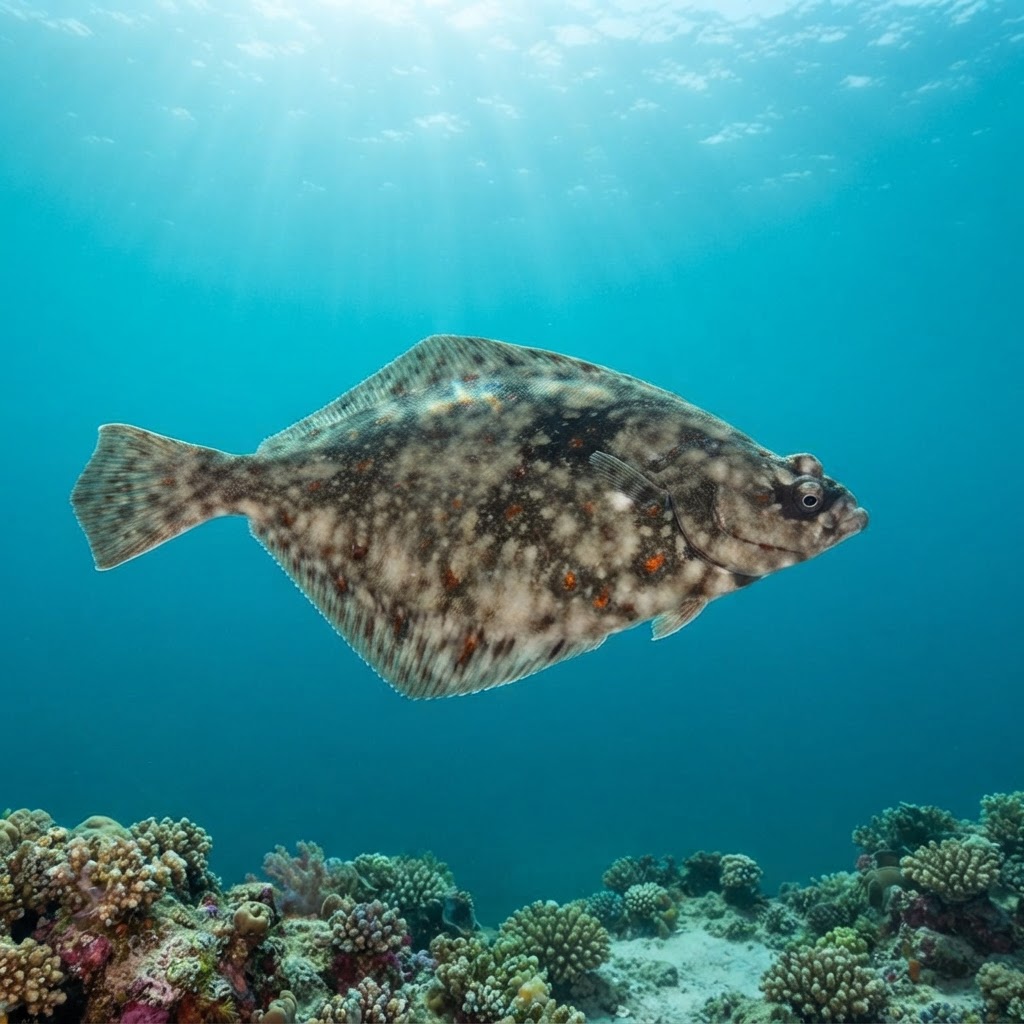
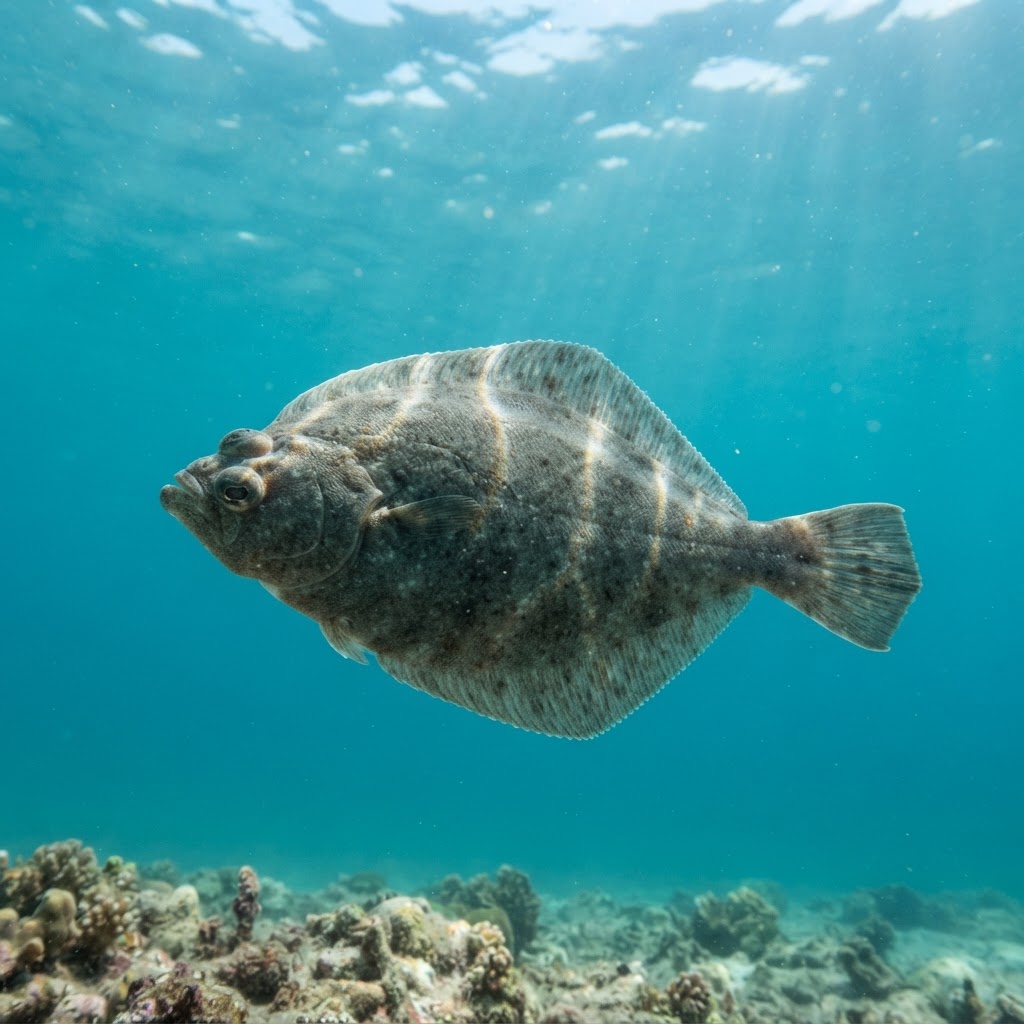
Look for a flat, oval body lying directly on sand or mud, rarely more than 29 cm long, coloured in mottled brown, tan and grey blotches that mimic the sediment beneath it. Both eyes sit on the right side of the head, the giveaway that this is a flatfish rather than a bottom-dwelling round fish. It often lies so still and so well camouflaged that divers swim past it, only the faint outline of a body and the occasional twitch of a fin giving it away.
Spends most of its time motionless on sand or soft sediment, often half-buried, relying on camouflage rather than flight to avoid attention. When approached too closely it will flick away in a short, fast burst and resettle a metre or two off, then go still again. Most divers log it as a rare or uncommon find on sandy patches near reef edges rather than on the reef structure itself.
Like other flatfish, it starts life swimming upright with an eye on each side of its head, then undergoes a dramatic transformation as one eye migrates across the skull so both end up on the same side once it settles onto the seabed.
Sightings run year-round with no detected seasonal pattern, matching a species comfortable across a wide temperature range from about 5.5 to 19.4C. Dive whenever conditions suit the site itself rather than timing a trip around this fish.
Most consistently logged in British Columbia, Canada, with a strong secondary population in Baja California, Mexico, and scattered sightings along the California coast in the United States. British Columbia sites account for the bulk of confirmed reports, making it more of a cold-water Pacific Northwest find than a warm-water one.
Mapping where Pacific Sanddab is logged…
British Columbia, Canada is the strongest region for sightings, with Baja California, Mexico also producing regular reports and a smaller number logged off California, United States.
There is no clear season in the data, so sightings happen year-round. It tolerates a wide temperature range, from cold water around 5.5C up to about 19.4C, which likely explains the lack of a seasonal pattern.
Look for a flat, mottled brown and tan body lying still on sand, with both eyes on one side of the head. It rarely exceeds 29 cm and blends closely with the seabed, so scan slowly rather than expecting it to stand out.
They typically reach around 29 cm in length, staying flat and low-profile against the seabed rather than bulky.
It starts life as a symmetrical swimming larva with one eye on each side, then one eye migrates across the skull during development so both sit on the same side once it settles to live flat on the seabed.
No. They are not dangerous to divers and simply move away with a short burst of swimming if approached too closely.
Site and sighting data is aggregated from diver logs, iNaturalist and GBIF. For taxonomy and conservation status:
Wide Eyed Flounder
1,624 sites