Romaleon antennarium
Uncommon but reliable find on Pacific coast dives, most logged in California and the Pacific Northwest at 10.6 to 18.7C.
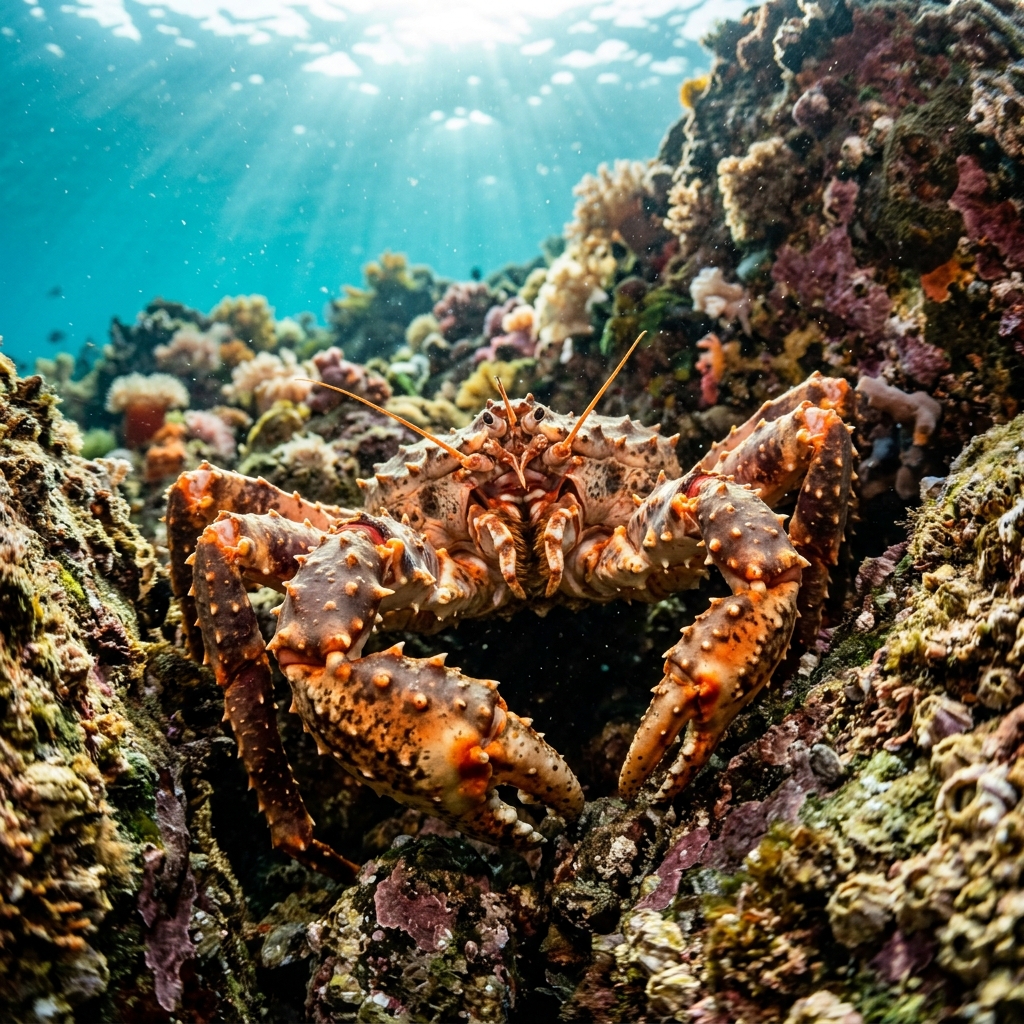
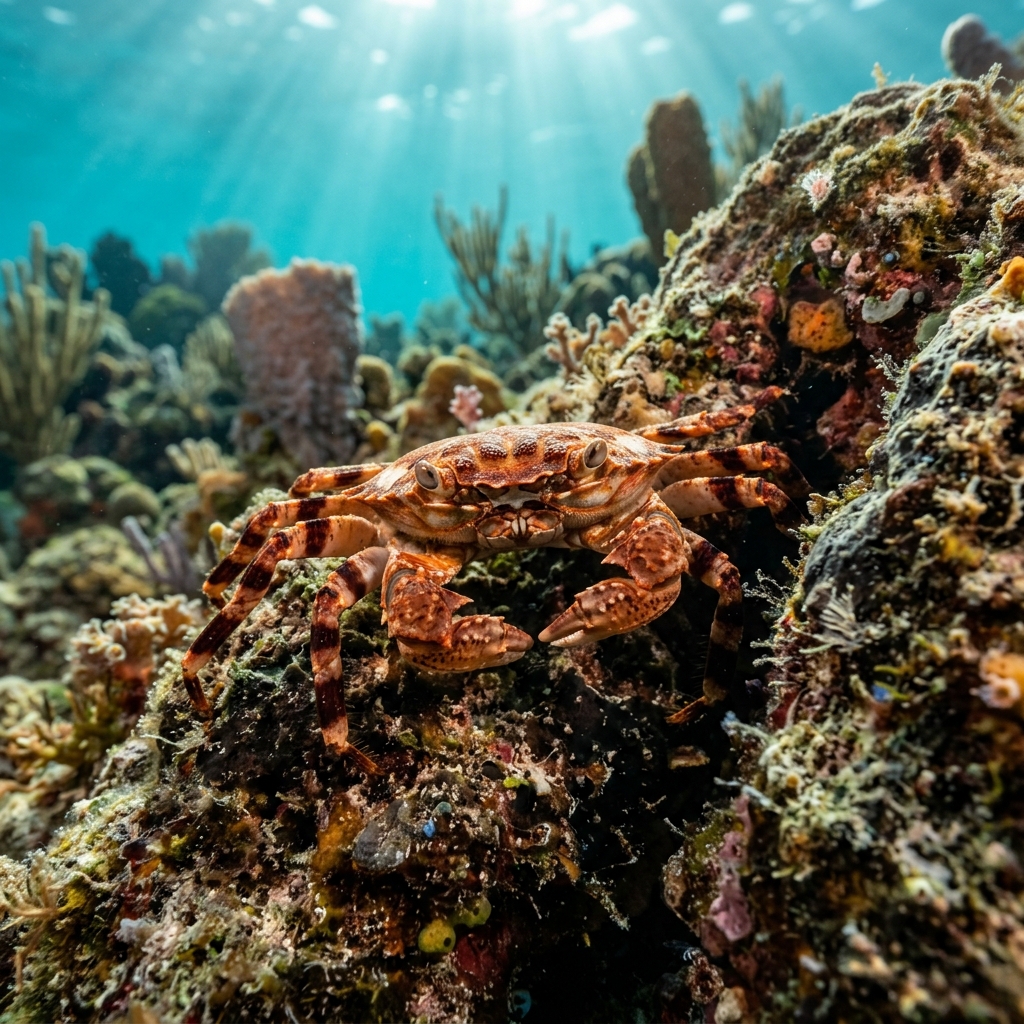
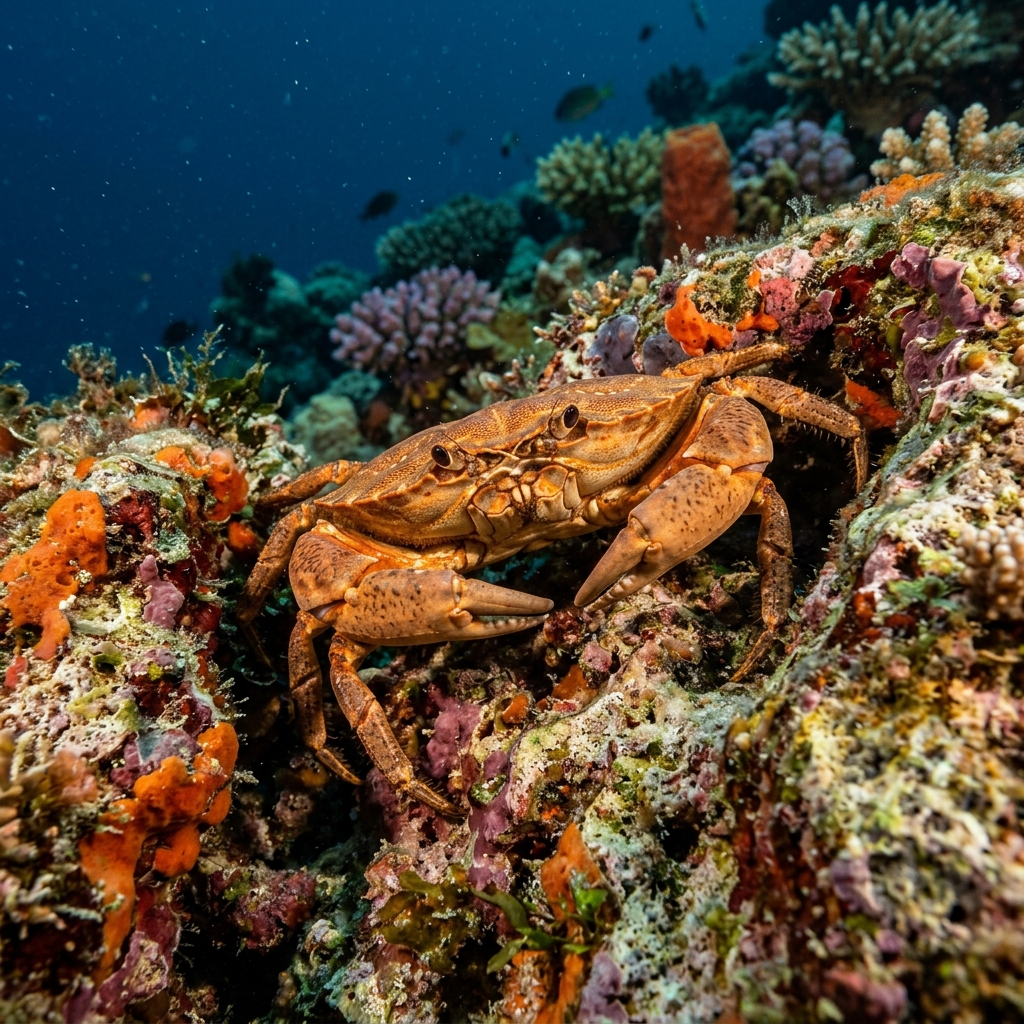
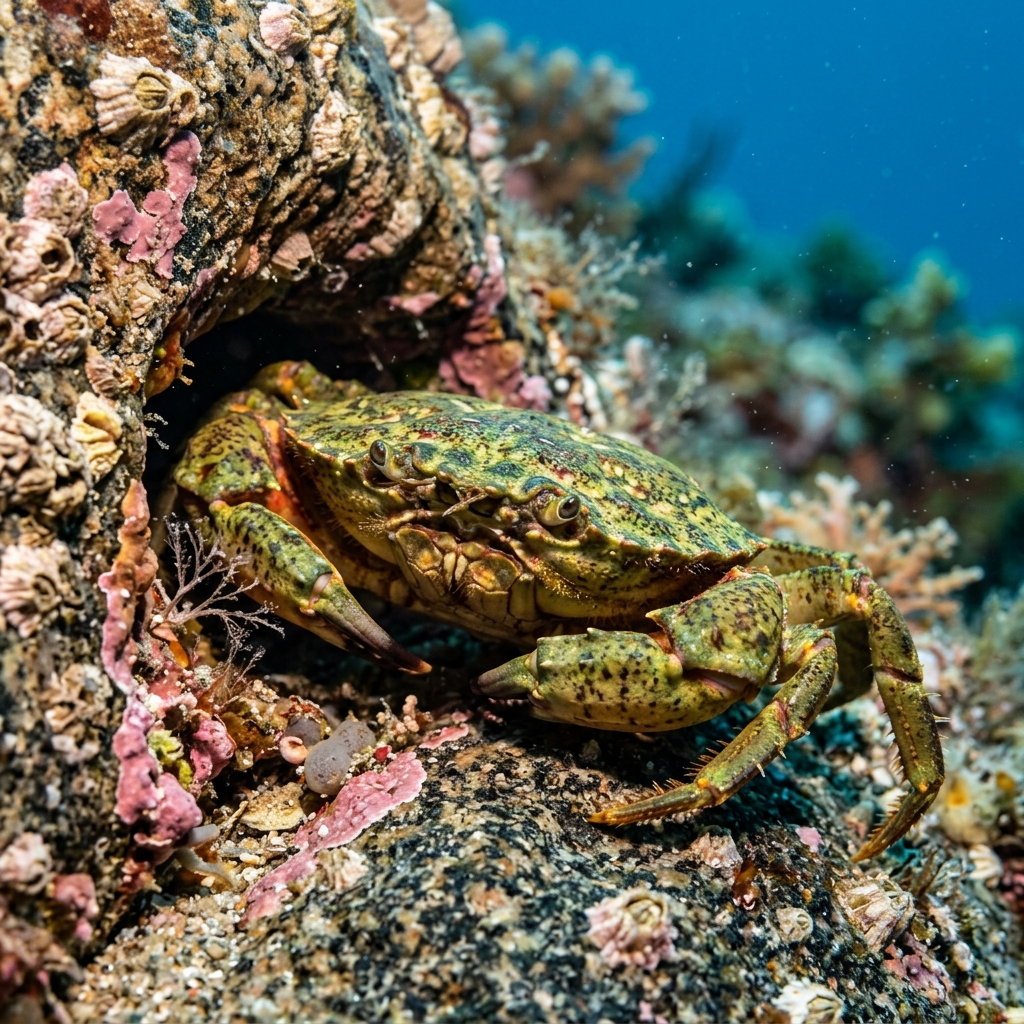
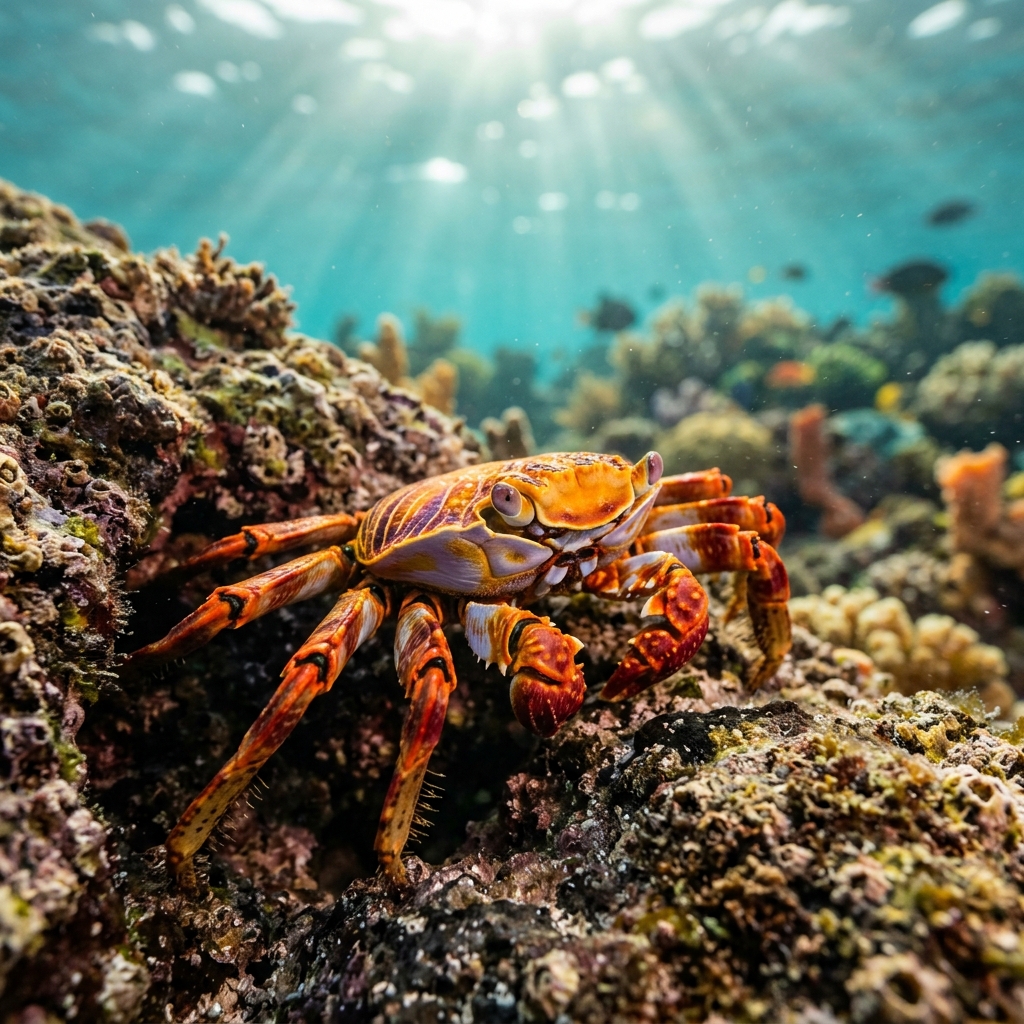
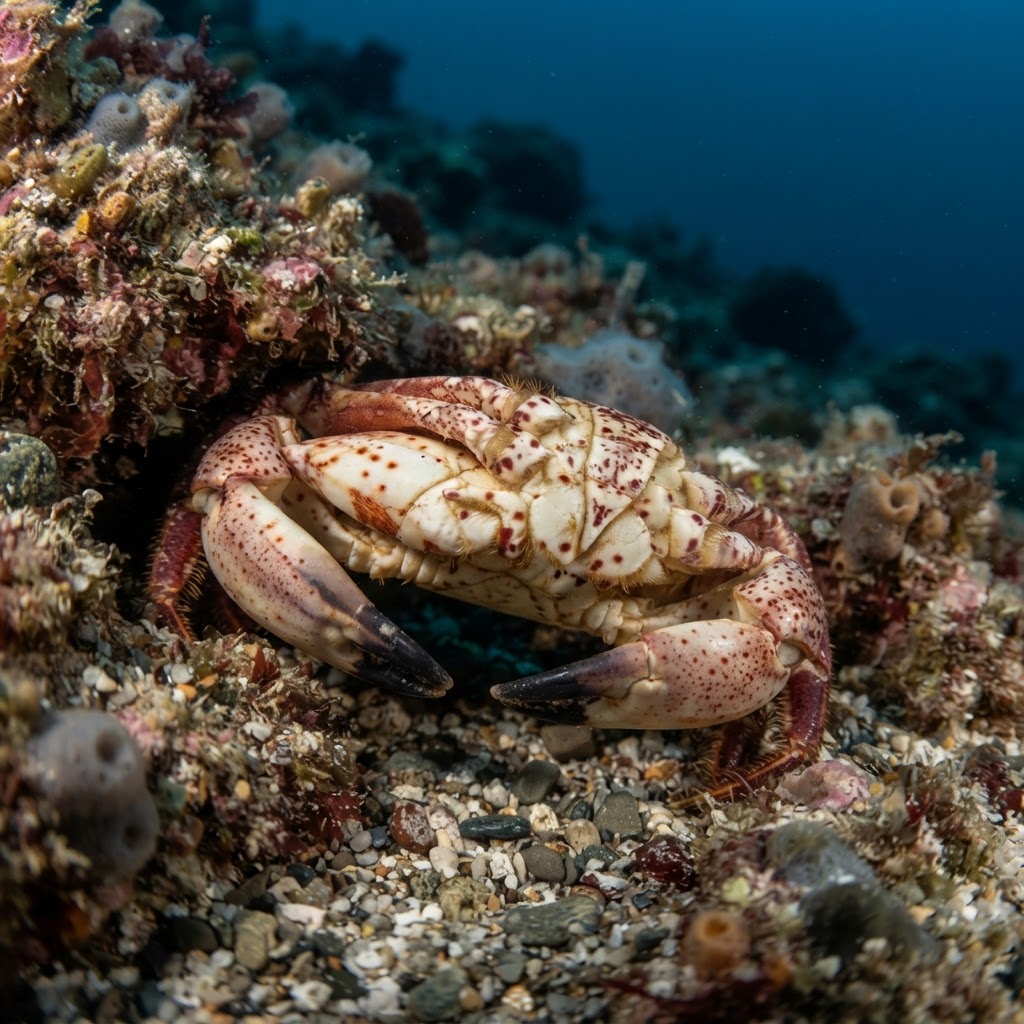
Squat, oval-shelled crab reaching about 10 cm across, with a reddish-brown to purplish carapace covered in fine mottling. Look for the row of small teeth along the front edge of the shell and stout, dark-tipped claws. It usually sits tucked against rock or under ledges rather than out in the open, so divers often spot just the claws or shell edge first.
Divers typically find it wedged into rock crevices, under kelp holdfasts, or beneath boulders during the day, often with just an antenna or claw tip visible. It's generally logged as uncommon rather than abundant at any given site, so a slow look under ledges pays off more than open-water scanning. It doesn't flee dramatically when approached, more often holding still or backing deeper into its hiding spot.
Like other cancer crabs, it moults its entire shell to grow, leaving behind a perfectly intact, empty crab-shaped exoskeleton that divers sometimes mistake for a dead animal.
Sightings show no clear seasonal pattern, and it turns up year-round across its logged range. Its comfort band of roughly 10.6 to 18.7C matches Pacific coast water temperatures for most of the year, so timing your dive around season isn't necessary.
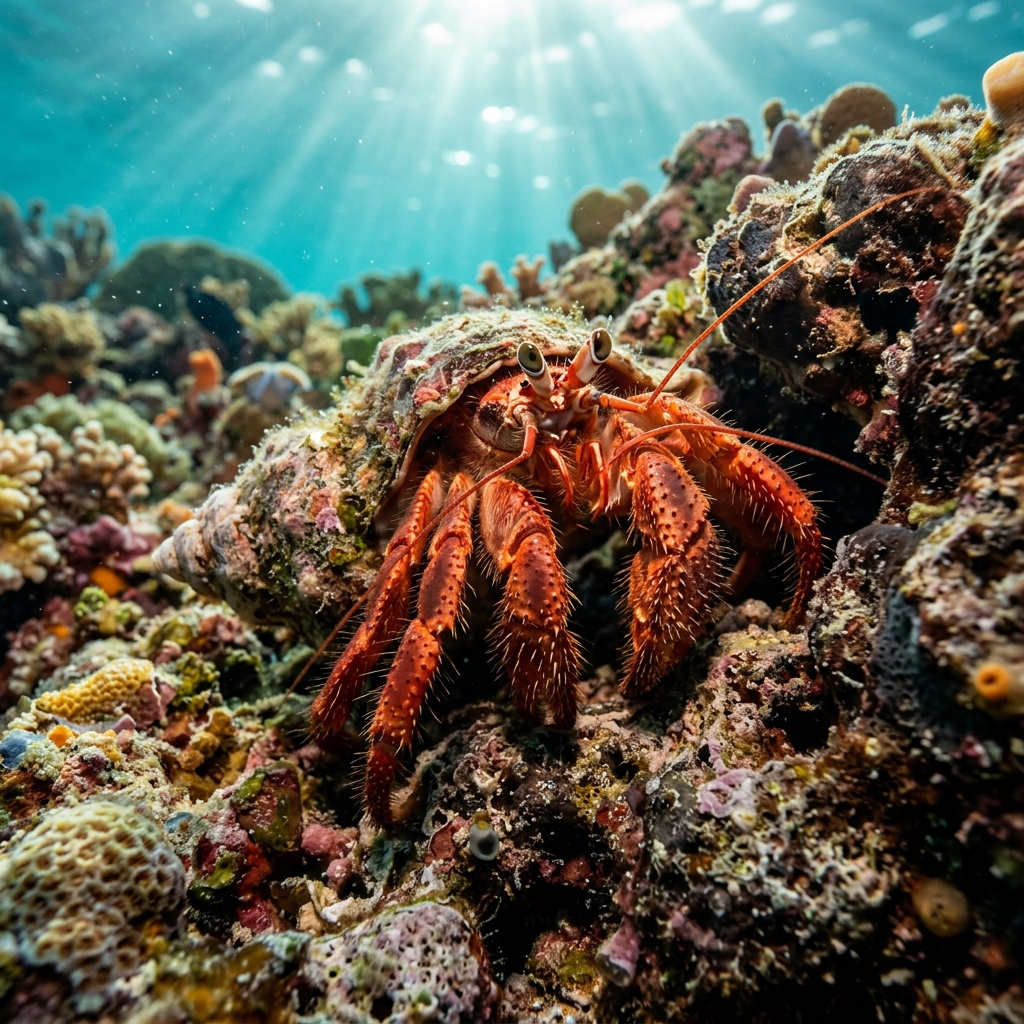
Reef neighbours a diver could mistake it for. Use the identification notes above to tell them apart.
Most consistently logged along the US Pacific coast, with California the strongest region for sightings, closely followed by the Pacific Northwest. Expect it on rocky reef and kelp-forest dive sites rather than sand or estuary flats, tucked into crevices and under boulders.
Mapping where Pacific Rock Crab is logged…
It's most reliably seen on rocky reef dives in California and the Pacific Northwest, tucked under ledges and boulders. All current logged sightings are from the US Pacific coast.
There's no strong season in the data, it's logged year-round. Water temperatures in its range typically sit between 10.6 and 18.7C, well within its comfort range for most of the year.
Look for a reddish-brown, mottled oval shell about 10 cm across with small teeth along the front edge and dark-tipped claws. It's usually half-hidden in a rock crevice rather than out on open reef.
They reach around 10 cm across the shell, a solid handful but not a large crab. Most divers see them at or near this full size, wedged into rocky crevices.
No, they pose no danger to divers. They tend to hold still or retreat further into cover rather than react aggressively when approached.
Site and sighting data is aggregated from diver logs, iNaturalist and GBIF. For taxonomy and conservation status:
European Green Crab
2,469 sites