Alphestes immaculatus
Mottled reef grouper found on rocky bottoms in Guanacaste and Baja California, 20.6-28.4C, uncommon but there year-round.
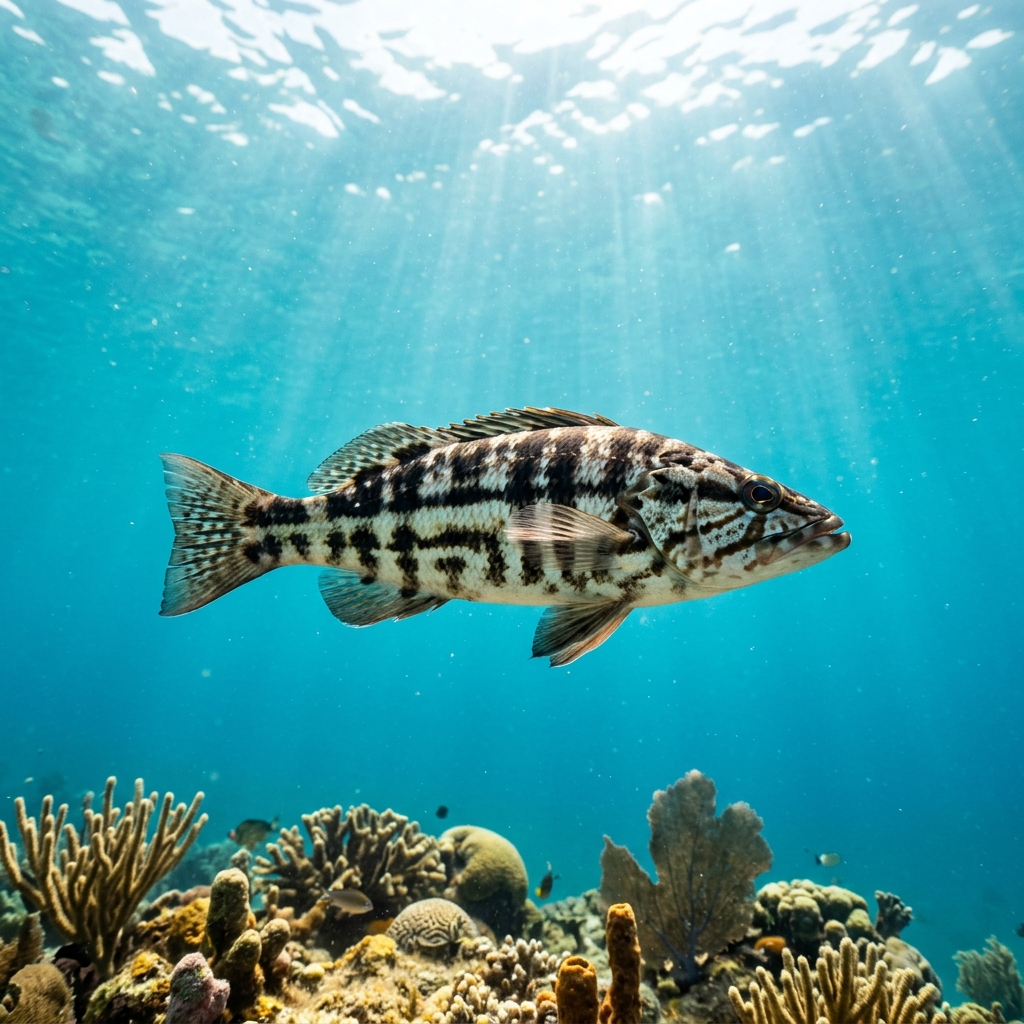
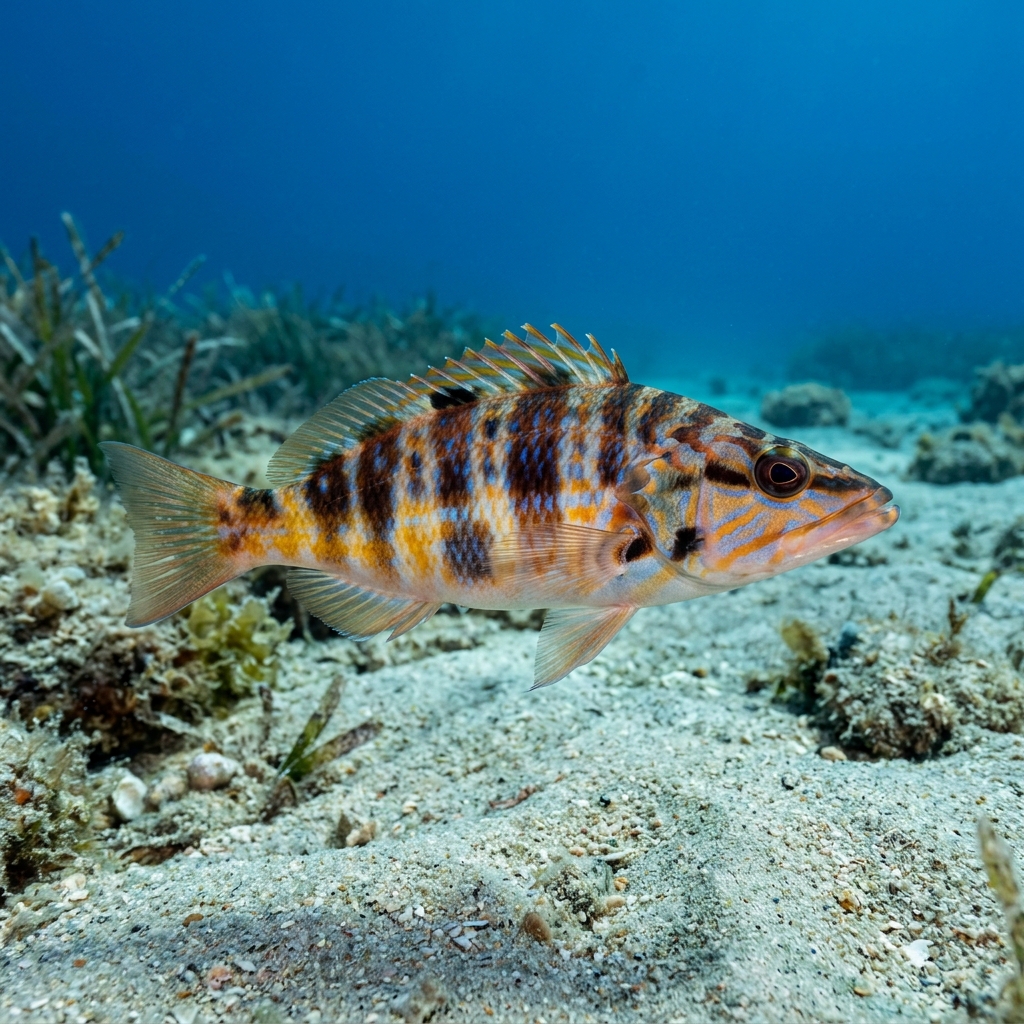
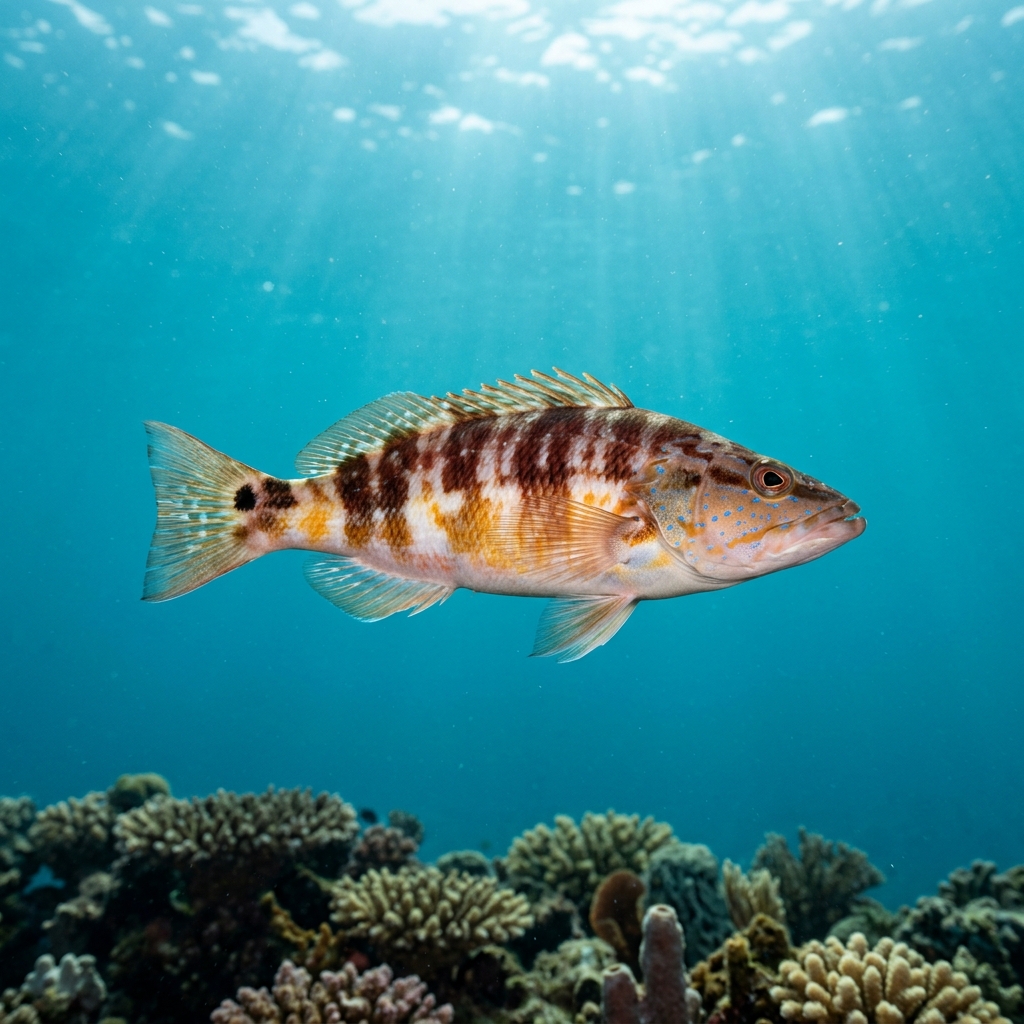
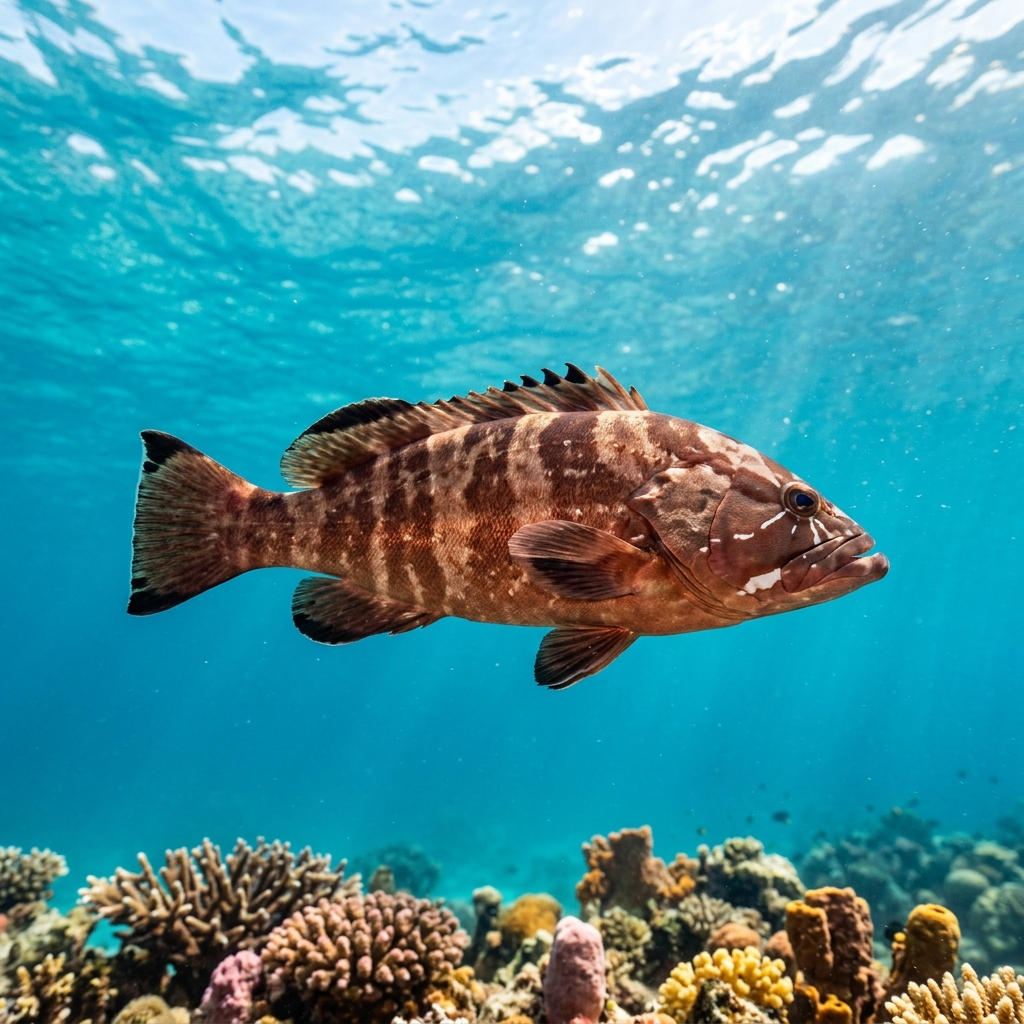
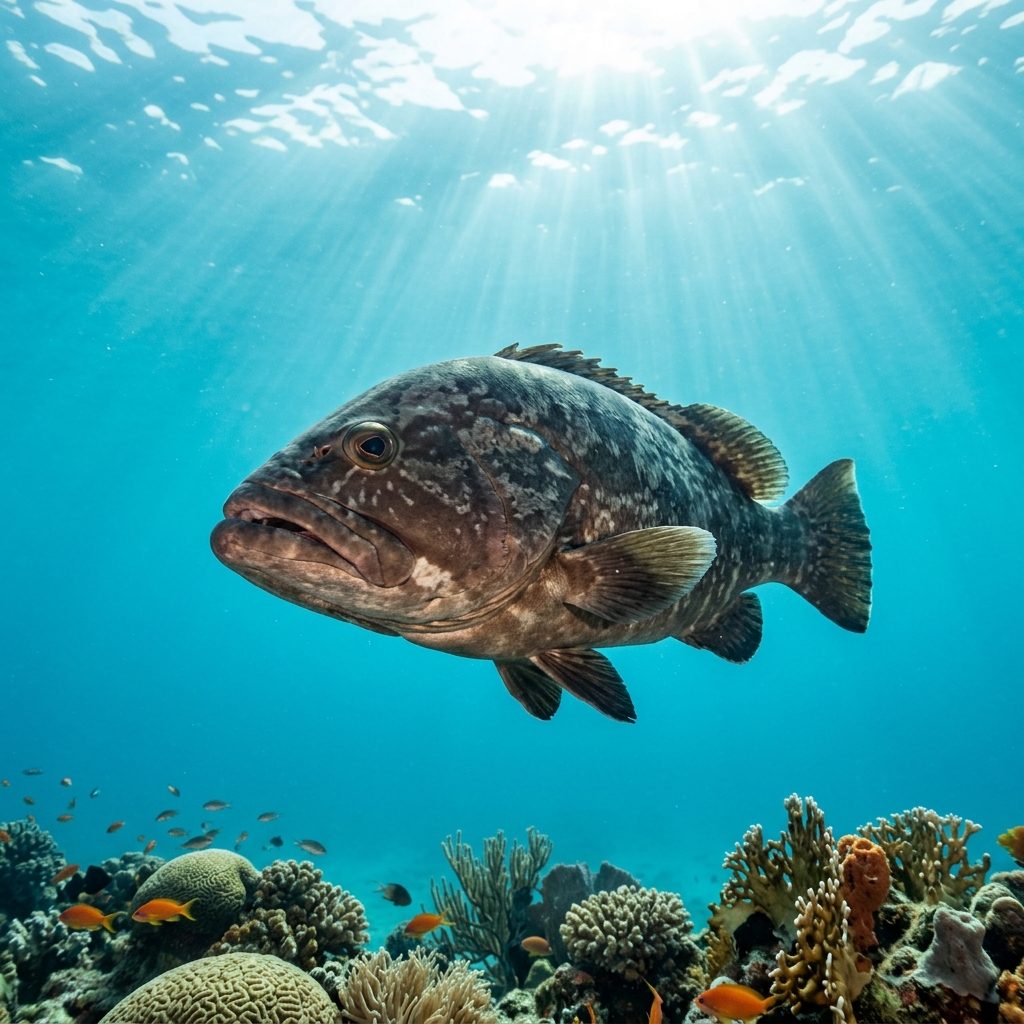
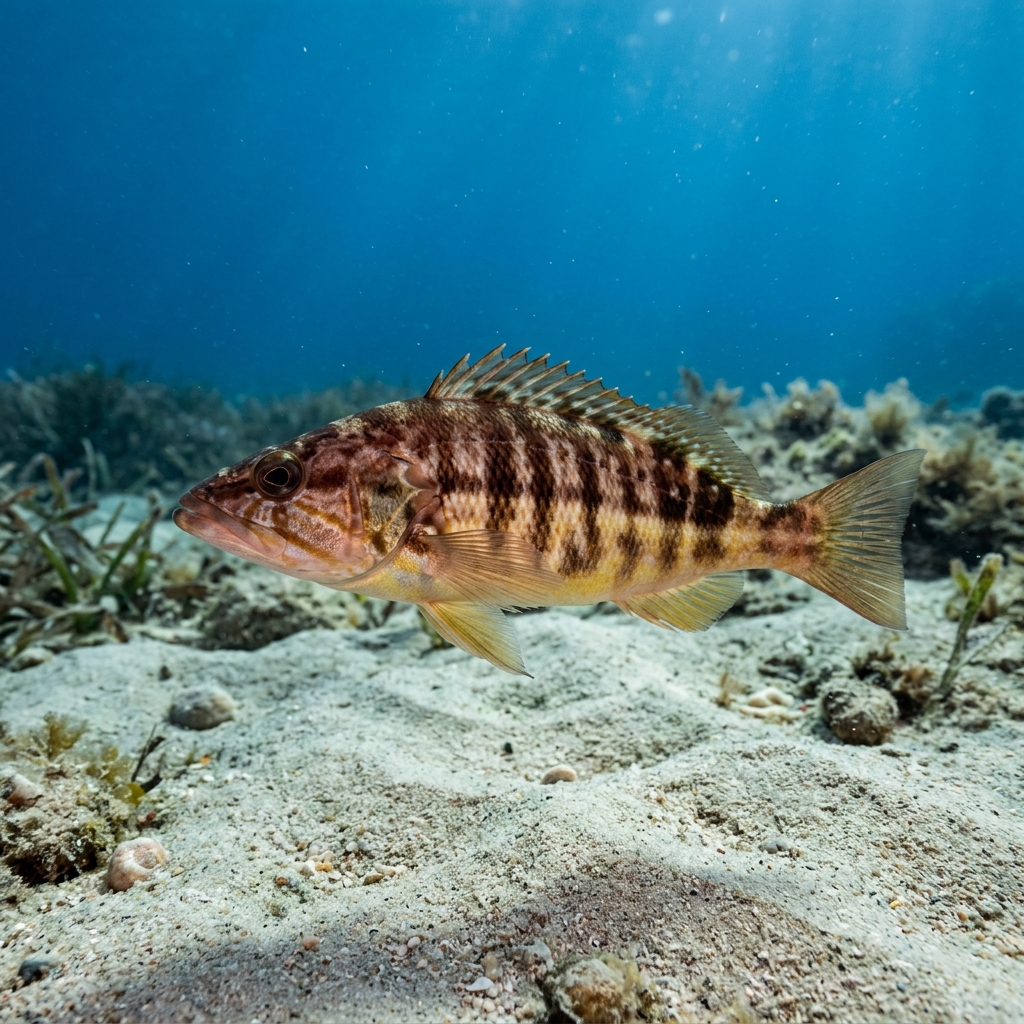
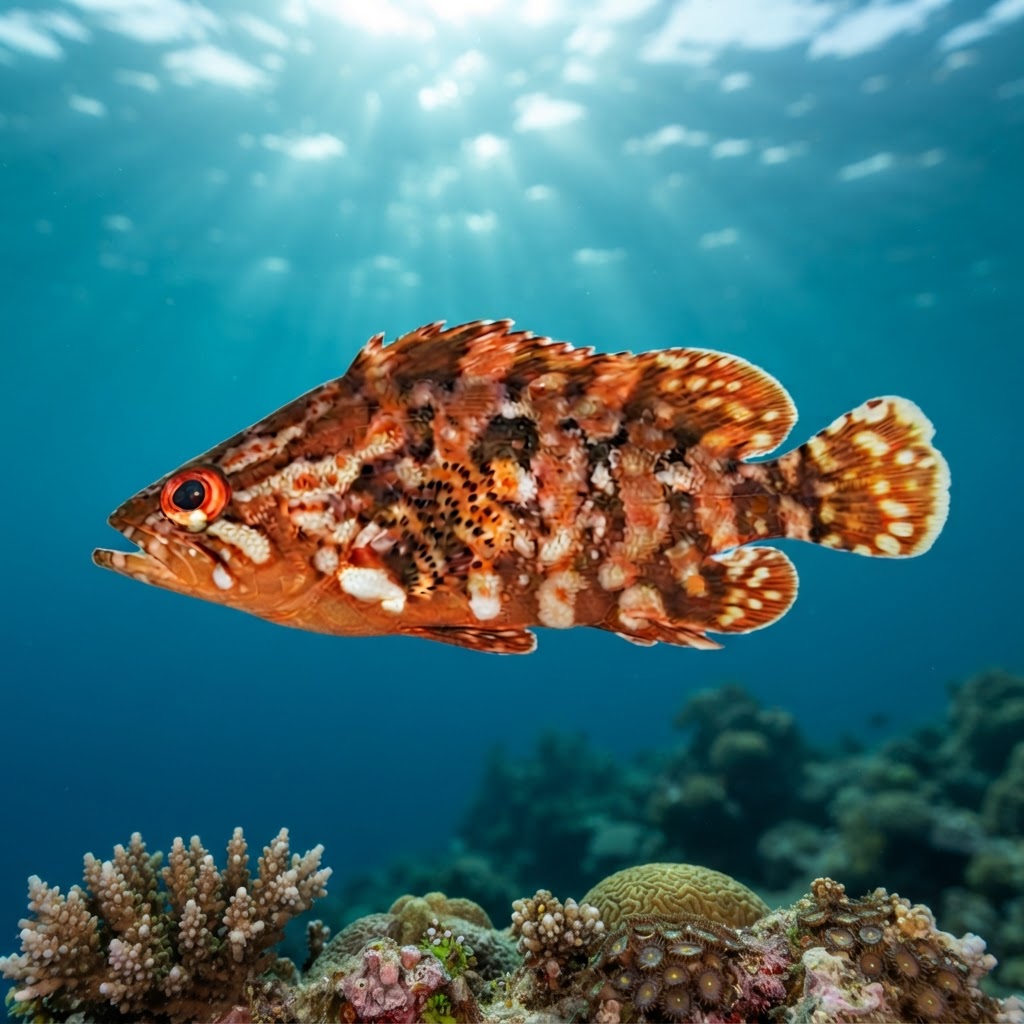
A stocky, compact grouper-relative that tops out around 21 cm, so easy to miss against a rocky bottom. Look for a heavily mottled brown, tan and cream body pattern that breaks up its outline rather than any single bold stripe or spot. It sits low and still on rock or rubble rather than swimming in open water, with a broad head and thick-set body typical of the group.
Divers usually find this one parked motionless on a rocky ledge or tucked among boulders, relying on its blotched camouflage rather than fleeing when approached. It's an ambush feeder, so expect long stationary spells punctuated by short strikes at passing prey rather than active cruising. Because it's uncommon to rare at most sites where it's logged, spotting one usually comes down to slow, careful scanning of rock crevices rather than open-water searching.
Like other members of its family, it likely relies on camouflage and a sit-and-wait ambush style rather than speed, making a sharp eye for shape and texture more useful than watching for movement.
Sightings don't show a clear seasonal pattern, and it's logged across a wide 20.6 to 28.4C range, so treat it as a year-round possibility at these rocky Pacific sites.
Most reliably logged in Costa Rica, especially around Guanacaste, and in Mexico across Baja California and the Pacific Coast. Smaller numbers turn up in Ecuador's Galápagos Islands and on Panama's Pacific coast, so it's very much an eastern Pacific find rather than a Caribbean one.
Mapping where Pacific Mutton Hamlet is logged…
It's most consistently reported in Costa Rica's Guanacaste region and in Mexico's Baja California and Pacific Coast areas. Smaller numbers of sightings also come from Ecuador's Galápagos Islands and Panama's Pacific coast.
There isn't a detected seasonal pattern in sightings, and it's found across a broad 20.6 to 28.4C temperature range. That points to a year-round presence at its known Pacific rocky-reef sites rather than a narrow window.
Look for a small, thickset grouper-shaped fish, around 21 cm, with a mottled brown and cream camouflage pattern rather than bold stripes or spots. It's typically found resting motionless on rock or rubble rather than swimming openly.
They stay small for a grouper relative, typically reaching about 21 cm, which makes them easy to overlook against a rocky bottom.
No, they pose no danger to divers. They're a small, camouflaged ambush predator that mostly ignores passing divers.
Site and sighting data is aggregated from diver logs, iNaturalist and GBIF. For taxonomy and conservation status:
Blacktip Grouper
2,726 sites