Gastropteron pacificum
Uncommon cold-water find in the Pacific Northwest and British Columbia, spotted year-round in 8.6 to 14.6C water.
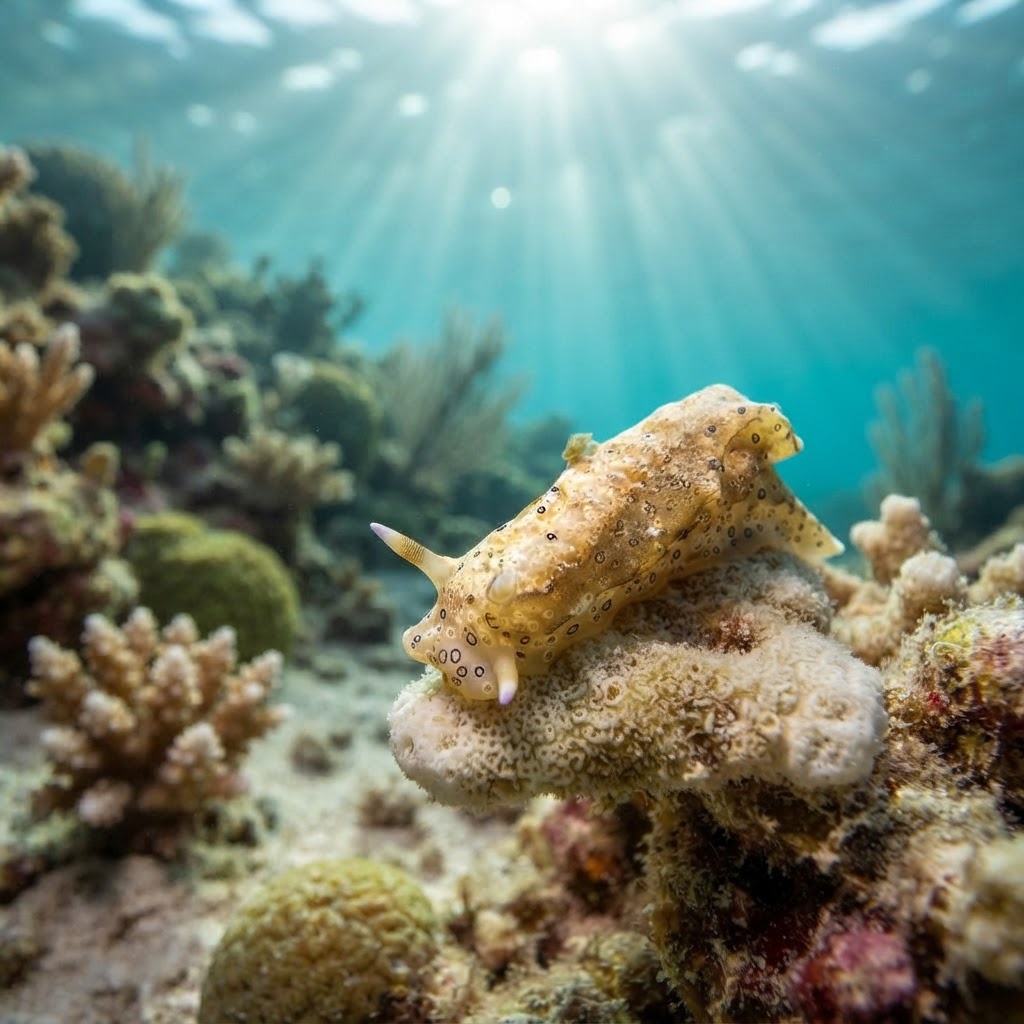
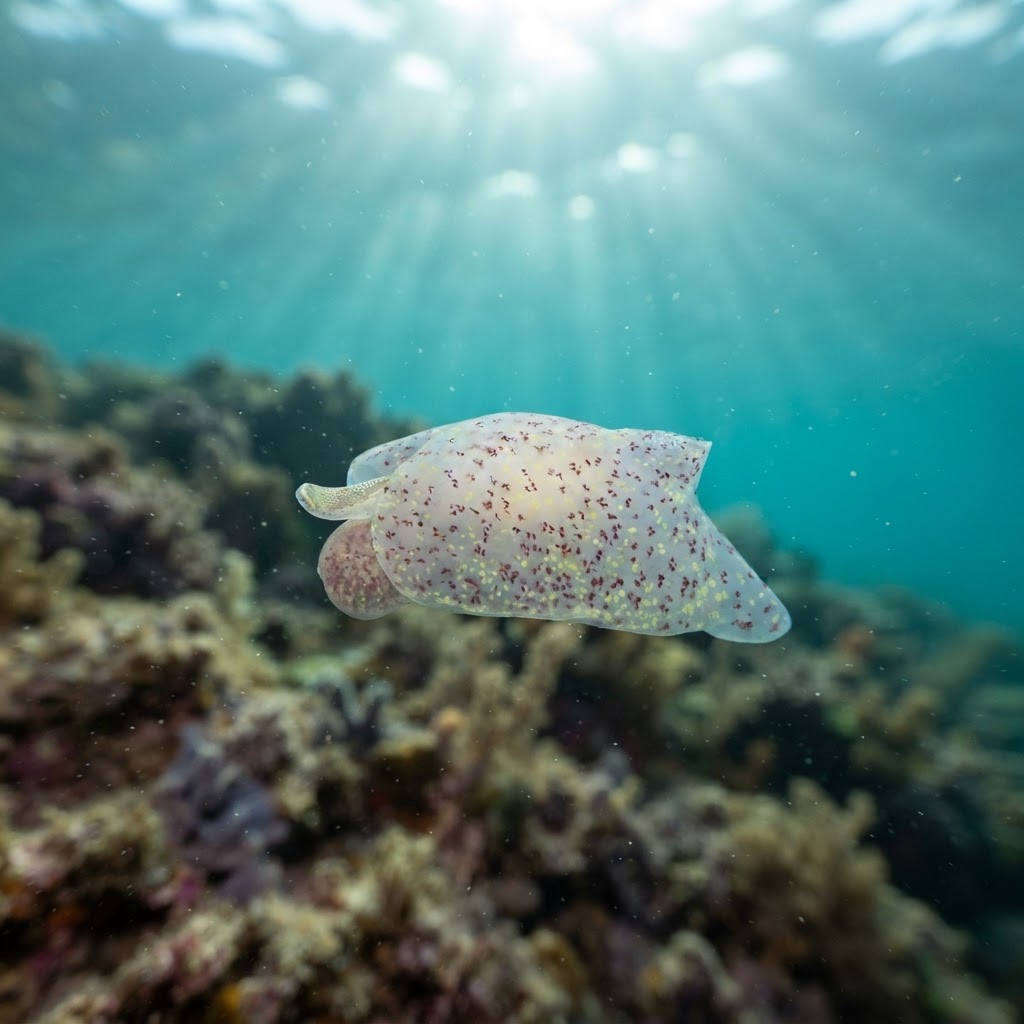
Tiny at around 3 cm, with a soft, almost fragile-looking body and a pair of broad, flared lateral flaps (parapodia) that give it a batwing silhouette as it swims or crawls. Colour runs translucent to orange-brown, often with the internal organs faintly visible through the skin. Look for it low on rock walls or in silty gullies rather than out in open water, since its swimming is more of a slow flutter than a cruise.
Divers usually find it moving slowly over rock and silt, sometimes flexing those wing-like flaps in a slow flutter that looks more like swimming than crawling. It tends to stay tucked into low-light crevices and cooler patches of reef, and shows no reaction to divers beyond simply continuing its slow, unhurried pace.
Those flared parapodia aren't just for show, they can flap in a loose rhythm that lets the slug lift briefly off the bottom and drift, an unusual trick for a sea slug this size.
No clear seasonal pattern shows up in the sightings, and its 8.6 to 14.6C temperature range holds through most of the year on these coasts, so it's a year-round target rather than a seasonal one.
Reef neighbours a diver could mistake it for. Use the identification notes above to tell them apart.
Most reliably logged in the Pacific Northwest of the United States, with additional sightings across British Columbia, Canada. These cold, nutrient-rich waters are the only places divers currently report it, so plan a Pacific Northwest or BC trip if you want a real shot at one.
Mapping where Pacific Batwing Seaslug is logged…
It's most often reported in the Pacific Northwest of the United States, with further sightings in British Columbia, Canada. These cool coastal waters are currently the only known diver hotspots for this species.
Sightings don't show a strong season, and the water it favours, roughly 8.6 to 14.6C, is typical of the Pacific Northwest and BC most of the year, so divers log it across the calendar rather than in one window.
Look for a translucent to orange-brown body only about 3 cm long, with broad flared side flaps that give it a winged look. It moves slowly over rock and silt rather than swimming far, and is usually found tucked into cooler, shaded spots on the reef.
They stay small, typically around 3 cm, which combined with their translucent colouring makes them easy to swim past without noticing.
No. It poses no threat to divers and is best left undisturbed for a photo.
Its wing-like side flaps let it flutter and briefly lift off the seafloor, a rare bit of swimming ability for a slug this small.
Site and sighting data is aggregated from diver logs, iNaturalist and GBIF. For taxonomy and conservation status:
Light-spotted Aegires
3,168 sites