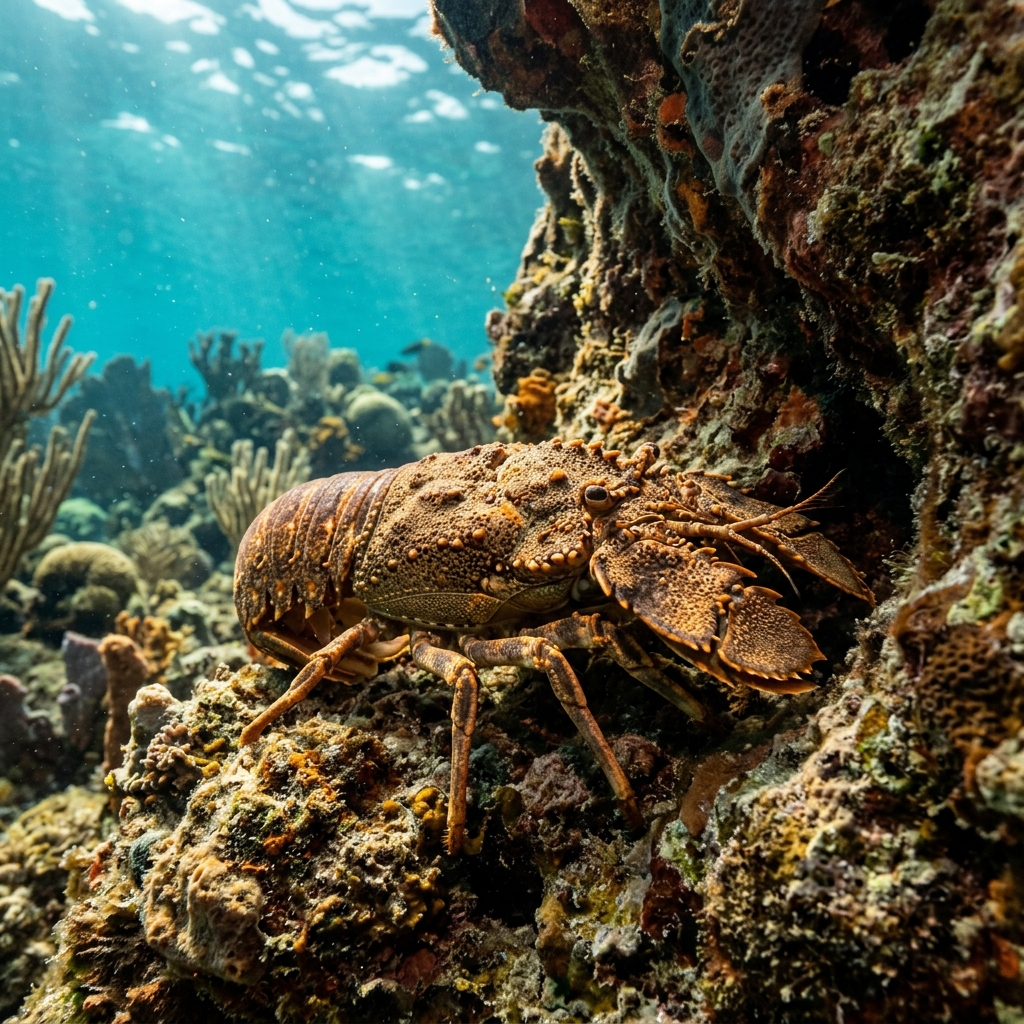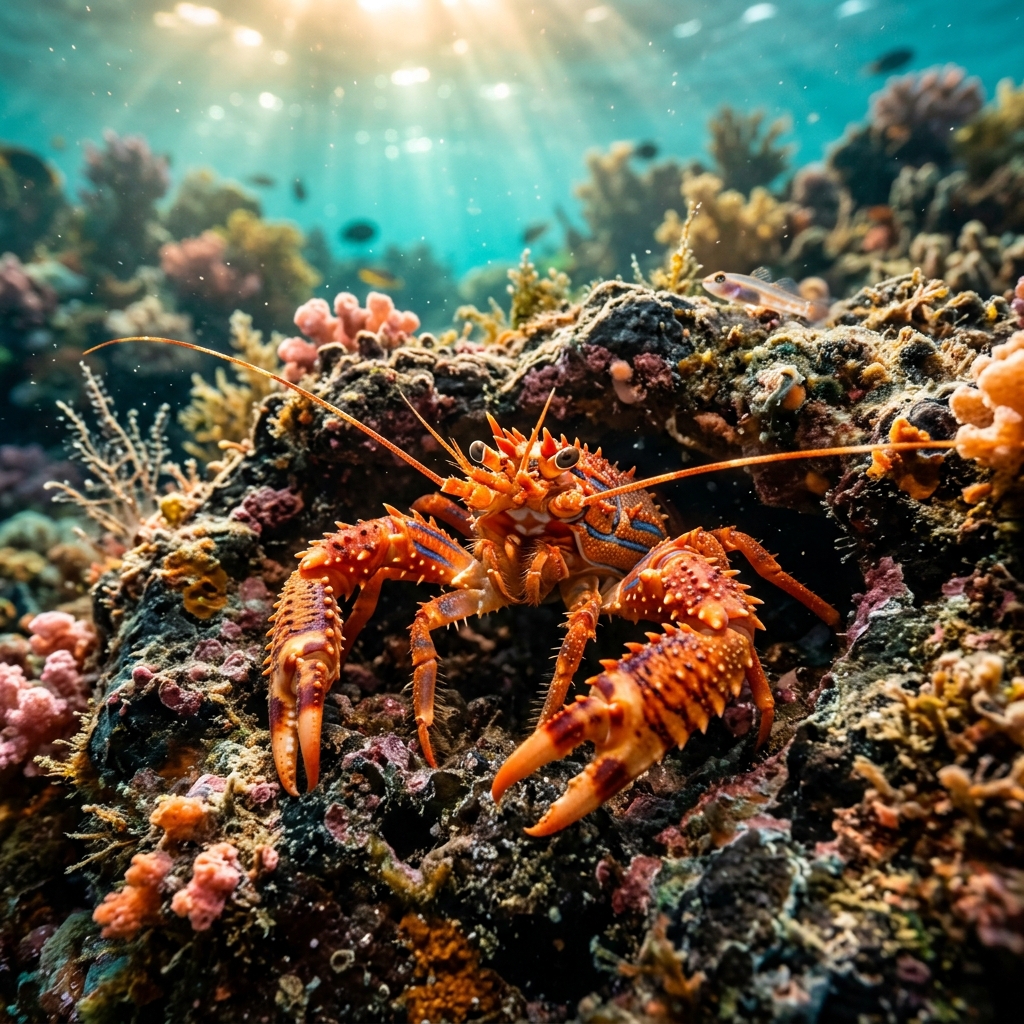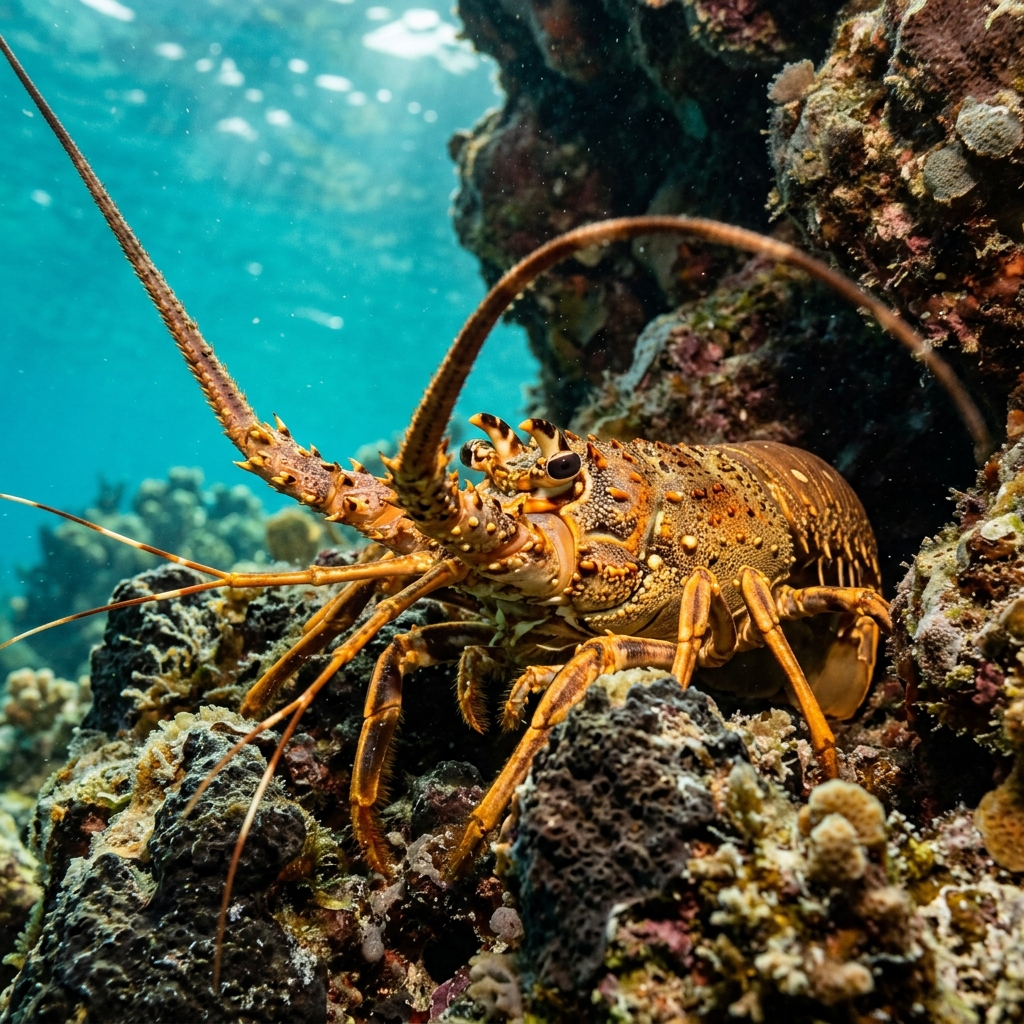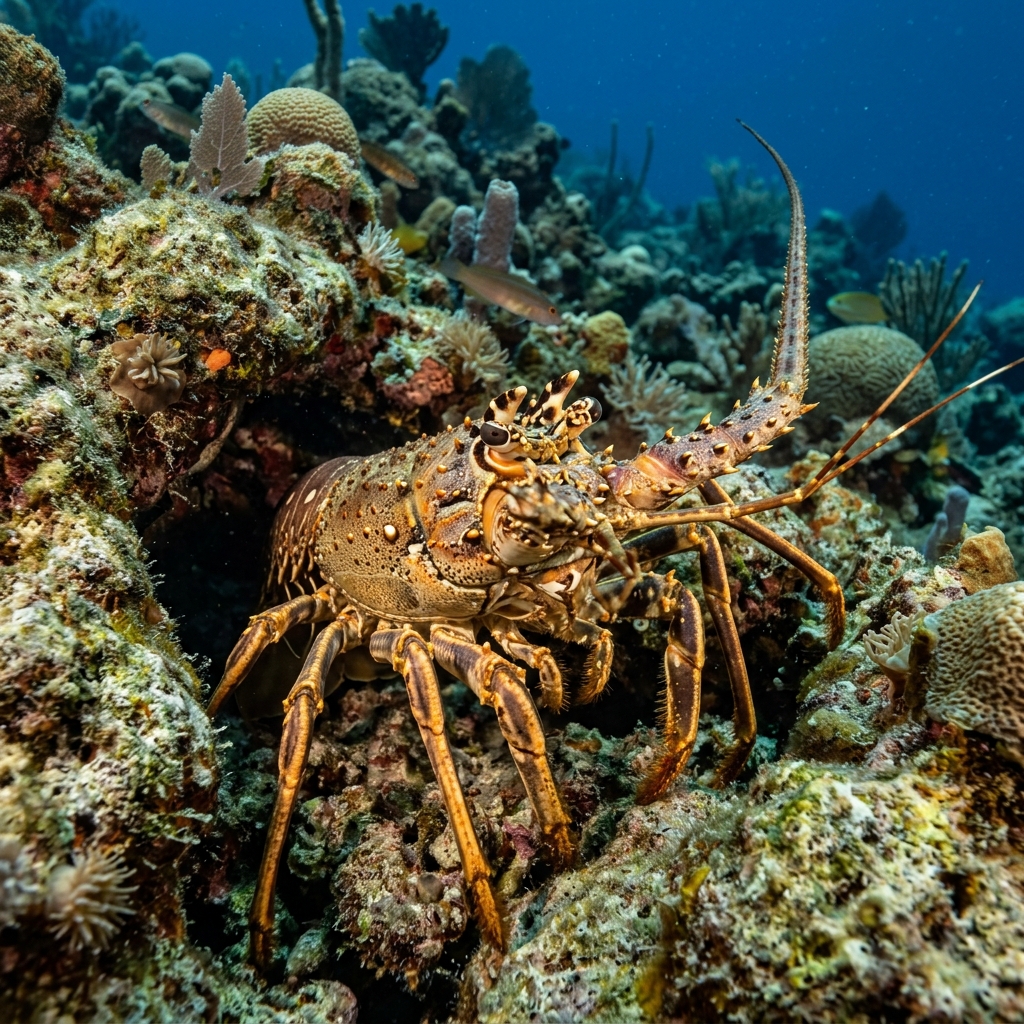
Pacifastacus leniusculus
Spot Signal Crayfish in the alpine lakes of Central Switzerland and Salzkammergut. Cold-water divers find them in 7-16 °C freshwater sites across Europe.
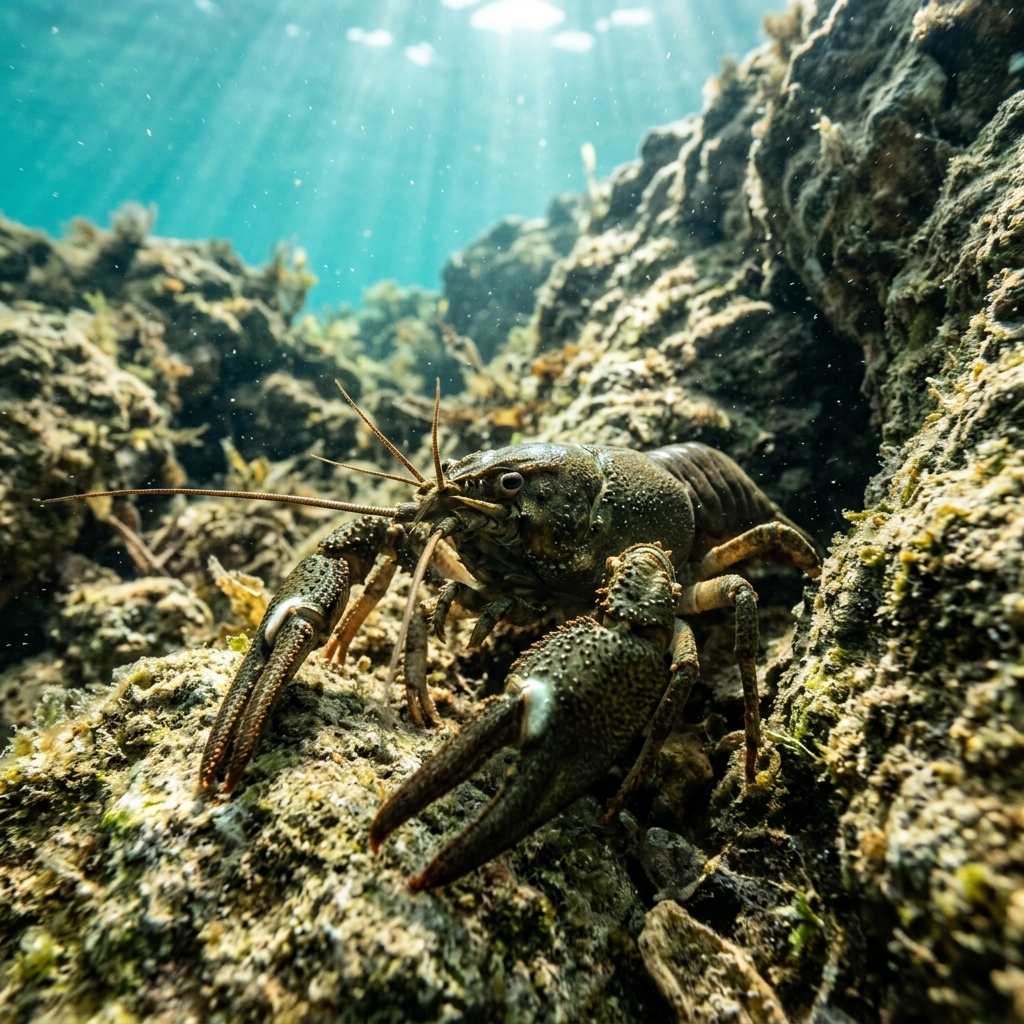
Look for the distinctive pale turquoise or whitish patch at the base of each claw where the two halves meet, this is the feature that gives the species its name and sets it apart from native European crayfish. The body is typically olive-brown to reddish-brown, robust and flattened, with large, broad claws relative to body size. Adults are sizeable for a freshwater crustacean, though they often tuck themselves under rocks and log debris, so you may only spot the claws protruding. The underside of the claws frequently shows a reddish-orange colouration.
Signal Crayfish are most active after dark, foraging along the bottom for organic matter, invertebrates, and plant material, so night dives or dusk dives give the best chance of finding them out in the open. During the day they shelter under flat rocks, submerged logs, and bank undercuts, and a diver who searches these microhabitats carefully will sometimes spot claws or antennae poking out. They tend to retreat backwards into cover when approached, so slow, deliberate movement reduces disturbance.
Originally introduced to Europe from western North America as a farmed species, the signal crayfish has spread widely through freshwater systems and is considered highly invasive across much of Europe, outcompeting native crayfish species and carrying a water mould (crayfish plague) to which it is largely resistant but which is lethal to European crayfish.
There is not enough monthly sighting data to identify a peak season, so encounters are possible year-round. The observed temperature range of roughly 7 to 16 °C fits cool alpine and pre-alpine lakes, which maintain suitable conditions across most of the year.
Signal Crayfish are most commonly logged in Central Switzerland and the Salzkammergut lake district of Austria, which together account for the large majority of recorded dive sites. The French Alps also offer a meaningful number of sites, with a small number of observations from the Pacific Coast of the United States, the species' native range. All recorded sightings come from freshwater lakes and rivers.
Mapping where Signal Crayfish is logged…
The strongest concentrations of diver-logged sightings are in the alpine lakes of Central Switzerland and the Salzkammergut district of Austria. The French Alps also have a solid number of sites. A handful of observations come from the Pacific Coast of the United States, part of the species' native western North American range.
The clearest marker is the pale turquoise or whitish patch at the hinge of each claw, visible even in low light. The claws themselves are large and broad, the body olive-brown to reddish-brown, and the underside of the claws often shows reddish-orange. No other crayfish likely to be encountered in European alpine lakes shares that turquoise claw patch.
Adults commonly reach 10 to 16 cm in total body length, with large individuals occasionally exceeding 20 cm. The claws are proportionally large and are often the first thing a diver notices when the animal is partially hidden under a rock.
Sighting data does not point to a single best season, so encounters are possible throughout the year at suitable sites. Because the species is nocturnal by nature, a night dive in a lake where they are present improves your odds considerably compared with a daytime dive.
No. Signal Crayfish pose no meaningful risk to divers. They may pinch if handled, but the standard advice is simply to observe without touching. They will typically retreat if approached.
Introduced from North America, signal crayfish carry crayfish plague, a water mould that is harmless to them but devastates native European crayfish species. Combined with their aggressive foraging and burrowing behaviour, they have displaced native crayfish across large parts of Central and Western Europe. Divers should be careful not to transfer water or wet equipment between lakes to avoid spreading the pathogen.
Site and sighting data is aggregated from diver logs, iNaturalist and GBIF. For taxonomy and conservation status:
Caribbean Spiny Lobster
2,209 sites