Opsanus tau
Warty, camouflaged, and easy to miss: find Oyster Toadfish tucked under ledges in the Carolinas and the Northeast US year-round.
Safety warning
Its bite is strong and its dorsal spines carry a mild venom, so the real risk is a diver putting a hand into a crevice without looking first. Leave gaps in wrecks and rockwork unexplored by touch and it will simply hold still and let you pass.
If you're stung
Venomous spinesGeneral first-aid guidance, not a substitute for professional medical care. In an emergency, call your local emergency number.
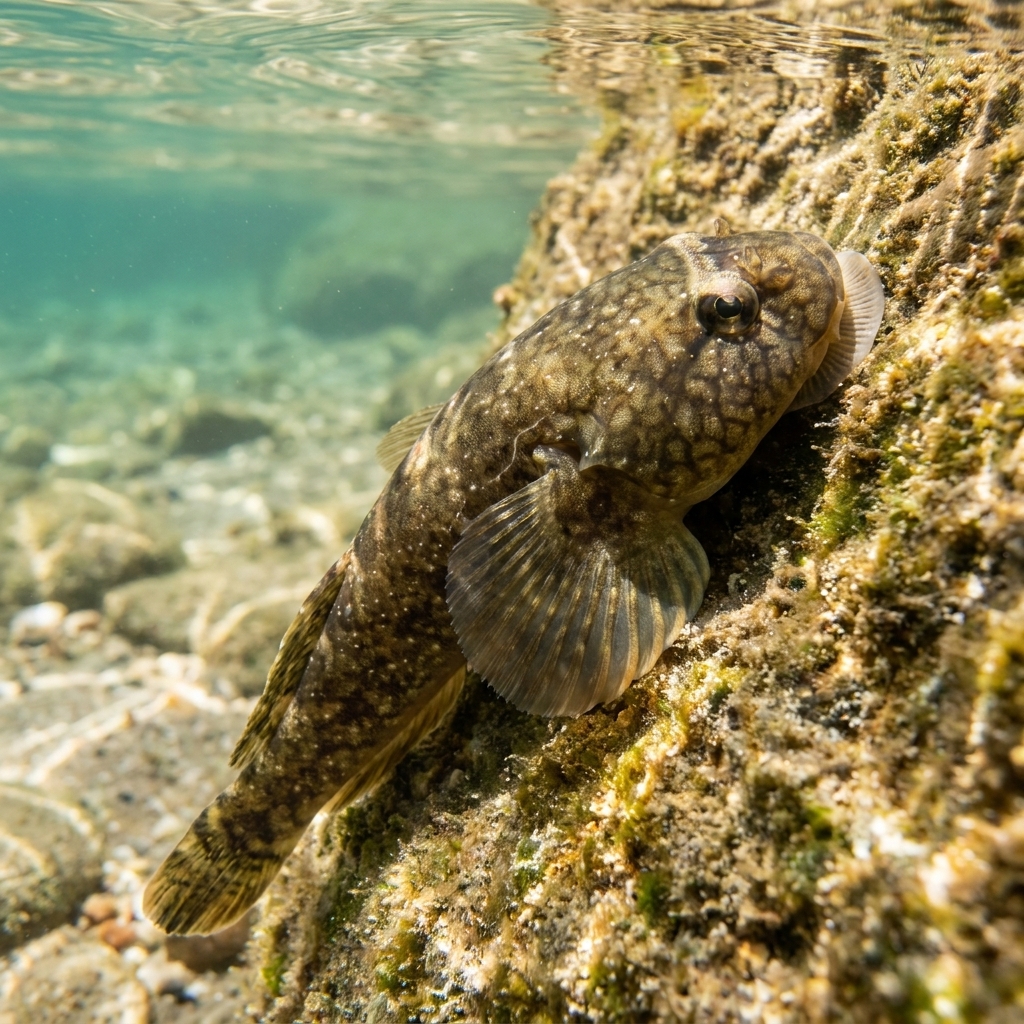
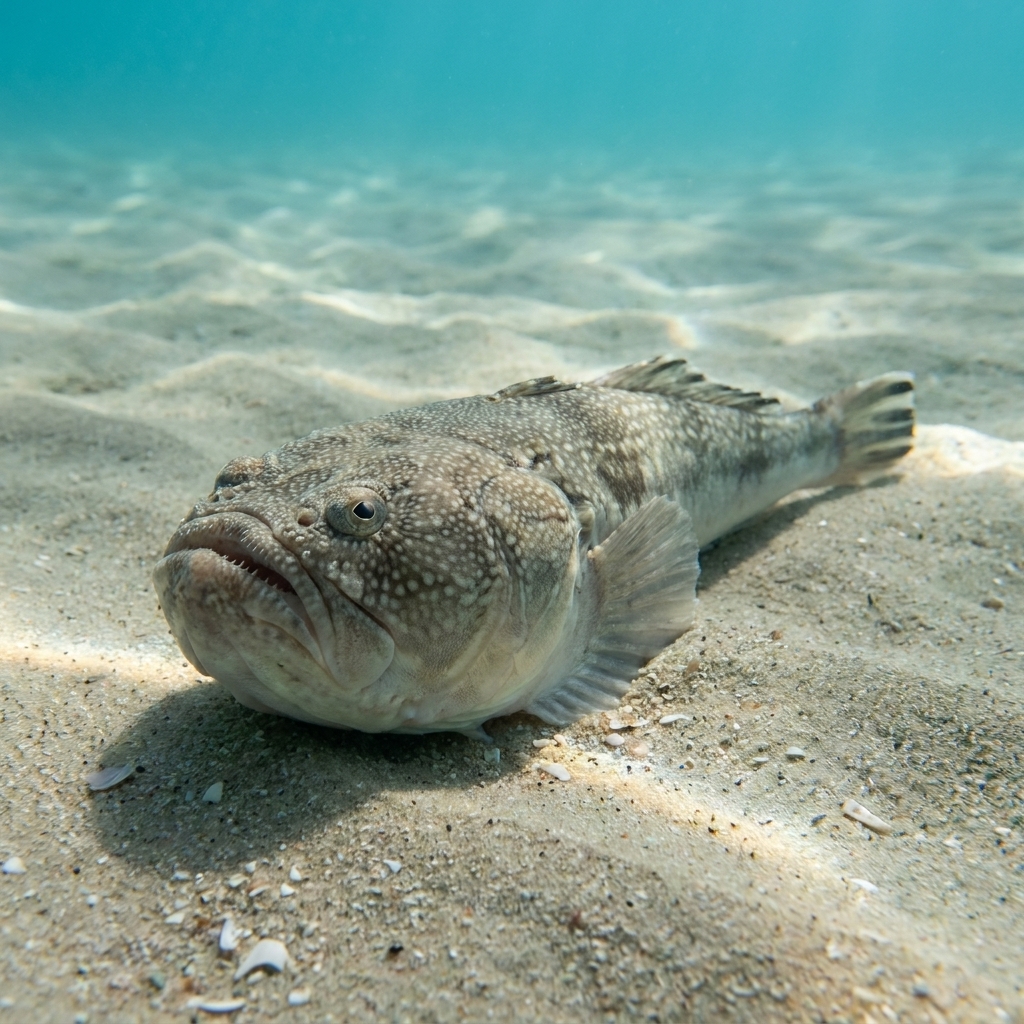
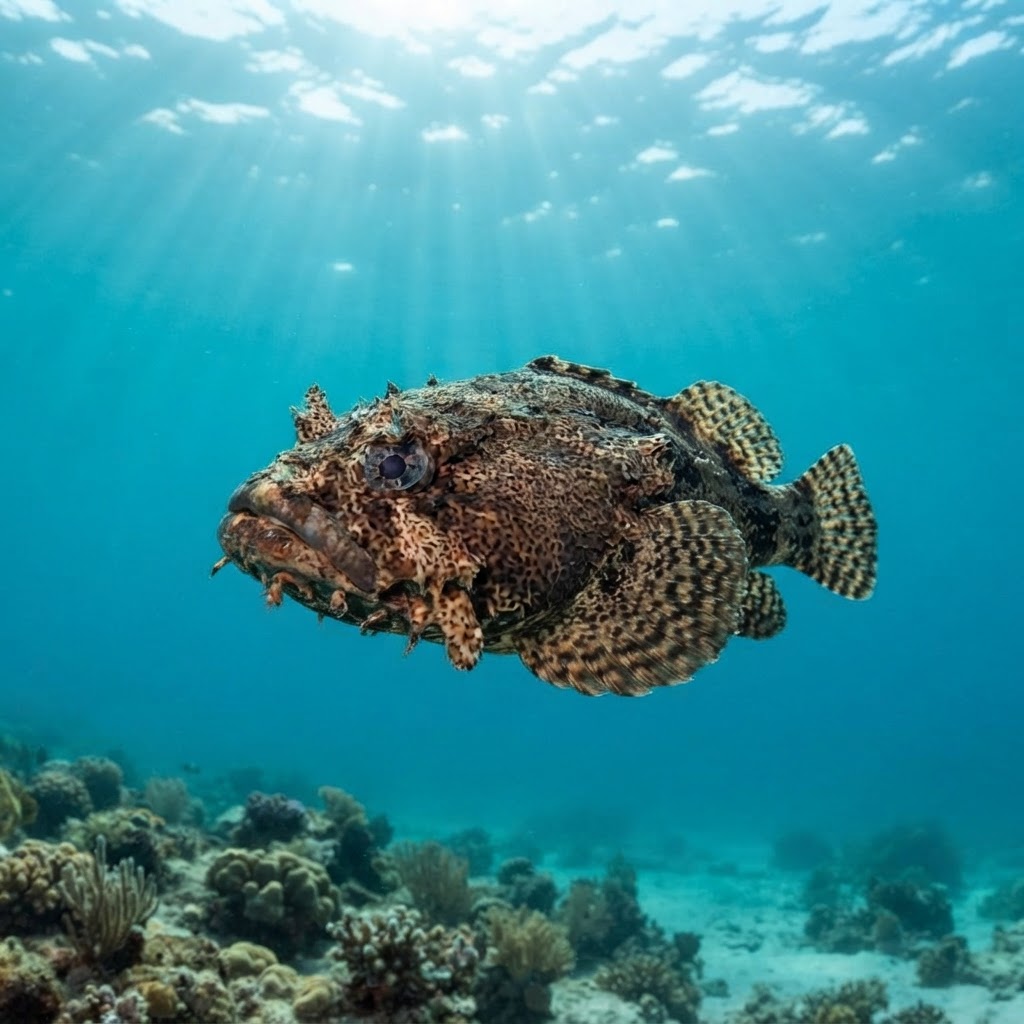
Flat, broad head with a wide mouth and fleshy flaps of skin around the jaw and chin that break up its outline against rock or wreckage. Mottled brown, olive and yellow skin blends into whatever it's sitting on, and the body tapers back into a stocky, almost toad-like build up to about 30 cm. It sits motionless on the bottom rather than swimming in open water, so the giveaway is usually just two eyes and a wide mouth staring out from a crevice.
Spends most of its time wedged into a crevice, under a ledge or tucked into wreck debris, relying on stillness and colour-matching rather than fleeing. It's territorial around its chosen hole and will hold its ground as divers pass rather than bolt, which is exactly why it's easy to overlook and also why divers shouldn't reach into dark cracks without checking first. Most sightings come from slow, close-focus looks at structure rather than mid-water encounters.
Males guard the eggs alone, fanning and defending a clutch stuck to the roof of a den until the young hatch, one of the more attentive parenting displays among coastal fish.
Recorded across a wide temperature range from 10.2 to 26.1C, and there isn't enough seasonal data to point to one particular window, so treat it as a year-round bottom-dweller in these regions. Divers report it as uncommon rather than seasonal, so persistence and a good eye for camouflage matter more than timing.
Logged exclusively at sites in the United States, with the Carolinas the most reliable region and the Northeast US close behind. Look for it on wrecks, rocky ledges and jetty structure rather than open reef.
Mapping where Oyster Toadfish is logged…
Sightings come from the United States, most reliably in the Carolinas and the Northeast, on wrecks, jetties and rocky bottom structure rather than open reef.
There's no clear seasonal pattern in the data, and it's been recorded across a broad temperature range from about 10 to 26C, so it's best treated as a year-round find in its US range.
They can deliver a firm, mildly venomous bite if handled or if a hand is pushed into their hiding spot. They won't chase a diver, so the simple fix is to avoid reaching blindly into wreck holes or rock crevices.
Look for a flat, broad head with fleshy skin flaps around the mouth, mottled brown and olive colouring, and a stocky body up to about 30 cm parked motionless on the bottom.
They typically reach around 30 cm, with a thickset, toad-like body shape rather than a streamlined one.
Males stand guard over a nest of eggs stuck to the ceiling of a den, fanning and defending them until hatching, a level of parental care that's unusual among bottom-dwelling fish.
Site and sighting data is aggregated from diver logs, iNaturalist and GBIF. For taxonomy and conservation status:
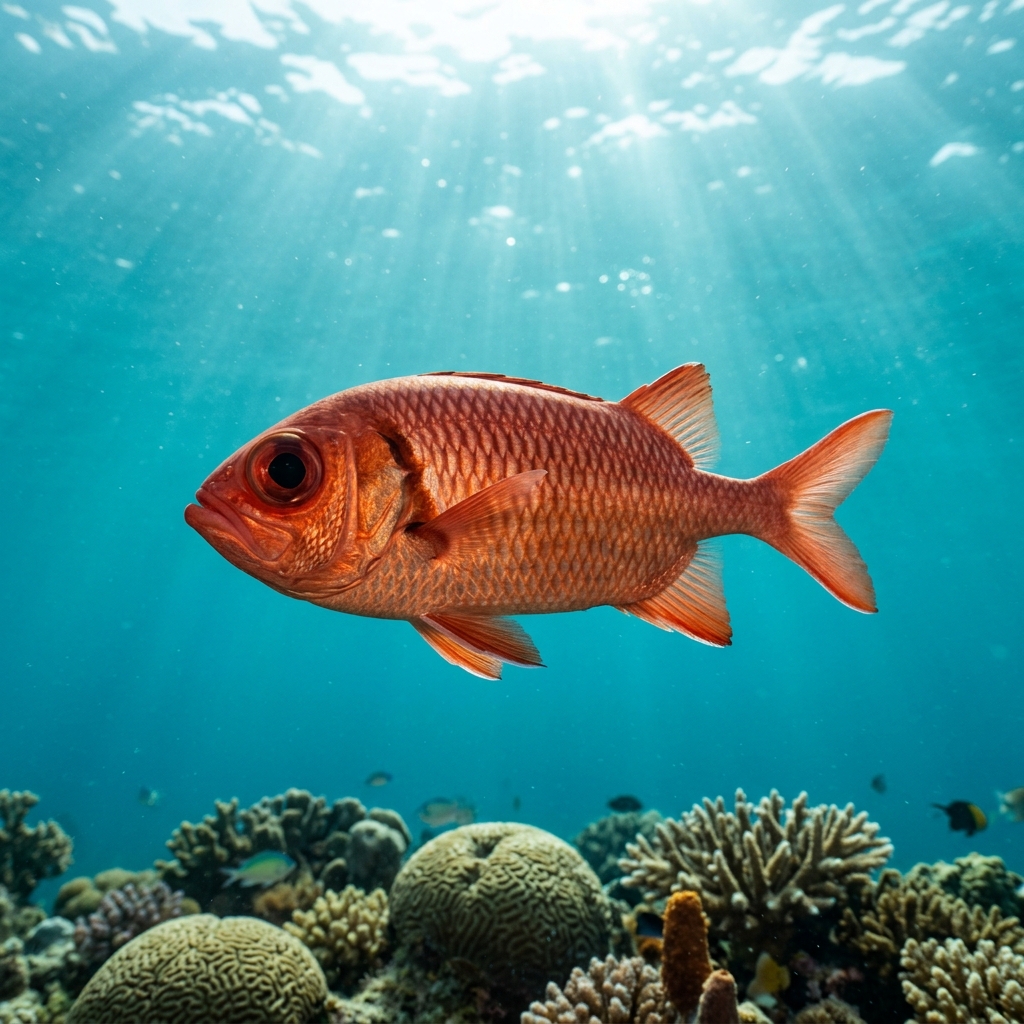
Soldierfish
3,612 sites