Chaetodon lunulatus
Diagonal blue lines and a black eye band make this reef regular easy to spot in Raja Ampat, Fiji or Hawaii at 25-29 C, year-round.
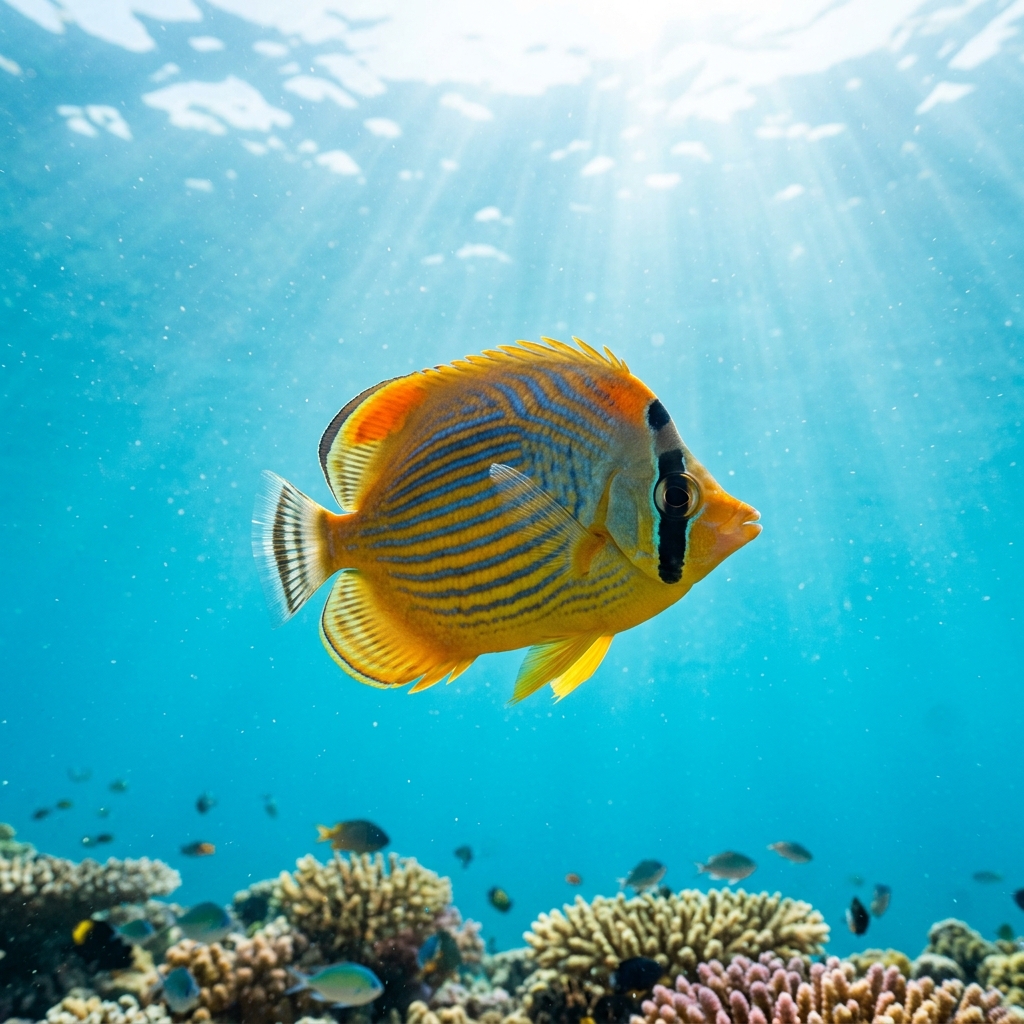
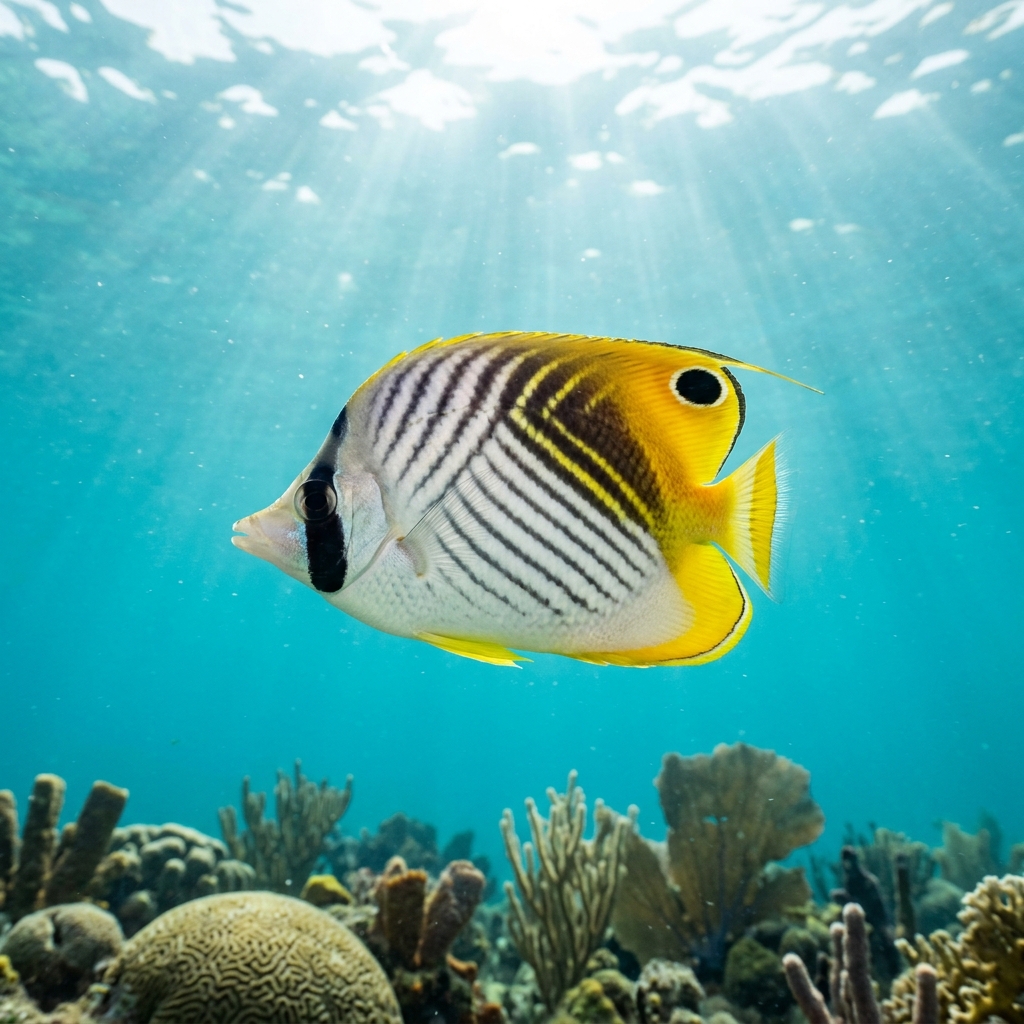
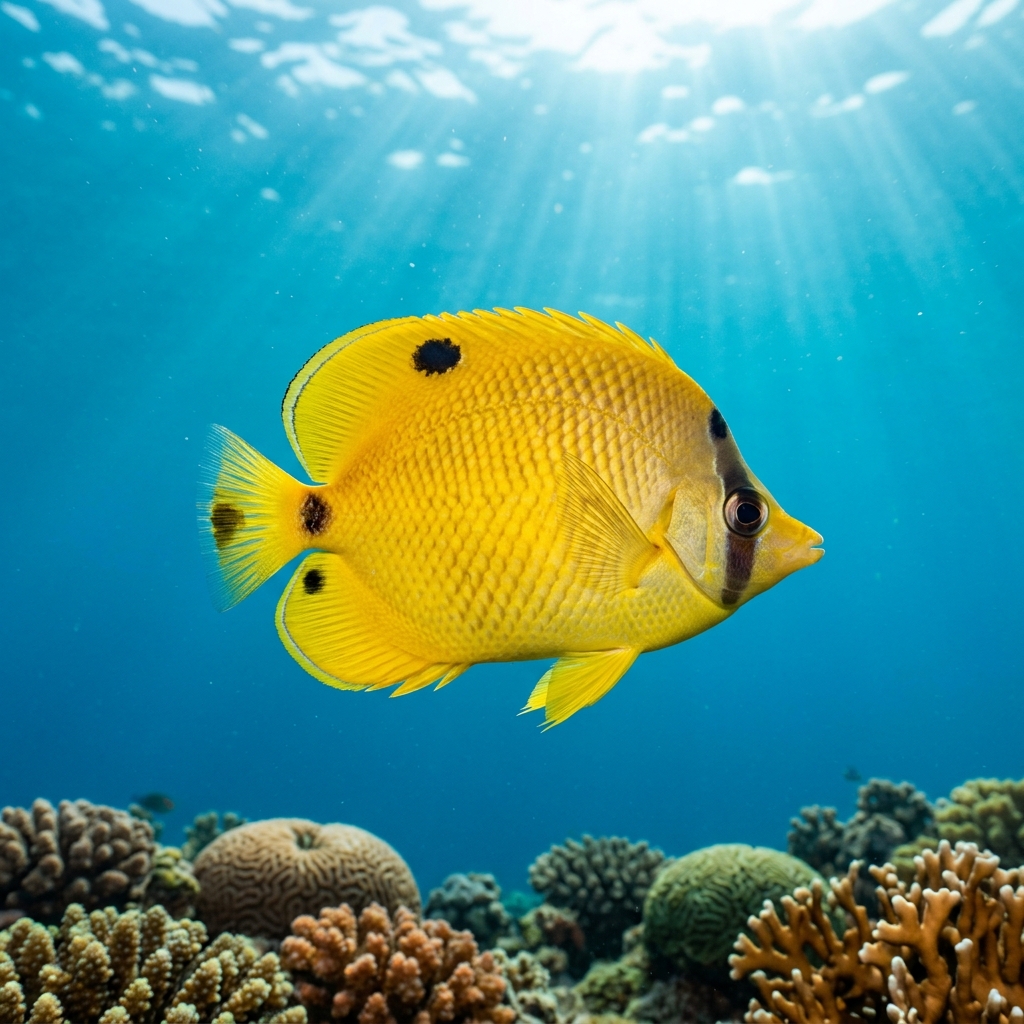
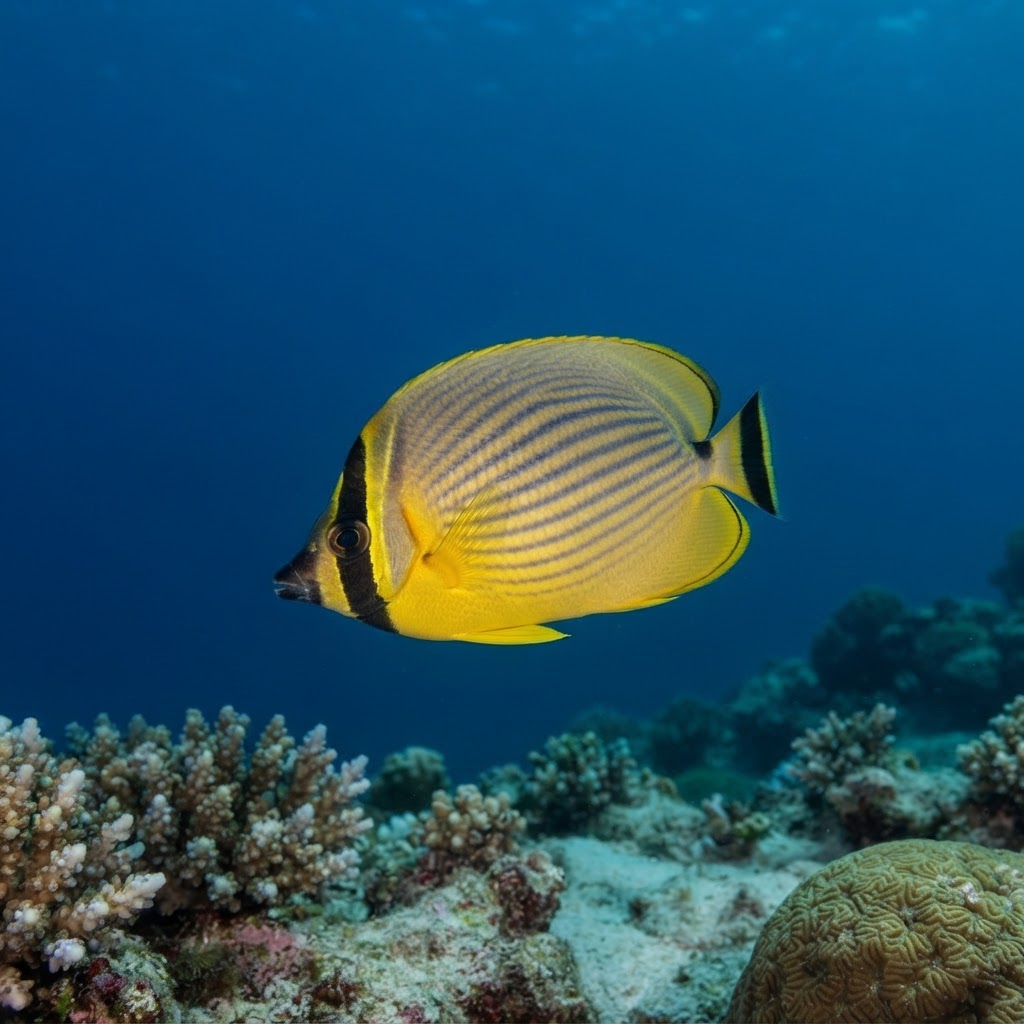
A compact, oval-bodied fish around 18 cm with a orange-red base colour crossed by diagonal blue-white lines running nose to tail. A bold black band runs through the eye, and the rear body carries a dark, rounded patch near the tail edge that helps separate it from plainer relatives. It swims singly or in tight pairs, hugging the reef contours rather than the open water.
Usually seen picking at coral polyps and algae on the reef face, moving in a slow, deliberate way that lets divers get close without spooking it. Often spotted in monogamous pairs that hold a patch of reef and defend it against other butterflyfish, most active during daylight hours over shallow to mid-depth reef structure.
Like many Chaetodon species it feeds heavily on live coral polyps, making it a useful indicator of reef health since it tends to thin out on degraded coral.
No clear season shows up in the sighting data, and its comfort range of roughly 24.7 to 29.3 C spans tropical reefs year-round, so any month works on most of these reefs.
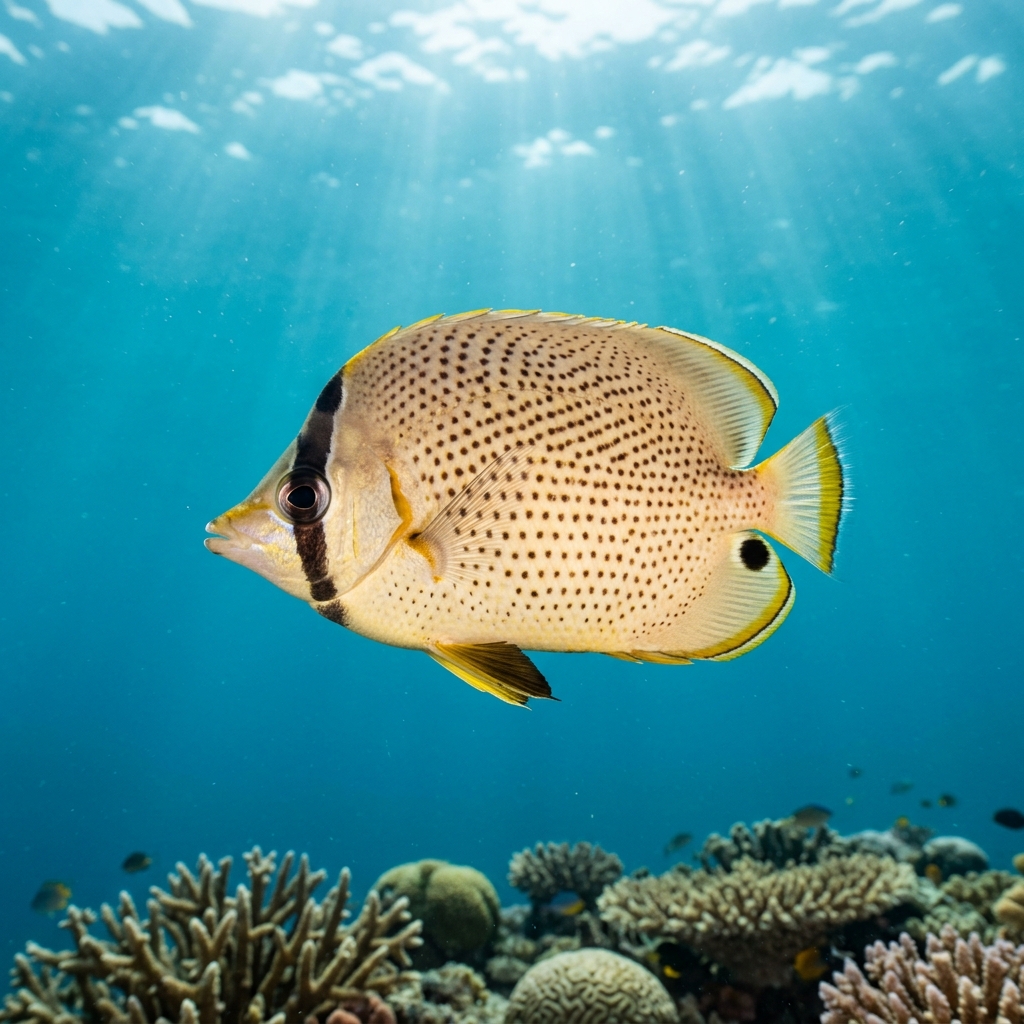
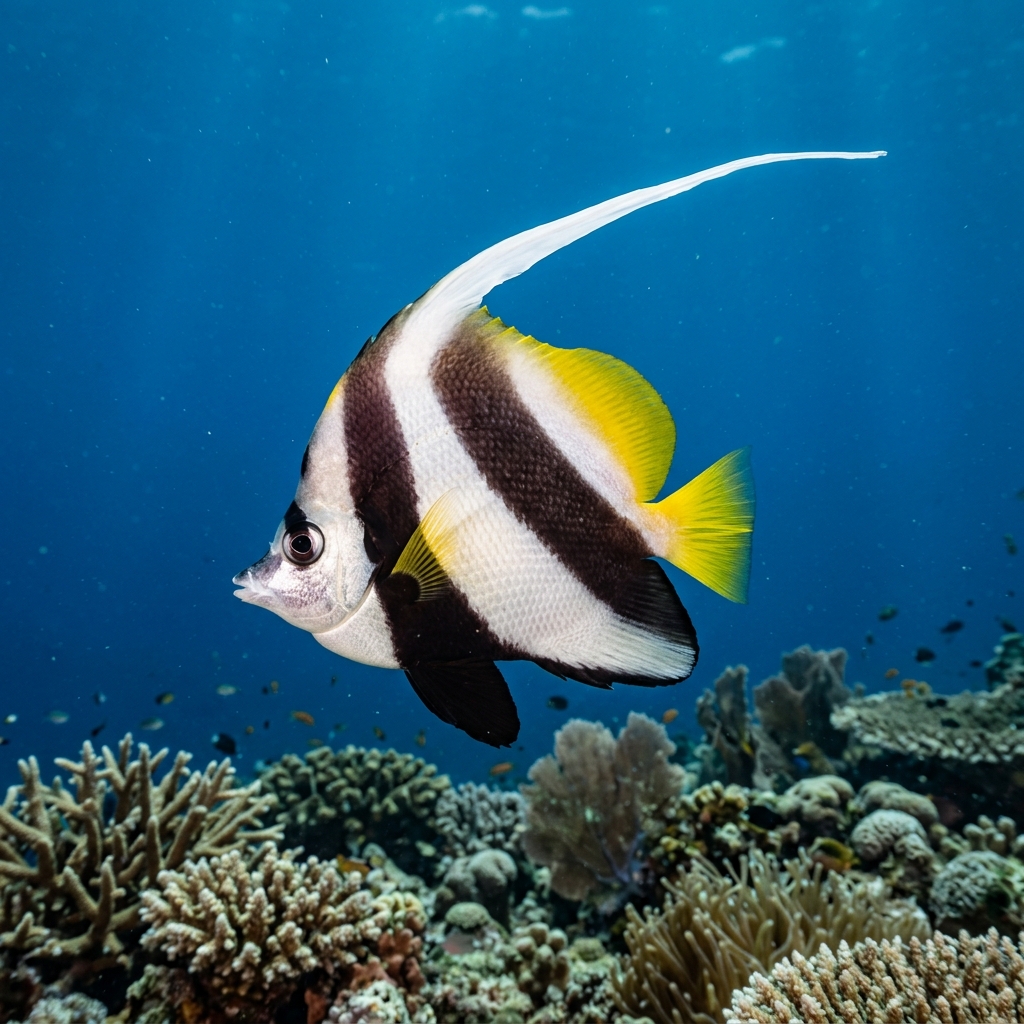
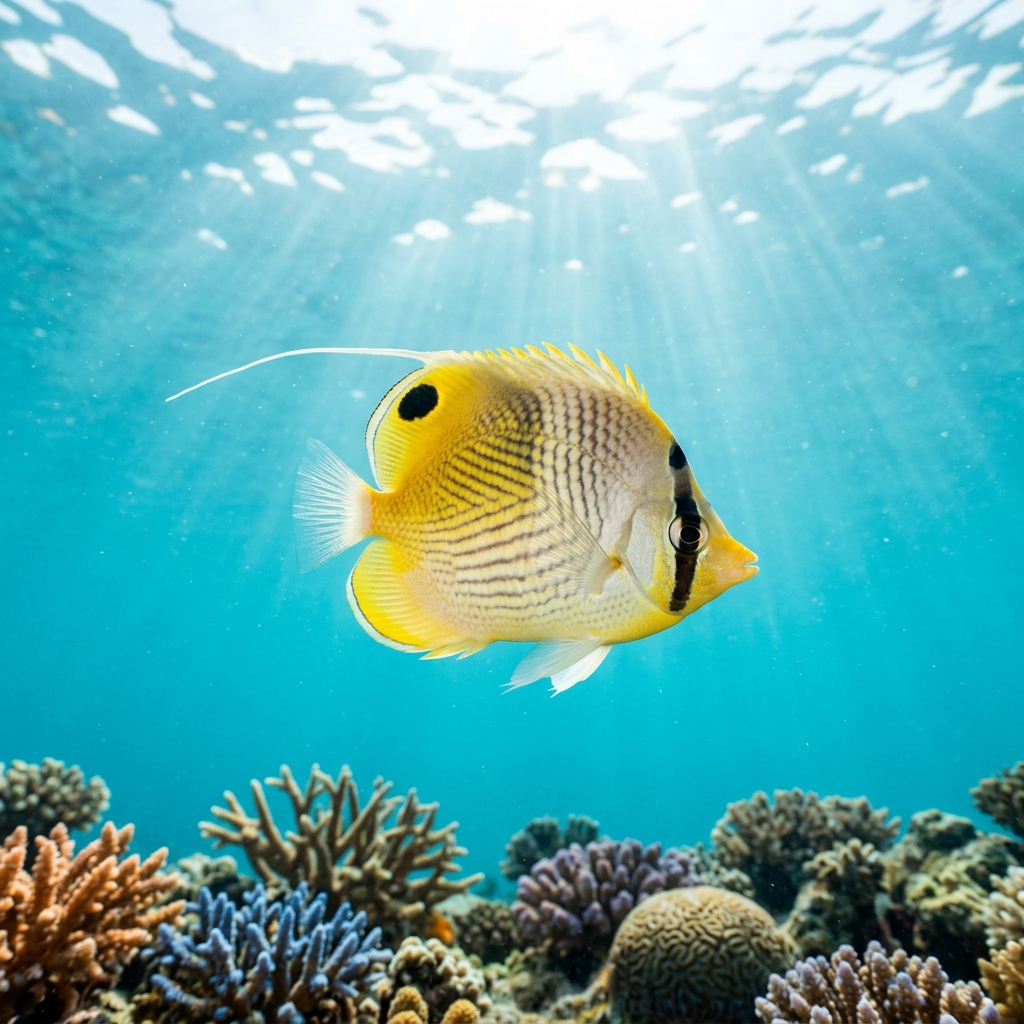
Reef neighbours a diver could mistake it for. Use the identification notes above to tell them apart.
Most reliably logged across Indonesia and the Philippines, with Sulawesi, Nusa Tenggara and Raja Ampat all strong, plus the Visayas region in the Philippines. French Polynesia, especially the Society Islands, and Queensland in Australia also produce frequent sightings, alongside Okinawa in Japan and Hawaii in the United States.
Mapping where Oval Butterflyfish is logged…
Indonesia and the Philippines top the list, particularly Sulawesi, Nusa Tenggara and Raja Ampat, alongside the Visayas. French Polynesia's Society Islands, Queensland in Australia, Okinawa in Japan and Hawaii also see regular sightings.
There is no strong seasonal pattern in the data. Warm reef temperatures between about 25 and 29 C mean they are present on tropical reefs throughout the year.
Look for an orange-red oval body crossed by diagonal blue-white lines, a black band through the eye, and a dark patch near the rear of the body. They are usually seen alone or in pairs close to the reef.
They typically reach about 18 cm in length, a fairly small and compact reef fish that is easy to overlook if you are not scanning the coral face closely.
No, they pose no threat to divers. They are small, reef-grazing fish that will simply move along the coral if you approach too closely.
Site and sighting data is aggregated from diver logs, iNaturalist and GBIF. For taxonomy and conservation status: