Macropharyngodon ornatus
Spot this small, speckled wrasse on sandy patches in Sulawesi and Raja Ampat, in warm 25-29C water year-round.
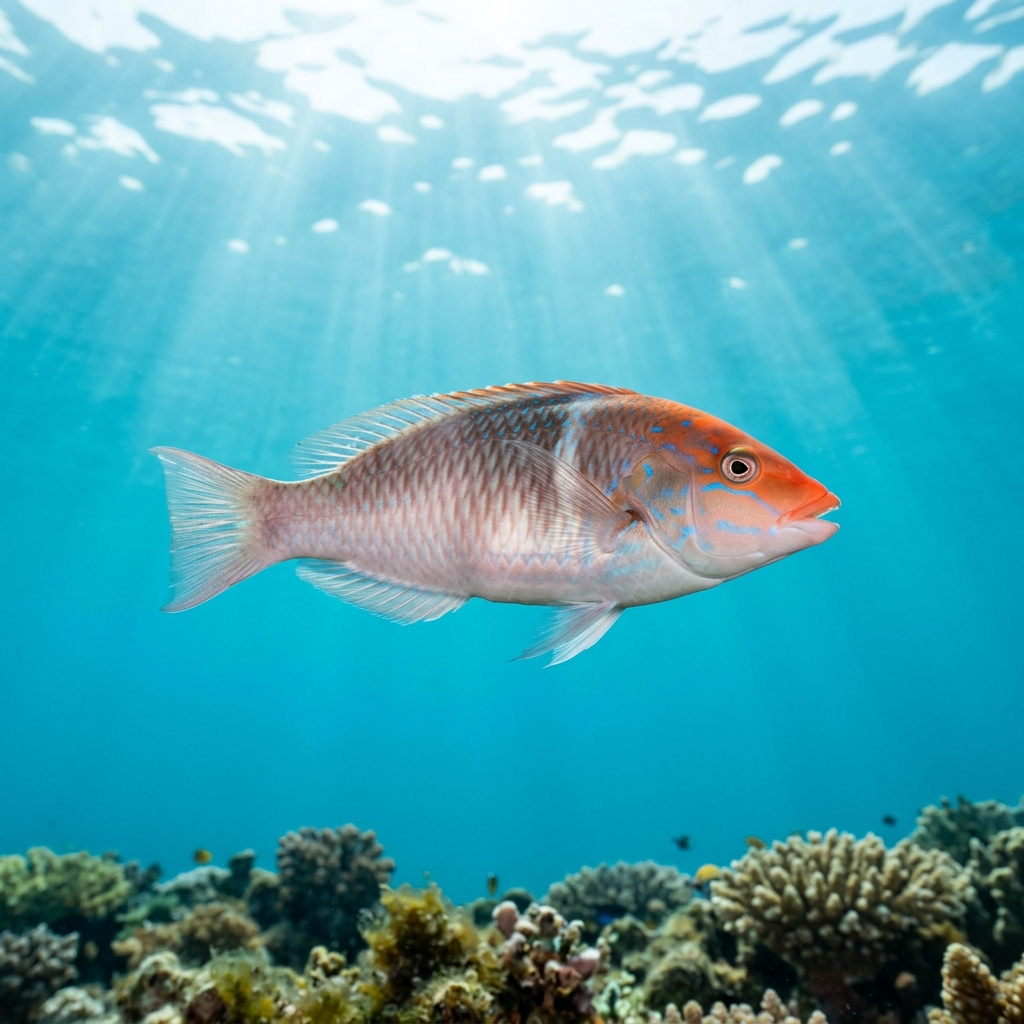
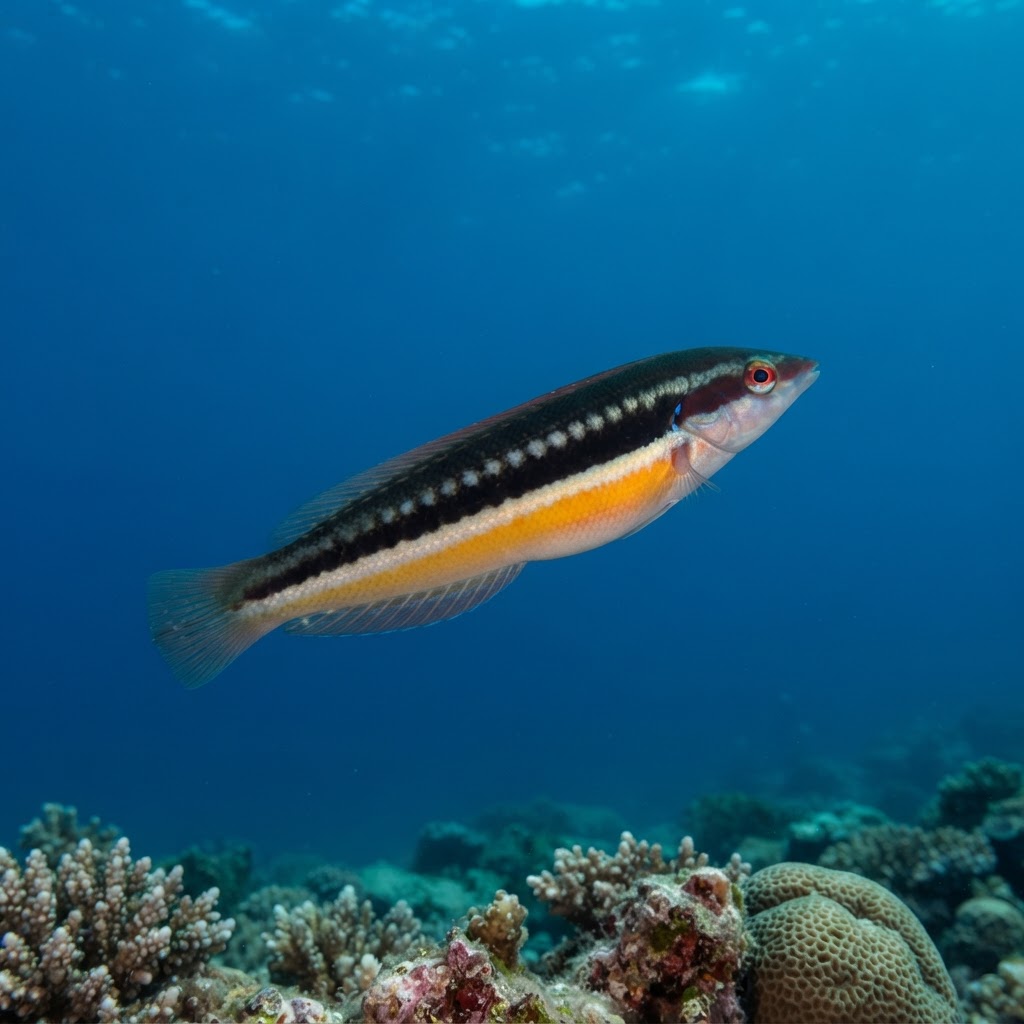
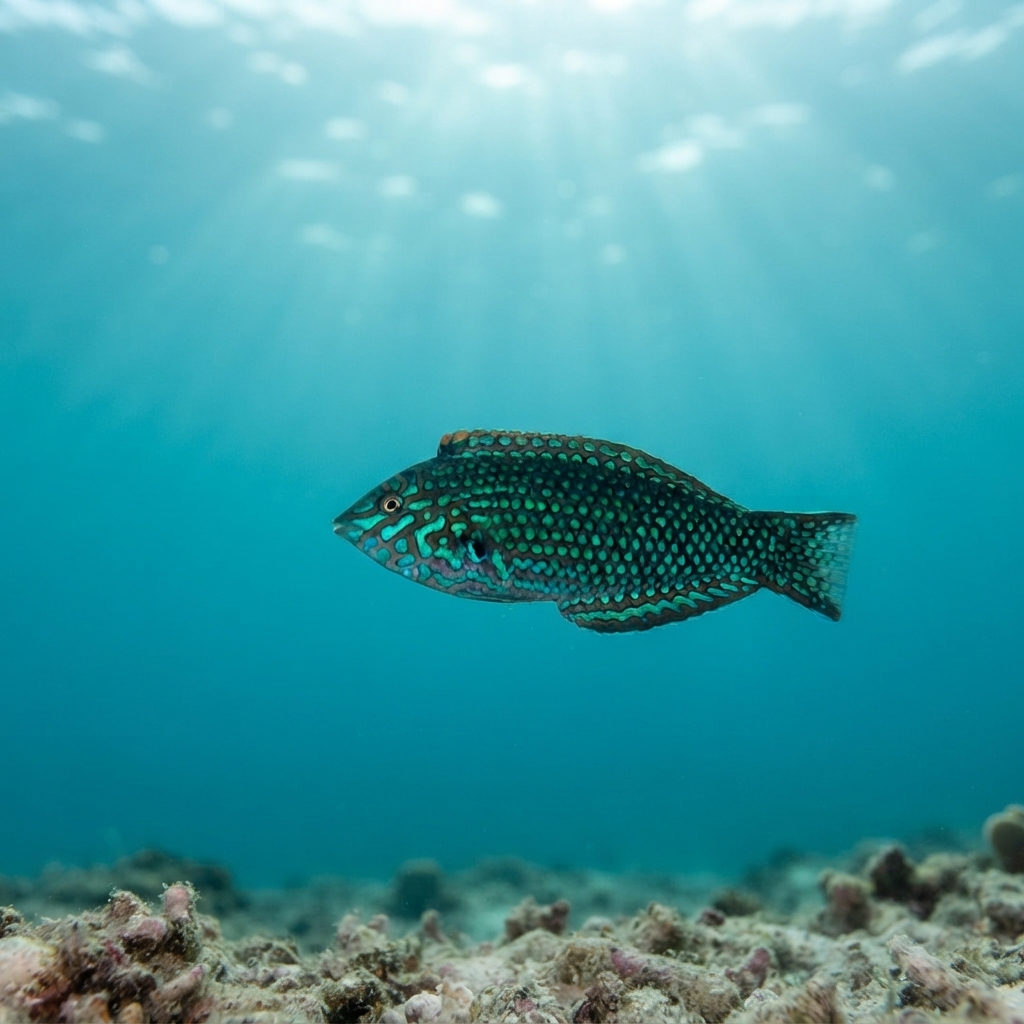
A small, slender wrasse at around 9 cm, easiest to spot cruising just above sand or rubble patches rather than up in the water column. Look for a pale, whitish body covered in a scattering of dark spots and blotches that give it the leopard-print look, with fine reticulated patterning on the head. It swims with a distinctive stop-start, darting motion low to the substrate, quite different from the steadier cruising of larger wrasses.
Divers usually find it working sand and rubble patches close to the reef base, picking at the substrate for small invertebrates during daylight hours. It tends to be flighty and quick to dart for cover among rubble or weed when a diver gets too close, so slow, low approaches give the best look. Logged as uncommon at every site where it's been recorded, so a sighting takes a bit of patient, close-focus searching rather than a casual reef scan.
Like many wrasses in this family, it buries itself in sand to sleep and to escape threats, so a sudden disappearance into the substrate is normal behaviour, not a sign of distress.
Sightings don't show a concentrated season, and with water temperatures observed between 25.2 and 29.2 C, conditions stay comfortable for it year-round on these reefs. Plan around good visibility and calm sand-flat conditions rather than a particular month.
This one is most reliably logged in Indonesia, with Sulawesi standing out as the strongest area and Raja Ampat also producing sightings. All confirmed logs in the data come from these two Indonesian regions, so they are the places to prioritise if you want a real shot at one.
Mapping where Ornate Leopard Wrasse is logged…
The strongest logged sightings come from Sulawesi in Indonesia, with additional records from Raja Ampat. Both areas offer the sandy, rubble-edged reef habitat this species favours.
There's no strong seasonal pattern in the sighting data, and it tolerates a warm 25.2 to 29.2 C range, so it's around on tropical Indonesian reefs throughout the year.
Look for a small, white-bodied wrasse under 10 cm with dark leopard-like spotting, darting low over sand and rubble patches rather than swimming freely in open water. Its jerky, stop-start movement near the substrate is a strong clue.
They stay small, reaching only around 9 cm as adults, which makes them easy to overlook against a busy sand or rubble bottom.
It's logged as uncommon even at the handful of sites where divers have recorded it, so spotting one usually takes a slow, close look at sand and rubble patches rather than a quick reef pass.
Site and sighting data is aggregated from diver logs, iNaturalist and GBIF. For taxonomy and conservation status:
Bird Wrasse
3,632 sites