Glebocarcinus oregonensis
A palm-sized crab tucked into cold rocky reefs from British Columbia to the Pacific Northwest, active year-round in 7 to 13 C water.
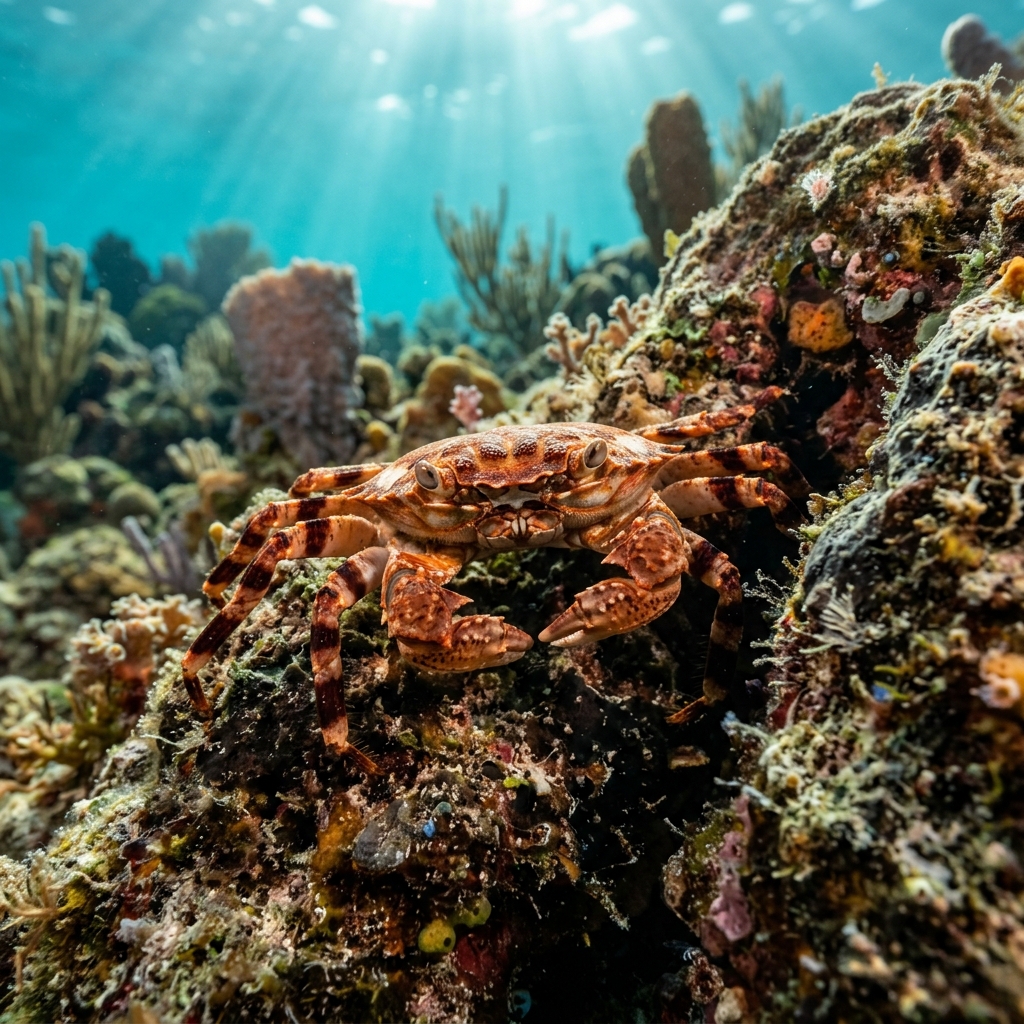
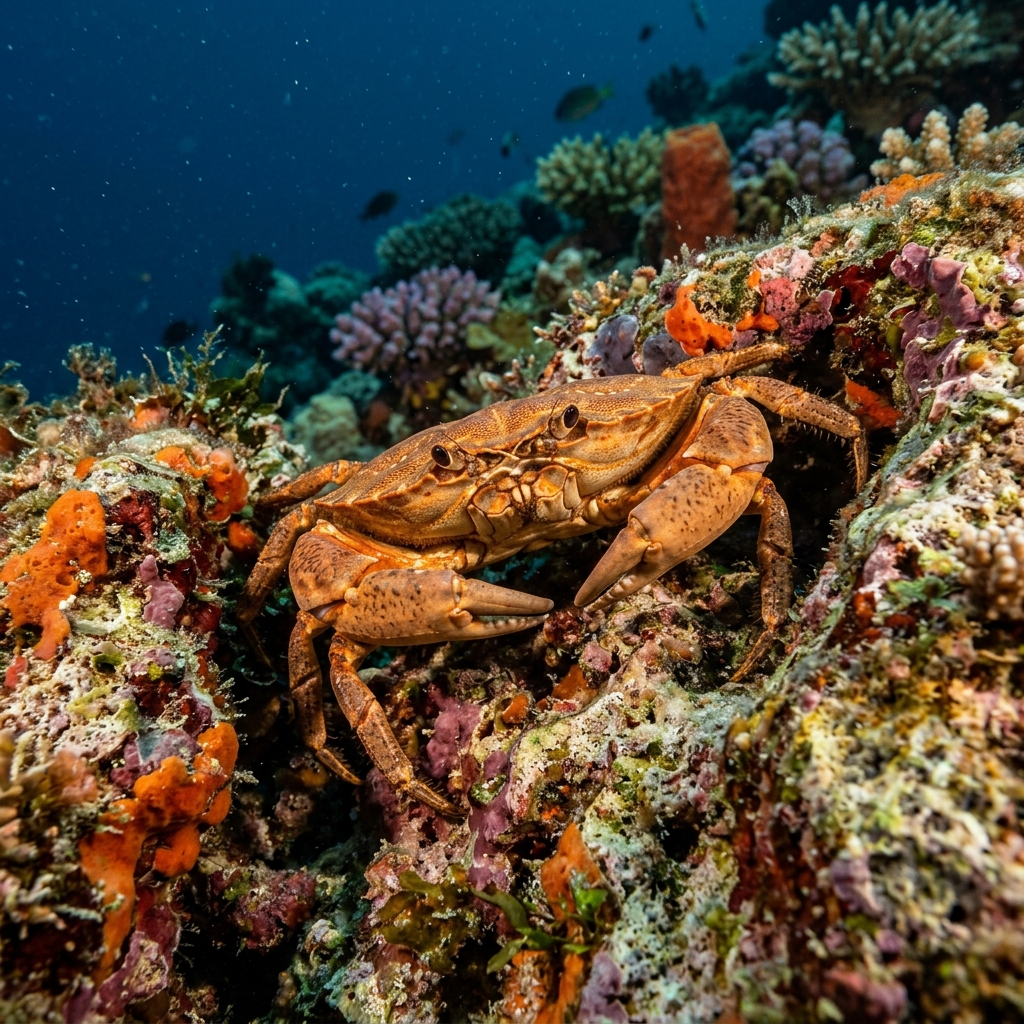
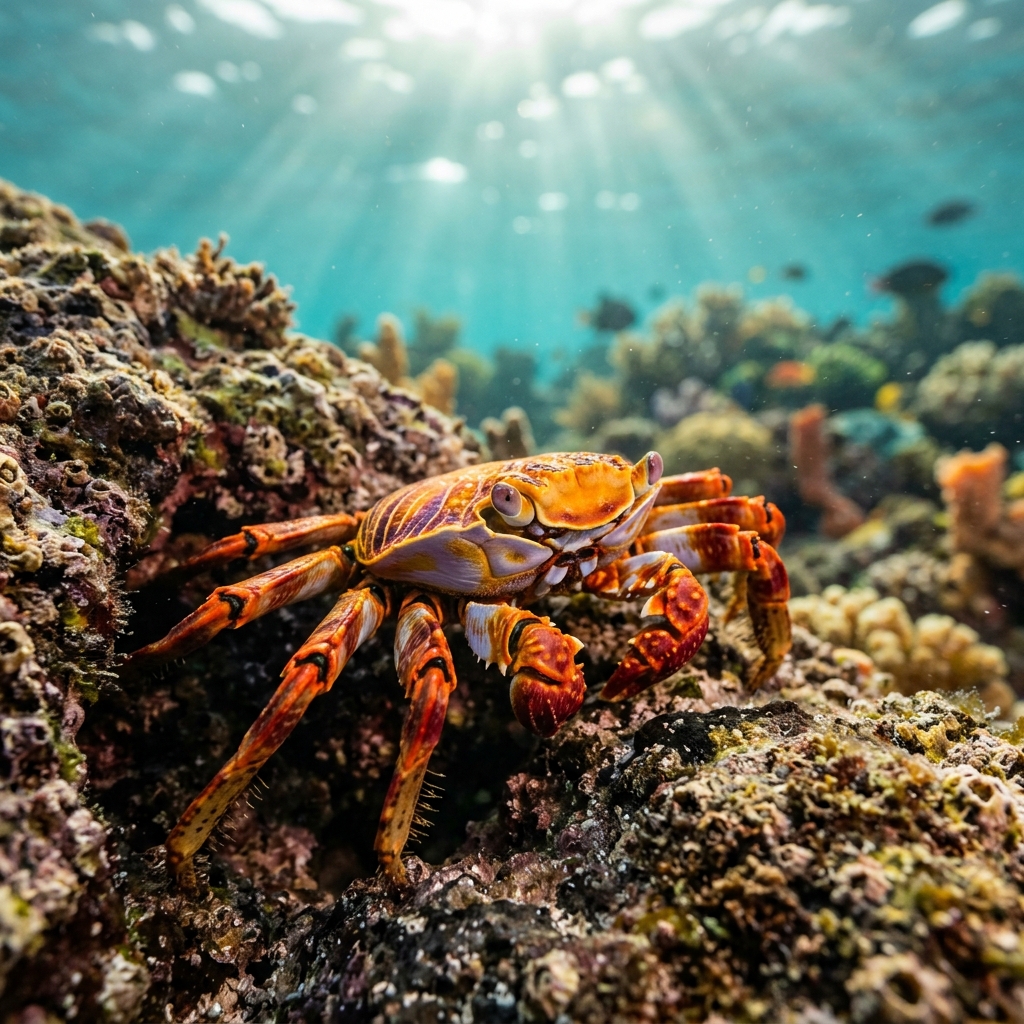
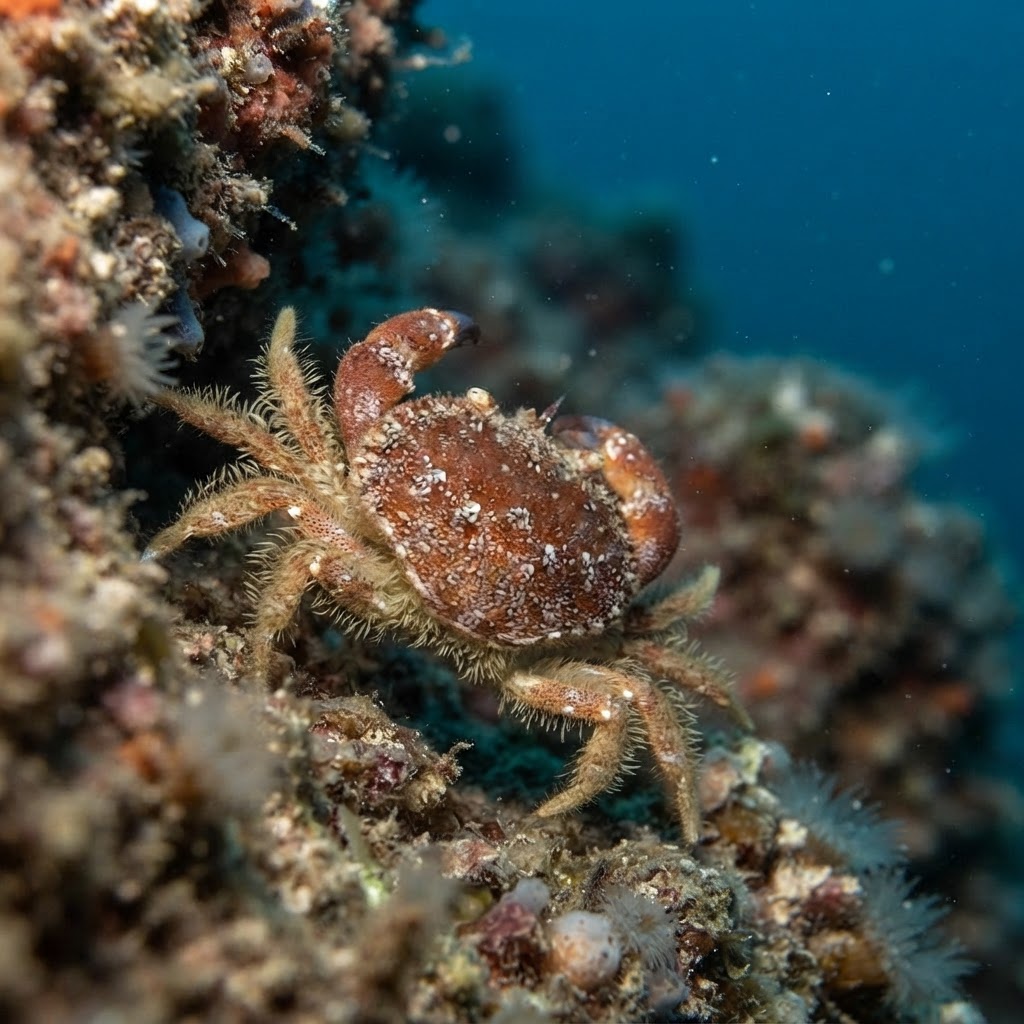
A small crab, rarely bigger than a couple of centimetres across the shell, with a rounded, slightly bumpy carapace in mottled reddish-brown to purplish tones that blends into rock and gravel. The claws are proportionally chunky for its size, often tipped in a darker shade, and the shell edge shows a smooth, gently scalloped outline rather than sharp spines. Look for it wedged into crevices or under cobbles rather than out in the open.
Expect to find it wedged under rocks, in crevices, or tucked among cobble and boulder fields rather than wandering in the open, which is part of why divers log it as uncommon to rare even where it's present. It tends to sit still and rely on its mottled shell for cover when a torch beam passes over, so slow, methodical crevice-checking on a macro-focused dive turns up more of these than casual mid-water swimming.
Like other cancer crabs it moults its entire shell to grow, so divers occasionally find an intact, empty carapace wedged in the same crevices where live animals hide, which can look like a sighting at first glance.
Sightings don't show a clear seasonal pattern, and with a comfort range of only about 7.4 to 13.4 C it's tucked into cold water year-round rather than following a warm-season pulse. Any time you're diving the Pacific Northwest or British Columbia's rocky reefs is fair game.
Most reliably logged in British Columbia, Canada, with a strong secondary showing across the Pacific Northwest in Washington and Oregon, and scattered records further north in Alaska. Between Canada and the United States these two countries account for essentially every logged sighting, so this is a cold-water Pacific coast species through and through.
Mapping where Oregon Rock Crab is logged…
British Columbia in Canada is the strongest area for sightings, closely followed by the Pacific Northwest coast of Washington and Oregon in the United States, with occasional records further north in Alaska.
There's no strong seasonal pattern in the sightings, and it stays in cold water between roughly 7.4 and 13.4 C year-round, so it can turn up on any dive in its Pacific coast range regardless of month.
Look for a small crab, around 2 cm across, with a rounded mottled reddish-brown shell and chunky claws, usually wedged into a rock crevice or tucked under cobble rather than out in the open.
They're small, topping out at roughly 2 cm across the shell, so they're easy to miss unless you're checking crevices closely on a macro dive.
No, they pose no danger to divers. They're small, shell-bound crevice-dwellers that stay put rather than approach, so there's nothing to worry about if you spot one.
Site and sighting data is aggregated from diver logs, iNaturalist and GBIF. For taxonomy and conservation status:
European Green Crab
2,469 sites