Blenniella chrysospilos
Spot this reef-hopping blenny on rubble flats in Nouméa, Guam and Saipan, active year-round in 25 to 29 C water.
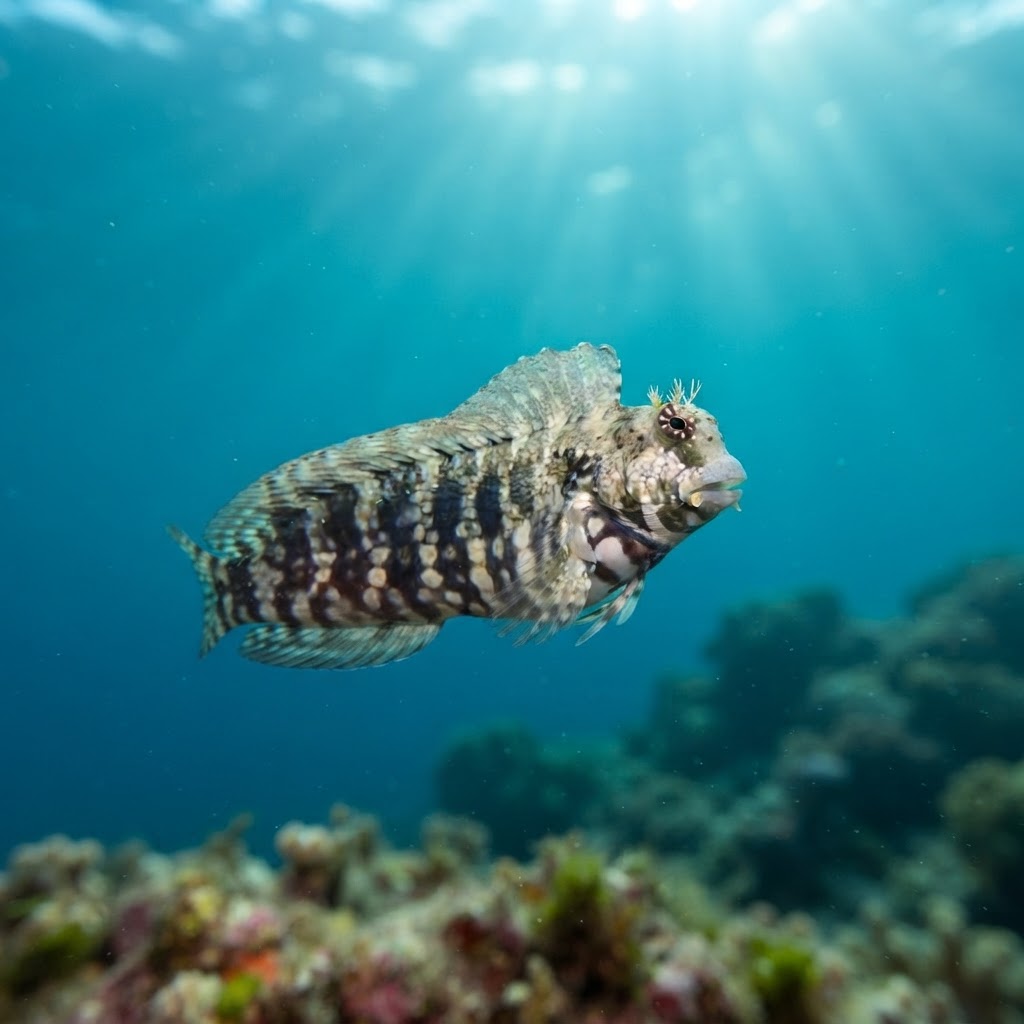
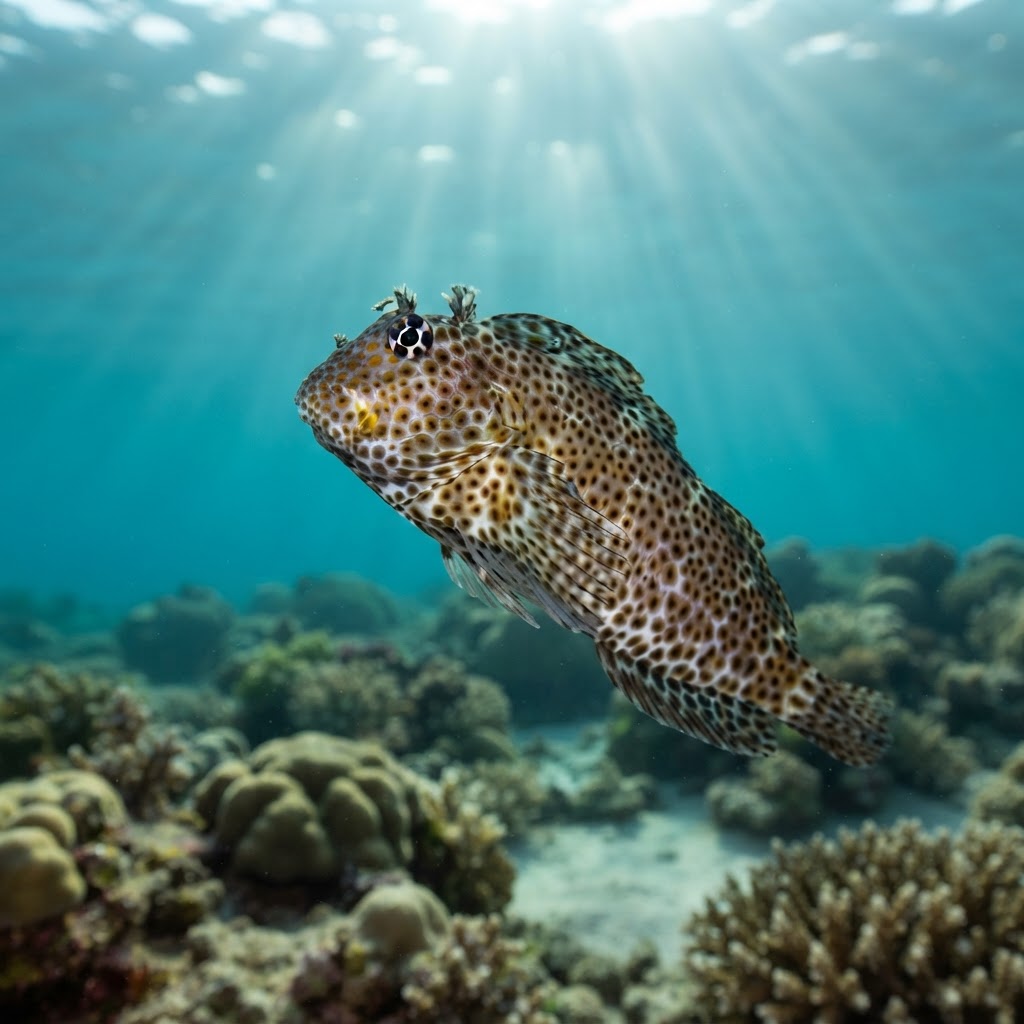
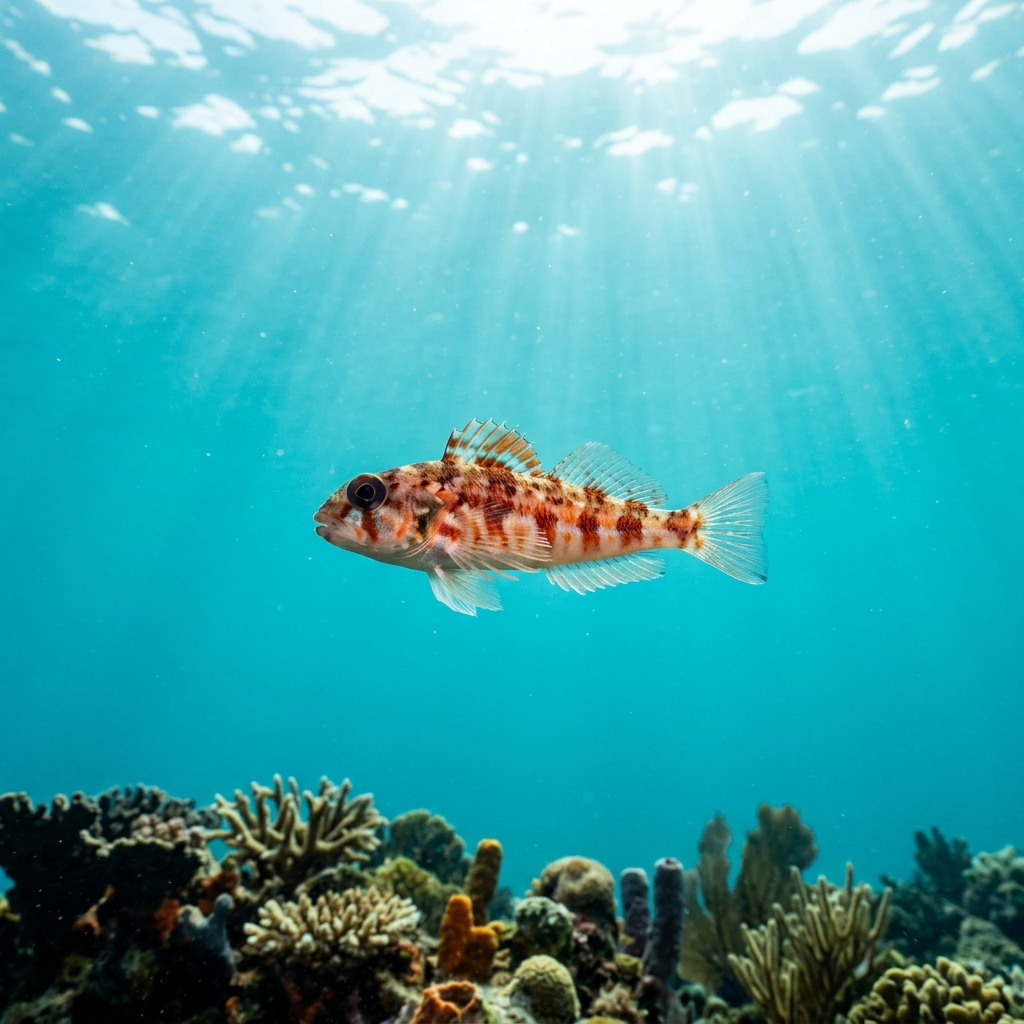
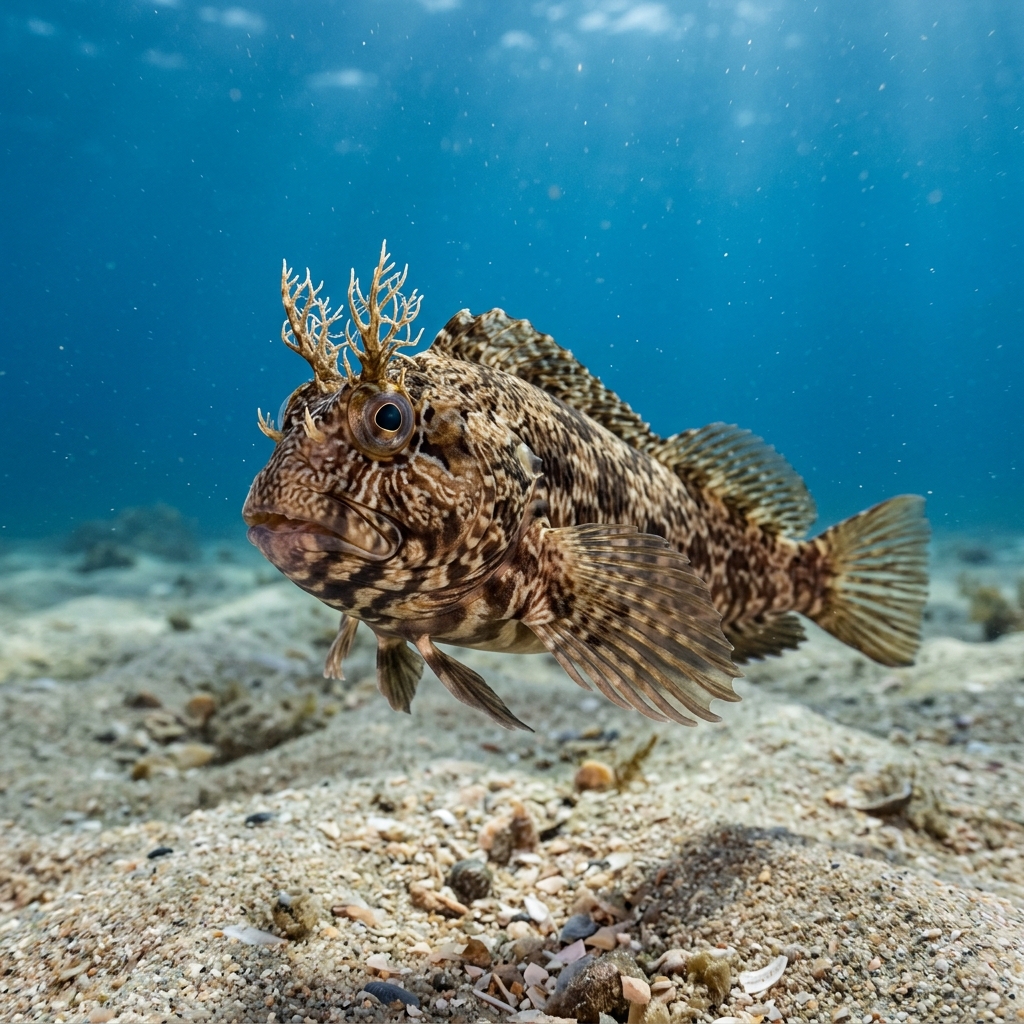
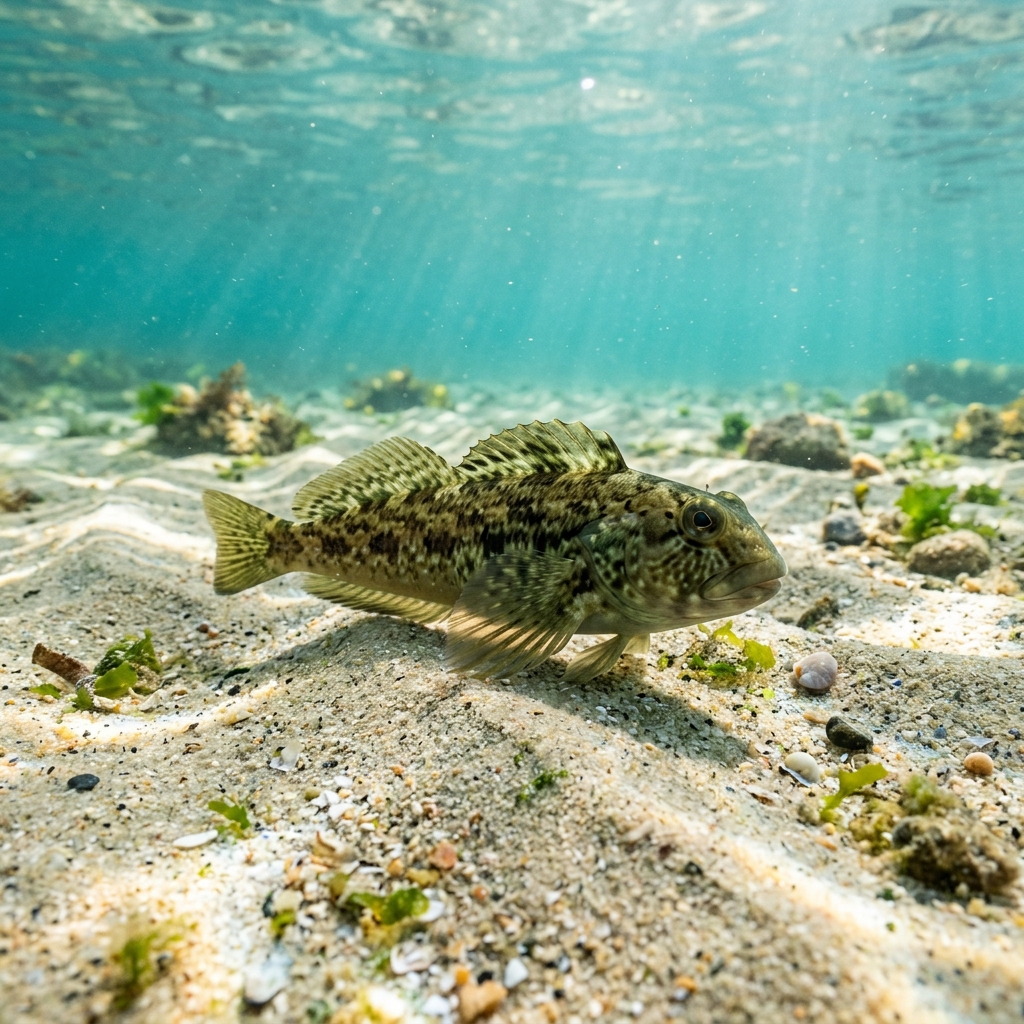
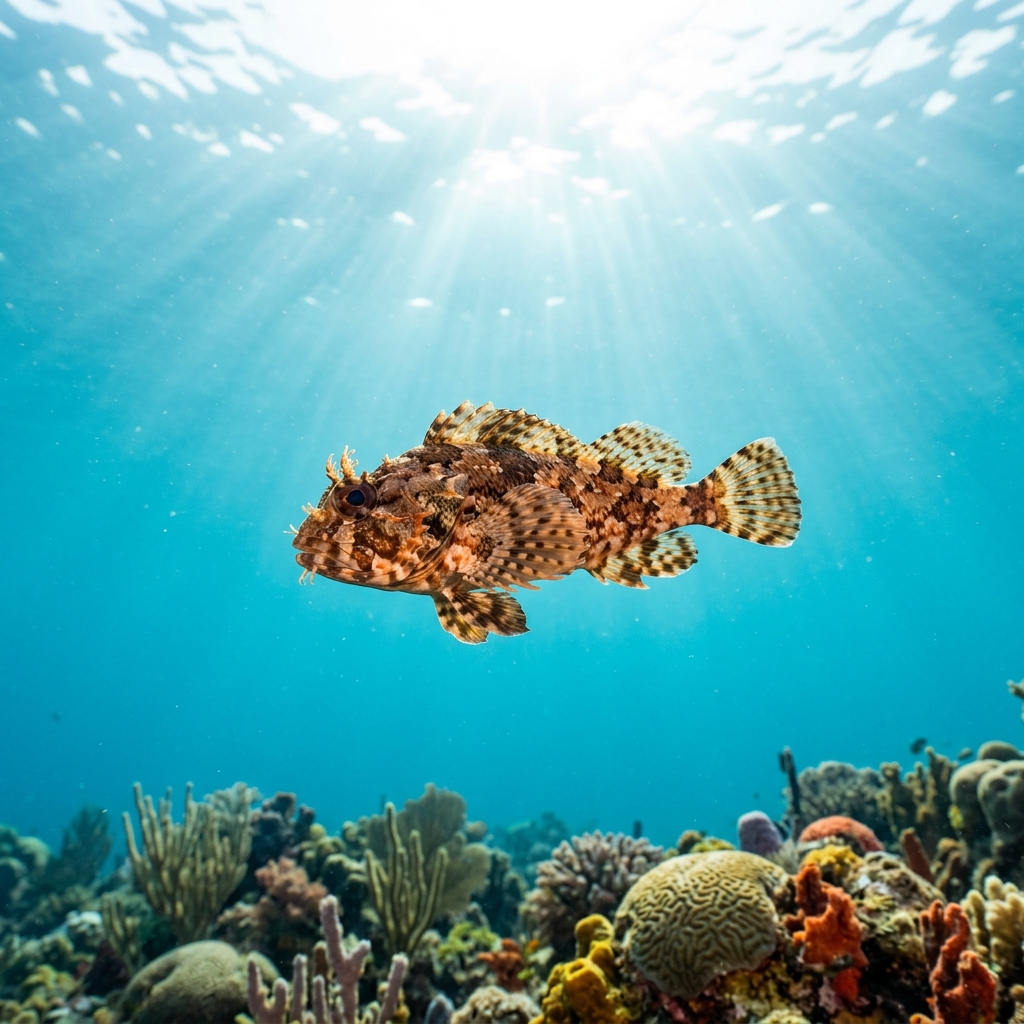
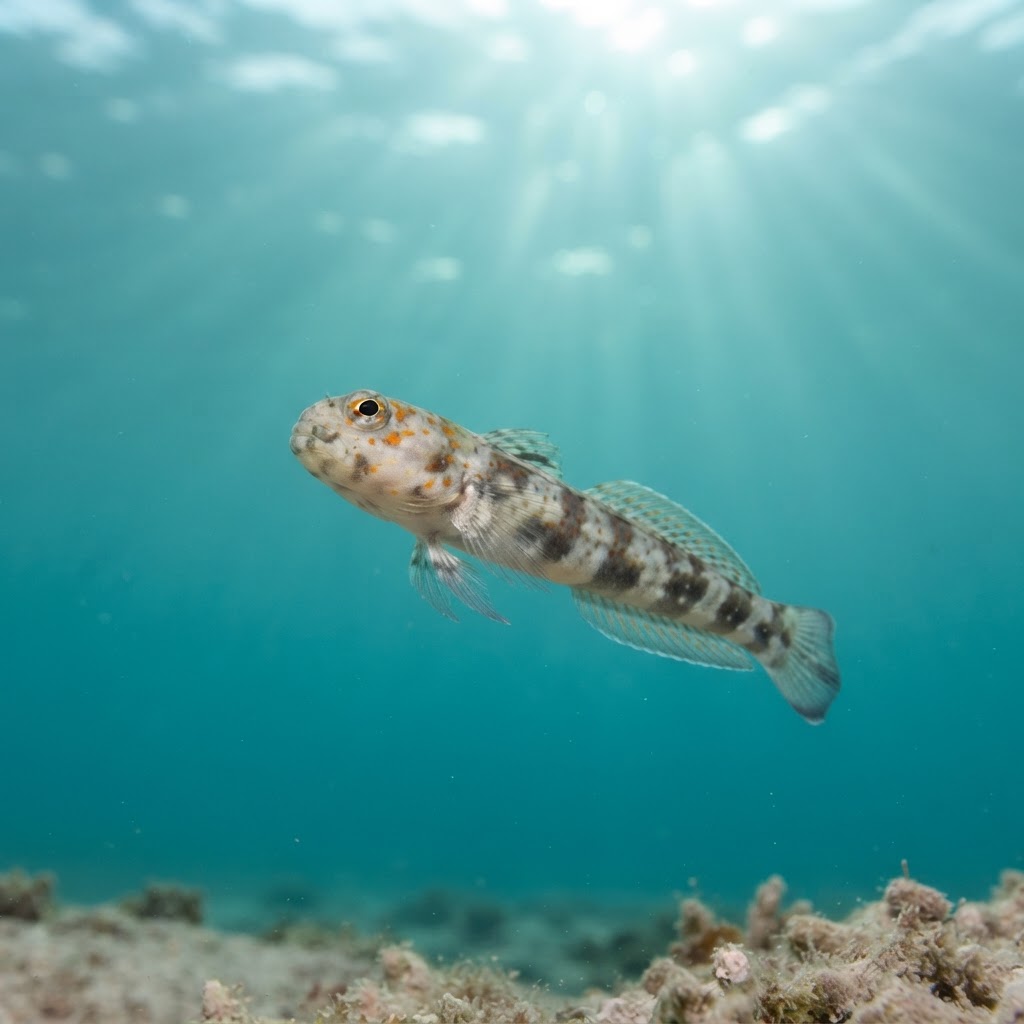
A small blenny, around 9 cm, with a stocky, tapered body mottled in brown and grey and scattered with the orange-red spots that give it its name. Look for the blunt head with a pair of short cirri (fleshy tentacle-like growths) above the eyes and the way it props itself up on its pectoral fins when resting on rock or rubble. It tends to sit still against a similarly coloured substrate, so the spotting pattern is often the clearest giveaway once you get close.
Expect to find it perched motionless on coral rubble, rock or dead reef flats, usually in shallow water where divers and snorkellers pass close by. It relies on staying still and blending in rather than fleeing, darting only a short distance if you get too close before settling again nearby.
Like other combtooth blennies, it feeds by scraping algae and fine organic film off rock and rubble with a row of comb-like teeth, doing its bit for reef algae control.
No clear seasonal pattern shows up in the sightings, and it sits comfortably in 25.4 to 29.3 C water, so it's a year-round find on the reefs where it occurs.
Reef neighbours a diver could mistake it for. Use the identification notes above to tell them apart.
Most reliably logged around Nouméa in New Caledonia and across Guam, including Tumon Bay and the North Coast, with further sightings in Queensland, Saipan in the Northern Mariana Islands, Dili in Timor-Leste and the Central Atolls of the Maldives. It shows up as an uncommon to occasional find rather than a guaranteed one, so treat any of these regions as a good bet rather than a sure thing.
Mapping where Redspotted Rockskipper is logged…
Best chances are around Nouméa in New Caledonia and across Guam's Tumon Bay and North Coast, with additional sightings in Queensland, Saipan, Dili and the Maldives' Central Atolls.
There's no strong season in the sightings data, and it tolerates a warm 25 to 29 C range, so it can turn up on tropical reefs at any time of year.
Look for a small, roughly 9 cm blenny with a mottled brown body dotted in orange-red spots, a blunt head with short cirri over the eyes, and a habit of propping itself on rubble rather than swimming freely.
They stay small, topping out around 9 cm, which is typical for reef-dwelling blennies of this type.
It grazes algae and organic film off rock and rubble using comb-like teeth, a feeding style shared across most combtooth blennies.
Site and sighting data is aggregated from diver logs, iNaturalist and GBIF. For taxonomy and conservation status:
Rusty Blenny
2,605 sites