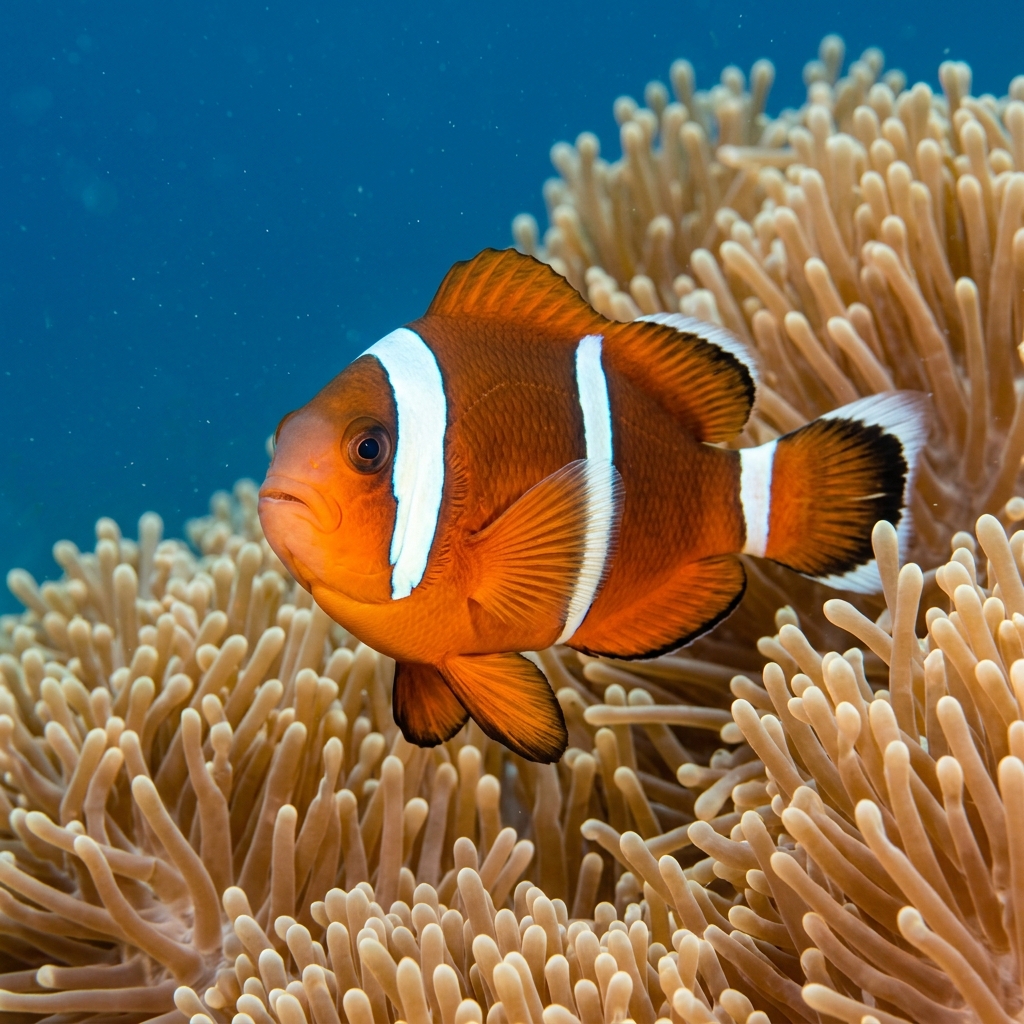
Amphiprion sandaracinos
Bright orange with a white racing stripe, this clownfish is a reliable find on reefs across Sulawesi and the Visayas year-round.
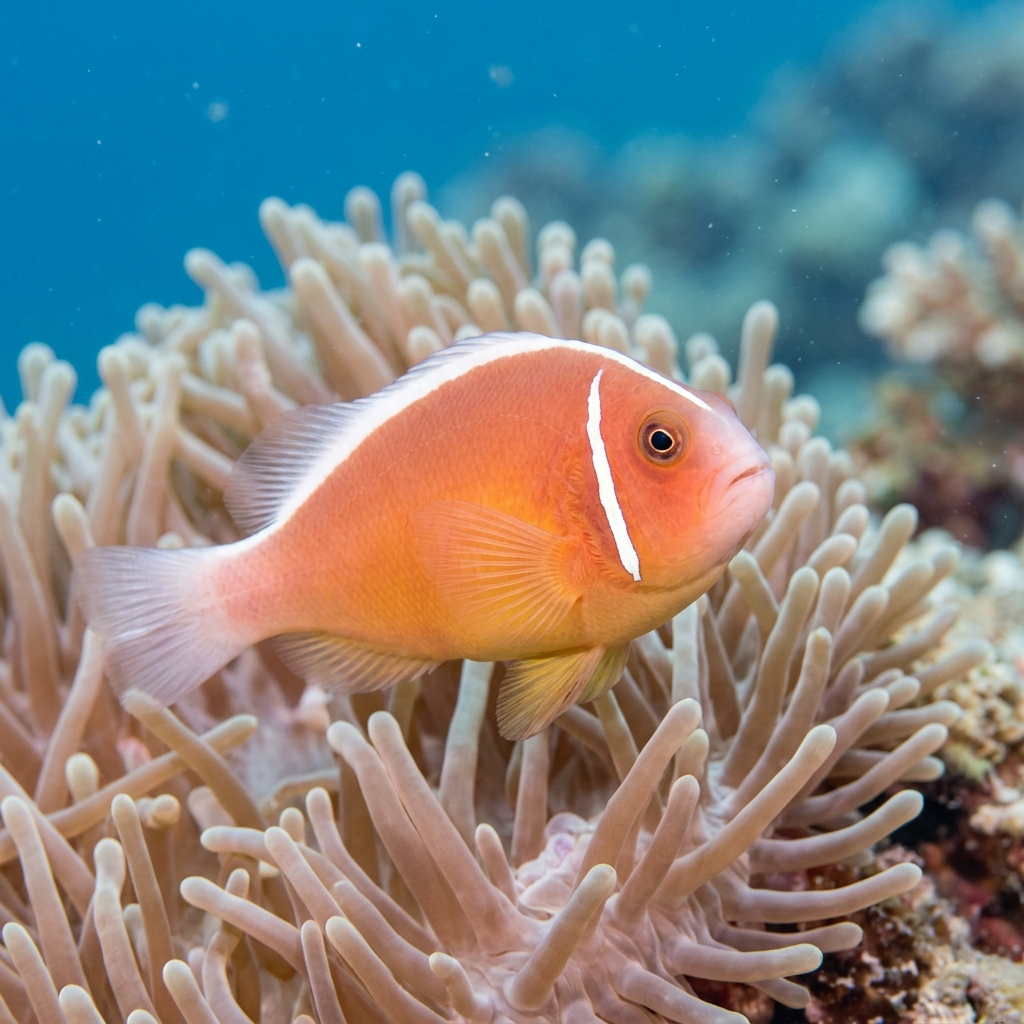
Solid orange body with a single crisp white stripe running from the snout along the top of the back to the tail, no vertical bars like most clownfish. Grows to around 9 cm, with a rounded body and small size that keeps it hovering close to its host anemone. The white stripe is the giveaway mark: no other reef fish in its range pairs that colour with that pattern.
Spend most of a dive tucked close to their host anemone, usually one of the larger carpet or Merten's anemones, darting out to feed on plankton or nip algae before ducking back in. They hold territory fiercely for their size, sometimes nipping toward a mask or finger that gets too close, but pose no real threat and mostly just retreat if you back off. Logged as uncommon at most sites where divers find them, so a pair on a single anemone is a typical sighting rather than a crowd.
Lives in a strict pecking order on its anemone: the largest fish is always female, the next largest is her breeding male, and if she dies he switches sex and takes her place.
Comfortable in warm water year-round (27.3 to 29.7 C), and the data shows no strong seasonal pattern, so any month on a tropical Indo-Pacific reef trip is a fair bet.
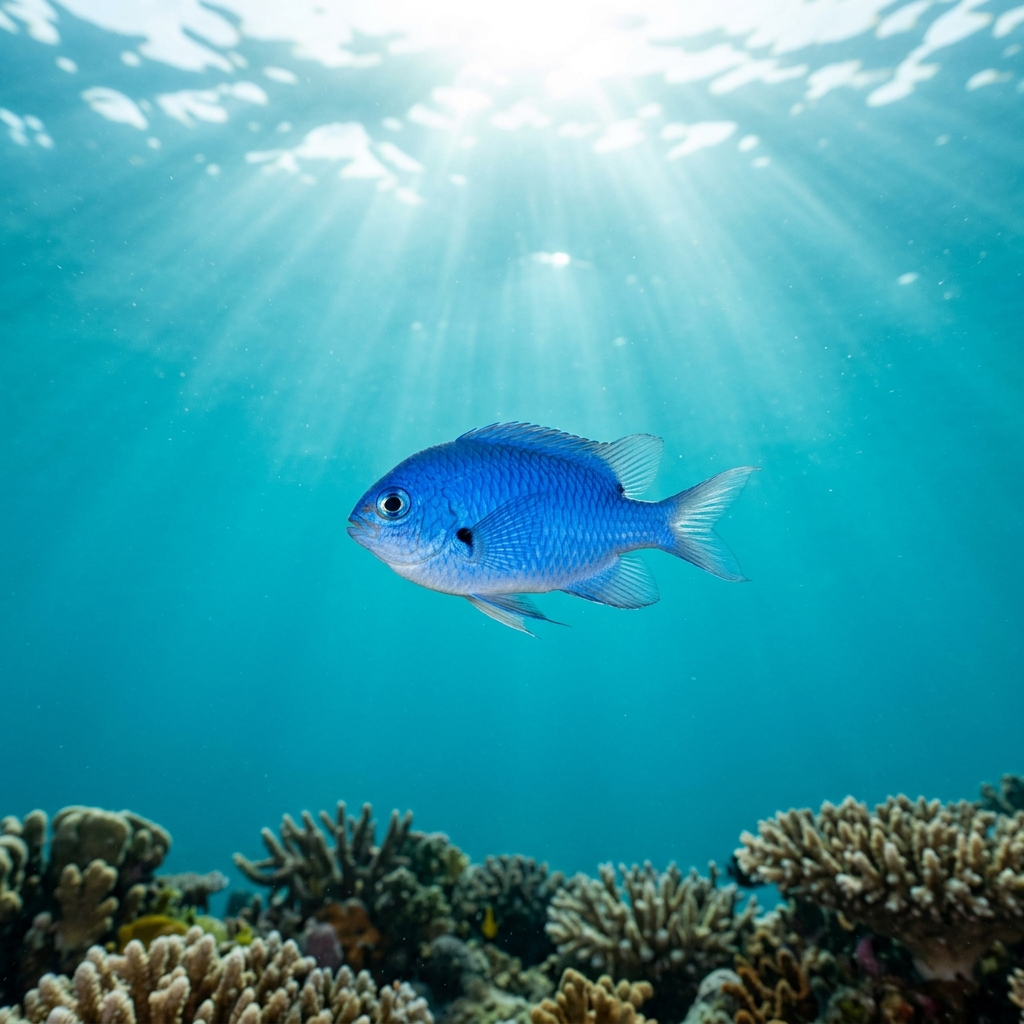
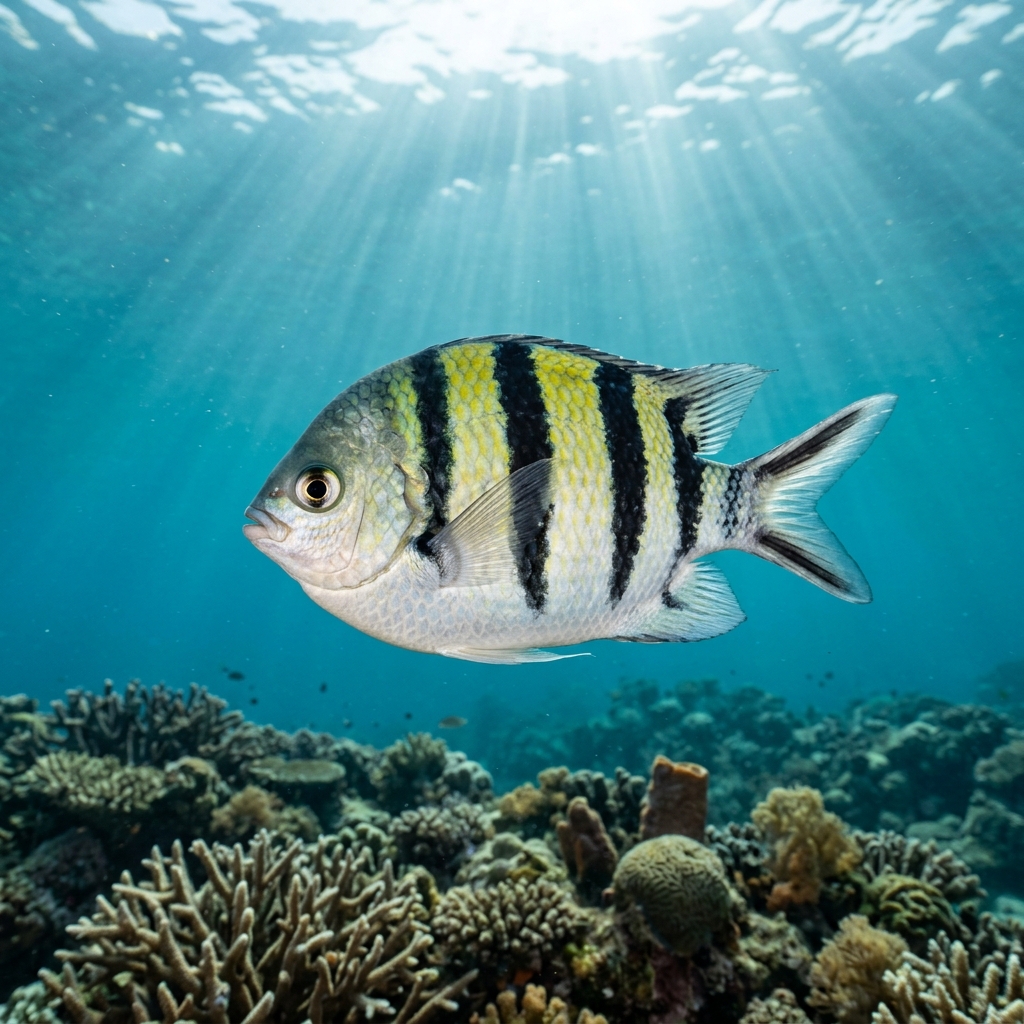
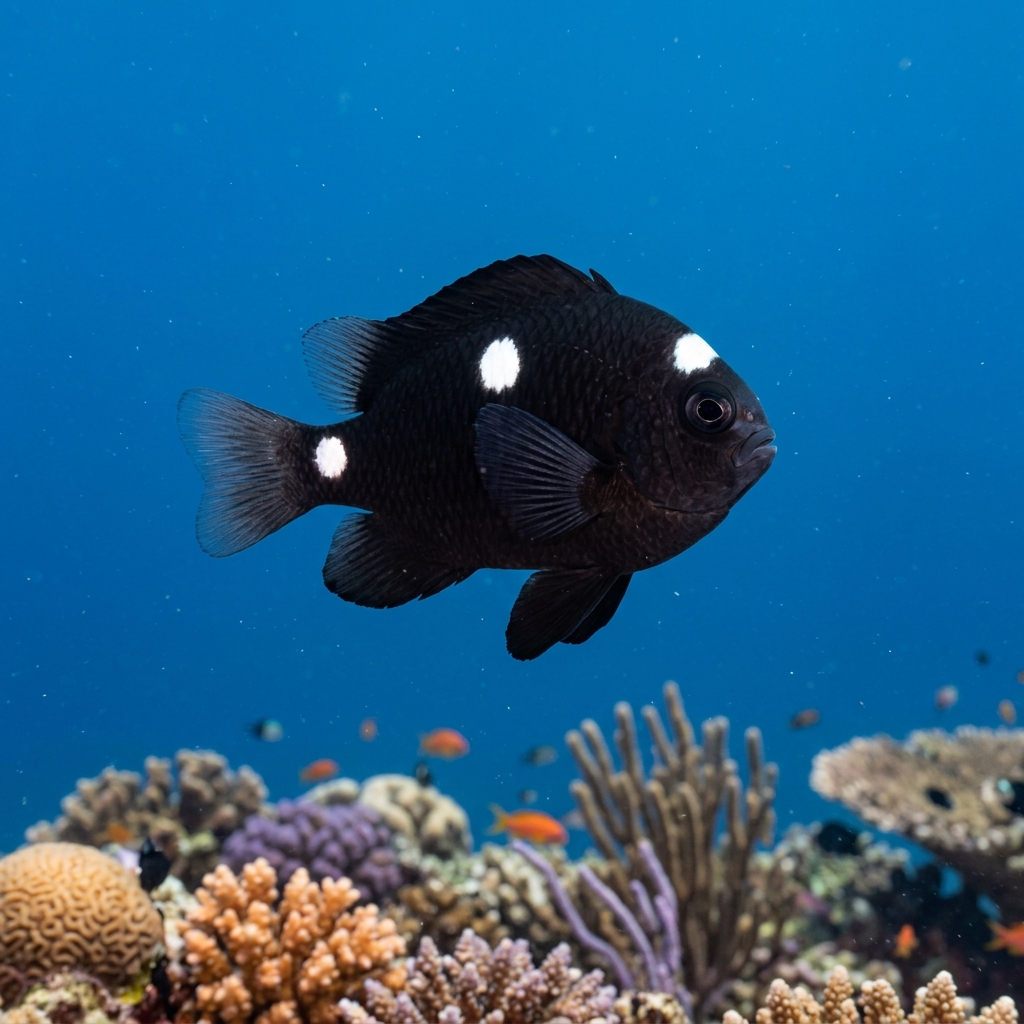
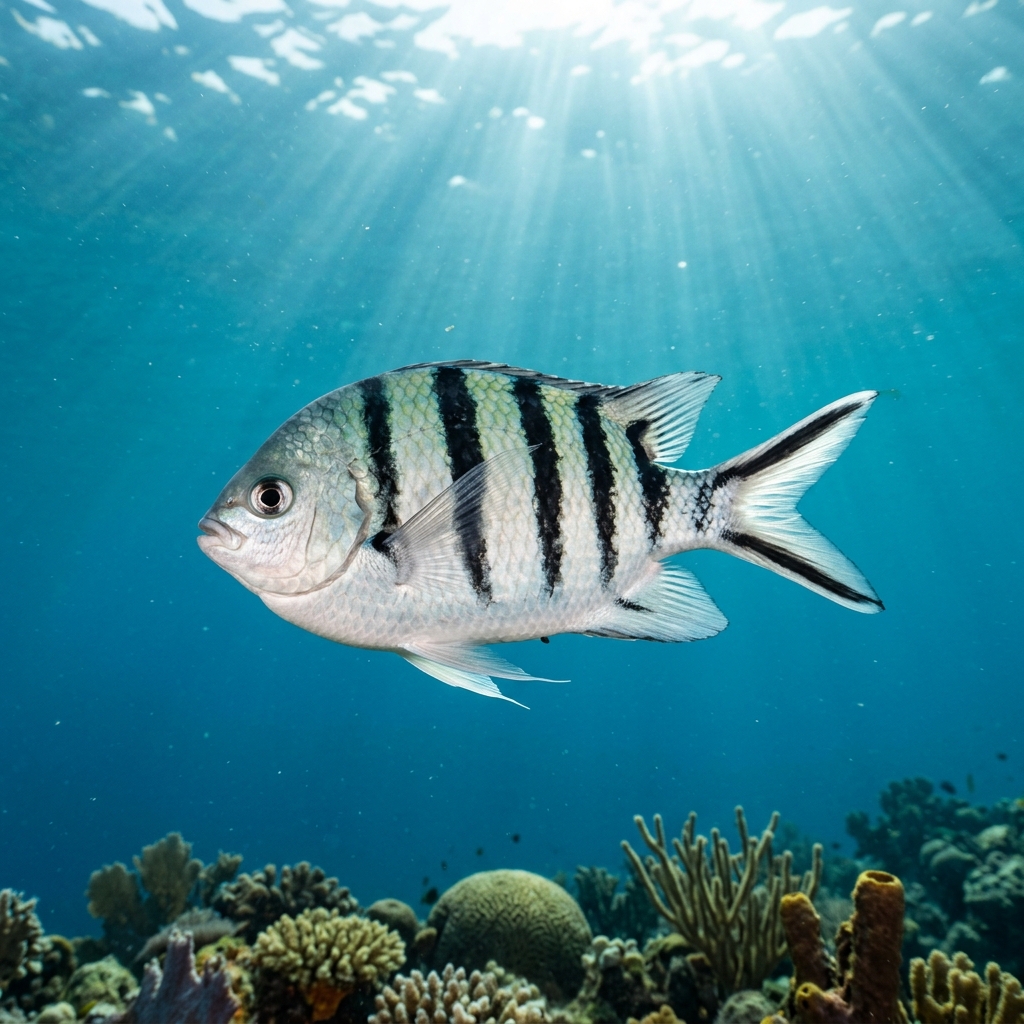
Reef neighbours a diver could mistake it for. Use the identification notes above to tell them apart.
Most reliably logged across Indonesia and the Philippines, with Visayas, Sulawesi, Sabah in Malaysia, Luzon, Palawan, and Mindanao all strong regions for it. Thailand's Pattaya coast and sites in Vietnam, Cambodia, and Papua New Guinea also turn it up, usually in ones or twos rather than big numbers.
Mapping where Orange Skunk Clownfish is logged…
Best chances are in the Philippines (Visayas, Luzon, Palawan, Mindanao) and Indonesia, especially Sulawesi, with good numbers also in Sabah, Malaysia. It turns up at scattered sites through Thailand, Vietnam, Cambodia, and Papua New Guinea too.
There's no strong seasonal pattern in the sighting data, and the warm 27 to 30 C water it prefers holds steady year-round across its range, so it's a fair sighting on any trip.
Look for a solid orange body with one clean white stripe running from the nose to the tail along the back, no vertical bars. It sits close to an anemone and rarely strays far from it.
Around 9 cm at full size, making it one of the smaller clownfish species divers encounter on Indo-Pacific reefs.
No. They may dart out and nip toward a mask or fingers that get too close to their anemone, but this is territorial bluff, not a real threat, and backing off ends it.
Site and sighting data is aggregated from diver logs, iNaturalist and GBIF. For taxonomy and conservation status:
Dascyllus
3,697 sites