Pleurobranchaea californica
A soft-bodied orange predator crawling California's cold reefs at 12 to 19 C, most reliably logged in California dive sites year-round.
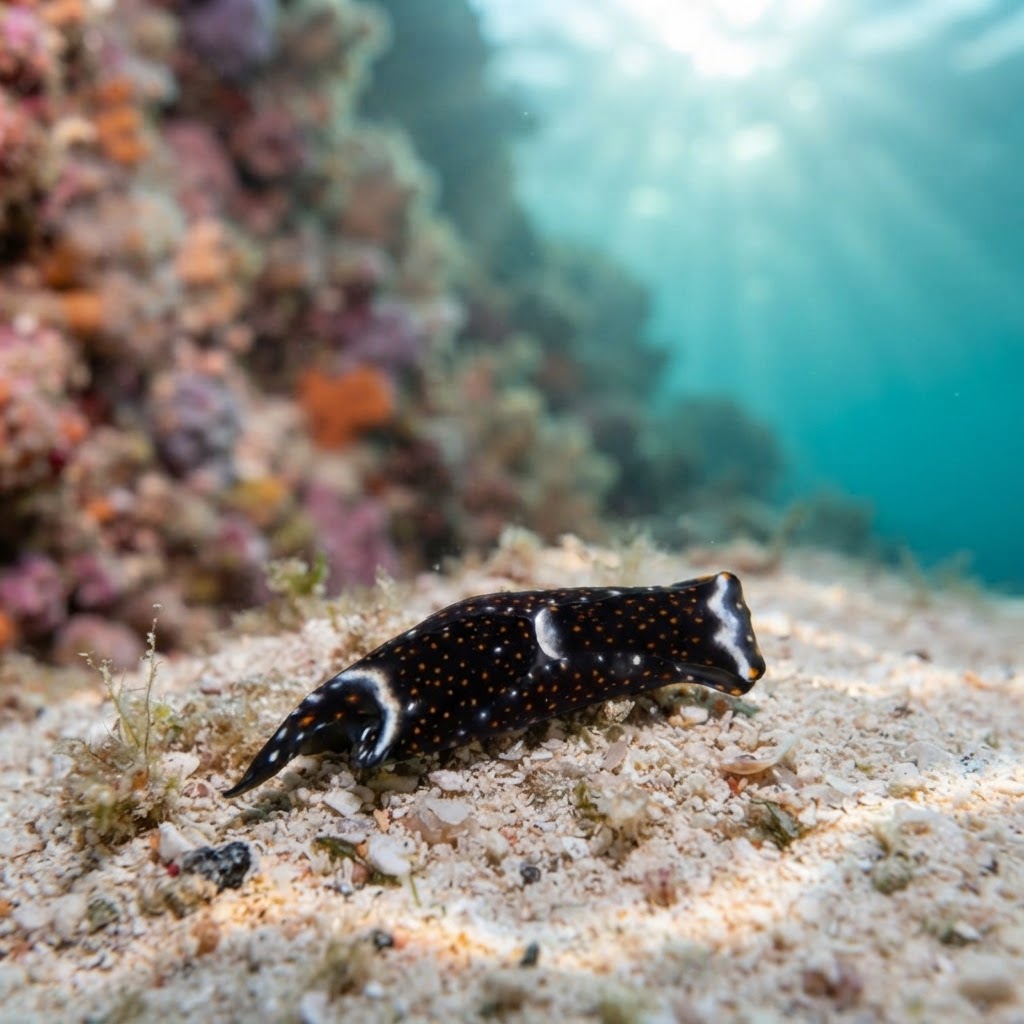
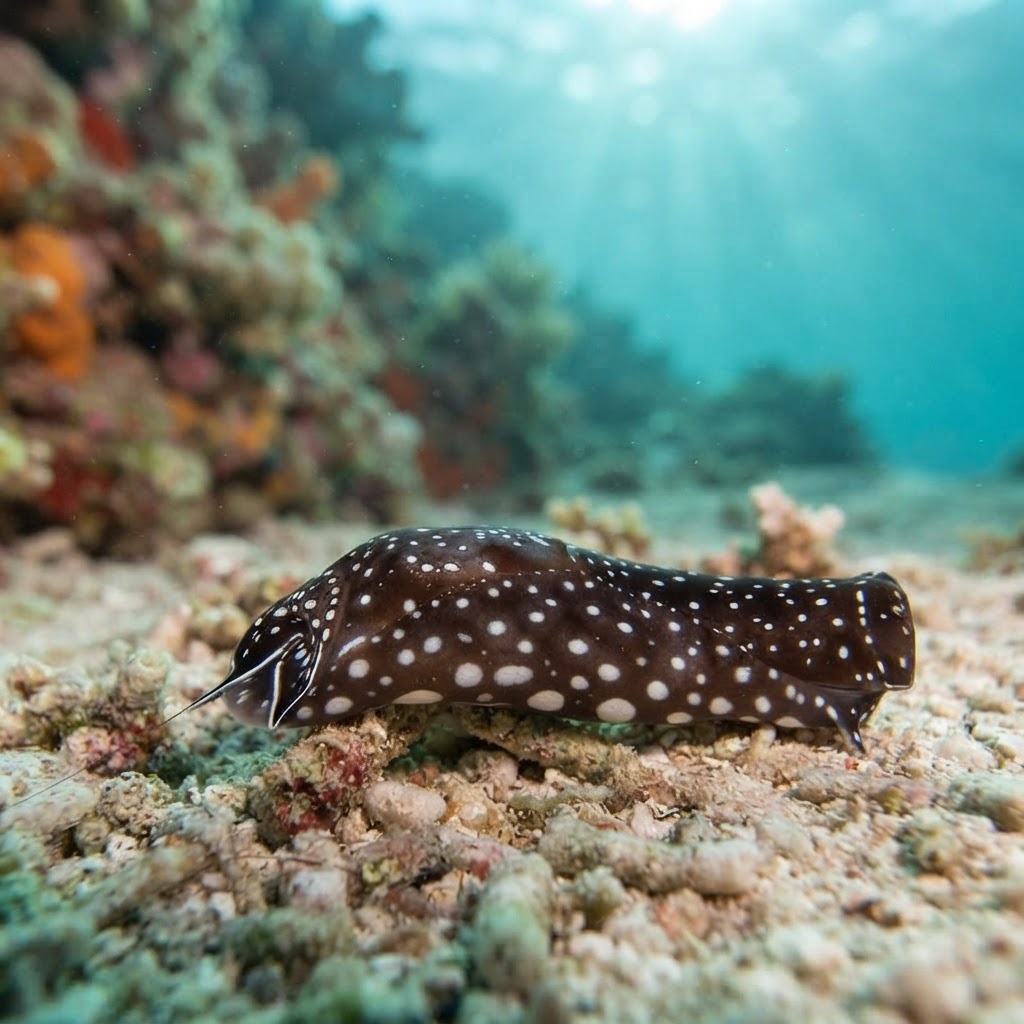
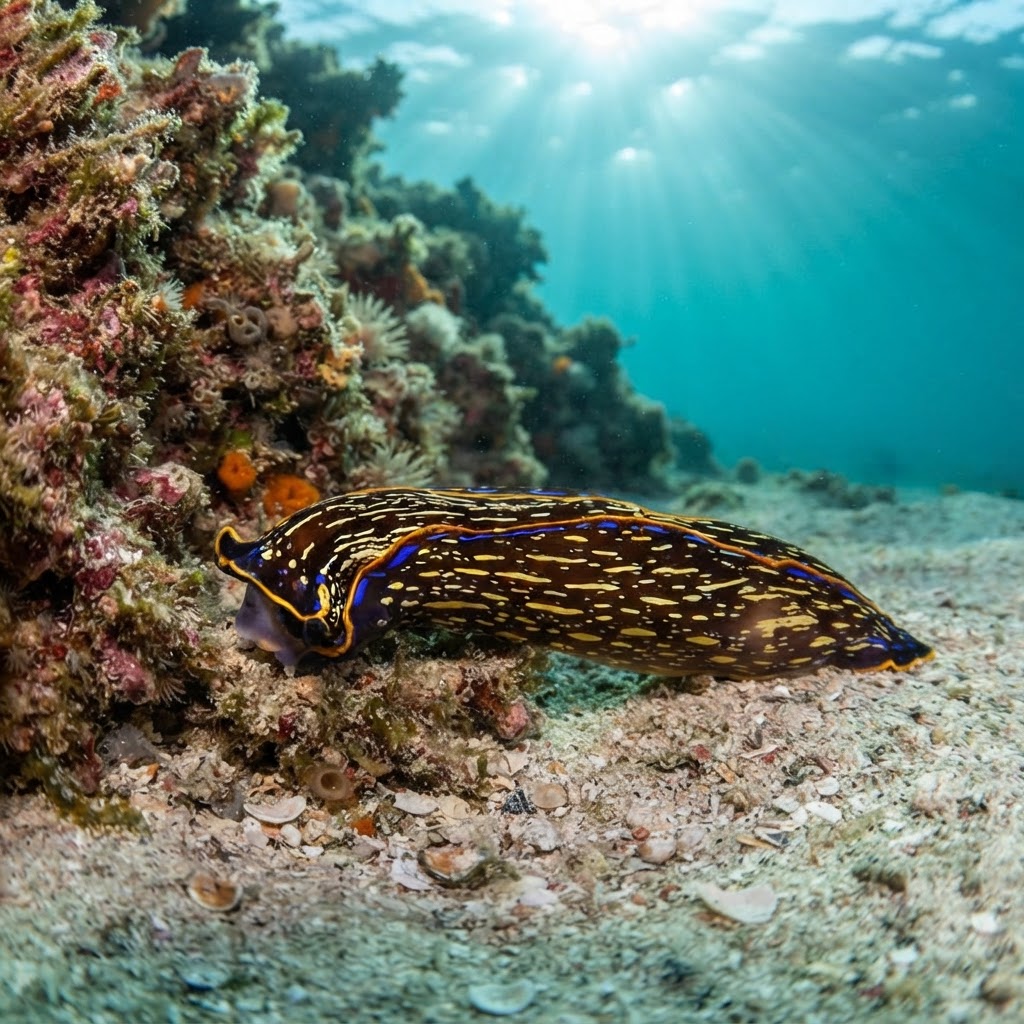
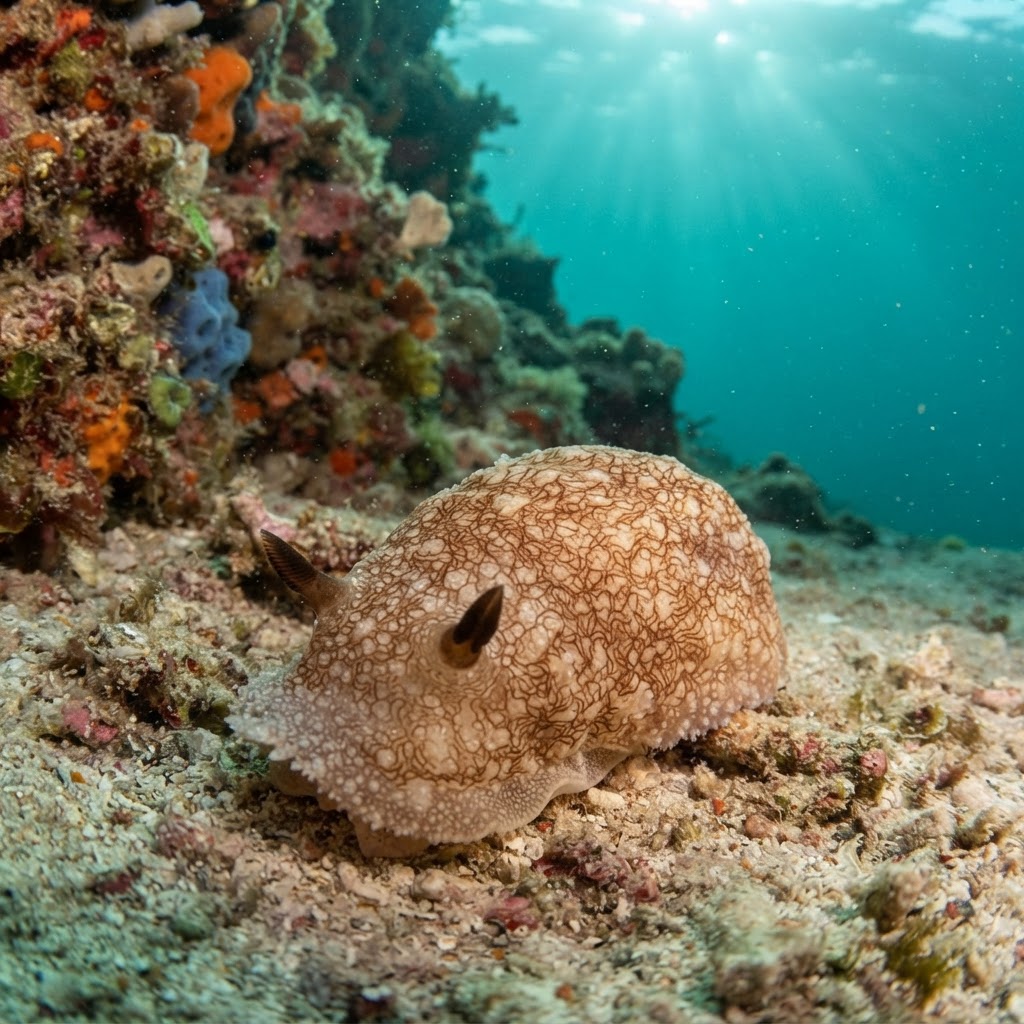
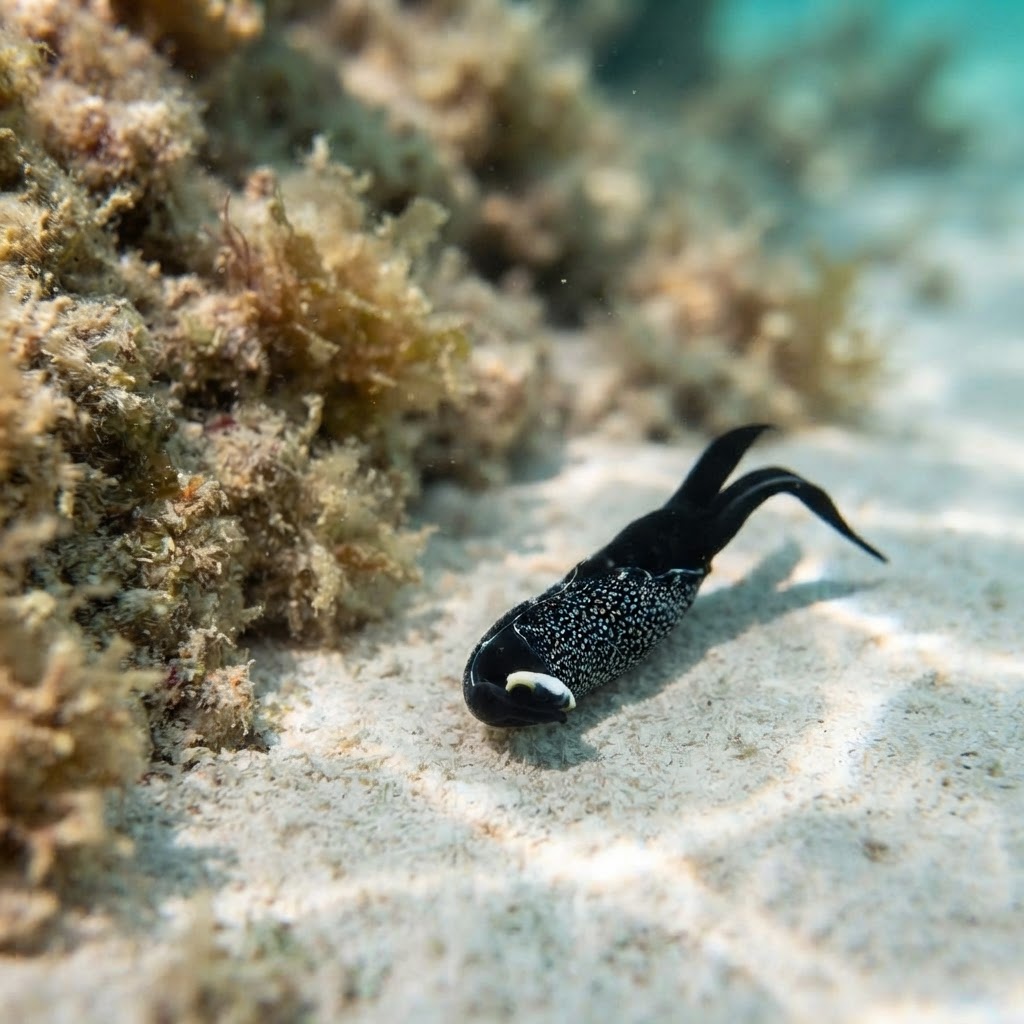
Look for a squat, fleshy body around 15 cm long in a solid orange to reddish-orange colour, with no shell visible and a broad, rounded oral veil (the flap-like sensory hood at the front end) that it uses to feel along the substrate. It moves slowly across rock and sand, and its blob-like, almost featureless profile compared to the frilled, spiky look of many other sea slugs is the giveaway.
Divers typically find it crawling slowly over rock, sand or mixed substrate, oral veil extended and sweeping side to side as it hunts for food by scent rather than sight. It shows little concern for divers and won't flee or hide, making it an easy subject to approach and photograph at a respectful distance.
It's an aggressive scavenger and predator that will eat almost anything it can catch or find dead, including other sea slugs, small fish and even injured members of its own species.
Sightings show no clear seasonal pattern, and with water temperatures logged between 12.3 and 18.9 C, it appears to be around across the range of conditions California's coast offers through the year.
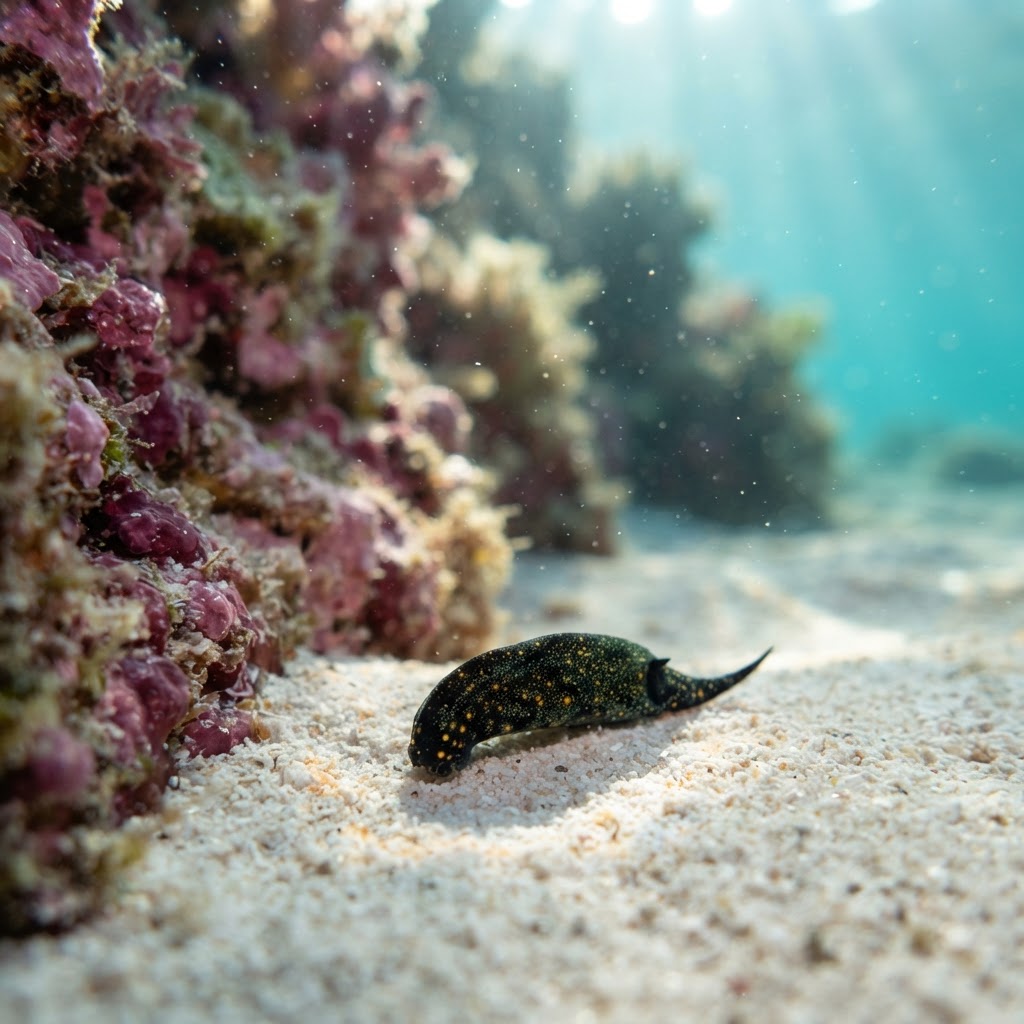
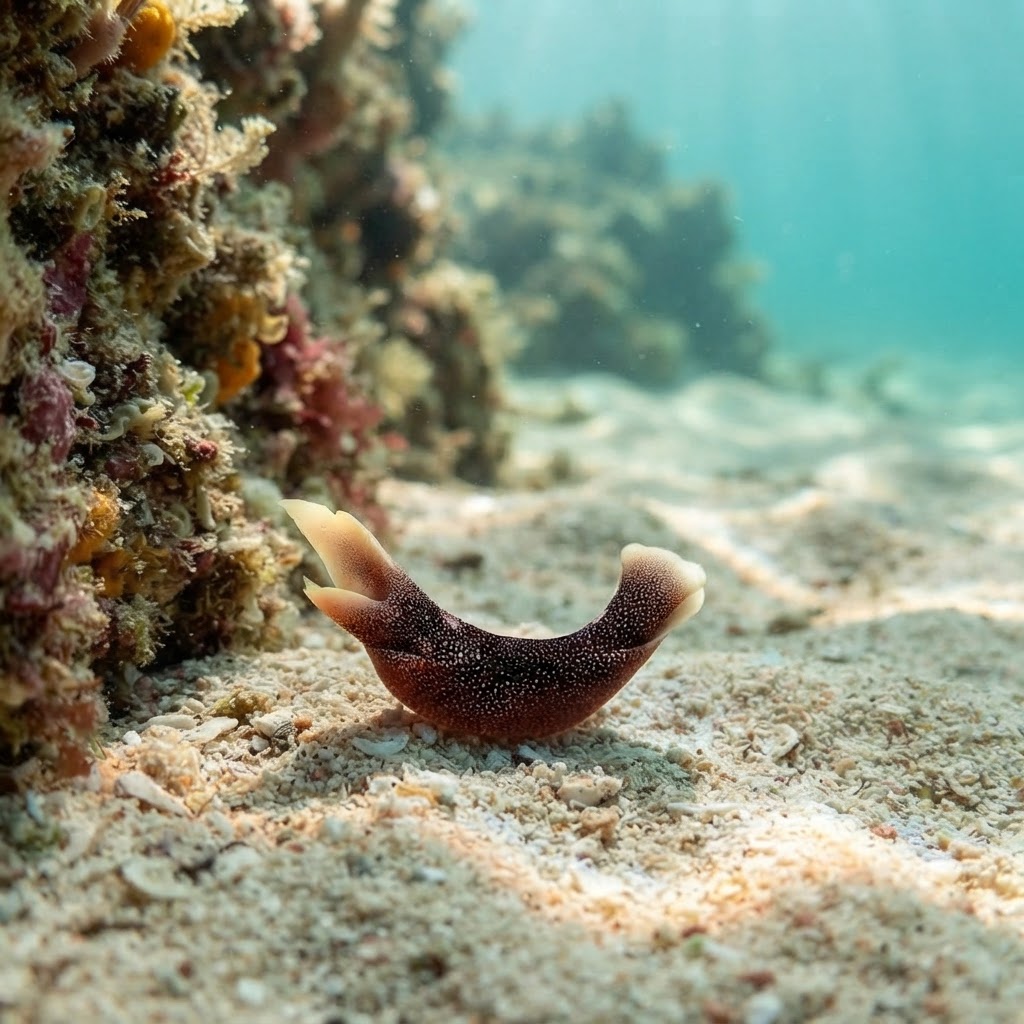
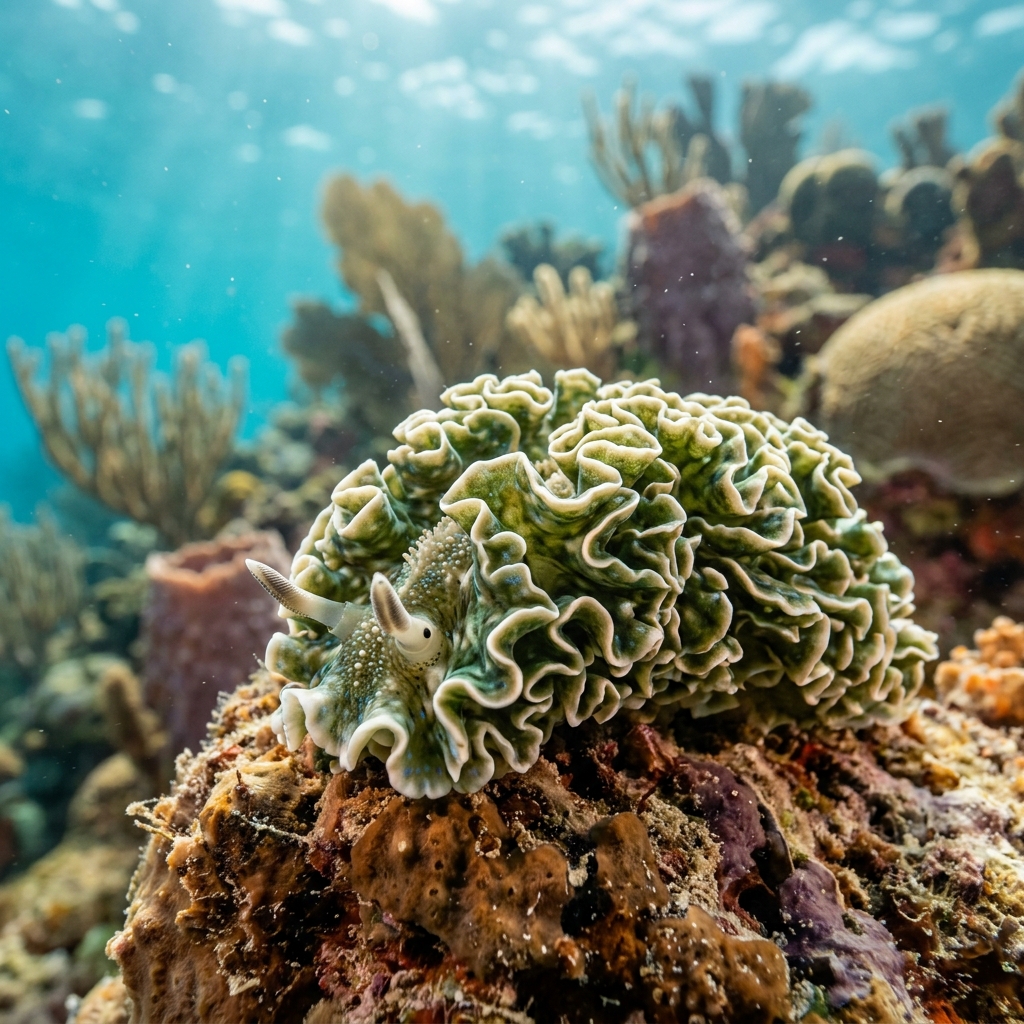
Reef neighbours a diver could mistake it for. Use the identification notes above to tell them apart.
Every logged sighting comes from California, with divers finding it consistently along the California coast. If you're diving cold-water California sites, this is one of the sea slugs worth scanning the rock and sand for.
Mapping where Orange Blob is logged…
Sightings are concentrated in California, particularly along the California coast, where divers log it on rock and sand substrate.
There's no strong seasonal signal in sightings, and it's found across a wide temperature range of roughly 12 to 19 C, so it's effectively a year-round find on California dives.
Look for a soft, shell-less body about 15 cm long in solid orange, with a broad rounded oral veil at the front and no frills or spikes. It moves slowly and looks like a smooth blob rather than a typically ornate sea slug.
They typically reach around 15 cm in length, making them one of the larger sea slugs divers encounter on California reefs.
It's a surprisingly aggressive scavenger for a sea slug, feeding on almost any organic matter it detects, including other sea slugs and injured animals, and it hunts primarily by smell rather than sight.
No, they pose no danger to divers. They move slowly, have no venom or sting relevant to humans, and can be observed and photographed up close without any risk.
Site and sighting data is aggregated from diver logs, iNaturalist and GBIF. For taxonomy and conservation status:
Mariaglaja inornata
Elysia Timida
573 sites