Octopus oculifer
Spot Reef Octopus in the Galápagos Islands in water from 22 to 26 °C. Here's how to recognise it and what to expect underwater.
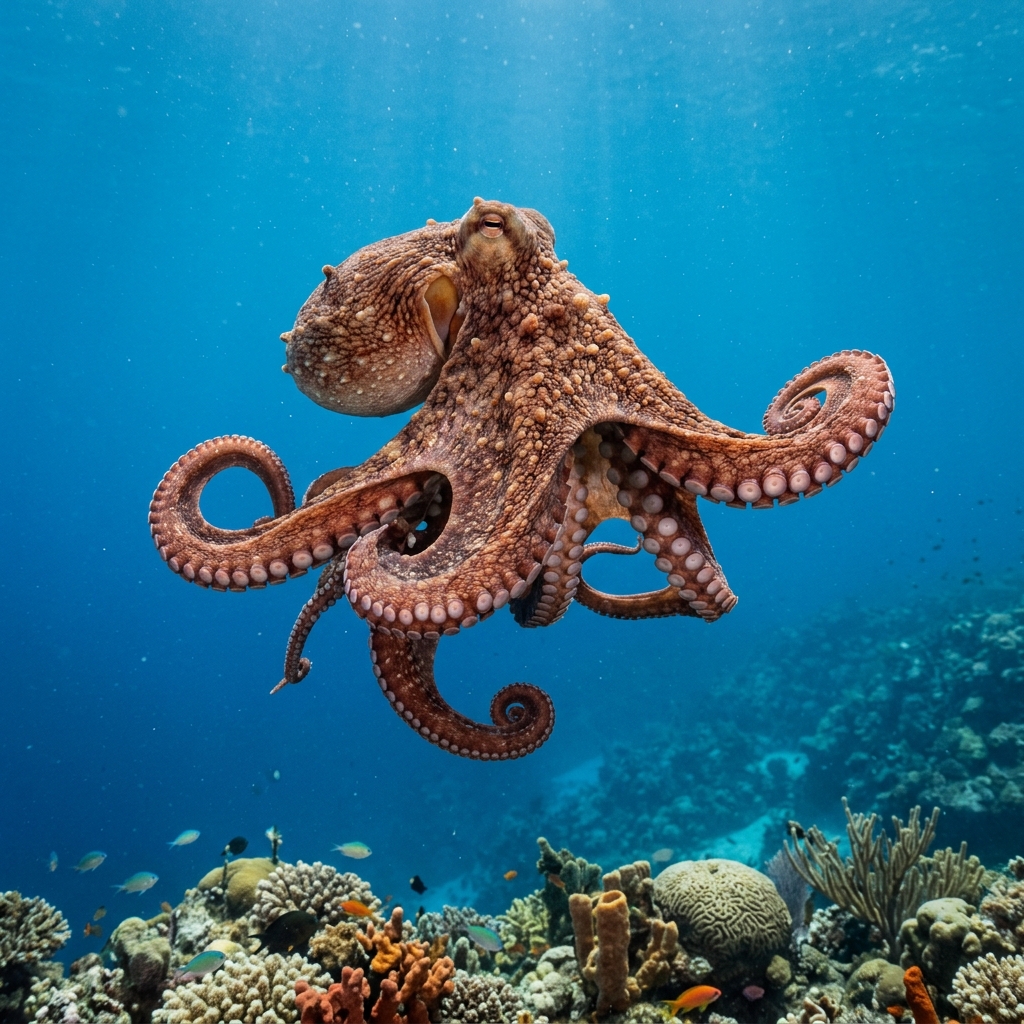
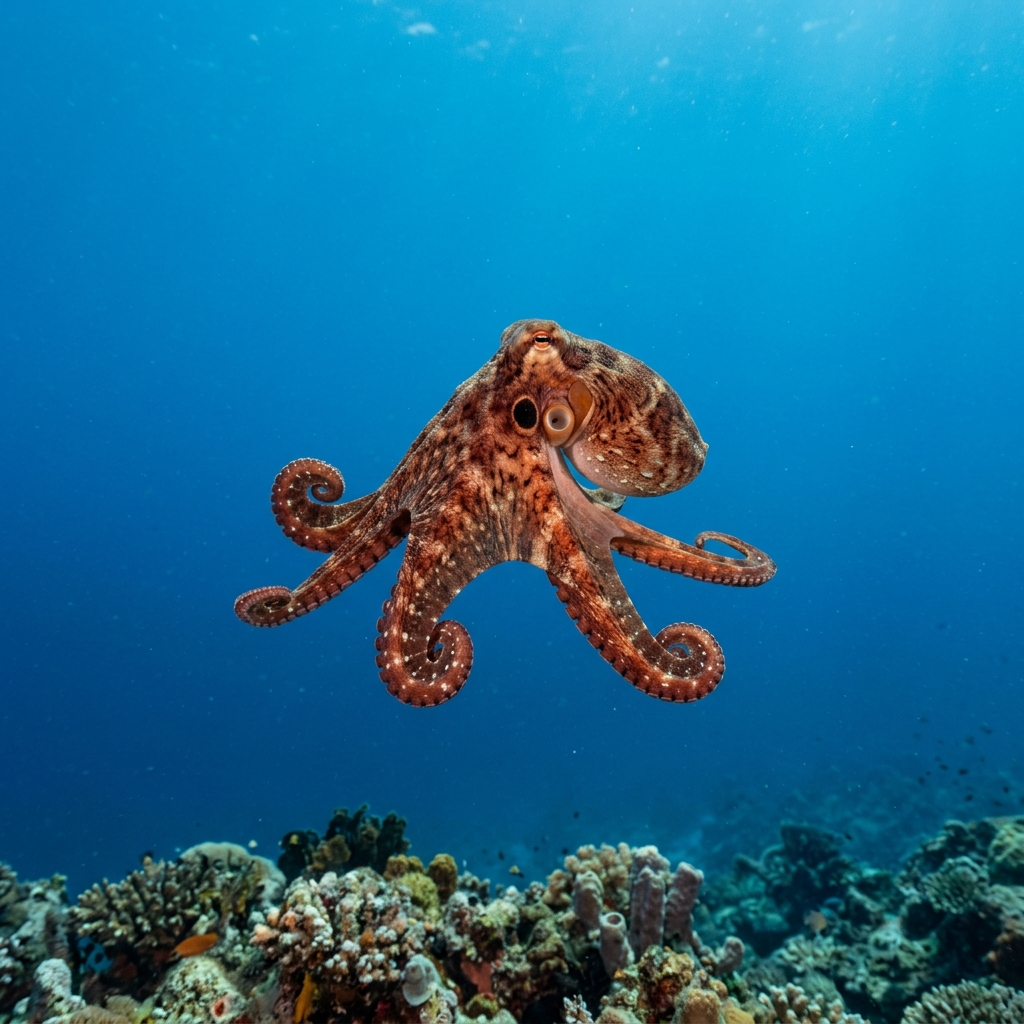
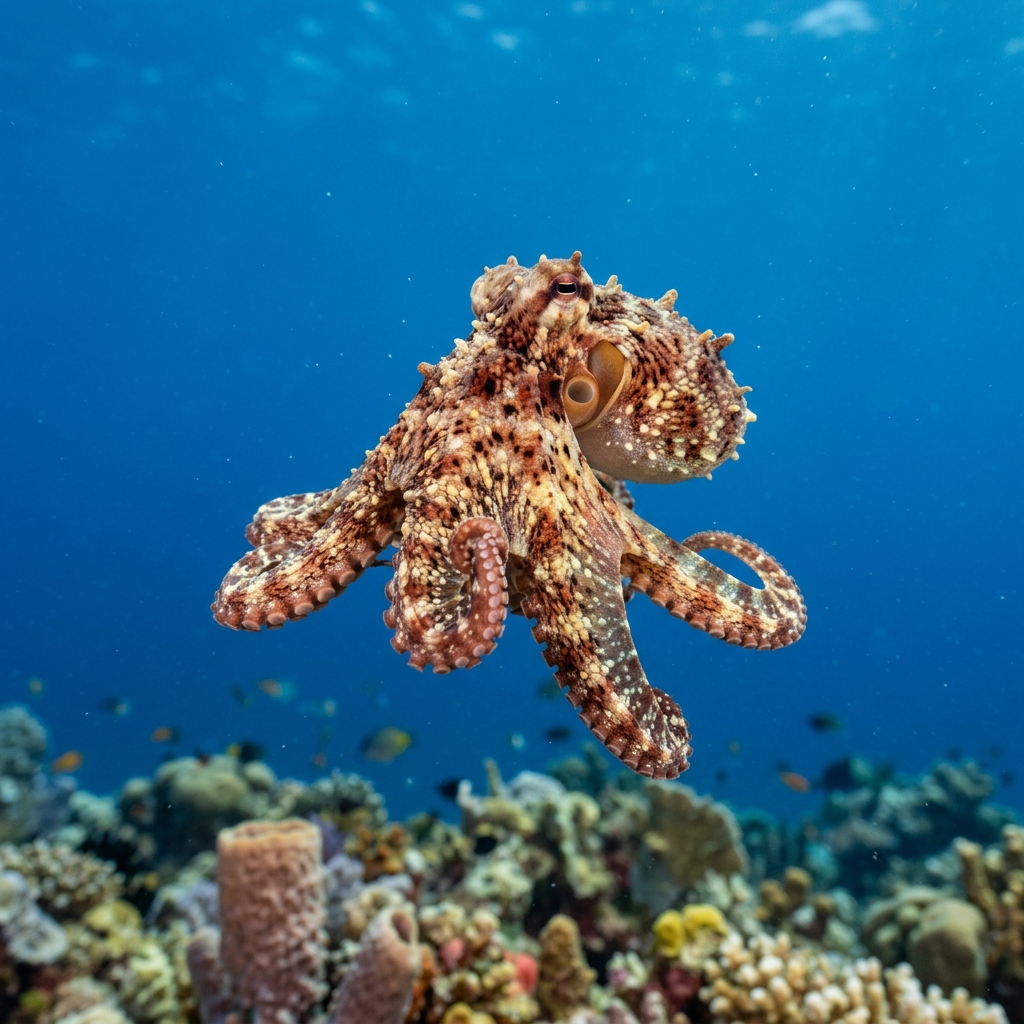
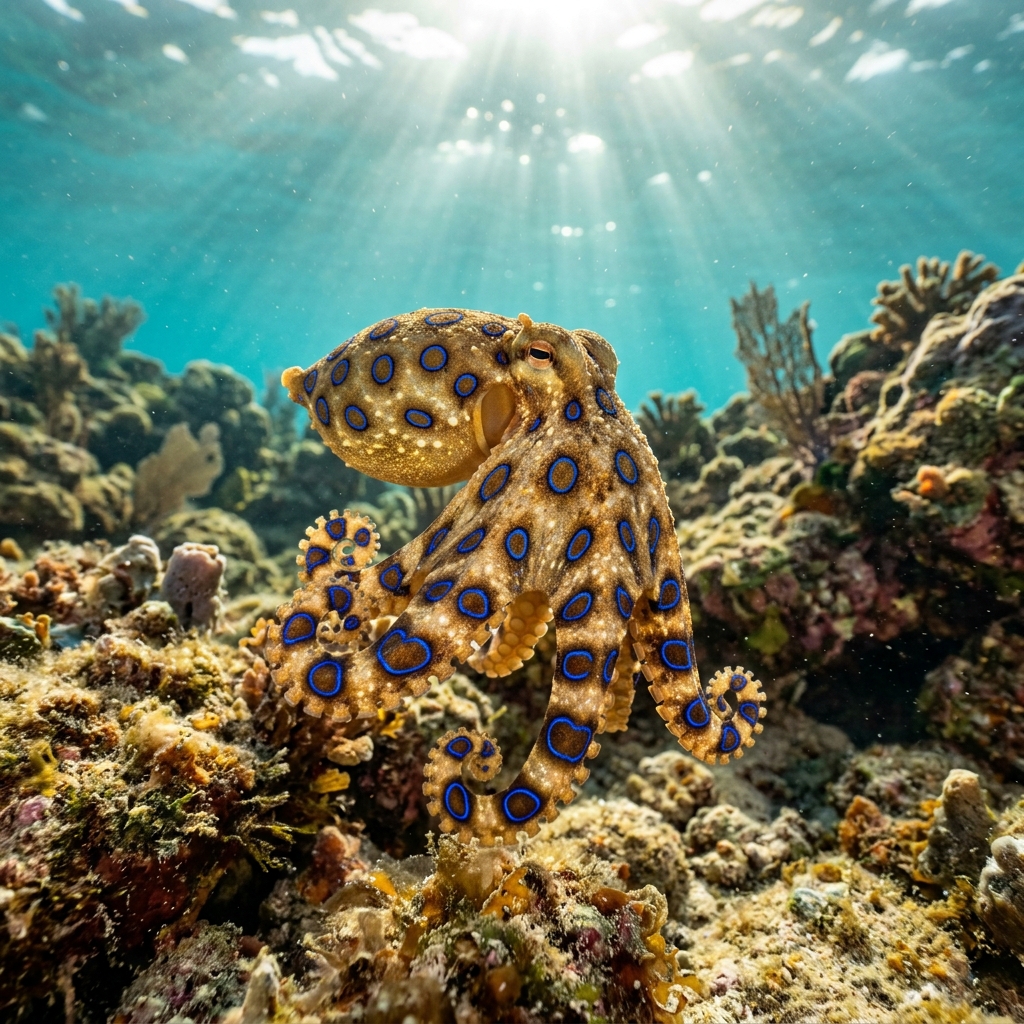
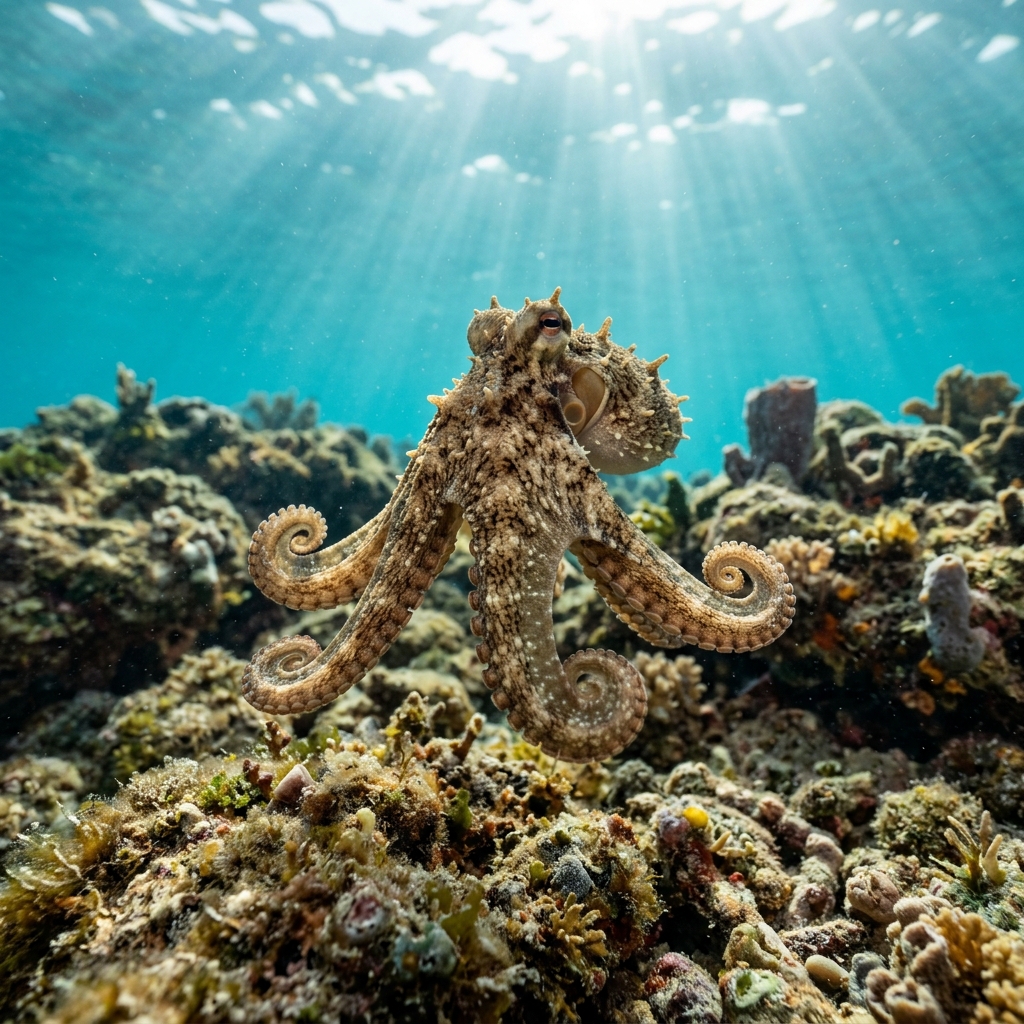
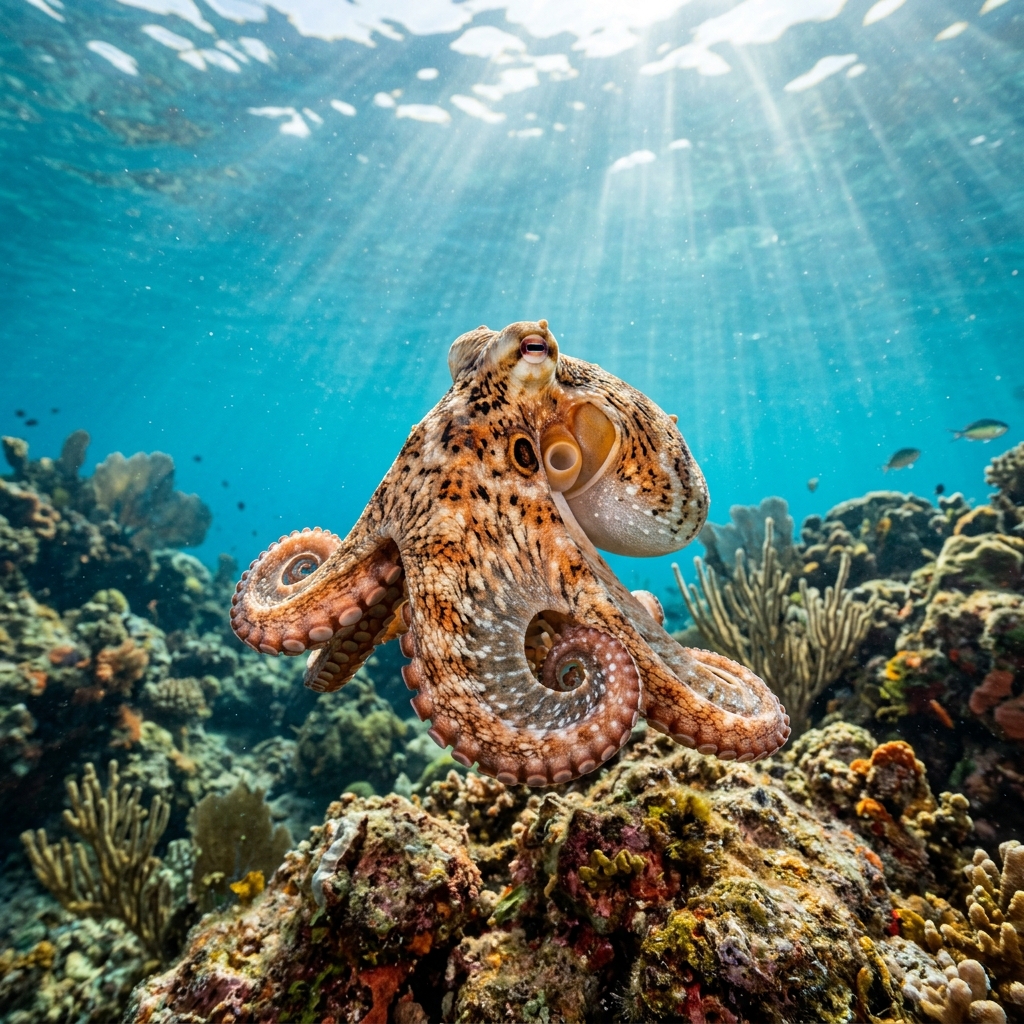
A medium-sized octopus with highly changeable skin texture and colour, typically shifting between rusty reds, mottled browns, and pale creams to blend with the reef. Like other reef octopuses, it can raise skin papillae (small fleshy bumps) to mimic the roughness of rock or coral almost instantly. The sucker-lined arms spread wide when it moves across the reef, and the eye is prominent with a horizontal pupil. No reliable size data exists for this species, so relative arm-spread compared to surrounding reef features is your best scale reference.
Most encounters happen when the octopus is tucked into a crevice or under a ledge, with only the arms and eyes visible at the den entrance. When spotted in the open, it typically freezes, changes colour rapidly, and then retreats if a diver approaches too closely. Sightings tend to be brief unless you wait quietly at a slight distance and let the animal settle.
The Galápagos sits at the intersection of several major ocean currents, and the relatively cool upwelling water there shapes which cephalopod species thrive, making the reef octopuses found in the archipelago subtly distinct from their warmer-water relatives.
No clear seasonal peak has emerged from the data, so treat sightings as possible year-round. The species appears comfortable across a water-temperature range of roughly 22 to 26 °C, which reflects the Galápagos's mix of warm equatorial surface water and cooler upwellings.
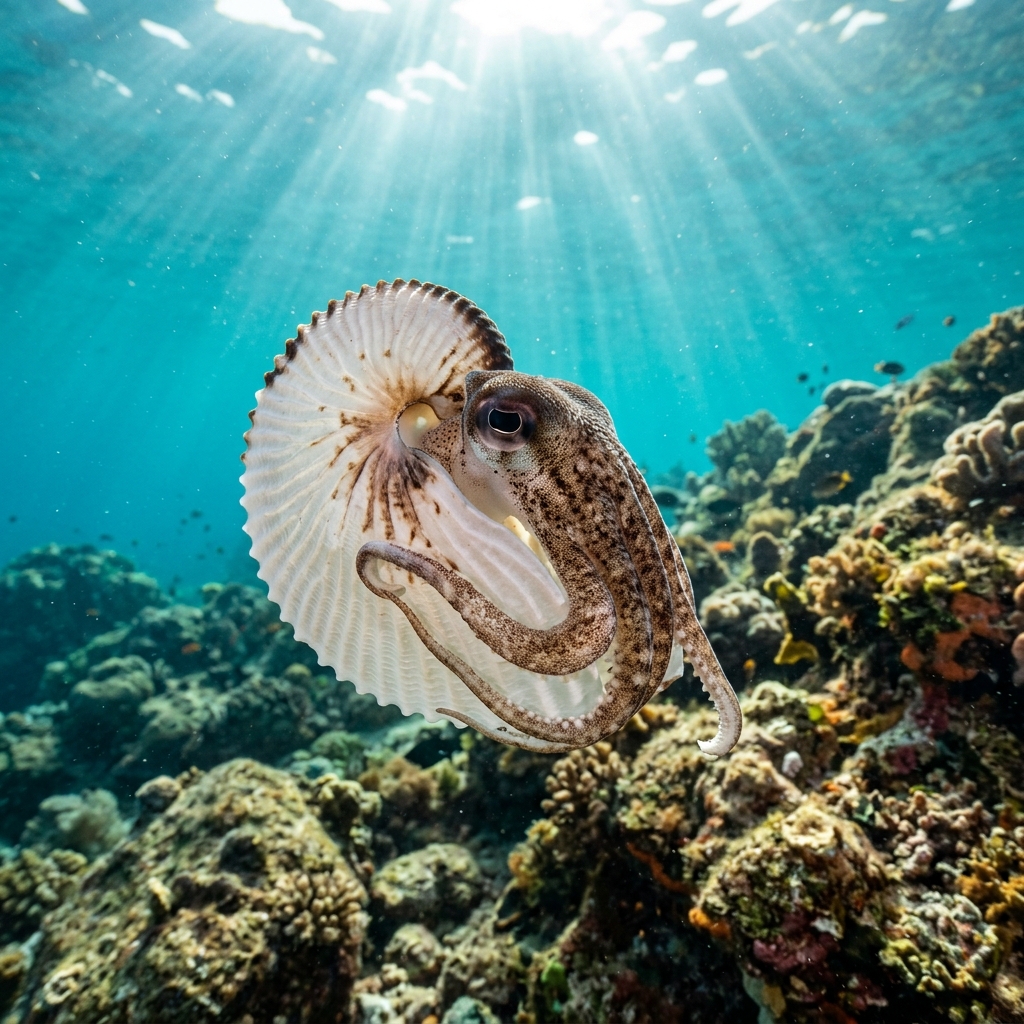
Reef neighbours a diver could mistake it for. Use the identification notes above to tell them apart.
Every logged sighting comes from the Galápagos Islands, Ecuador, making this one of the more distinctly range-restricted octopuses in diver records. Sites are spread across the archipelago, so any liveaboard or day-trip dive in the Galápagos gives you a realistic opportunity to encounter one.
Mapping where Reef Octopus is logged…
All confirmed diver sightings come from the Galápagos Islands, Ecuador. The species appears across multiple sites throughout the archipelago, so most Galápagos dive itineraries give you a reasonable chance of an encounter.
There is not enough monthly sighting data to identify a peak season, so encounters appear possible year-round. Water temperature in the Galápagos ranges from about 22 to 26 °C across seasons, and the species seems comfortable throughout that range.
Look for a medium-sized octopus with a mottled brown-to-cream colour pattern and the ability to raise rough skin bumps to mimic rock texture. The horizontal pupil inside a prominent eye is a useful close-up feature. Colour alone is unreliable because it changes within seconds, so focus on body shape and skin texture instead.
No. Reef Octopus poses no meaningful threat to divers. Like all octopuses it can bite if handled, but it is overwhelmingly inclined to flee or hide rather than defend itself. Observe from a short distance without touching and it will generally behave naturally.
Sighting frequency at logged sites ranges from rare to uncommon, meaning you should not expect to see one on every dive. Patience, a slow pace, and scanning crevices and rubble areas carefully will improve your odds considerably. Early morning and late afternoon dives are generally productive for octopus activity.
Site and sighting data is aggregated from diver logs, iNaturalist and GBIF. For taxonomy and conservation status:
Brazilian Reef Octopus
1,142 sites