Tozeuma lanceolatum
A slender, near-transparent shrimp logged across Sulawesi and Luzon reefs, thriving in warm 25-31C water year-round.
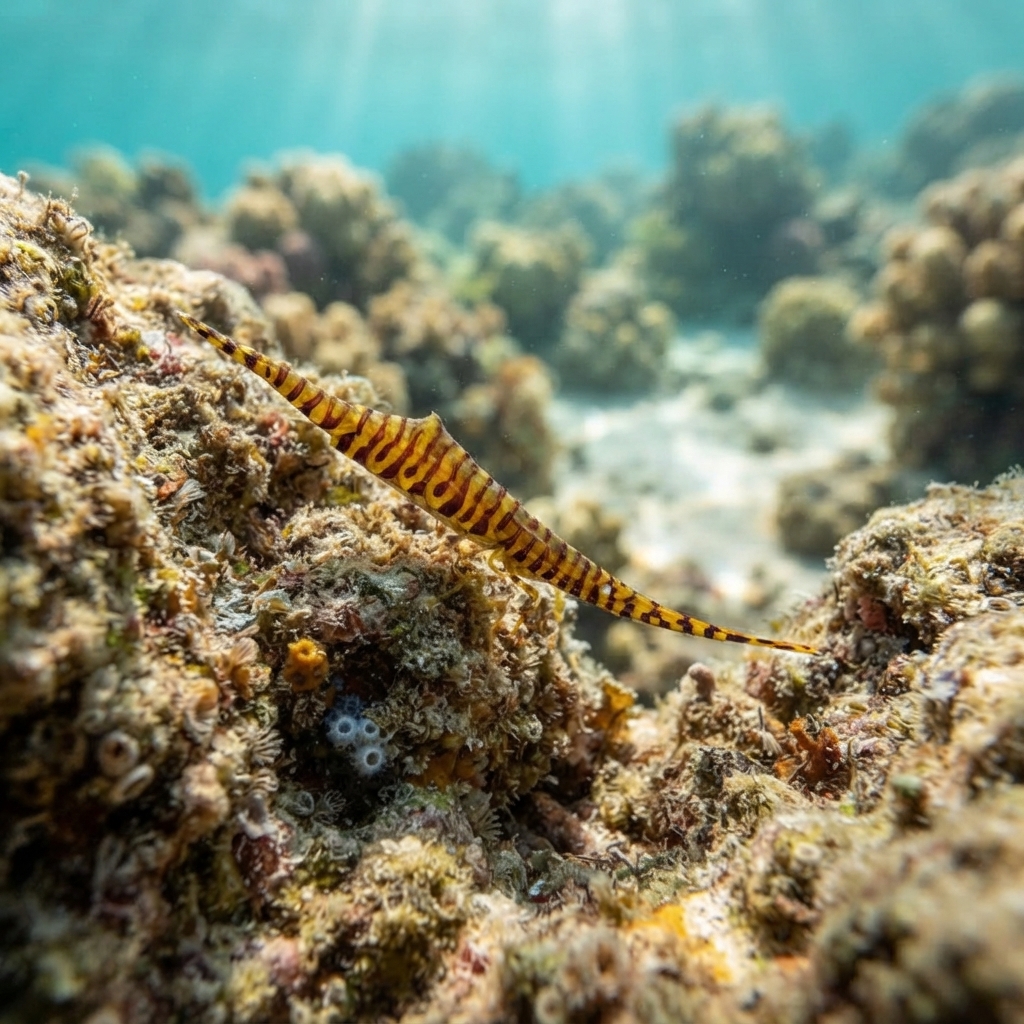
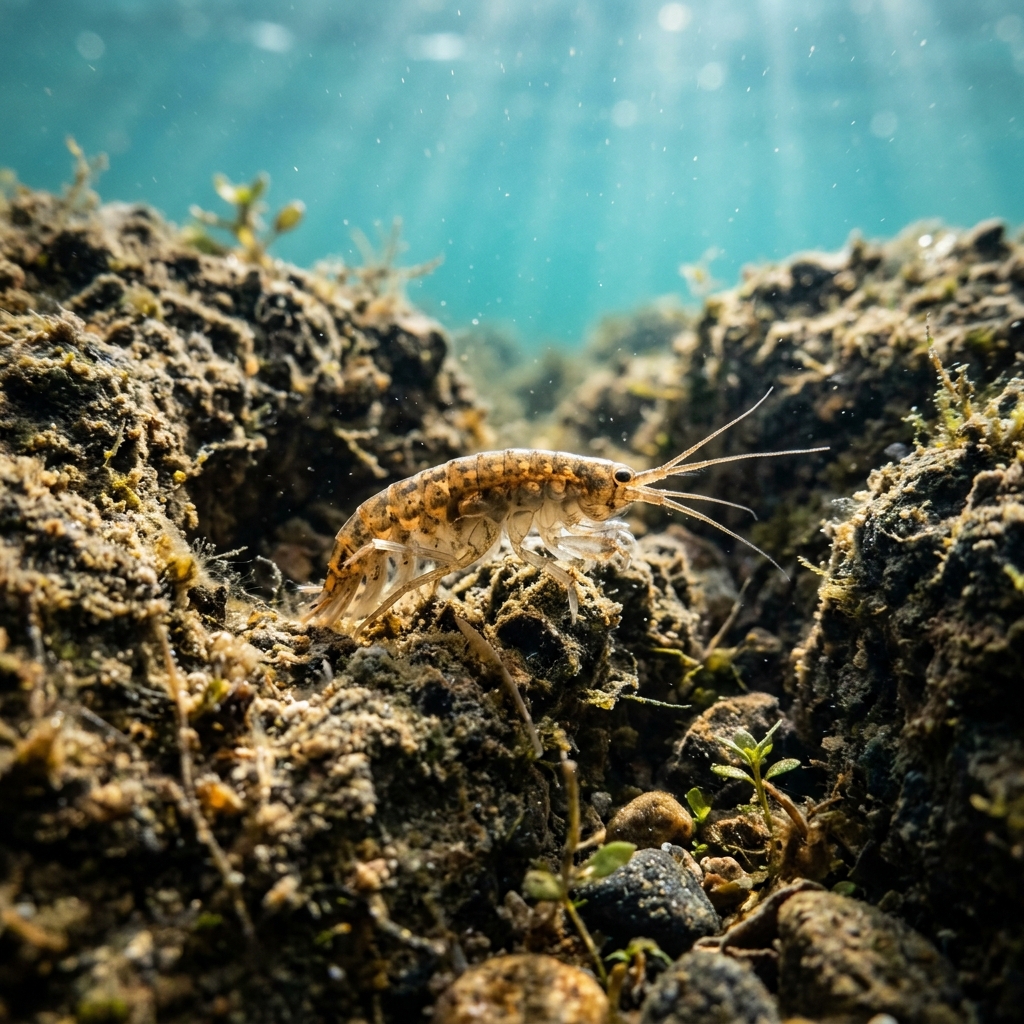
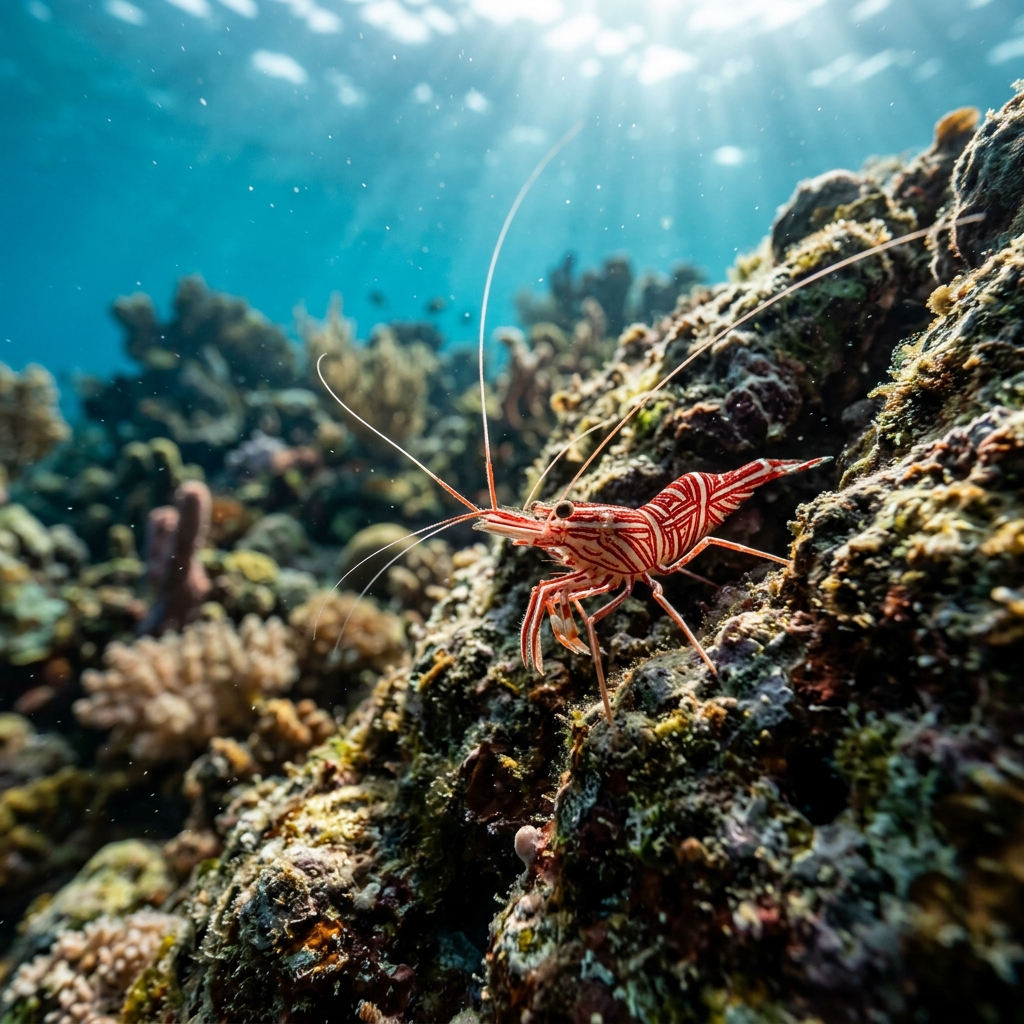
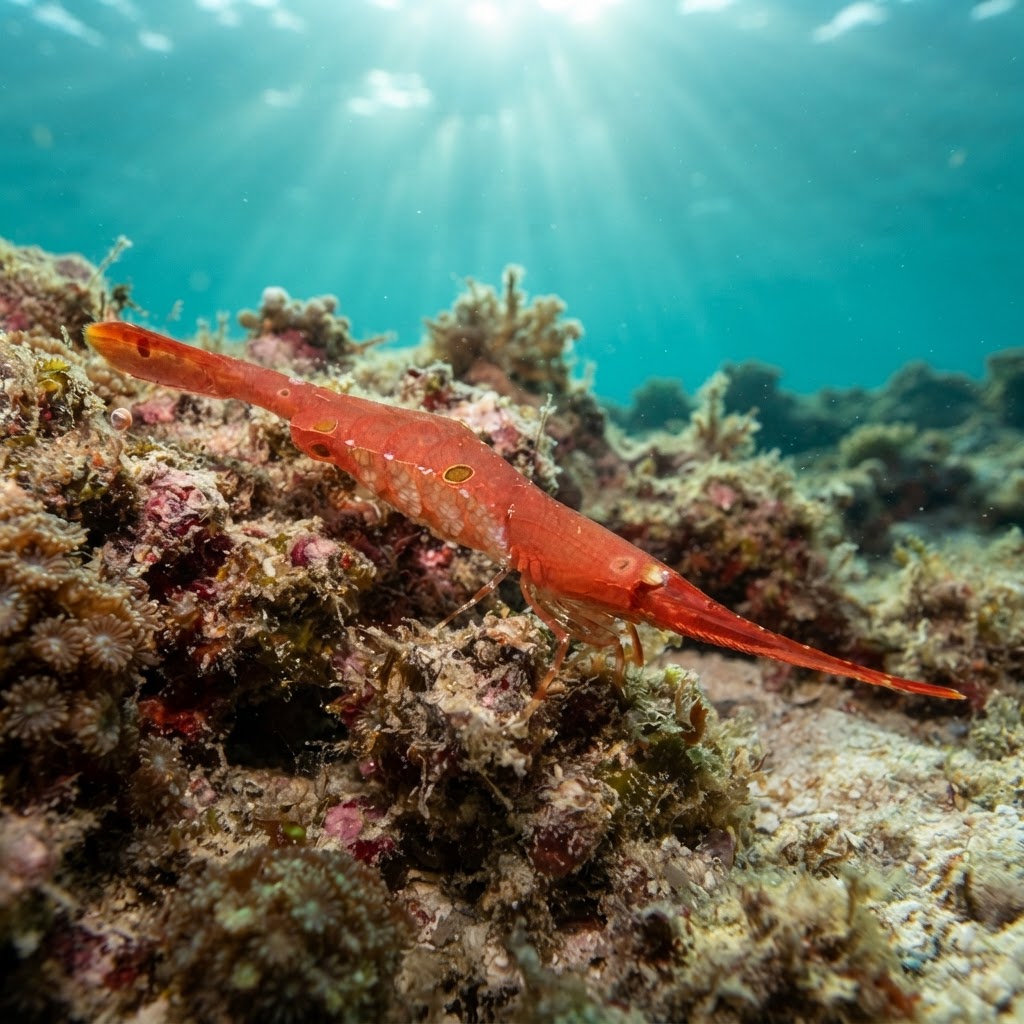
Look for a slender, almost needle-like body held at an angle, with a long forward-pointing rostrum (the pointed snout between the eyes) that gives it a stretched, wire-like silhouette. Colouration tends toward translucent or pale tones that pick up the hue of whatever it is perched on, making it easy to swim straight past. The eponymous ocellated marking (small eye-like spots) helps confirm identification once you slow down and look closely at the body segments.
Found sitting still on benthic (bottom-dwelling) substrate rather than swimming in open water, usually tucked against a perch that matches its colouring. Divers report it as an uncommon find at most sites, meaning it takes a slow, deliberate search rather than a casual look to spot one. It does not react much to divers beyond staying motionless, which is as much a defence as anything.
Its slender, elongated shape and muted colouring are a camouflage strategy, letting it blend into fine reef structure rather than relying on speed or shelter to avoid predators.
No clear seasonal pattern shows up in the sighting data, and the 25.4 to 31.4C temperature range it is found in holds steady on these reefs all year, so it is a reasonable target on any visit.
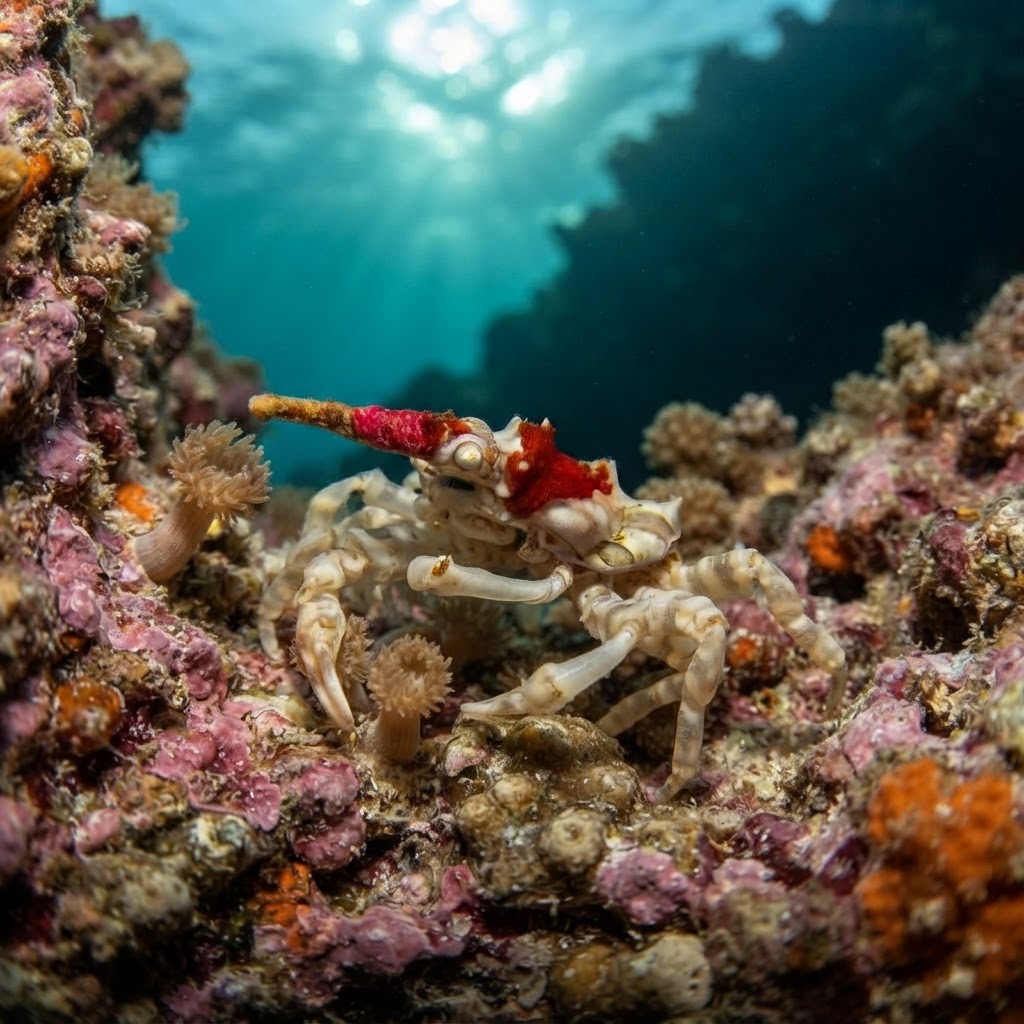
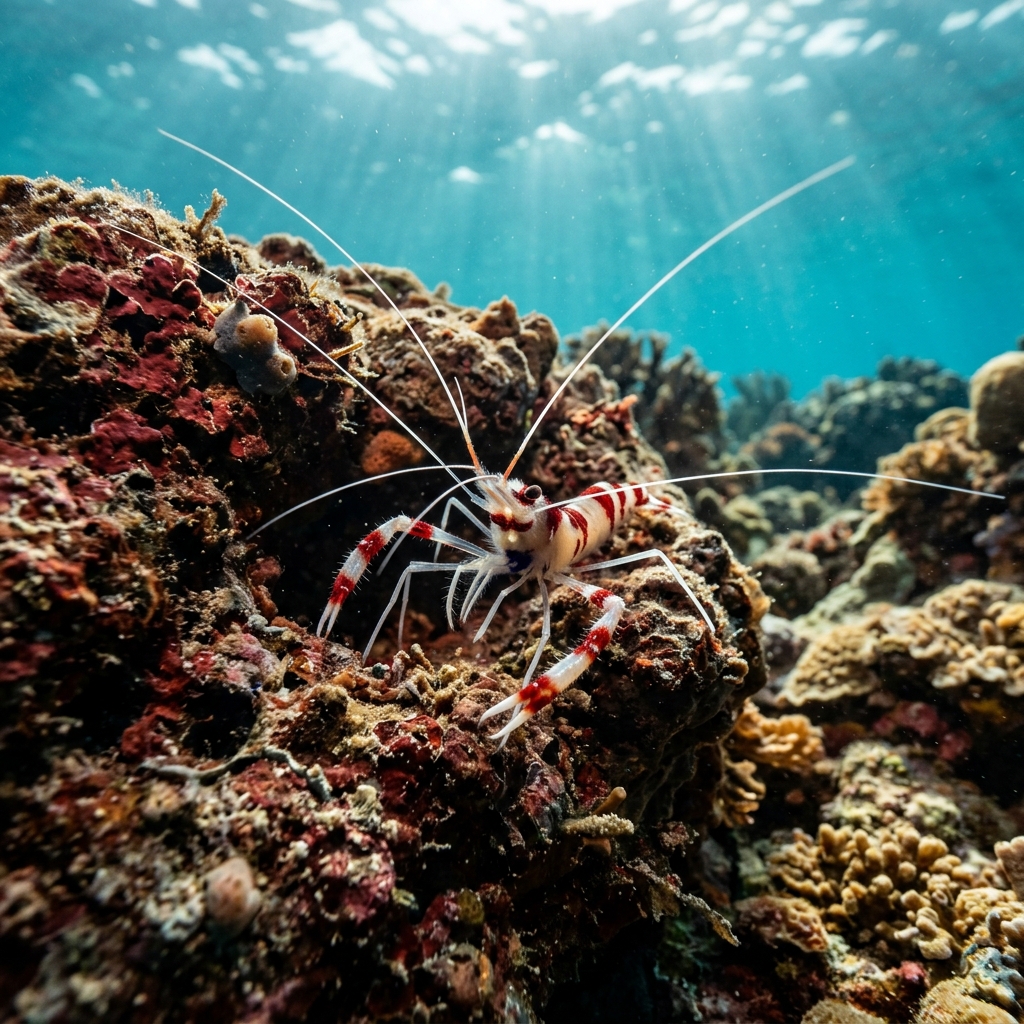
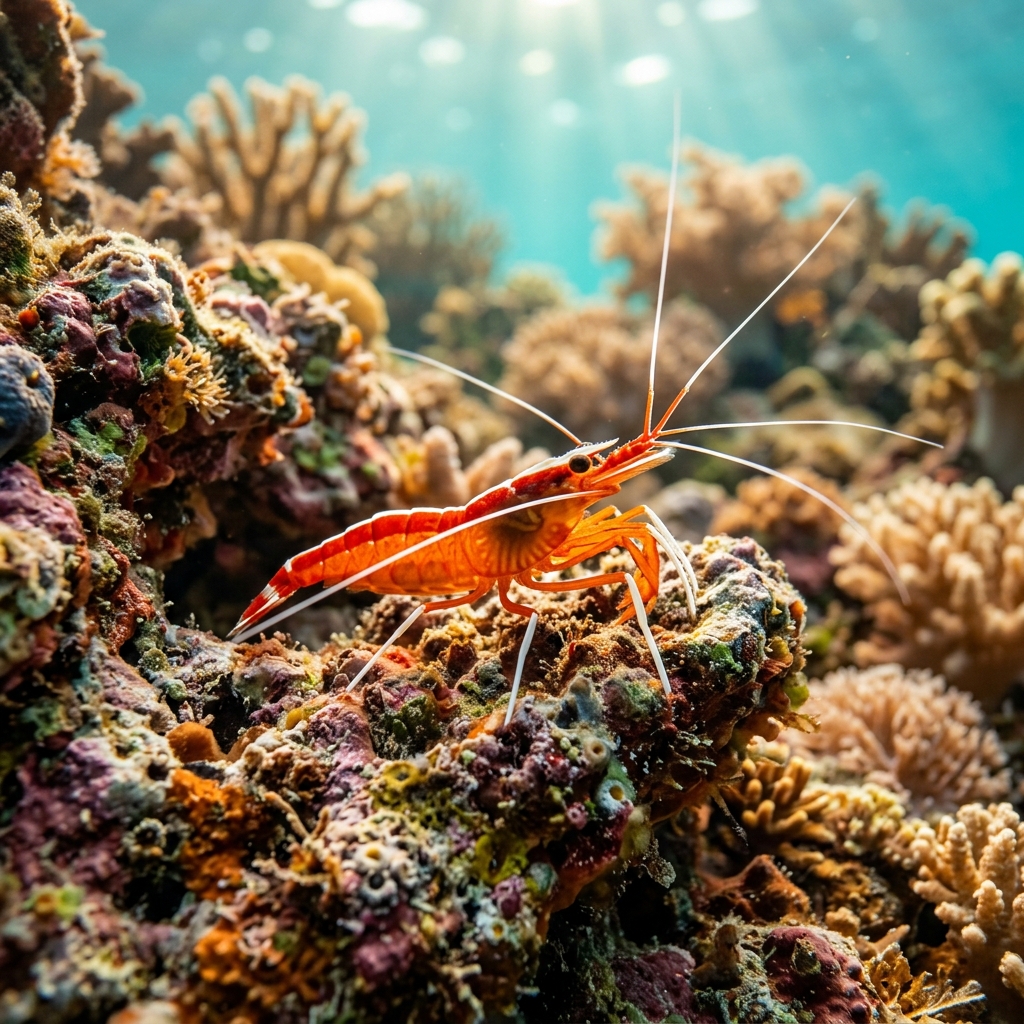
Reef neighbours a diver could mistake it for. Use the identification notes above to tell them apart.
Most reliably logged across Sulawesi in Indonesia and Luzon in the Philippines, with smaller numbers of sightings from Bali and Maluku. Indonesia carries the bulk of the recorded sites, so divers focused on this species will find the strongest odds working the Sulawesi coast.
Mapping where Ocellated Tozeuma Shrimp is logged…
Sulawesi in Indonesia and Luzon in the Philippines have the strongest records, with additional sightings from Bali and Maluku. Indonesia overall accounts for most logged sites.
There is no strong seasonal signal in the data, and the warm water range it favours is present year-round on these reefs, so any month is a fair shot.
Check for a thin, elongated body angled against the substrate, a long pointed rostrum, and pale or translucent colouring with small eye-like markings. It is easy to overlook without a close, slow search.
No, they pose no threat to divers and simply stay still on the substrate when approached.
It has not been formally assessed, so there is no conservation status to report. There is nothing in the data to suggest a population concern for divers to worry about.
Site and sighting data is aggregated from diver logs, iNaturalist and GBIF. For taxonomy and conservation status:
Rockpool Prawn
2,179 sites