Pseudorhombus dupliciocellatus
A flat, sand-coloured ambush artist logged across the Visayas, Philippines. Uncommon but findable if you scan the sand in 20.5 to 28C water.
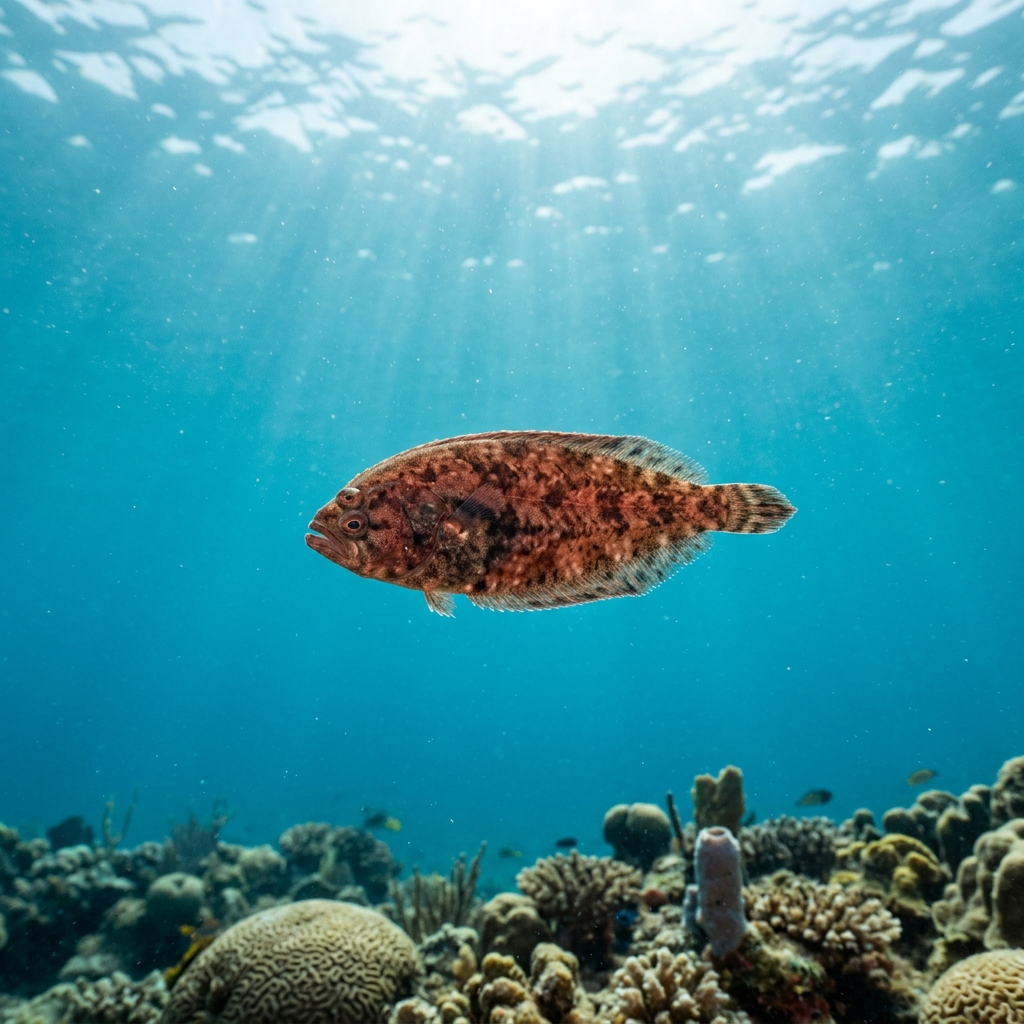
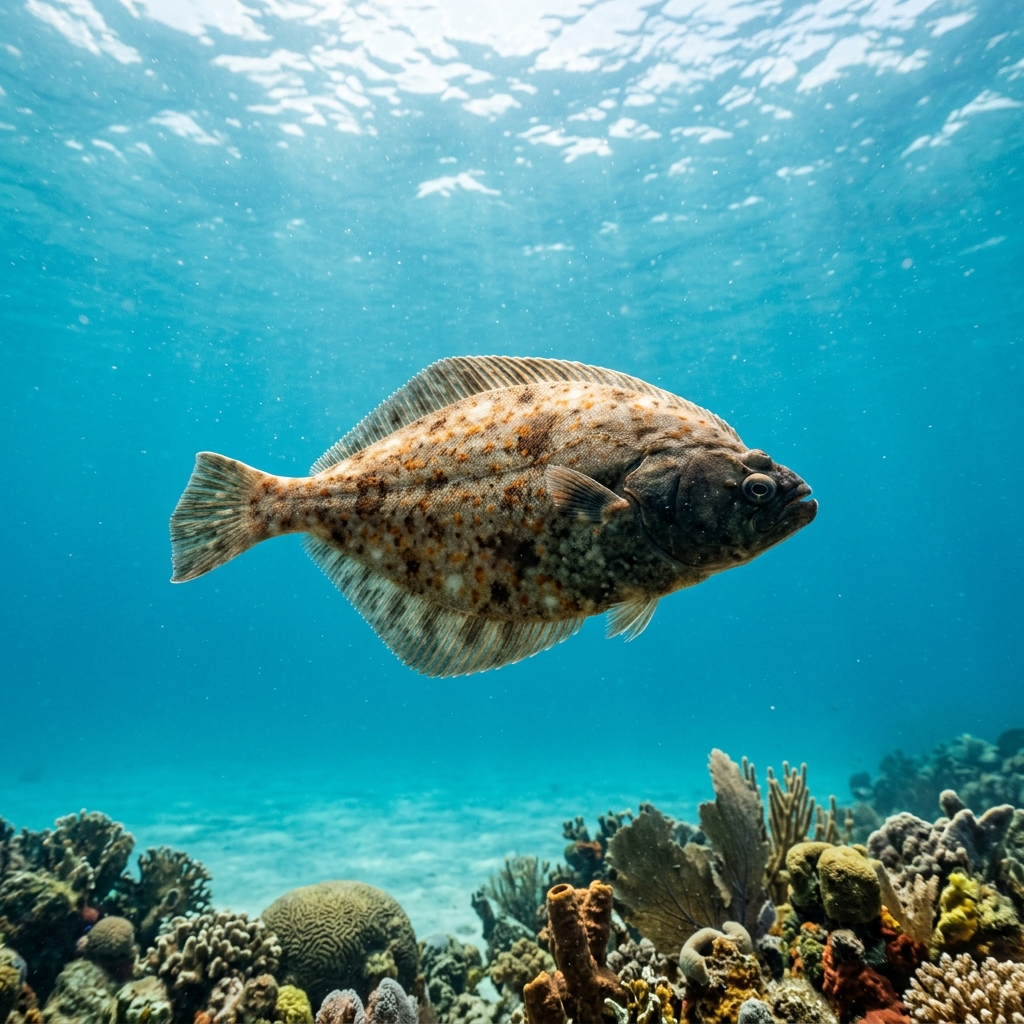
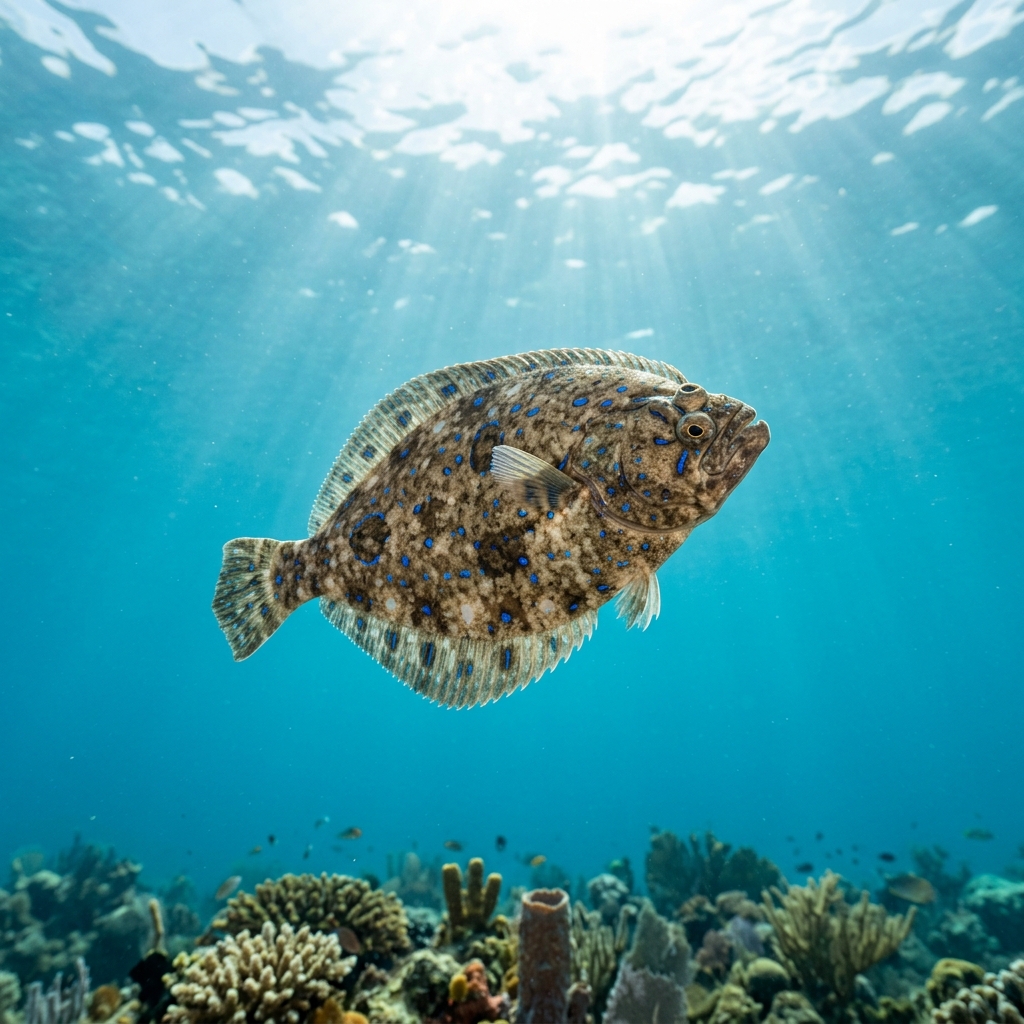
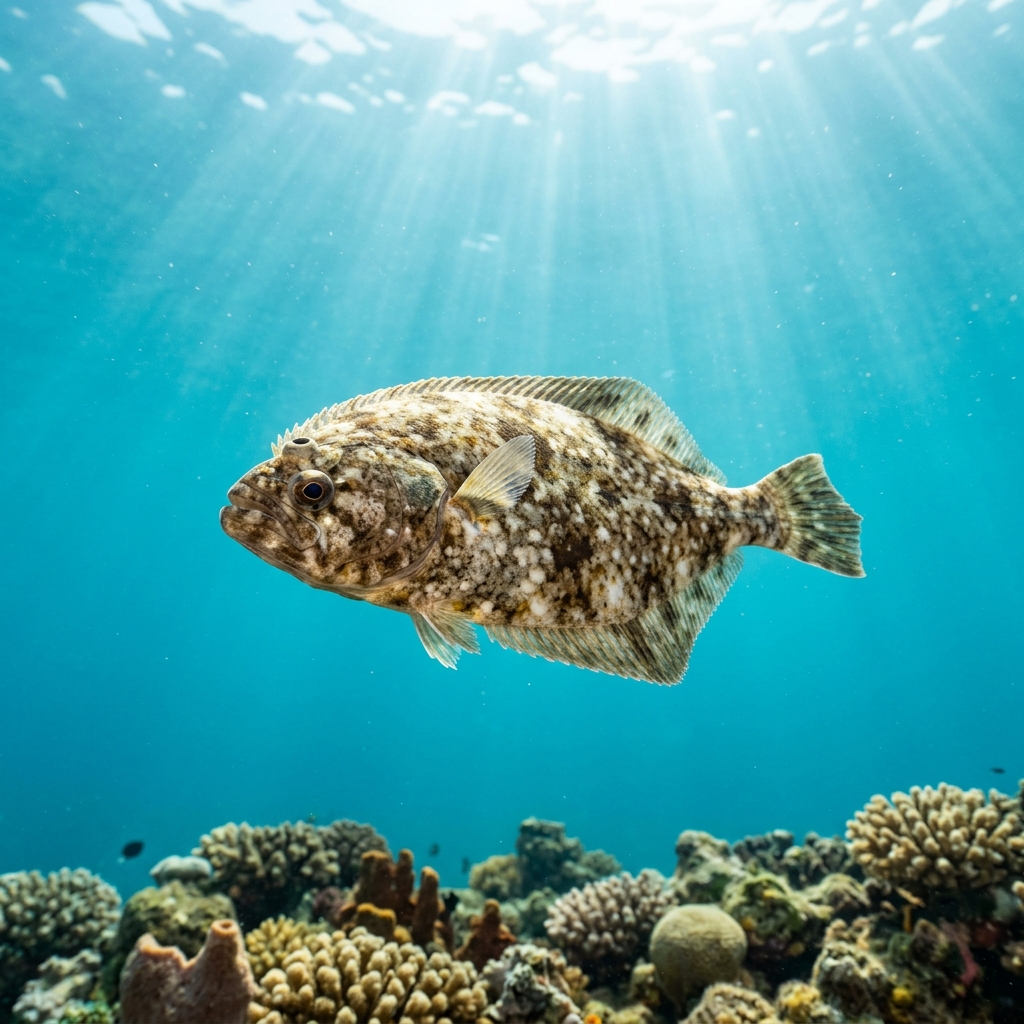
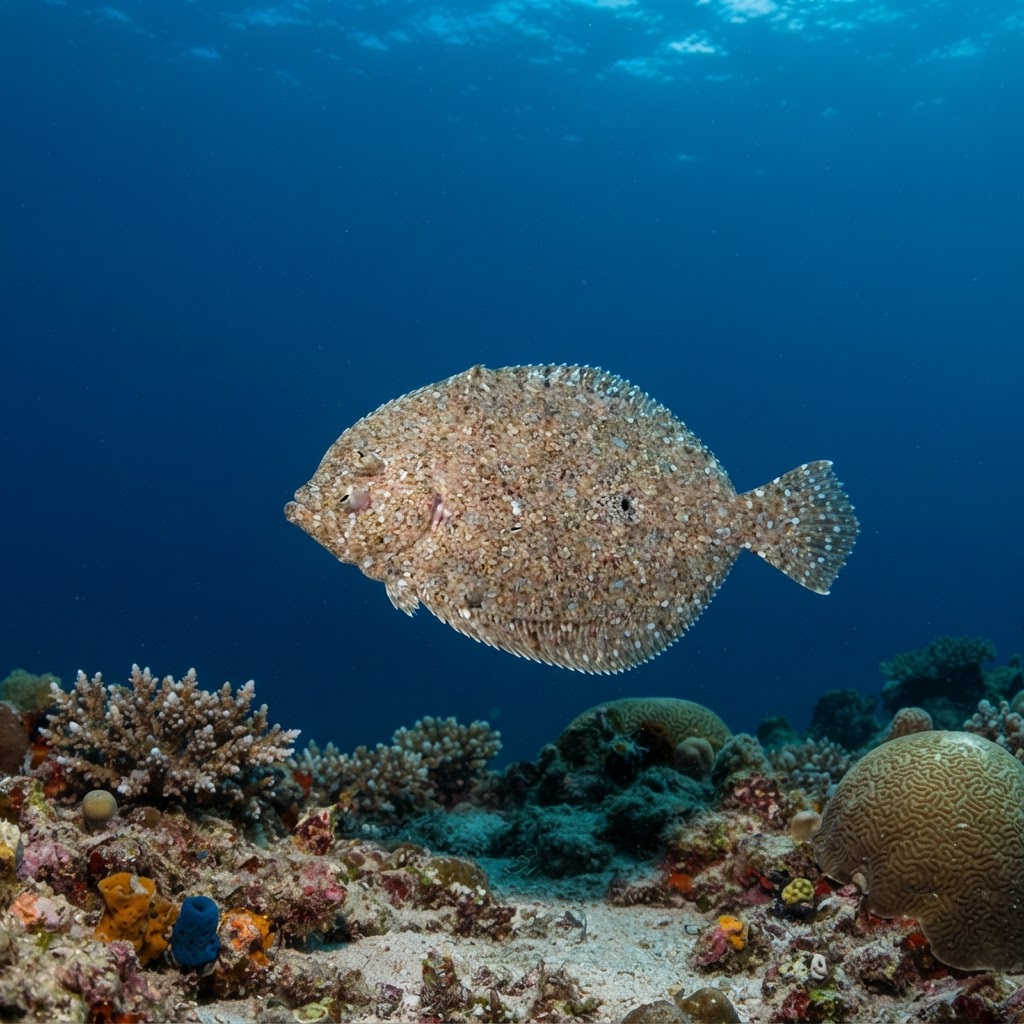
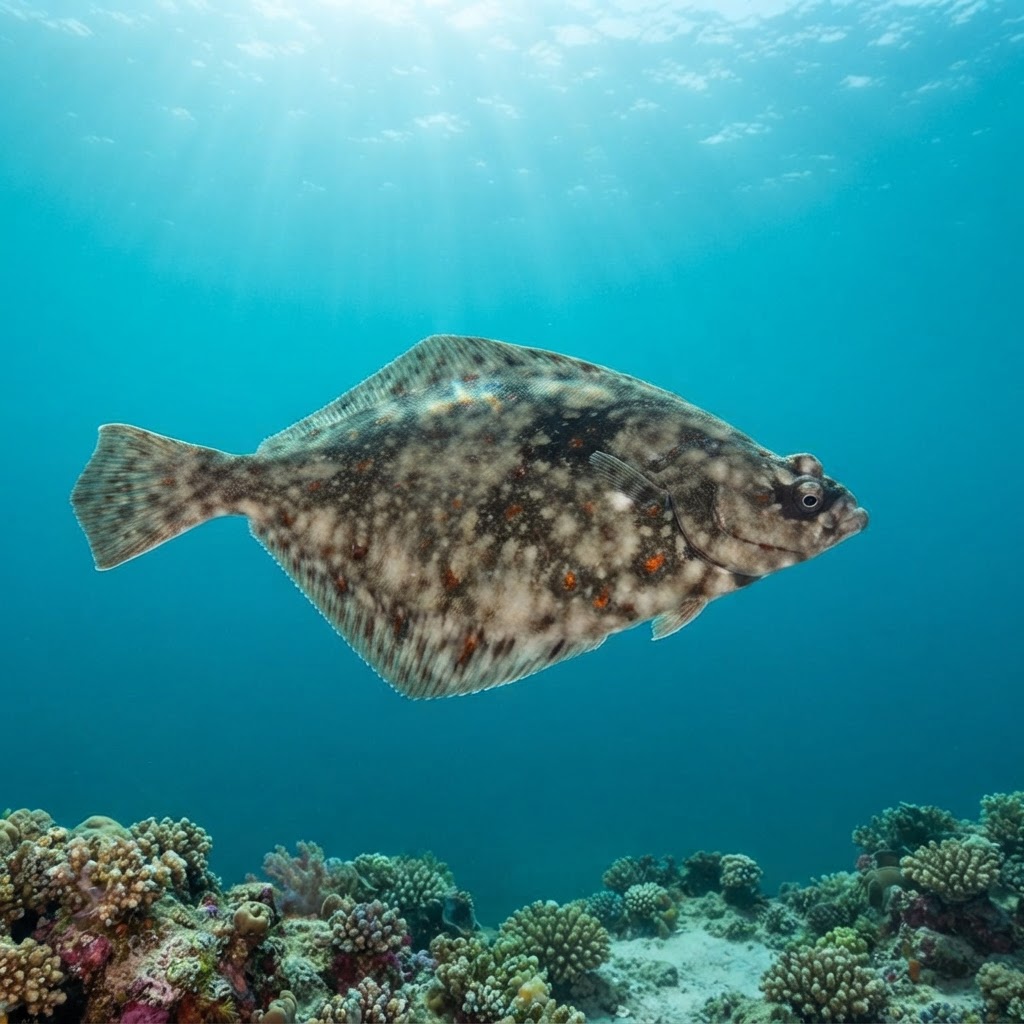
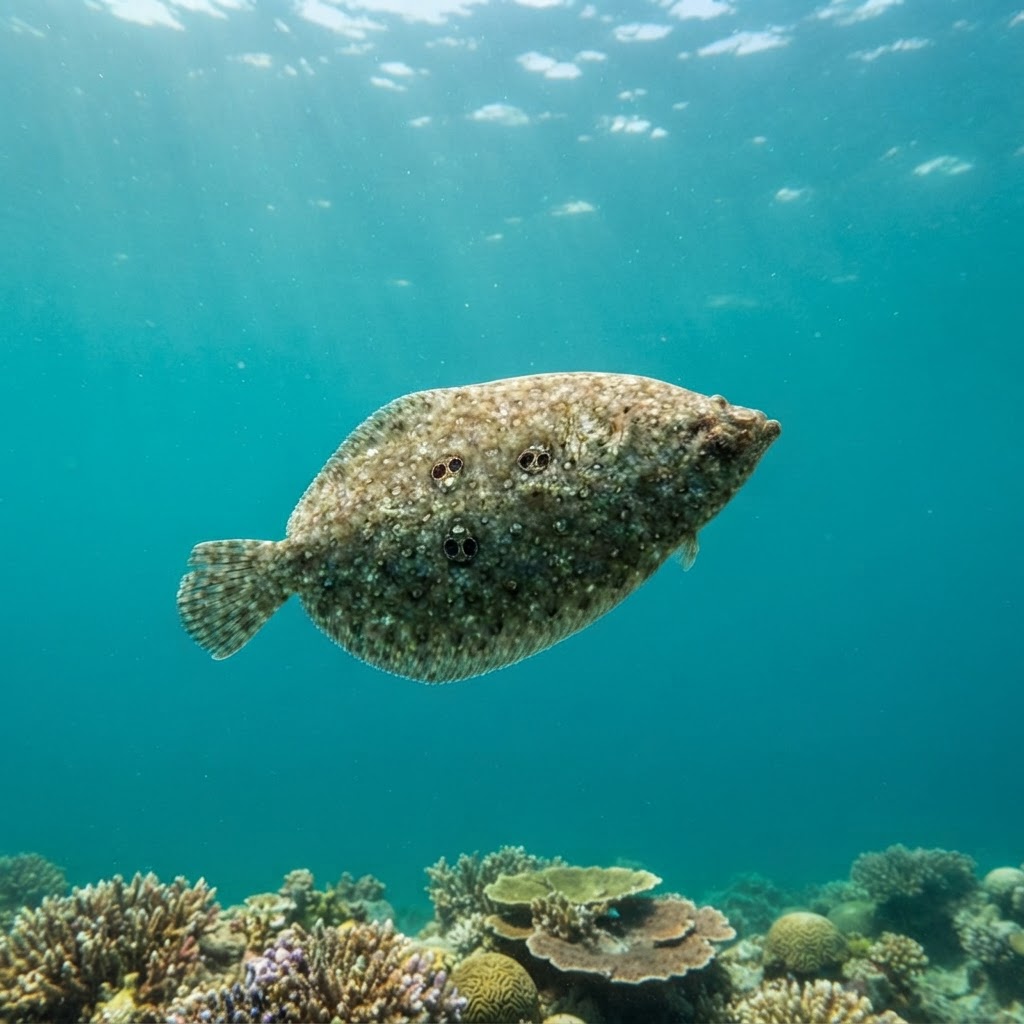
Flat, diamond-shaped body lying directly on sand or rubble, growing to around 28cm, with both eyes set on the left side of the head as with all left-eye flounders. Mottled brown and sandy tones break up its outline, and a scatter of dark, ringed eye-spots (ocelli) across the body is the main giveaway once you know to look for it. Most divers spot it only when it flinches or shifts position, since it otherwise sits still and blends almost completely into the substrate.
Look for it lying motionless on open sand or rubble patches, usually on the flatter stretches between reef structure rather than on the reef itself. It relies on stillness and camouflage rather than fleeing, so a slow approach and a careful scan of the substrate is more productive than chasing movement. Divers tend to notice it only when it shifts a few centimetres or flicks up a small puff of sand.
Like other left-eye flounders, it starts life swimming upright with an eye on each side, then one eye migrates across the head as it settles into its flattened, sand-dwelling adult form.
Sighting records don't show a clear season, and with a comfortable range of 20.5 to 28C it seems to sit on the sand year-round rather than showing up only in certain months. Treat it as a possible find on any dive in its habitat rather than a seasonal target.
Every logged sighting in the data comes from the Philippines, with the Visayas region standing out as the reliable spot to look for it. It has not turned up elsewhere in diver records yet, so if you want a real shot at one, plan a sand-and-rubble dive in the Visayas rather than on open reef.
Mapping where Ocellated Flounder is logged…
The strongest records come from the Visayas region of the Philippines, where it has been logged across a number of dive sites. It hasn't been reported from other regions in diver sightings so far, so the Visayas is the place to target it.
There's no detected seasonal pattern, and it's found in water from 20.5 to 28C, so it appears to be a year-round resident of sandy habitat rather than a seasonal visitor.
Look for a flat, diamond-shaped fish lying on sand or rubble, mottled brown to match the seabed, with dark ringed eye-spots scattered across its body. Both eyes sit on the same side of the head, a trait shared by all left-eye flounders.
They reach around 28cm, a modest size that combined with their flat shape and camouflage makes them easy to swim straight past.
No, they pose no danger to divers. They're a passive, camouflaged fish that relies on staying still and blending into the sand rather than any defensive behaviour.
It's born with an eye on each side of its head like a normal fish, but as it matures one eye migrates across the skull so both end up on the same side, letting it lie flat on the seabed and still see upward.
Site and sighting data is aggregated from diver logs, iNaturalist and GBIF. For taxonomy and conservation status:
Wide Eyed Flounder
1,624 sites