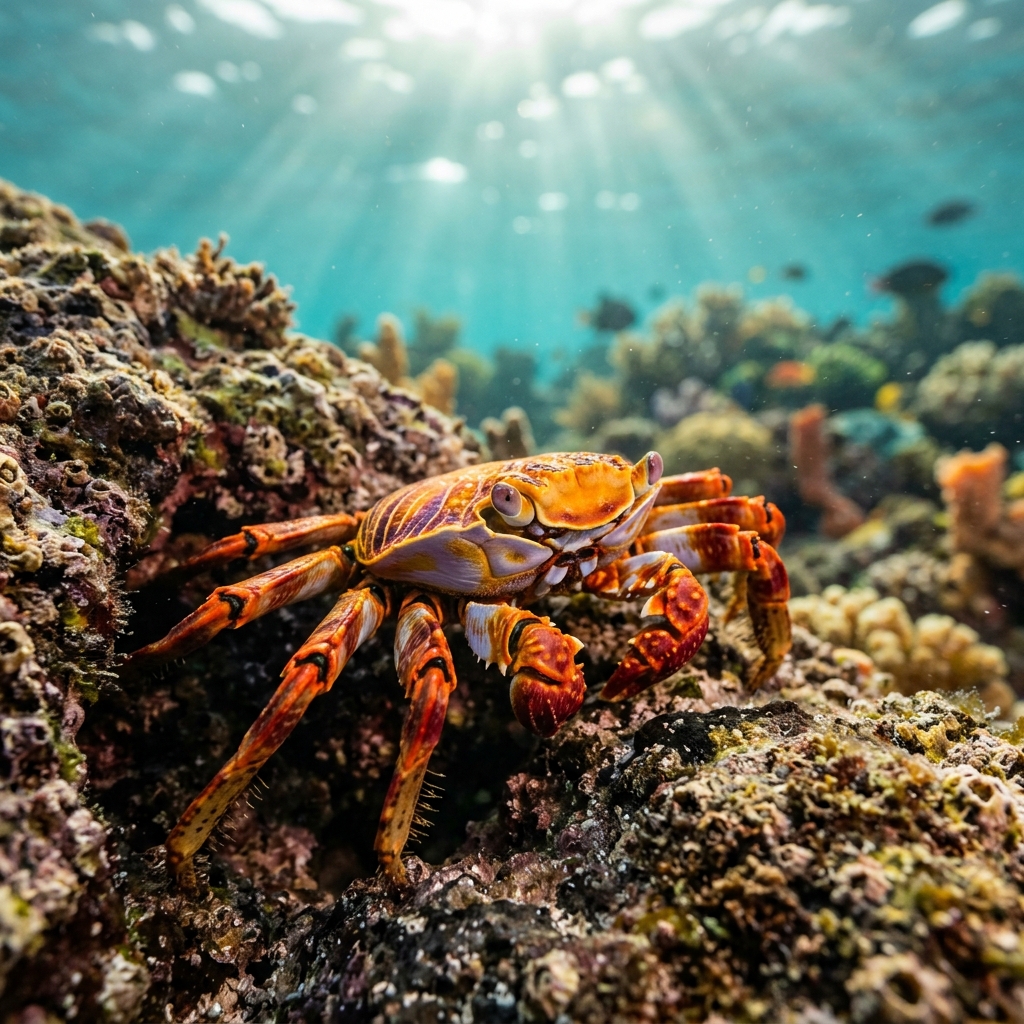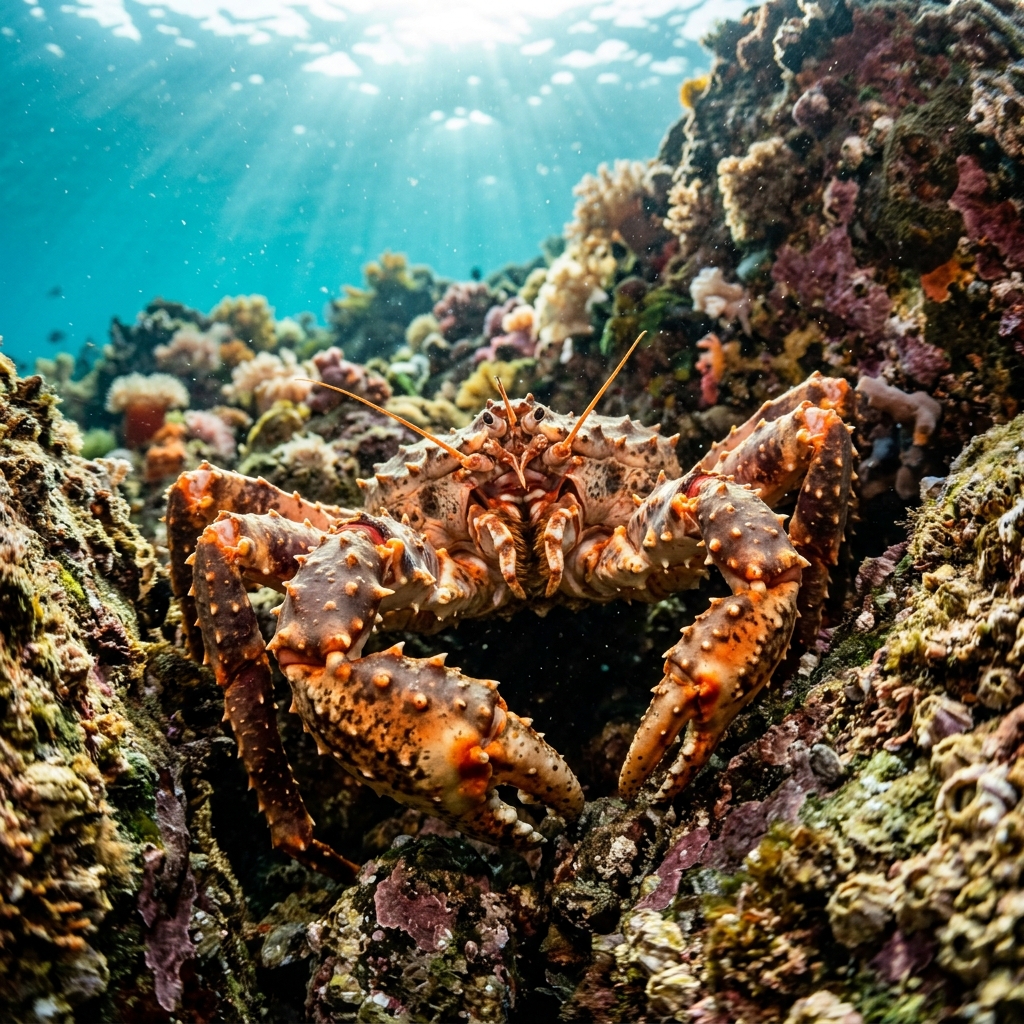
Calappa ocellata
Smooth, domed and spotted, this box crab turns up on night dives around Willemstad, Curacao, in warm 25-30C water year-round.
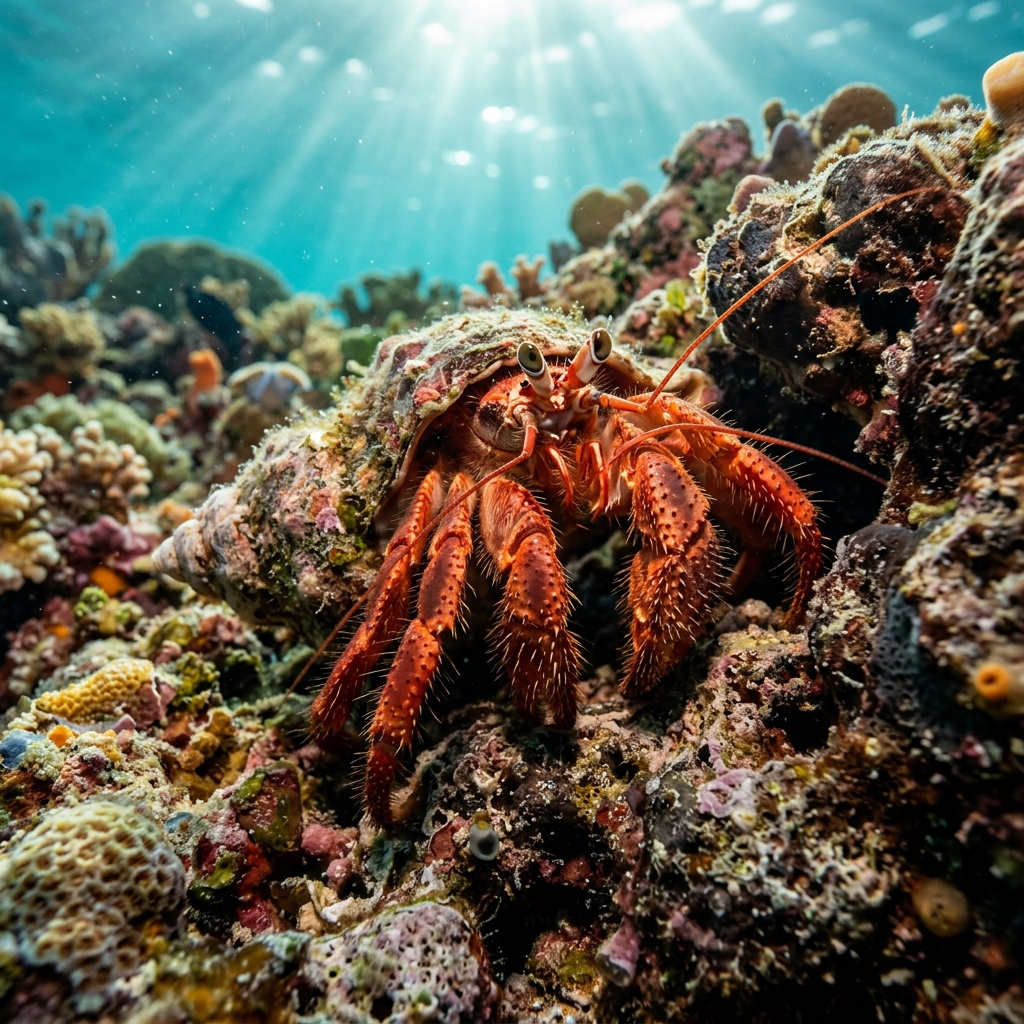
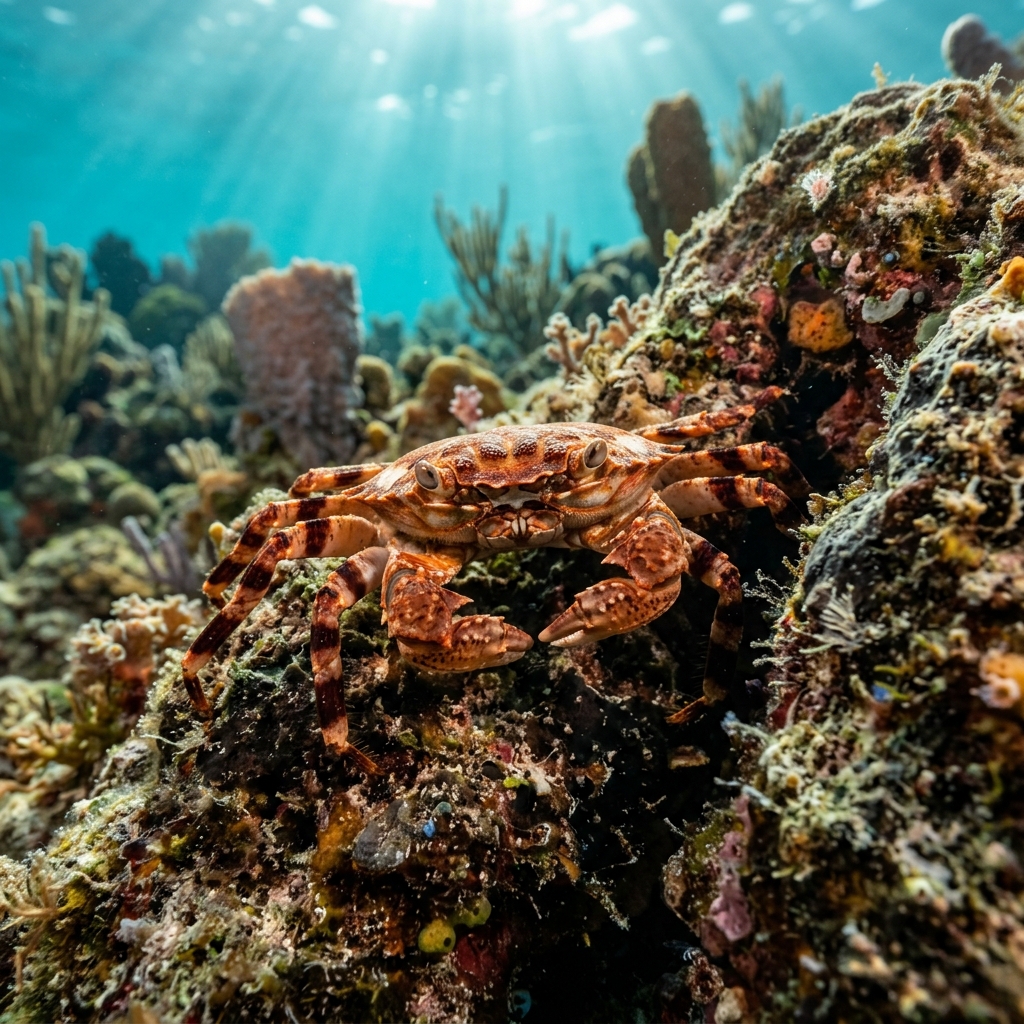
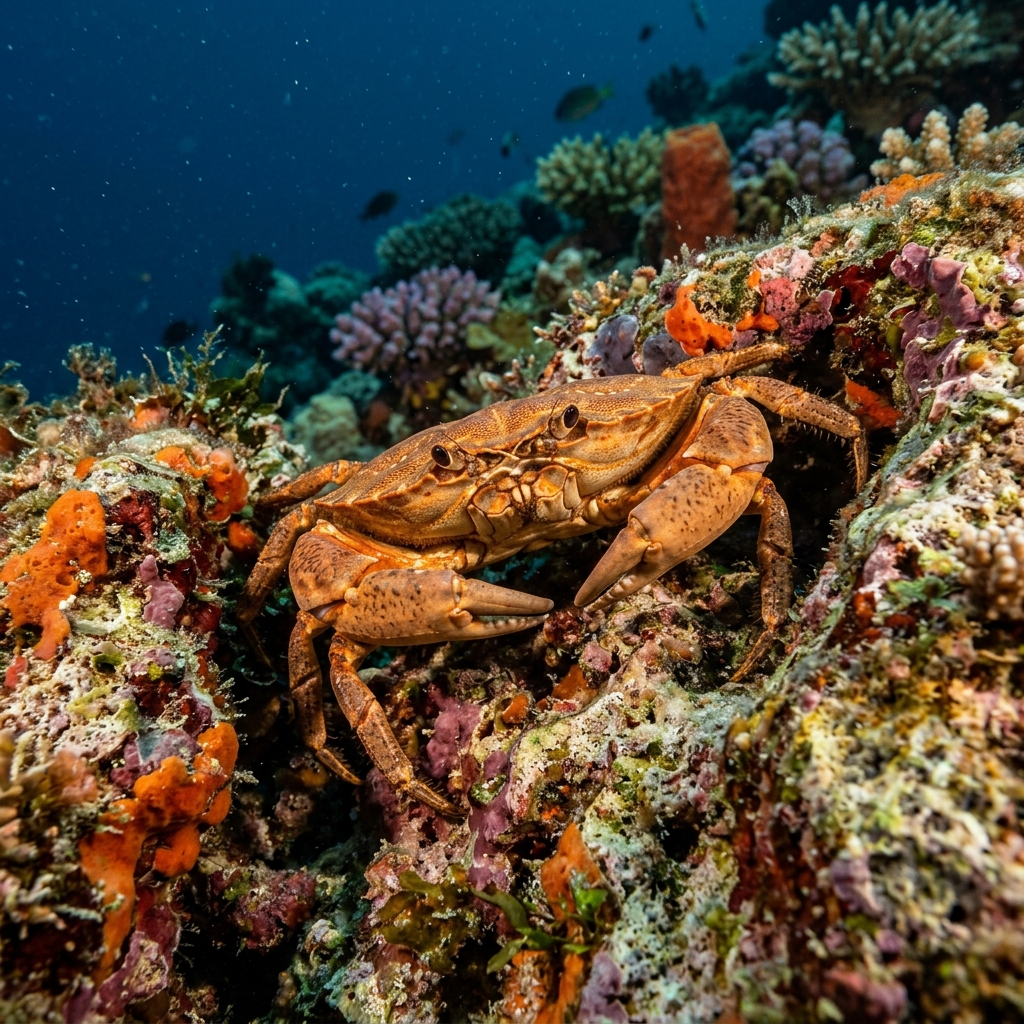
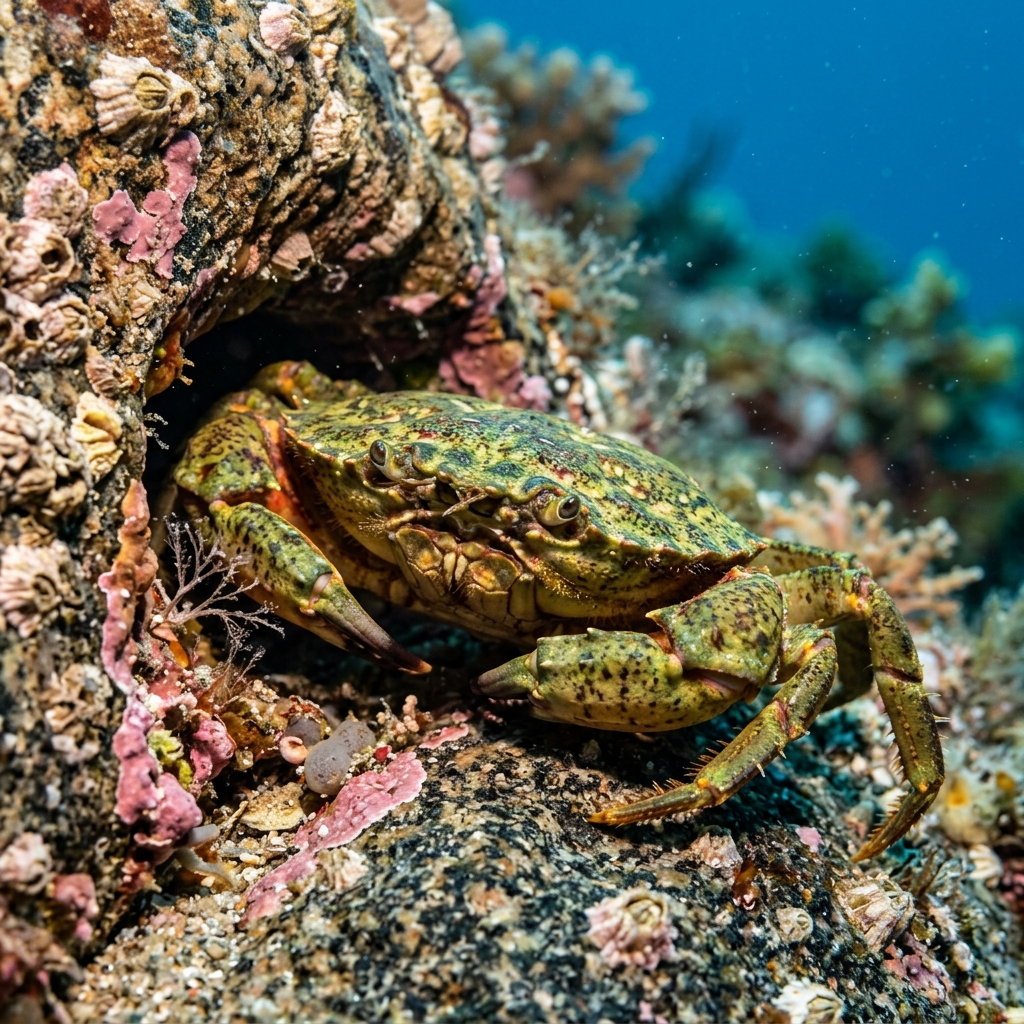
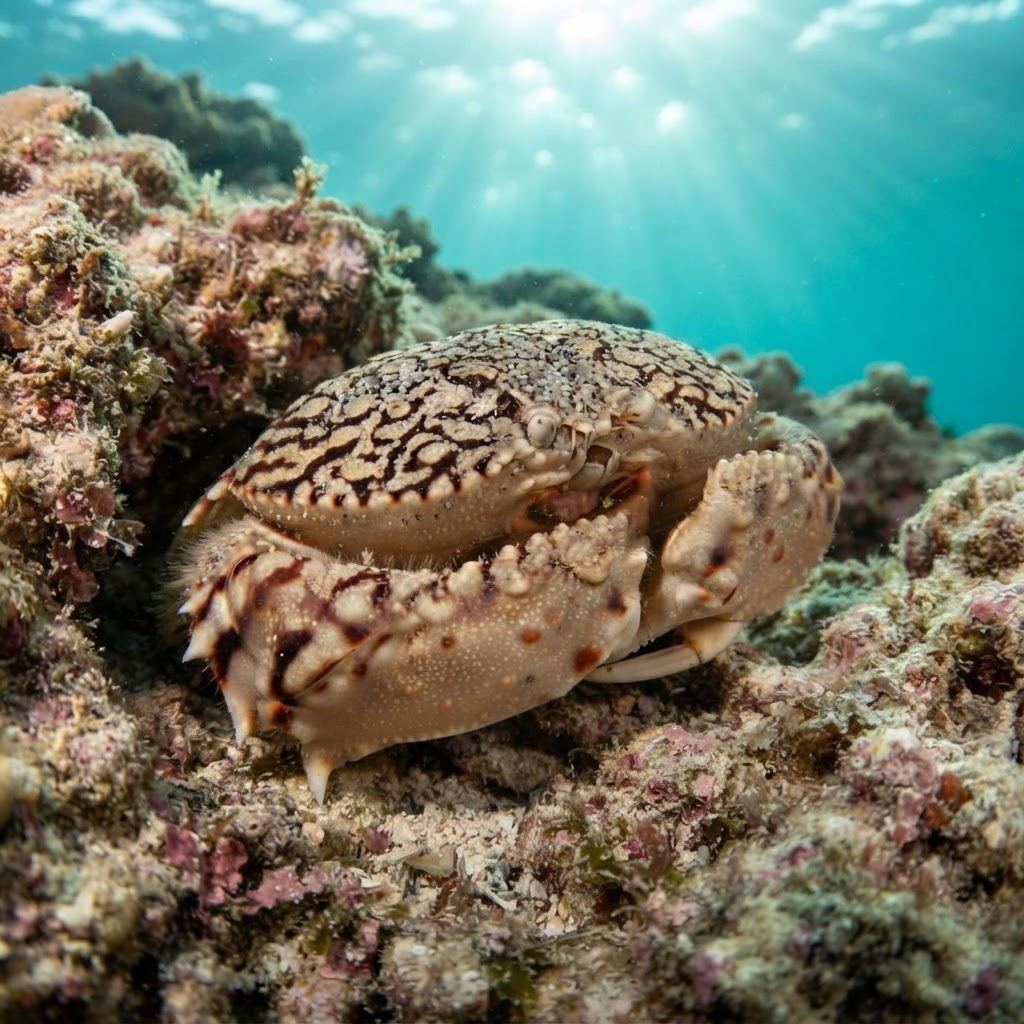
Look for a smooth, rounded shell shaped almost like a clamshell, mottled tan or pinkish-brown with pale eyespot markings that give the species its name. The claws are broad, flattened and tucked tight against the body, almost shield-like, rather than held out like a typical crab. Most sightings are on sand or rubble patches where the domed shape and still posture make it easy to walk right past.
Divers tend to find this crab sitting still on sand or rubble, often partly settled into the substrate where its dome shape and colouring blend in with the surrounding grit. It is not fast or flighty, relying more on staying still and looking like a rock than on making a run for it when a torch beam or diver passes close. Most logs describe it as uncommon to rare even at its known sites, so a sighting is usually a slow, deliberate find rather than a chance encounter while cruising past.
Box crabs in the genus Calappa are known for using one specialised claw shaped like a can-opener to crack open snail shells, a feeding trick that sets them apart from crabs that simply scavenge or filter.
No clear seasonal pattern shows up in the data, and with water sitting comfortably between 24.6 and 30.6C year-round, it is a possibility on any dive in these regions. Treat it as a lucky find any month rather than something to plan a trip around.
Most consistently logged in Curacao, especially around Willemstad and the South Coast and along Banda Abou, with additional sightings from Les Anses-d'Arlet in Martinique. Across both countries it tends to show up on the same handful of sand and rubble sites rather than open reef.
Mapping where Ocellate Box Crab is logged…
Curacao is the strongest bet, particularly around Willemstad, the South Coast, and Banda Abou. It has also been logged at Les Anses-d'Arlet in Martinique, though sightings there are fewer.
There is no detected seasonal pattern, and the water it is found in stays warm between roughly 25 and 30C all year, so sightings are possible on any dive trip to these regions rather than tied to a specific month.
Check for a smooth, domed, clamshell-like carapace in mottled tan or pinkish tones, with pale eyespot markings on the shell. The claws are broad and flattened against the body rather than held out, and it usually sits still on sand or rubble.
No, it poses no danger to divers. It is a slow-moving, sand-dwelling crab that relies on camouflage rather than any threat display or defence against people.
Like other box crabs in the genus Calappa, it uses one claw shaped like a bottle opener to crack open the shells of snails and other molluscs, a specialised feeding tool most reef crabs do not have.
Site and sighting data is aggregated from diver logs, iNaturalist and GBIF. For taxonomy and conservation status:
European Green Crab
2,469 sites