Notodoris serenae
Rare but real: Serena's Notodoris turns up across Indonesia, Palau and the Philippines in warm 27-29 °C water. Here's how to spot it.
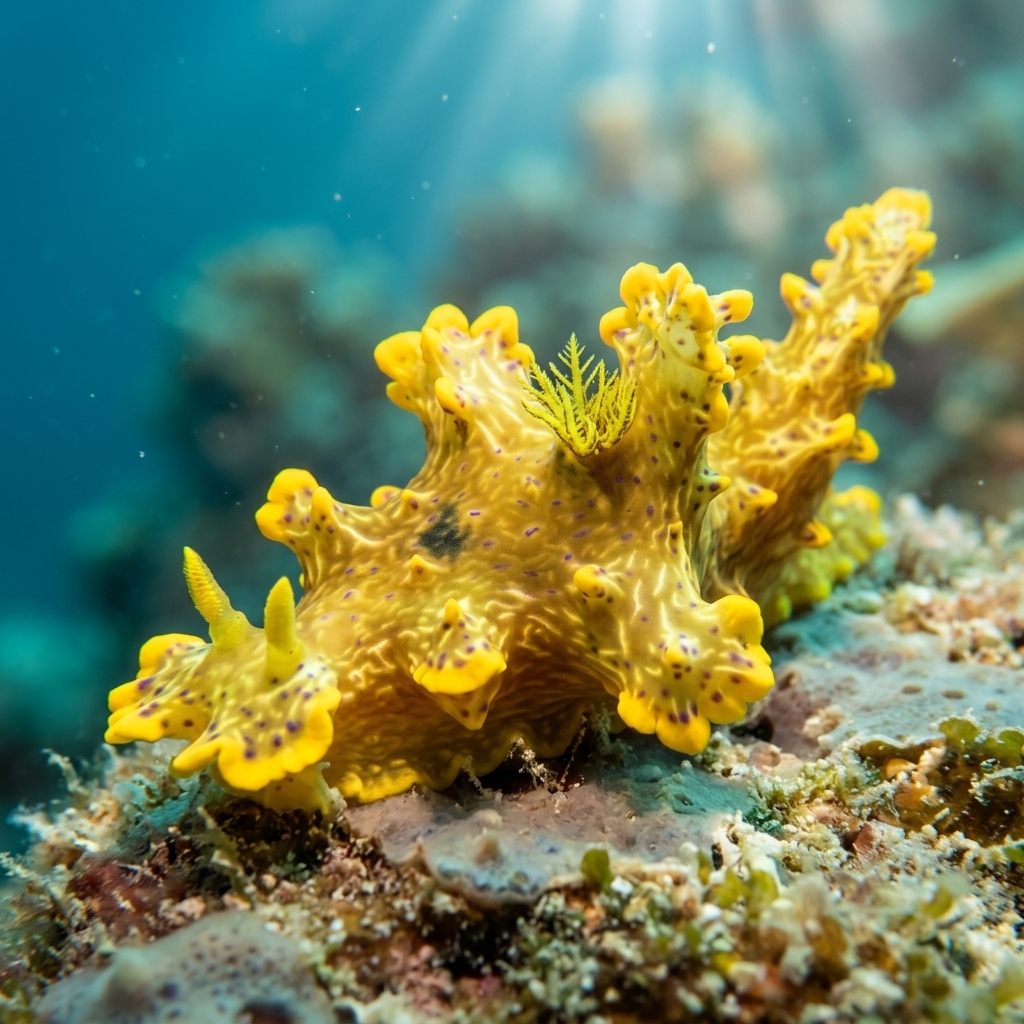
A bright yellow dorid nudibranch with bold black spots or reticulate (net-like) patterning across the body surface, making it one of the more eye-catching members of its family. The body is elongate and relatively firm-looking compared to softer dorids, with yellow gills and rhinophores (scent organs at the head) that echo the body colour. Size data is limited, but Aegirid dorids in this genus typically run small to medium, think a few centimetres at most. That yellow-on-black contrast is the field mark that stops divers in their tracks.
Like most dorids, this species is typically found crawling slowly across the reef substrate, rubble, sponge-encrusted rock and coral rubble are all fair game. It is a nudibranch, so expect no dramatic flight response; it will simply continue moving when approached, which makes for patient, close-up photography. Sightings are most often reported during daytime dives, though nocturnal activity is likely given the cryptic tendencies of related species.
Notodoris species feed almost exclusively on calcareous sponges of the genus Leucetta, so wherever those pale, cream-coloured sponges grow, there is at least a chance of finding this nudibranch nearby.
No clear seasonal pattern has emerged from the data, so it is treated as year-round. Its observed temperature range of 27 to 29 °C ties it firmly to warm tropical reefs, where conditions stay suitable throughout the year across its Indo-Pacific range.
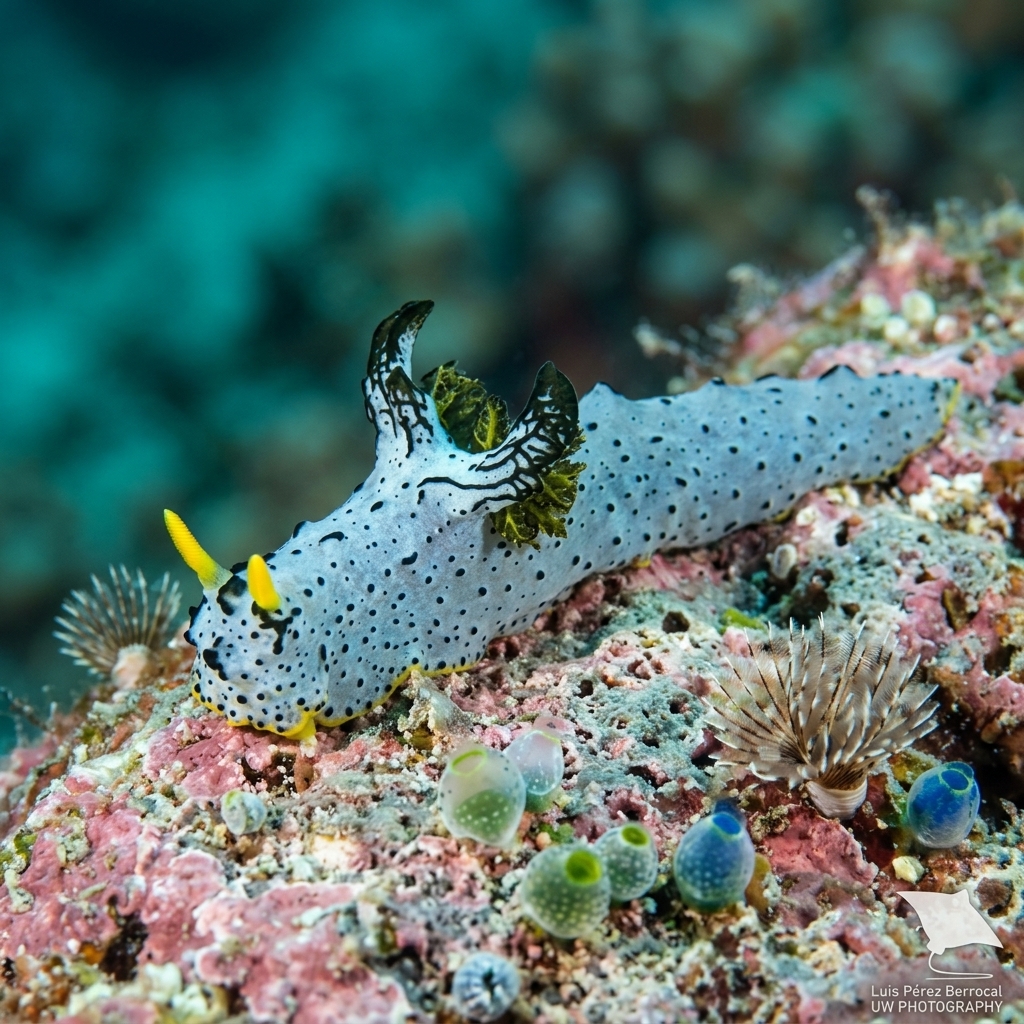
Reef neighbours a diver could mistake it for. Use the identification notes above to tell them apart.
Most observations come from Indonesia, with Maluku and Papua leading by a wide margin, followed by Bali, Lombok and Java. Palau, particularly the Ngemelis Islands, is the next most reliable region, with strong records also from the Central Visayas in the Philippines and Sipadan and East Sabah in Malaysia. Pohnpei in Micronesia and a single Queensland, Australia site round out the known range.
Mapping where Serena's Notodoris is logged…
It is most commonly logged in Indonesia, especially in Maluku and Papua. Palau's Ngemelis Islands, the Central Visayas in the Philippines, and Sipadan and East Sabah in Malaysia are the other standout regions. Scattered sightings also come from Pohnpei in Micronesia and Queensland, Australia.
There is no detected seasonal peak, so any time of year is as good as another. It lives in warm tropical water between 27 and 29 °C, which persists year-round across its Indo-Pacific range, meaning no single season gives a clear advantage.
Look for a bright yellow body with bold black spotting or net-like patterning. The gills and rhinophores are also yellow, reinforcing that vivid contrast. Its firm, elongate dorid body shape and the strong yellow-black pattern distinguish it from the softer, more rounded dorids you might see nearby.
Rare is the honest answer. Across the sites where it has been logged, the majority rate it as rare, with a smaller number calling it uncommon. Only a handful of sites report it as common. Finding one is a noteworthy moment even for experienced nudibranch hunters.
Site and sighting data is aggregated from diver logs, iNaturalist and GBIF. For taxonomy and conservation status:
Light-spotted Aegires
3,168 sites