Notodoris minor
Bright yellow and spotted, the Banana Nudibranch turns up on warm Indo-Pacific reefs from the Philippines to Okinawa. Here's where to look and how to spot it.
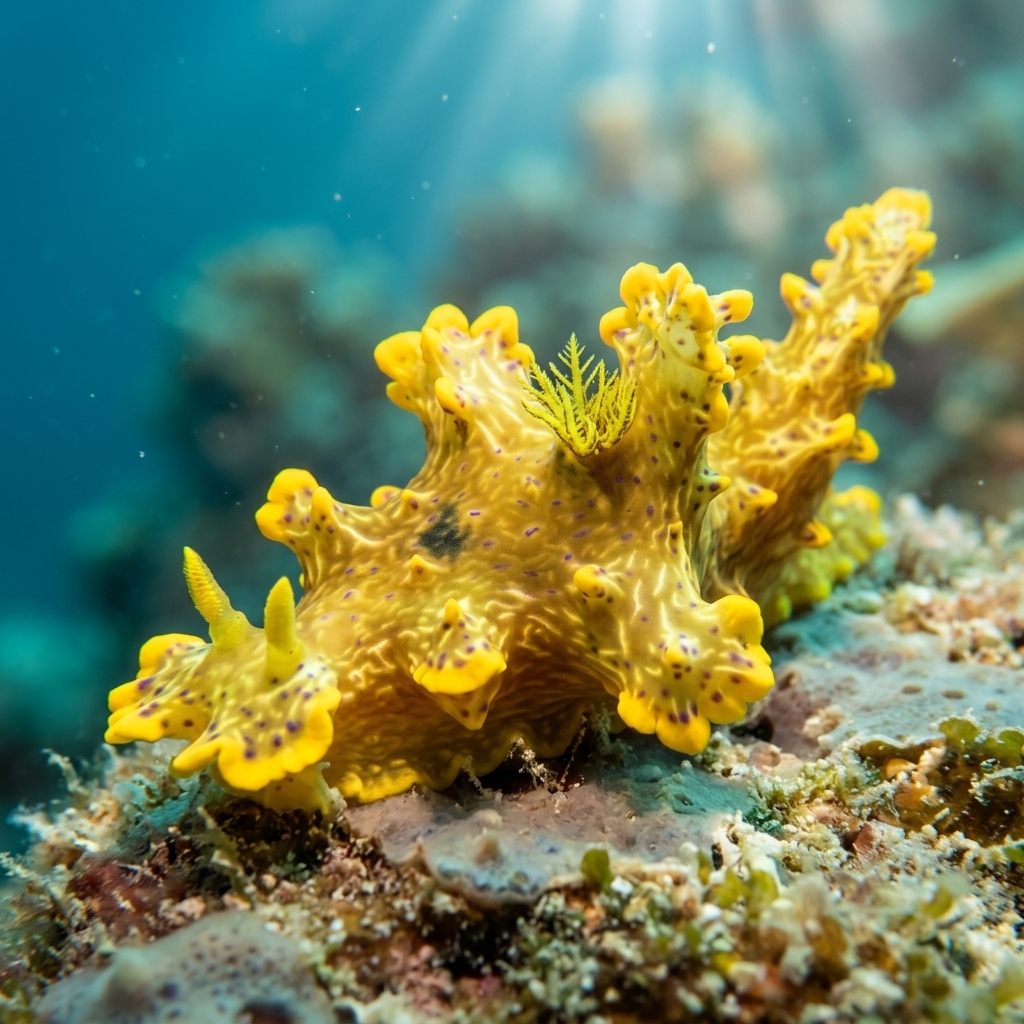
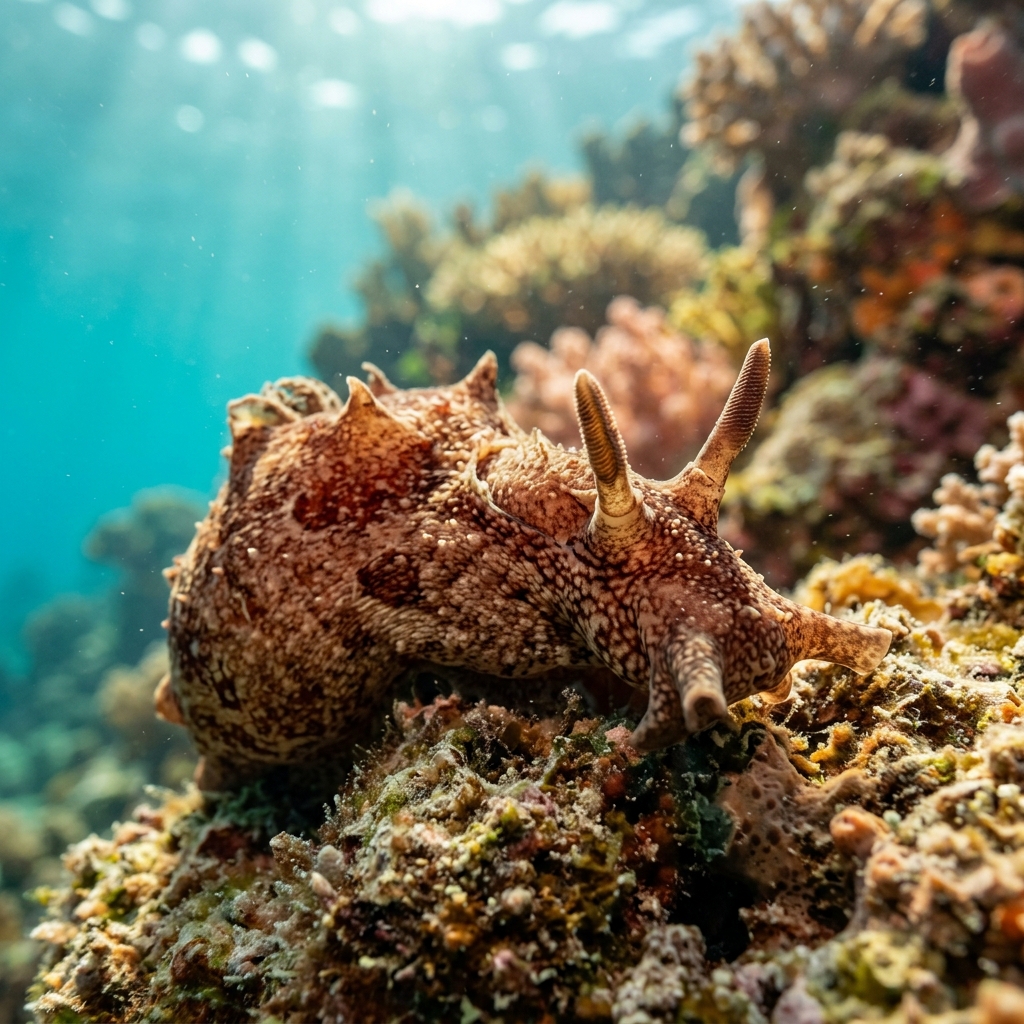
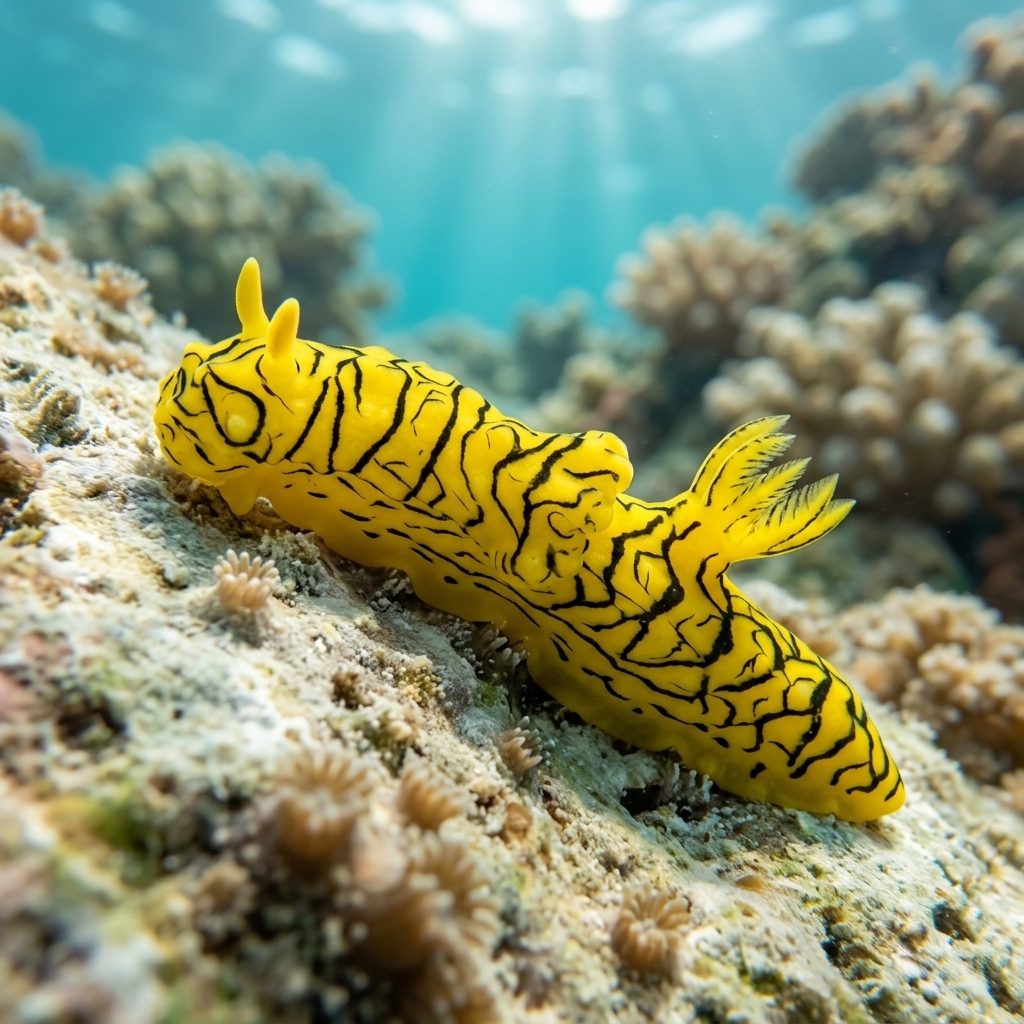
Vivid yellow body covered with scattered black spots makes this one of the more distinctive nudibranchs you can find on a tropical reef. The body is elongated and relatively smooth compared to dorid nudibranchs with feathery gills, with simple gill plumes and rhinophores (sensory tentacles on the head) that share the same yellow-and-black patterning. It is a small animal, easily overlooked unless you are actively searching rubble and encrusting sponge. The uniform banana-yellow ground colour is the key underwater cue.
You will almost always find one moving slowly across encrusting sponge, which is the primary food source for aegirid nudibranchs. It shows little reaction to divers, continuing to graze even when approached closely, which makes photography straightforward if you can first locate one. Given its small size and cryptic habit of hugging the substrate, most sightings are made by divers who are already searching the reef at very close range.
Like other members of the Aegiridae family, the Banana Nudibranch feeds exclusively on calcareous (calcium-carbonate-encrusted) sponges, a food source most nudibranchs ignore entirely, which helps explain why it turns up in the rubble and wall zones where those sponges thrive.
No clear seasonal peak has emerged from the data, so it is treated as a year-round possibility. It is observed in water temperatures of roughly 24 to 29 °C, which fits the permanently warm conditions across its Indo-Pacific range.
Reef neighbours a diver could mistake it for. Use the identification notes above to tell them apart.
Most sightings come from the Philippines, particularly across the Visayas, where both eastern and central dive sites hold records. Okinawa, Japan, and Queensland, Australia, are also strong areas for encounters, with additional records from Papua New Guinea's Tufi and Milne Bay, Vanuatu's Efate, and the Solomon Islands. If you are specifically targeting this species, the Philippines and Okinawa offer the greatest concentration of known sites.
Mapping where Banana Nudibranch is logged…
The Philippines, particularly the Visayas, holds the most recorded dive sites, followed closely by Okinawa in Japan and Queensland in Australia. Papua New Guinea's Tufi and Milne Bay, Efate in Vanuatu, and the Solomon Islands also have confirmed sightings. All of these are warm, tropical reef systems.
There is no identified seasonal peak, so it can be encountered year-round at sites within its range. It favours water temperatures between roughly 24 and 29 °C, which are present on its Indo-Pacific reef sites throughout the year.
Look for a small, elongated nudibranch with a bright yellow body covered in black spots. The gill plumes and rhinophores match the same yellow-and-black pattern. It moves slowly across encrusting sponge and sits very flat against the substrate, so scan reef walls and rubble carefully at close range.
It is logged as rare at the majority of sites where it appears, with a smaller number of sites recording it as uncommon. Encounters are not predictable, and most divers who spot one are specifically hunting the reef substrate at close range rather than coming across it by chance.
Site and sighting data is aggregated from diver logs, iNaturalist and GBIF. For taxonomy and conservation status:
Light-spotted Aegires
3,168 sites