Notemigonus crysoleucas
Spot the golden-flanked Golden Shiner in freshwater sites across Florida and the Great Lakes region. Here's how to ID it and where divers log it.
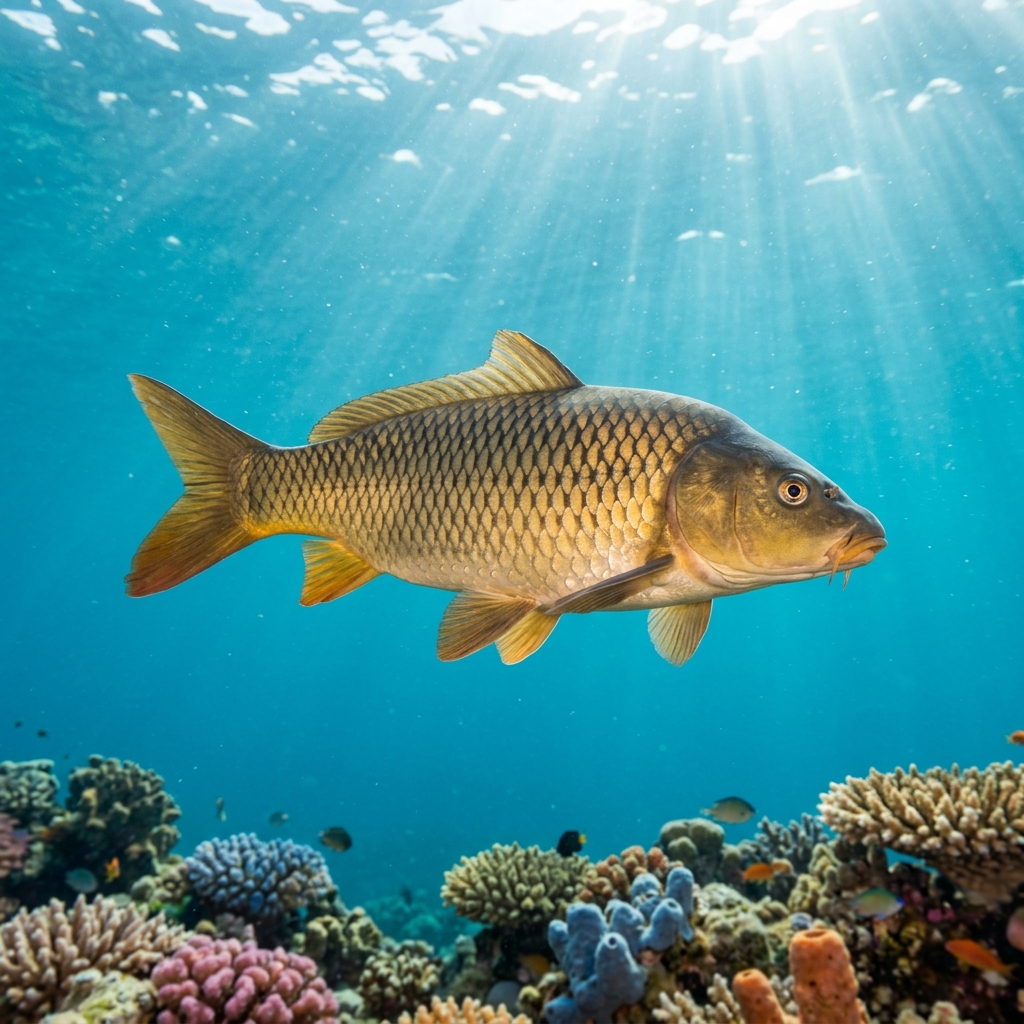
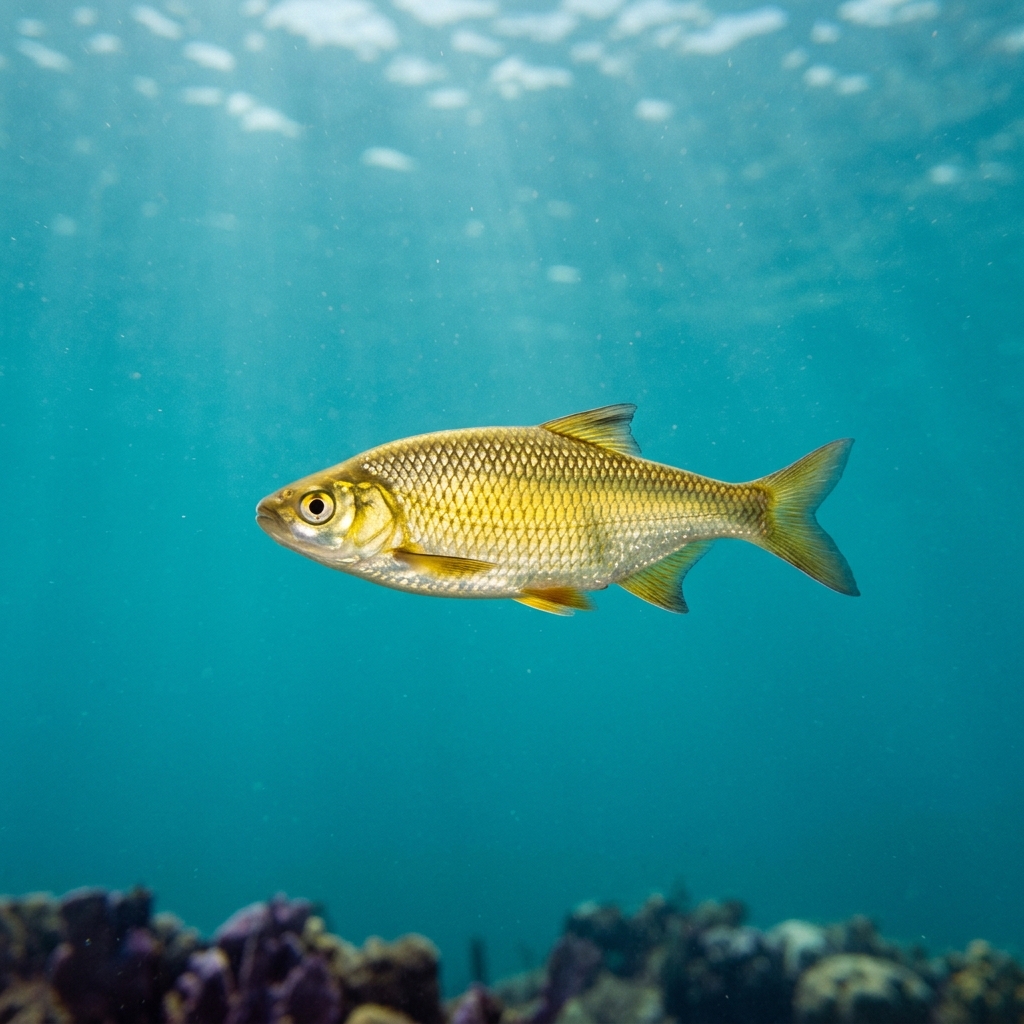
A small, laterally compressed (flattened side to side) fish with a noticeably deep body and a strongly curved belly. The flanks catch light with a golden or brassy sheen, particularly in shallow water, while the back is olive-green to grey. Look for the distinctive scaled keel running along the belly between the pelvic and anal fins, a feature unique among North American minnows. The mouth is small and upturned, giving the fish a slightly upward-angled face.
Golden Shiners tend to form loose schools in calm or slow-moving freshwater, often hovering near submerged vegetation or woody debris where light filters through. They are not bold fish; expect them to drift away rather than approach a diver. Sightings are most likely in shallower, vegetated areas where they feed on plankton and small invertebrates near the surface.
The belly keel is actually a row of modified scales rather than bare skin, making it a quick structural ID clue that no other common North American minnow shares.
There is not enough seasonal sighting data to point to a peak window, so it should be treated as a year-round possibility. Its observed temperature range of roughly 4 to 25 °C suggests it can be active across a wide spread of seasons, including cool-water periods.
Diver sightings come exclusively from the United States, split between Florida and the Southeast and the Great Lakes and Northeast regions. Both logged sites are freshwater environments, so this is a species to seek out on freshwater dives rather than coastal or reef sites.
Mapping where Golden Shiner is logged…
Diver-logged sightings are from freshwater sites in the United States, specifically in Florida and the Southeast and the Great Lakes and Northeast regions. Look for them in calm lakes, ponds, or slow rivers with plenty of submerged vegetation rather than coastal dive sites.
There is no confirmed seasonal peak in the sighting data, so they can potentially be encountered year-round. Their tolerance for water temperatures from near 4 °C up to about 25 °C means they remain active even in cooler months, unlike many warm-water fish.
Key in on the deep, compressed body with a golden or brassy sheen on the flanks and an obvious curved keel of scales running along the belly. The small, upturned mouth and relatively large scales help separate it from other small freshwater fish. No other common North American minnow has the scaled belly keel.
Size data for this species is not recorded in diver observations on Fin, but in the wild Golden Shiners typically reach around 15 to 30 cm in larger individuals, though most encountered while diving will be on the smaller end of that range.
The belly keel between the pelvic and anal fins is made up of actual modified scales, not bare skin. This scute-like (scale-keel) structure is unique among North American minnows and is one of the fastest ways to confirm an ID in the water.
Site and sighting data is aggregated from diver logs, iNaturalist and GBIF. For taxonomy and conservation status:
Sun Perch
2,182 sites