Labropsis manabei
A small coral-nipping wrasse most reliably found on Sabah's reefs in Malaysia, in water around 23 to 29C, year-round but always uncommon.
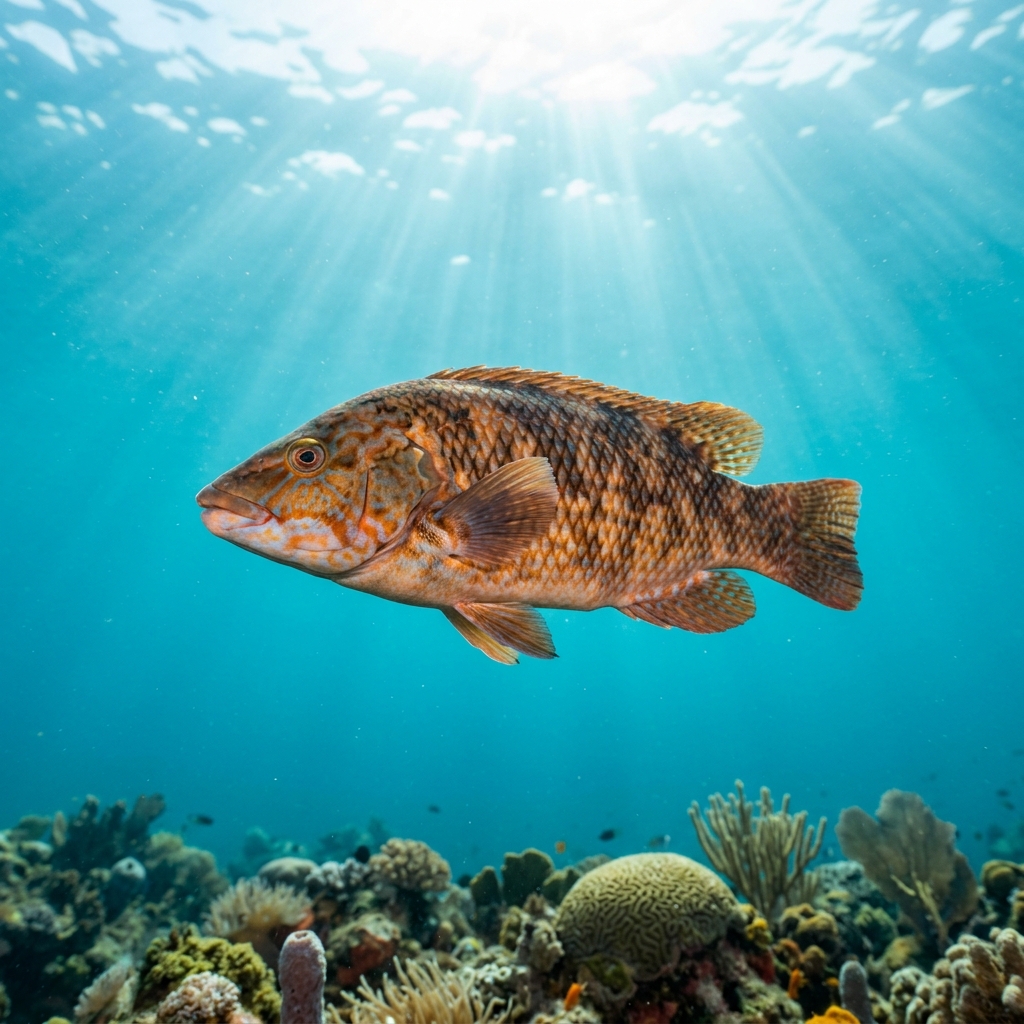
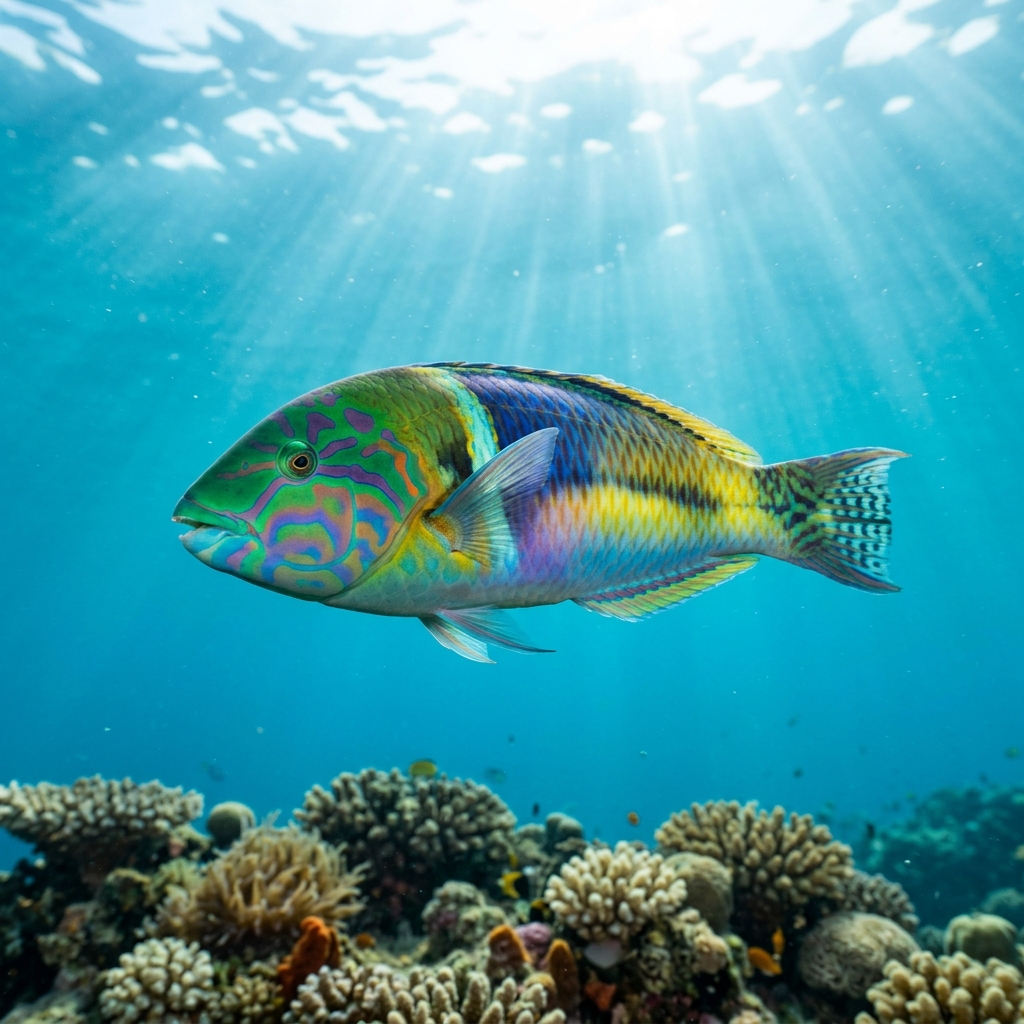
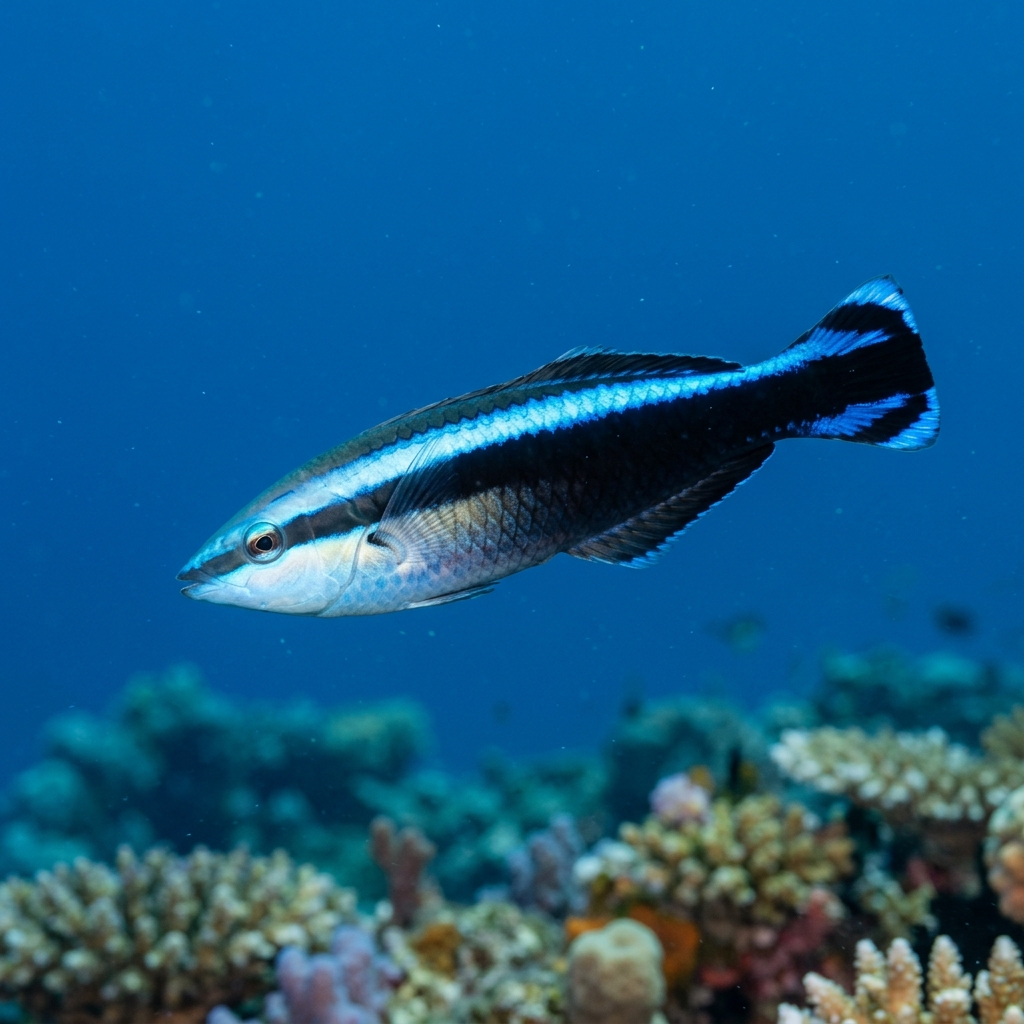
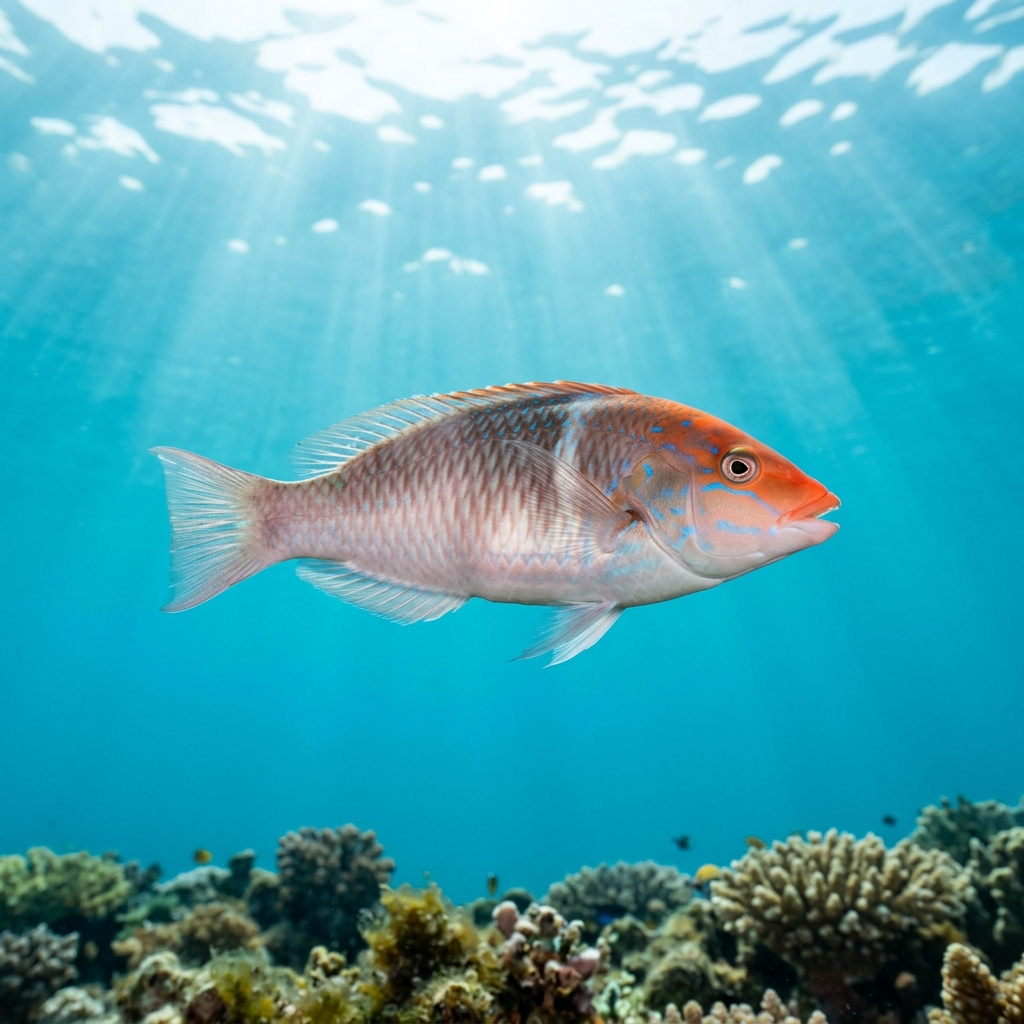
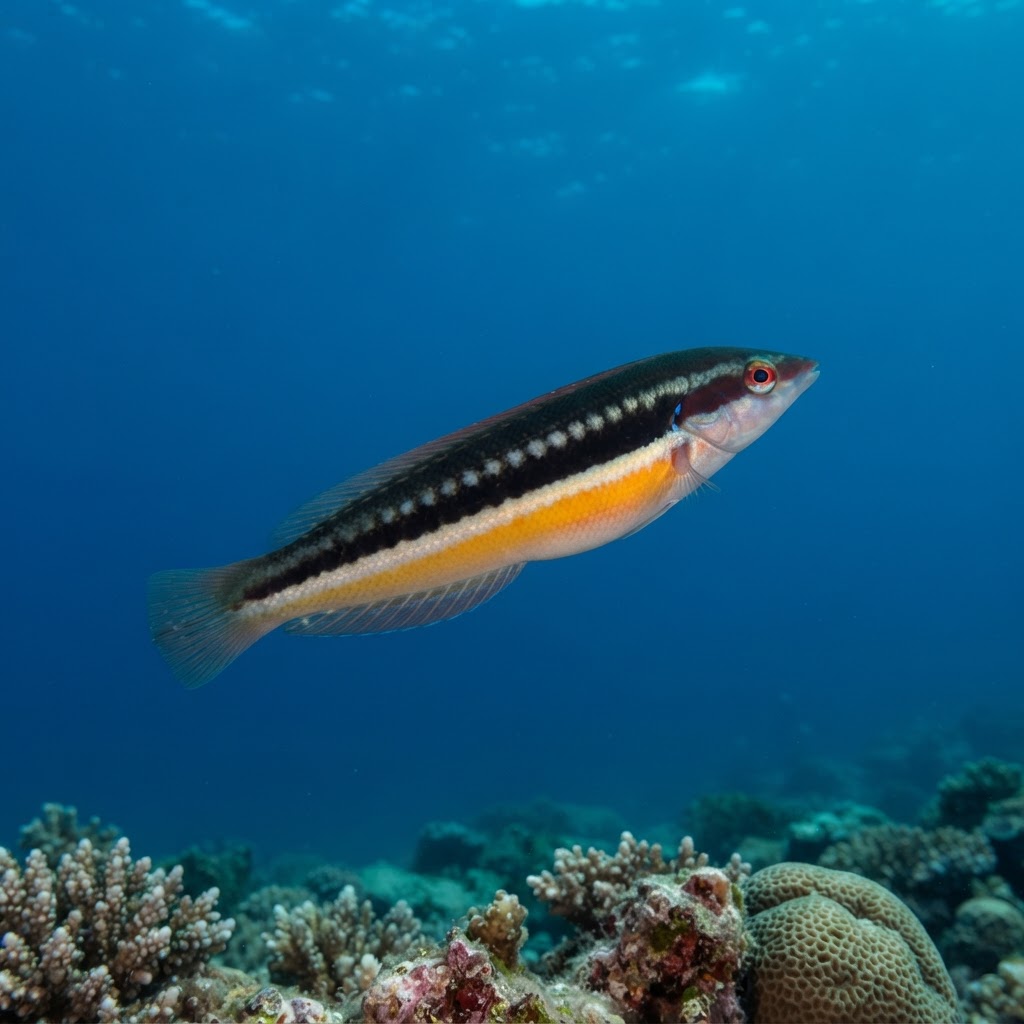
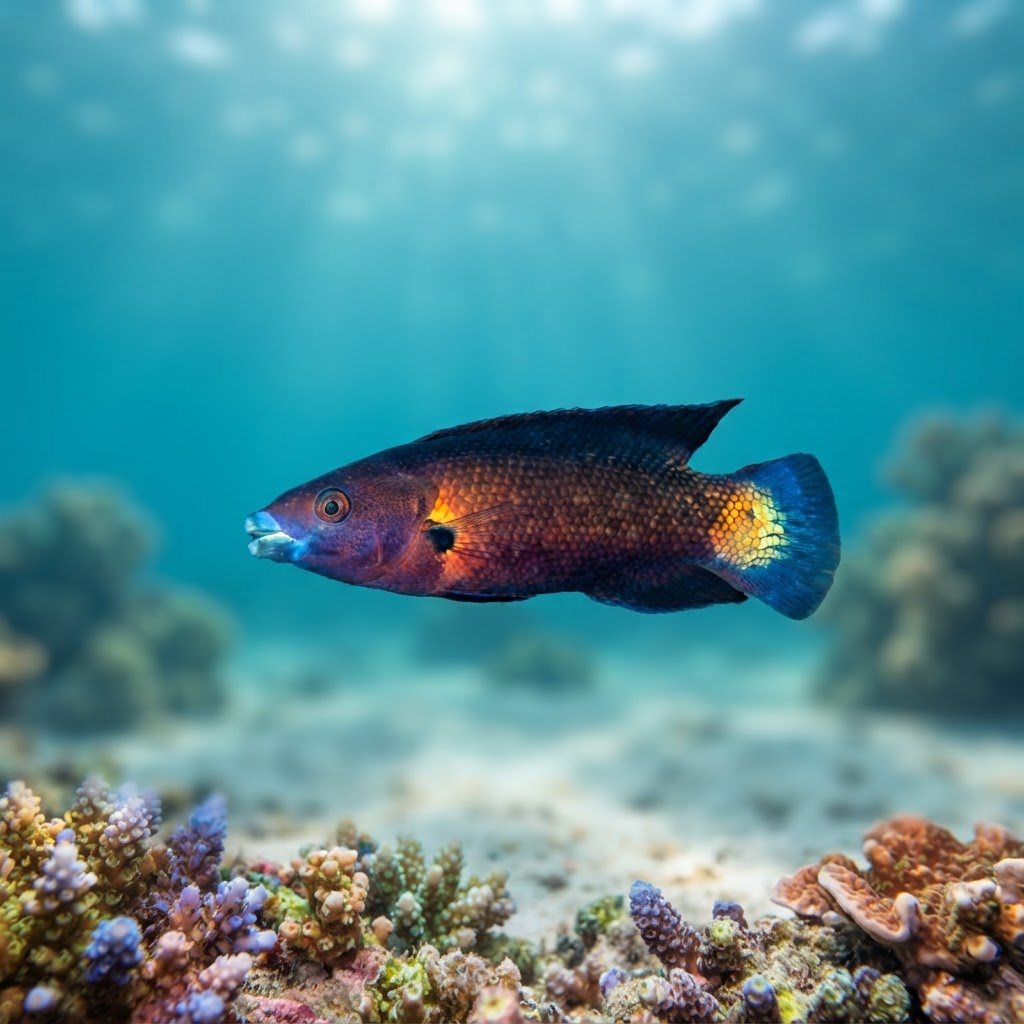
A small wrasse, around 8cm, with a slim, streamlined body built for hovering right over coral branches rather than swimming out in open water. Look for the thick, fleshy lips it's named for, which it uses to nip at coral polyps, and a subdued colour pattern that blends against the reef structure it feeds on. Because it stays tight to the coral and rarely strays into the open, divers often spot it only once they've slowed down and started scanning individual coral heads closely.
Divers typically find this wrasse working slowly over live coral heads, picking at polyps with its thick lips rather than chasing prey through open water. It stays close to the reef structure and doesn't school or shoal, so most sightings are of a single fish tucked in among branching coral. It's not shy exactly, but its small size and habit of staying low on the reef mean it's easy to swim past without noticing.
Its fleshy, specialised lips let it feed directly on live coral polyps, a narrow dietary niche shared by only a handful of wrasses in its genus, which is part of why it stays so tightly bound to healthy coral cover rather than roaming the reef.
Sightings show no detectable seasonal pattern, so it's treated as a year-round species. It's been recorded in water from about 22.9 to 28.9C, a comfortable range for tropical reefs in Sabah and Luzon at any time of year.
Most reliably logged on reefs in Sabah, Malaysia, which accounts for the bulk of recorded sightings, with a smaller number of records from Luzon in the Philippines. Divers working coral-rich sites in these two regions have the best odds of a sighting, though it should still be treated as a find-if-you-look species rather than a guaranteed encounter.
Mapping where Northern Tubelip Wrasse is logged…
It's most consistently recorded on reefs in Sabah, Malaysia, with additional sightings from Luzon in the Philippines. At either location, it's logged as uncommon, so treat it as a bonus sighting rather than a target species.
There's no clear seasonal pattern in the sightings, so it's considered a year-round species on the reefs where it occurs. Water temperatures of roughly 23 to 29C suit it in any month.
Look for a small wrasse, about 8cm long, with a slender body and noticeably thick, fleshy lips, hovering close to live coral rather than swimming in open water. It lacks the bold colour blocking of many reef wrasses, so it's easy to overlook unless you're scanning coral heads closely.
They stay small, typically reaching around 8cm in length, which is one reason they're easy to miss on a reef unless you're looking closely at coral heads.
It uses thick, specialised lips to nip directly at live coral polyps, a feeding style shared by only a small number of wrasses. This keeps it tied closely to healthy coral cover rather than open reef or sand.
Site and sighting data is aggregated from diver logs, iNaturalist and GBIF. For taxonomy and conservation status:
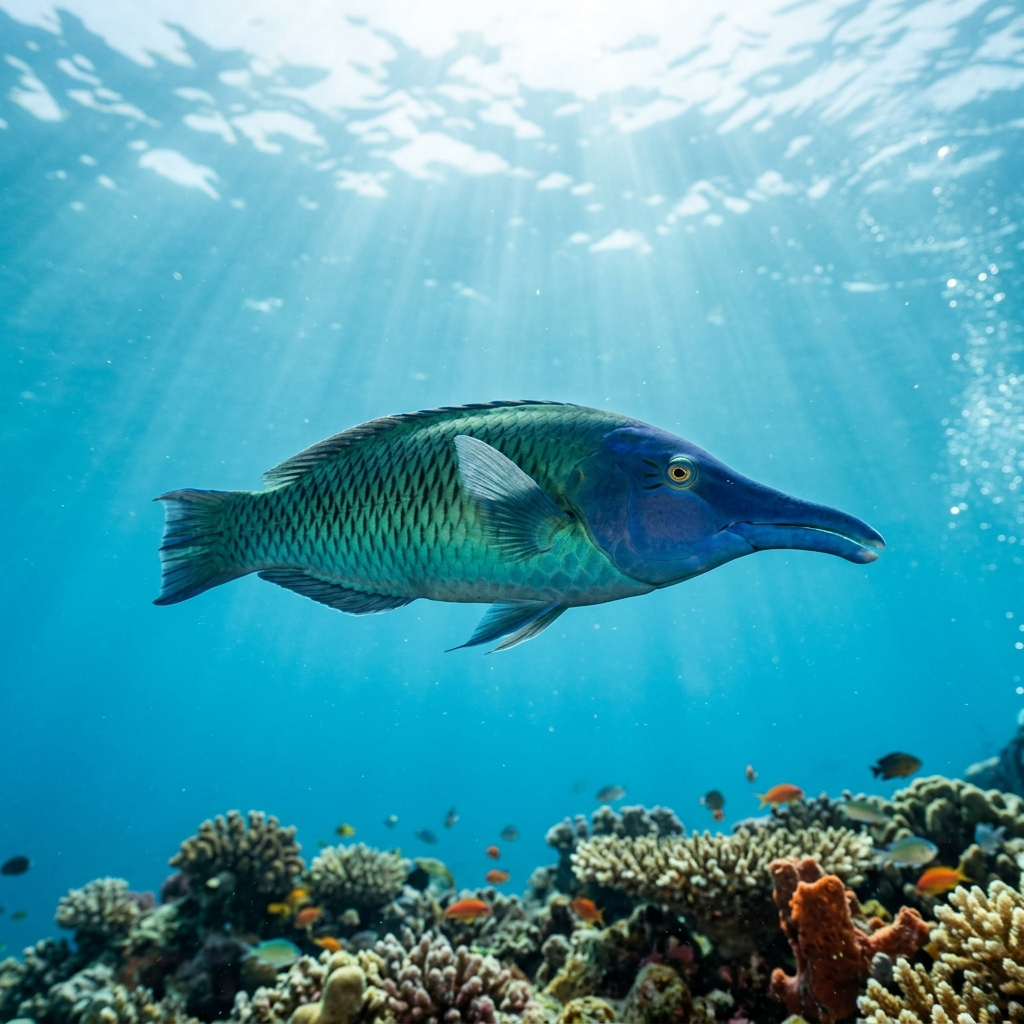
Bird Wrasse
3,632 sites