Ronquilus jordani
A small, slender fish logged mostly in British Columbia, in cold water down to 3.2 C, best found on chilly Pacific Northwest dives.
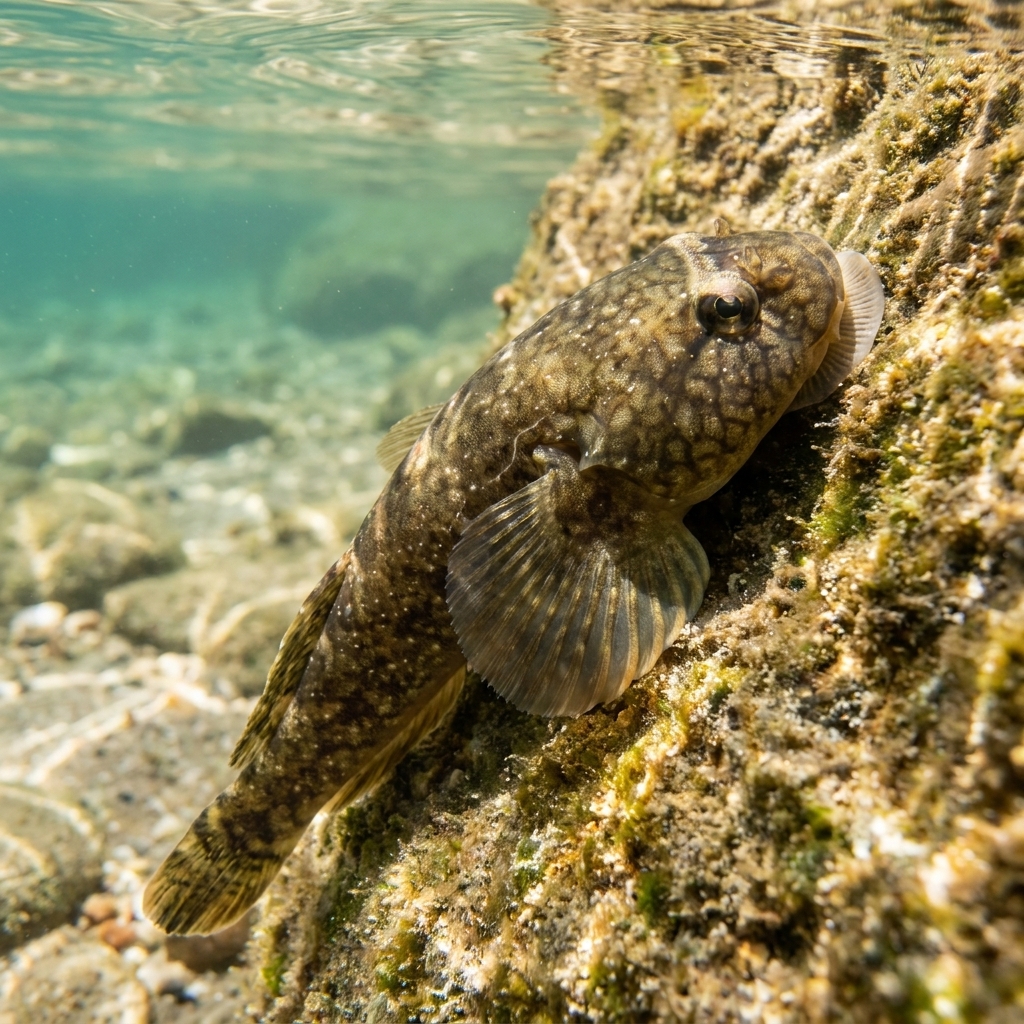
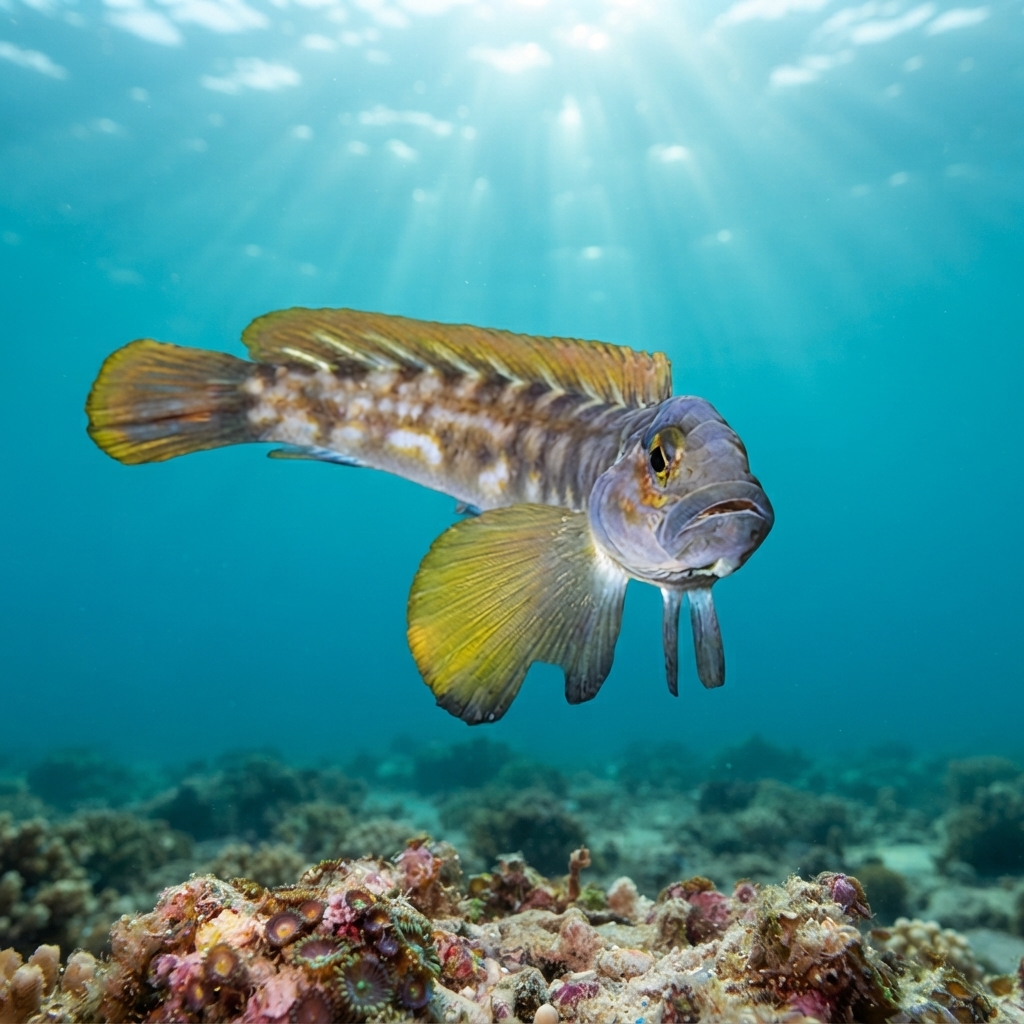
A slim, elongated body about 14 cm long, usually seen hovering close to rocky or gravelly bottoms rather than swimming in open water. Colouring runs brownish to olive with faint mottling that blends into the substrate, and the long dorsal fin runs almost the full length of the back, which is the easiest cue for telling it apart from other small bottom fish. The head is fairly blunt with large eyes suited to the dim, cold water it favours.
Divers typically find it resting on or hovering just above rocky and gravelly bottoms, tucked close to the substrate rather than out in open water. It tends to sit still or make short darting movements when approached, relying on its mottled colouring to blend in rather than fleeing far. Logged as uncommon at most sites and rare at others, so it rewards divers who slow down and scan the bottom closely rather than expecting it to come to them.
Its long, low-slung dorsal fin running nearly the full length of the body is a family trait shared with other ronquils, and it is one of the more reliable ways to separate this genus from unrelated small bottom-dwelling fish in the same cold-water habitat.
There is no clear seasonal pattern in the sighting data, and given it lives in consistently cold water (roughly 3 to 9 C), it appears to be a year-round resident rather than a seasonal visitor. Plan around good visibility and conditions in British Columbia rather than a particular month.
This is a British Columbia fish through and through: the strong majority of logged sightings come from sites across British Columbia, Canada, with only a scattering of records from Alaska in the United States. If you are diving the cold, current-swept rock walls and gravel slopes of coastal BC, this is the region to keep an eye on the bottom.
Mapping where Northern Ronquil is logged…
It is most reliably logged on rocky and gravelly dive sites across British Columbia, Canada, with a small number of additional sightings from Alaska in the United States. British Columbia is by far the strongest region for finding it.
There is no detected seasonal pattern, so it can be found year-round in the cold waters it favours, roughly 3 to 9 C. Focus on picking good diving conditions in British Columbia rather than a specific season.
Look for a small, slender fish around 14 cm resting close to rocky or gravel bottoms, with brownish-olive mottled colouring and a long dorsal fin that runs almost the full length of its back. It rarely swims far from the substrate.
They are a small species, typically reaching about 14 cm in length, so they are easy to overlook against a rocky or gravel bottom.
No, they pose no danger to divers. They are small, bottom-hugging fish with no venomous spines or aggressive behaviour to worry about.
Site and sighting data is aggregated from diver logs, iNaturalist and GBIF. For taxonomy and conservation status:
Soldierfish
3,612 sites