Thalassoma noronhanum
A small, electric-blue reef fish seen year-round around Fernando de Noronha, Brazil, in water between 24 and 28C.
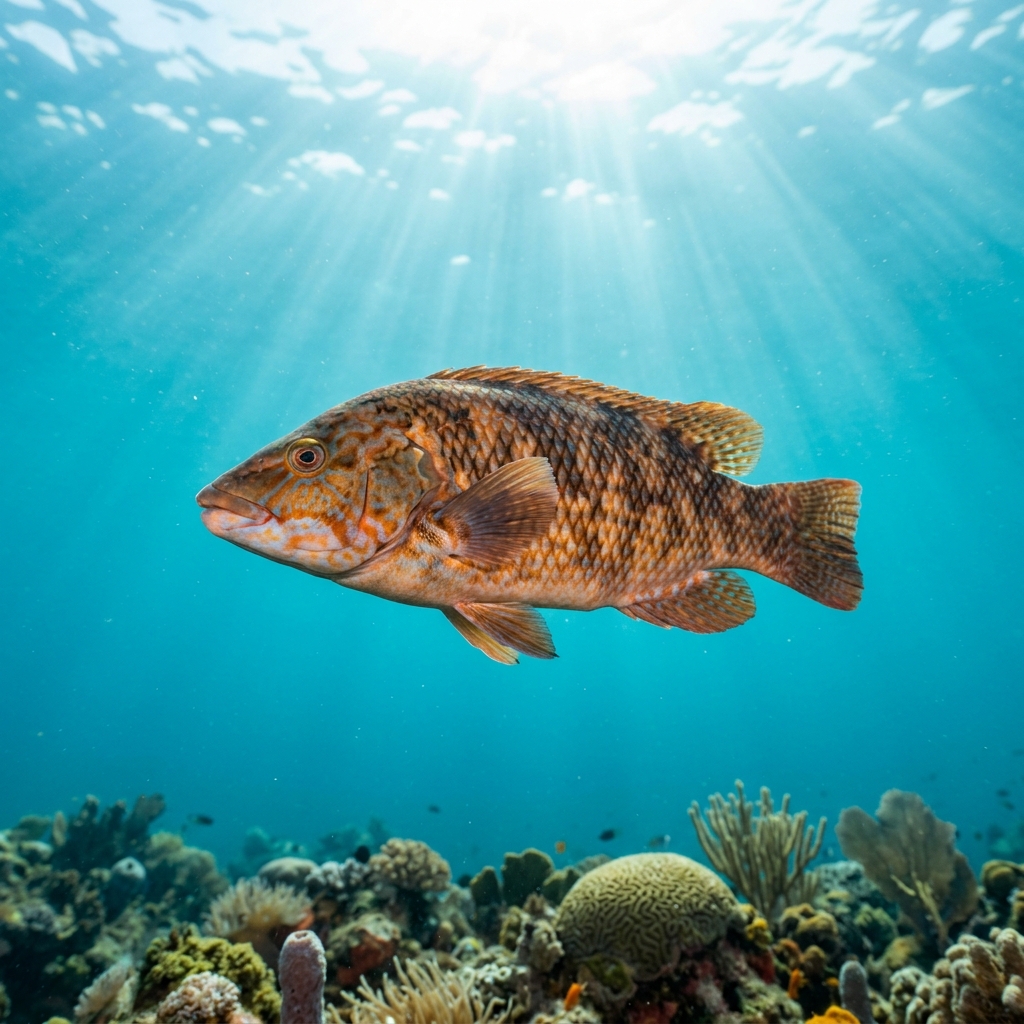
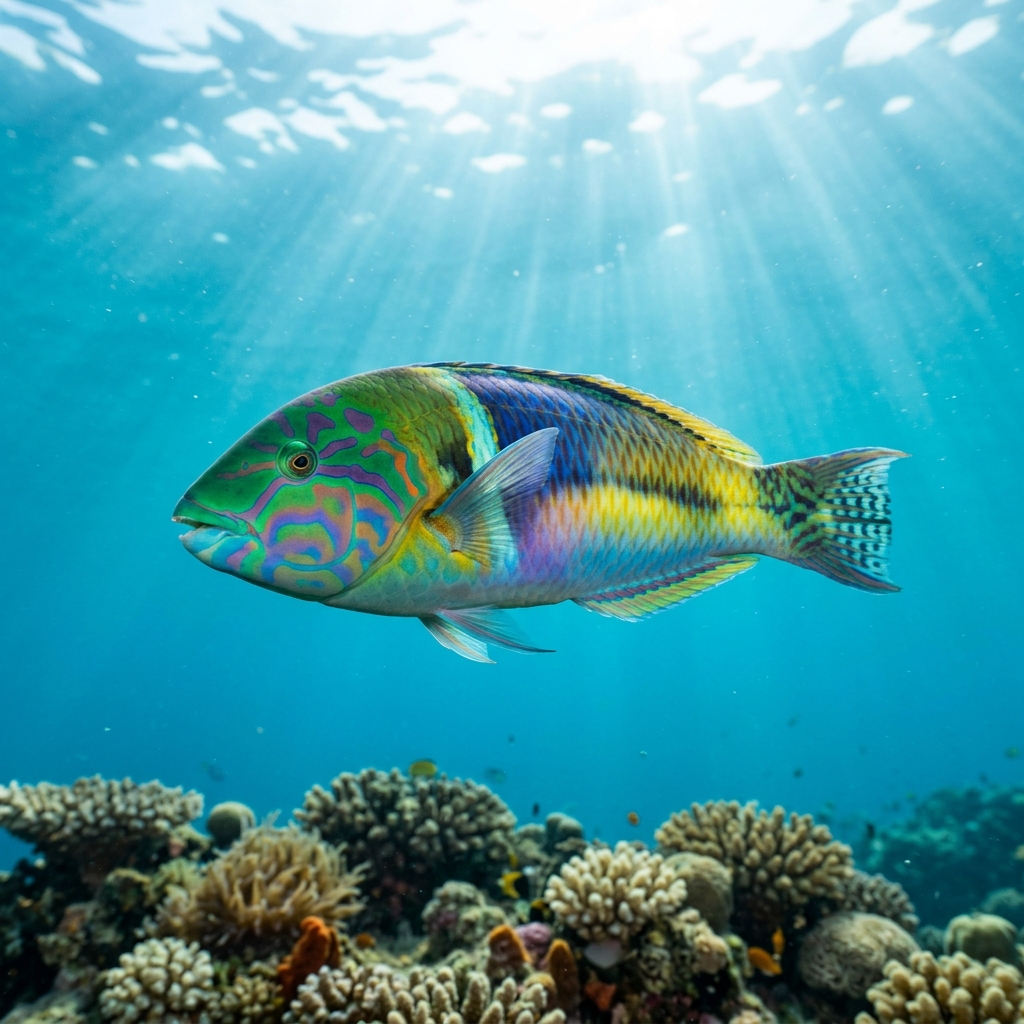
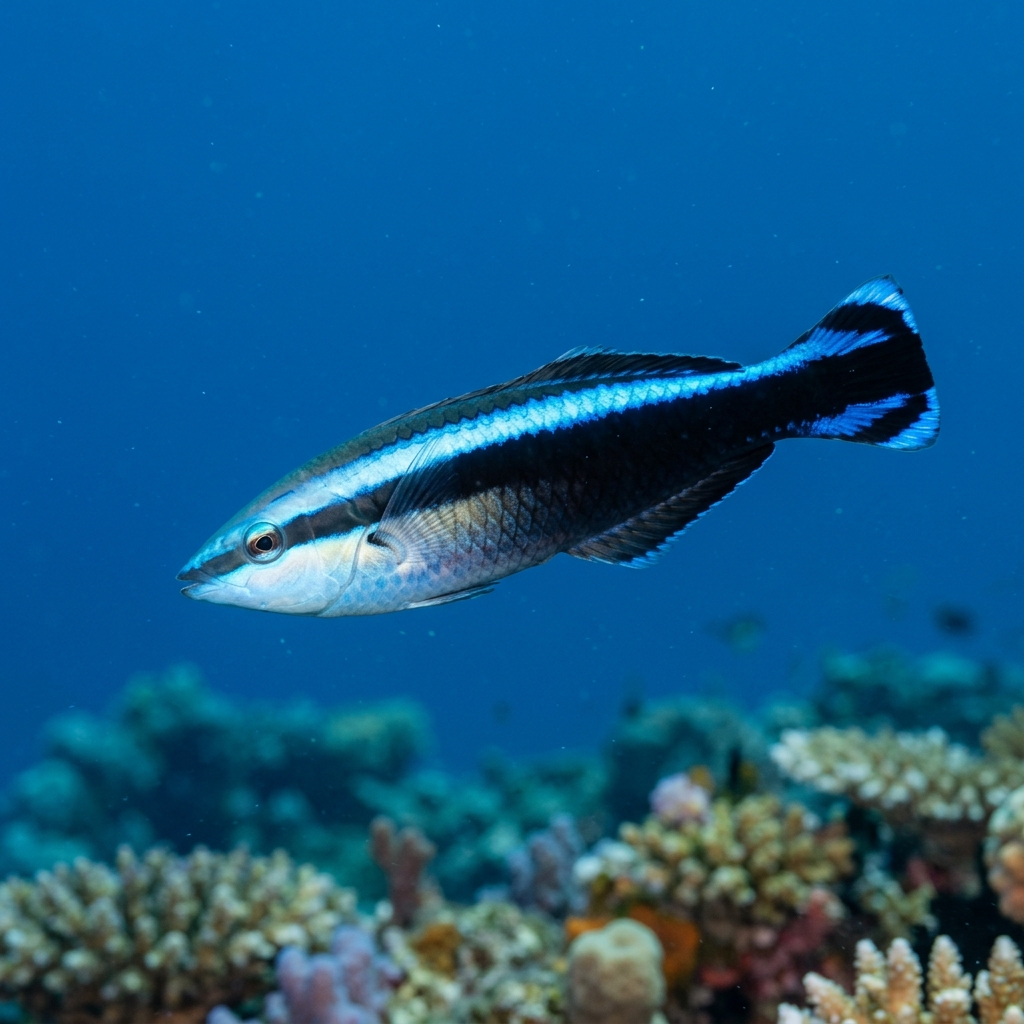
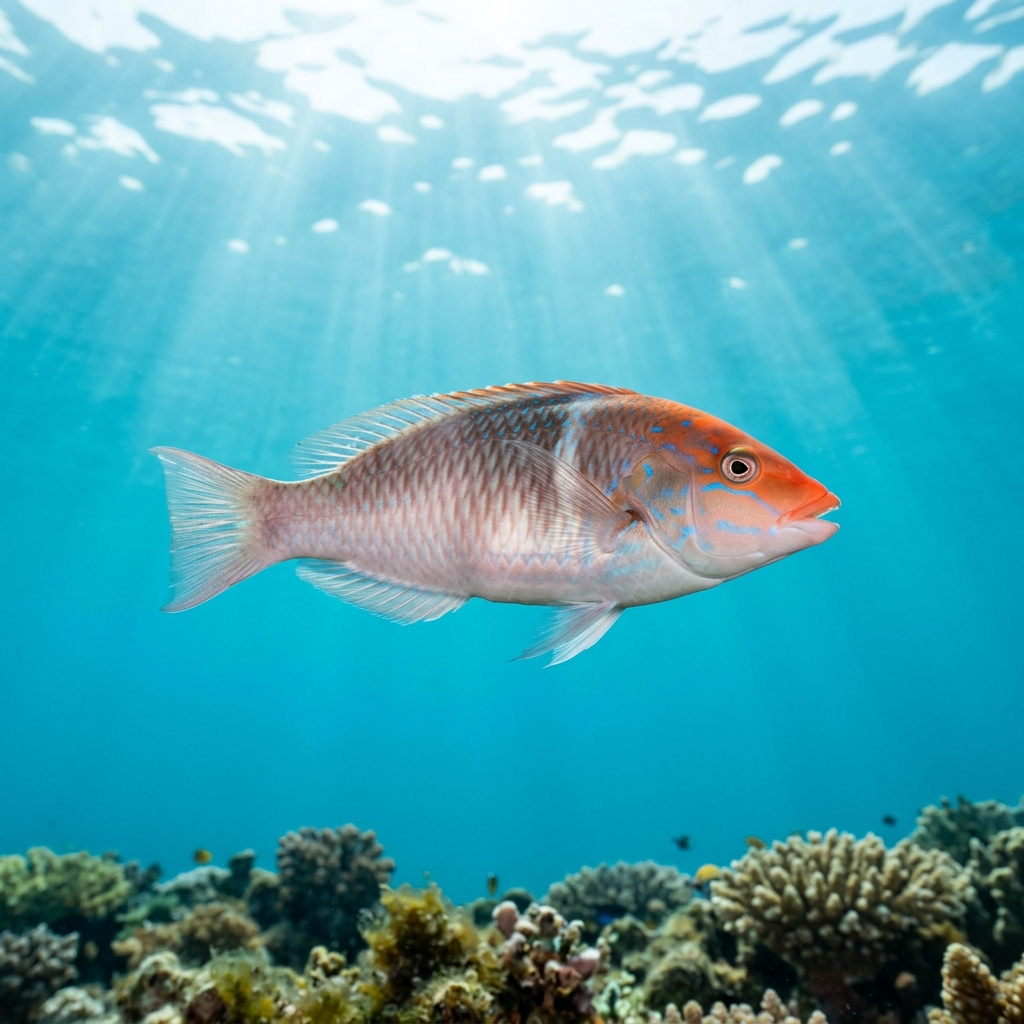
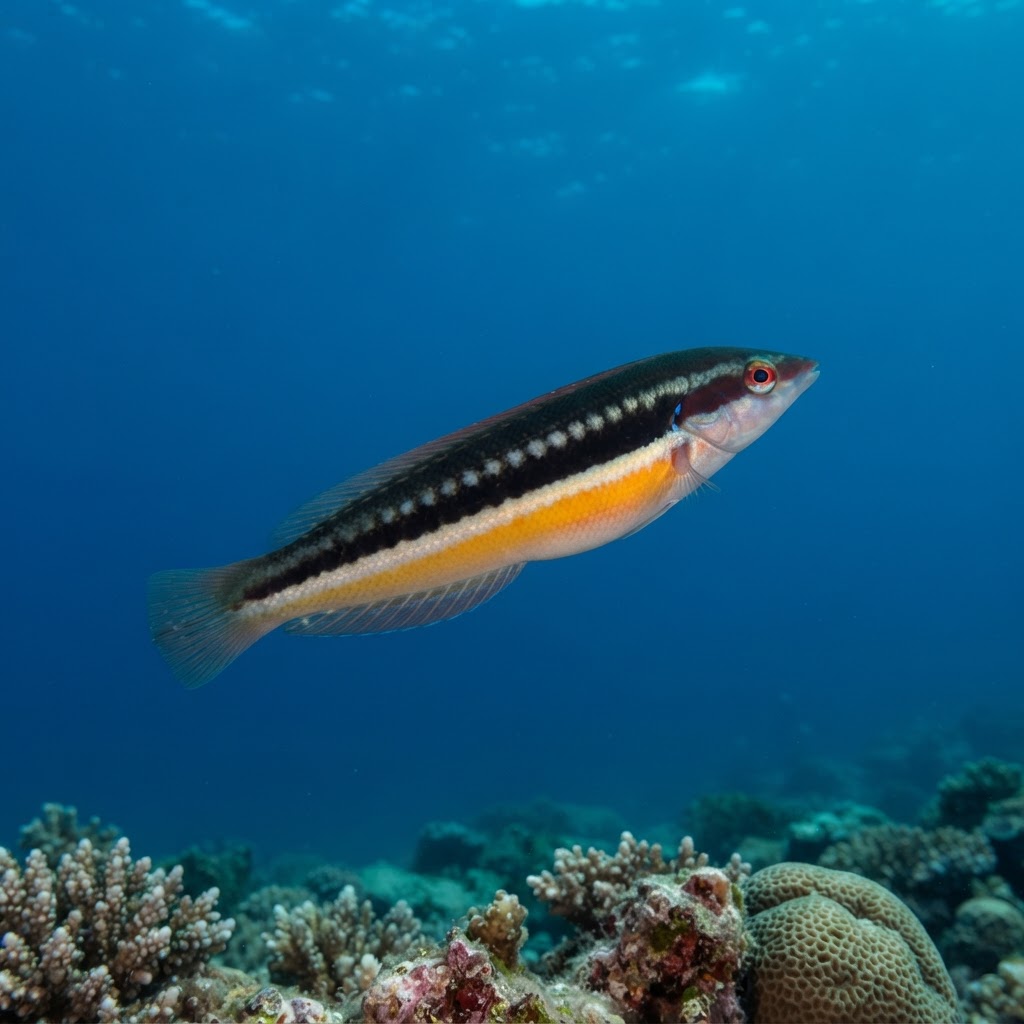
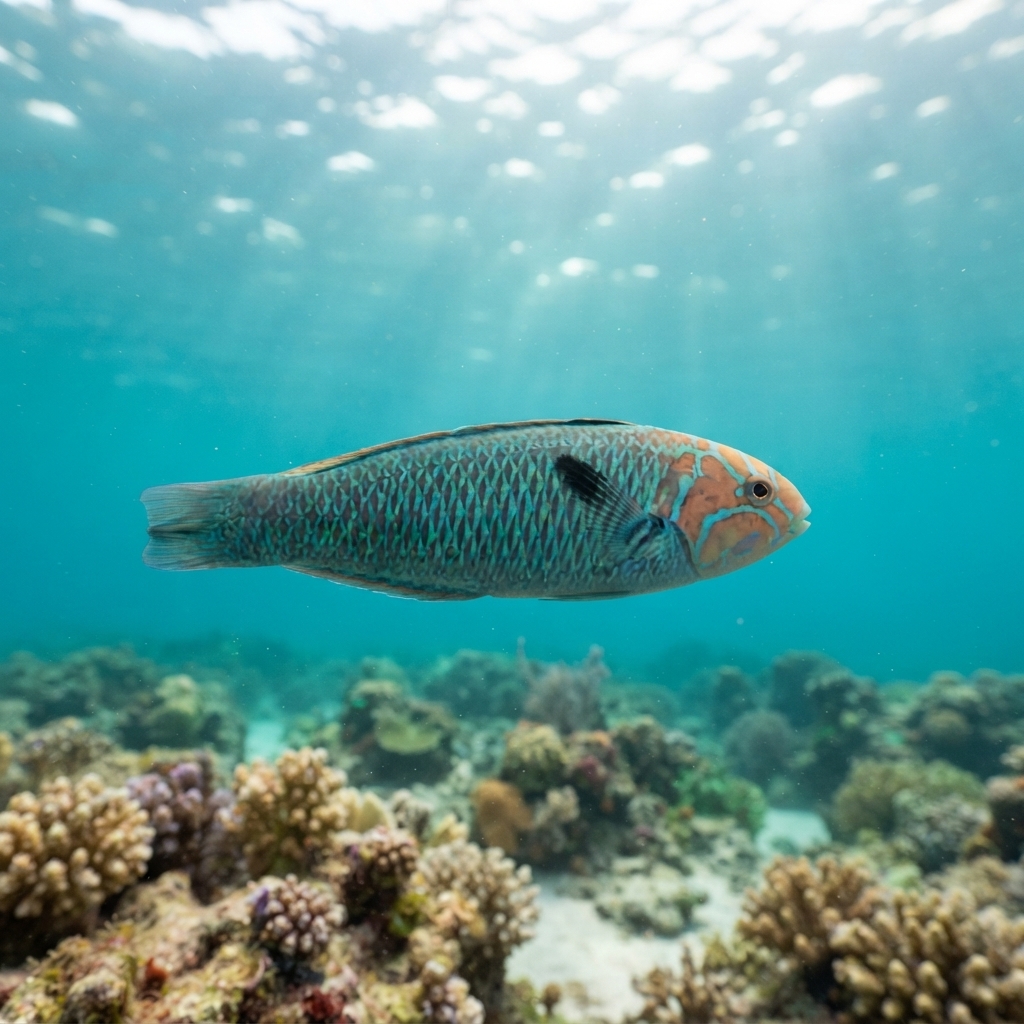
A small, slender wrasse rarely longer than 9 cm, easiest to spot by its electric-blue body cut through with a bright yellow saddle patch behind the head. It swims with the quick, darting wrist-flick motion typical of wrasses, often in loose groups over rock and reef. Colour intensity varies between individuals, and males in breeding condition tend to show the boldest blue.
Watch for small, active groups picking over rock and coral rubble in the shallower parts of the reef, often mixing with other small wrasses and juveniles. It pays divers little attention and keeps foraging rather than fleeing, making it an easy fish to photograph if you have the patience to follow its darting movements. Most activity is during daylight hours when it is out feeding over open reef.
Like many wrasses, it can change sex and colour pattern as it matures, so the brightest blue individuals on a reef are often the dominant males that have transitioned from a duller starting phase.
Sightings show no strong seasonal pattern, and the water stays in a fairly narrow 24 to 28C band year-round, so this wrasse is a reliable sighting on Noronha dives whenever you go.
This is very much a Fernando de Noronha fish: every logged sighting comes from that Brazilian archipelago, where it turns up as a common resident at most sites divers visit. If you are diving Noronha itself, expect to see it on the majority of your dives rather than as a rare find.
Mapping where Noronha Wrasse is logged…
Almost every logged sighting is from Fernando de Noronha, Brazil, where it is a common sight across most dive sites in the archipelago.
There is no clear season for this species. It stays in warm water year-round and is seen consistently on Noronha dives whenever conditions allow diving.
Look for a small, fast-moving wrasse under 9 cm with an electric-blue body and a yellow saddle patch behind the head, usually darting over rock or rubble in small groups.
They are small reef fish, typically reaching around 9 cm in length, making them one of the smaller wrasses divers encounter on Brazilian reefs.
Yes. Like other wrasses in the Thalassoma genus, individuals can shift in colour and even change sex as they mature, with dominant males usually showing the boldest blue tones.
Site and sighting data is aggregated from diver logs, iNaturalist and GBIF. For taxonomy and conservation status:
Bird Wrasse
3,632 sites