Petrolisthes elongatus
Flip a rock in New Zealand's North Island shallows for this small, flat crab, most reliably found year-round in cool 11 to 18C water.
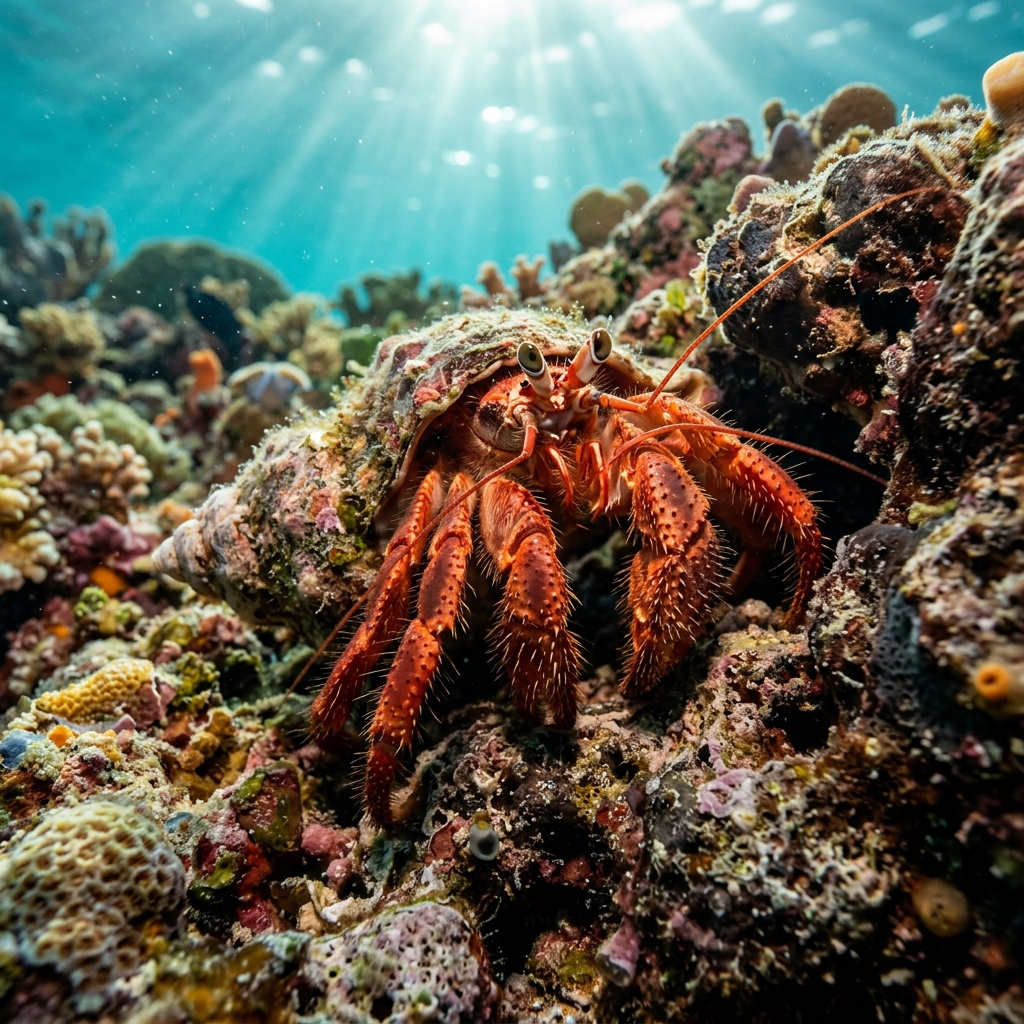
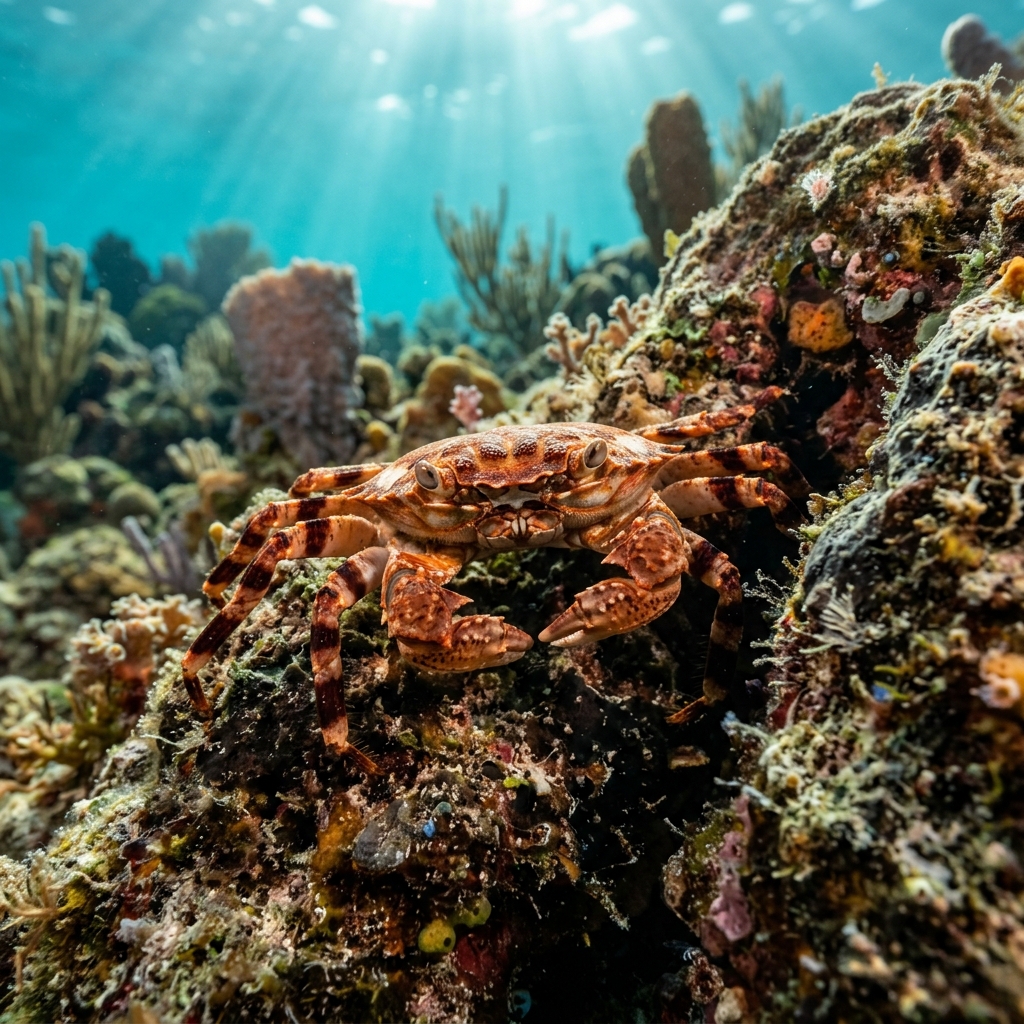
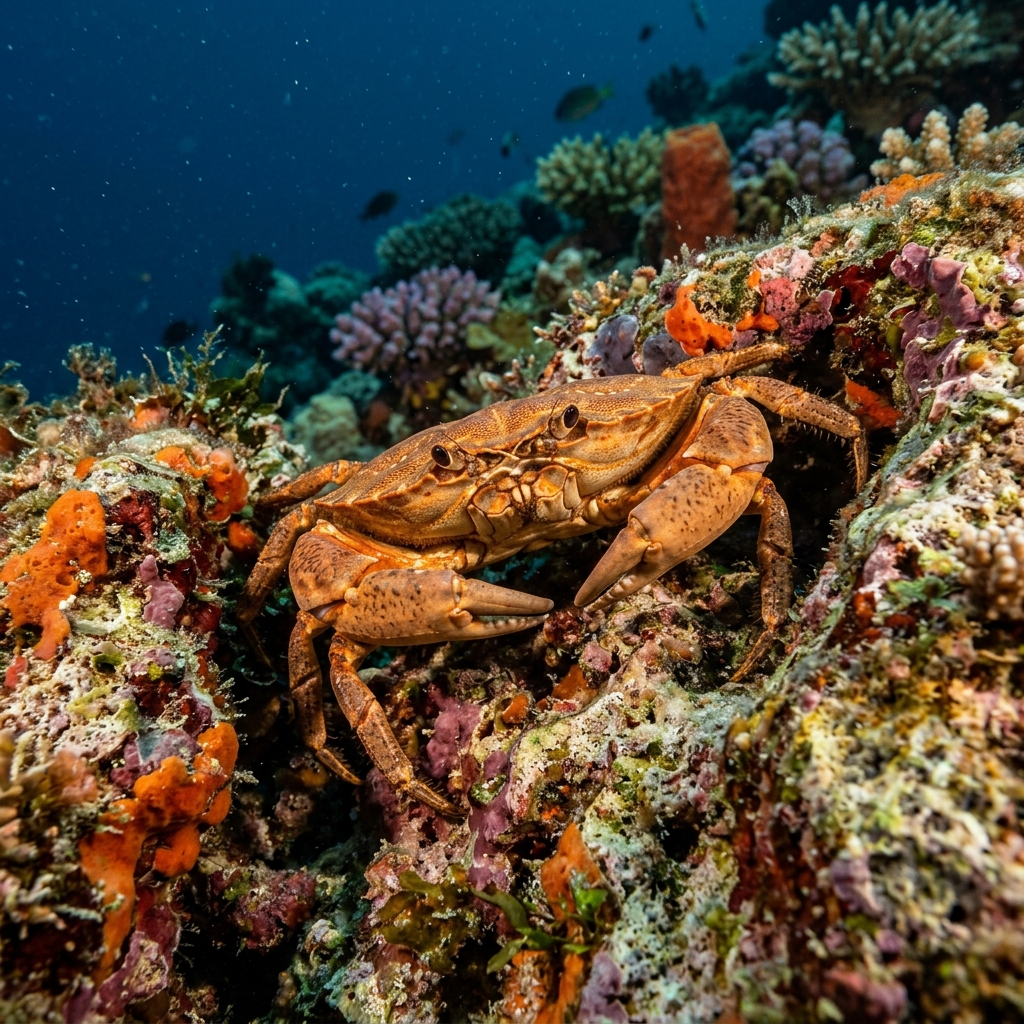
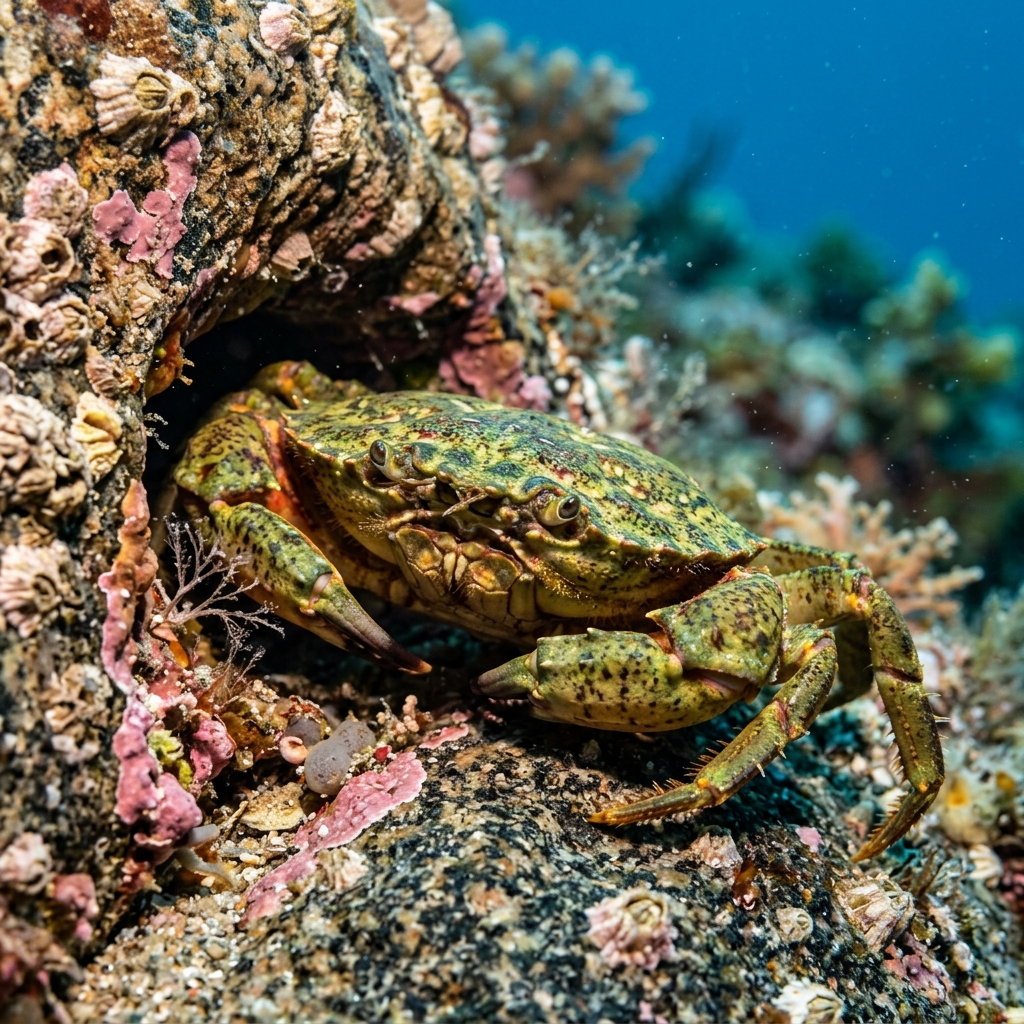
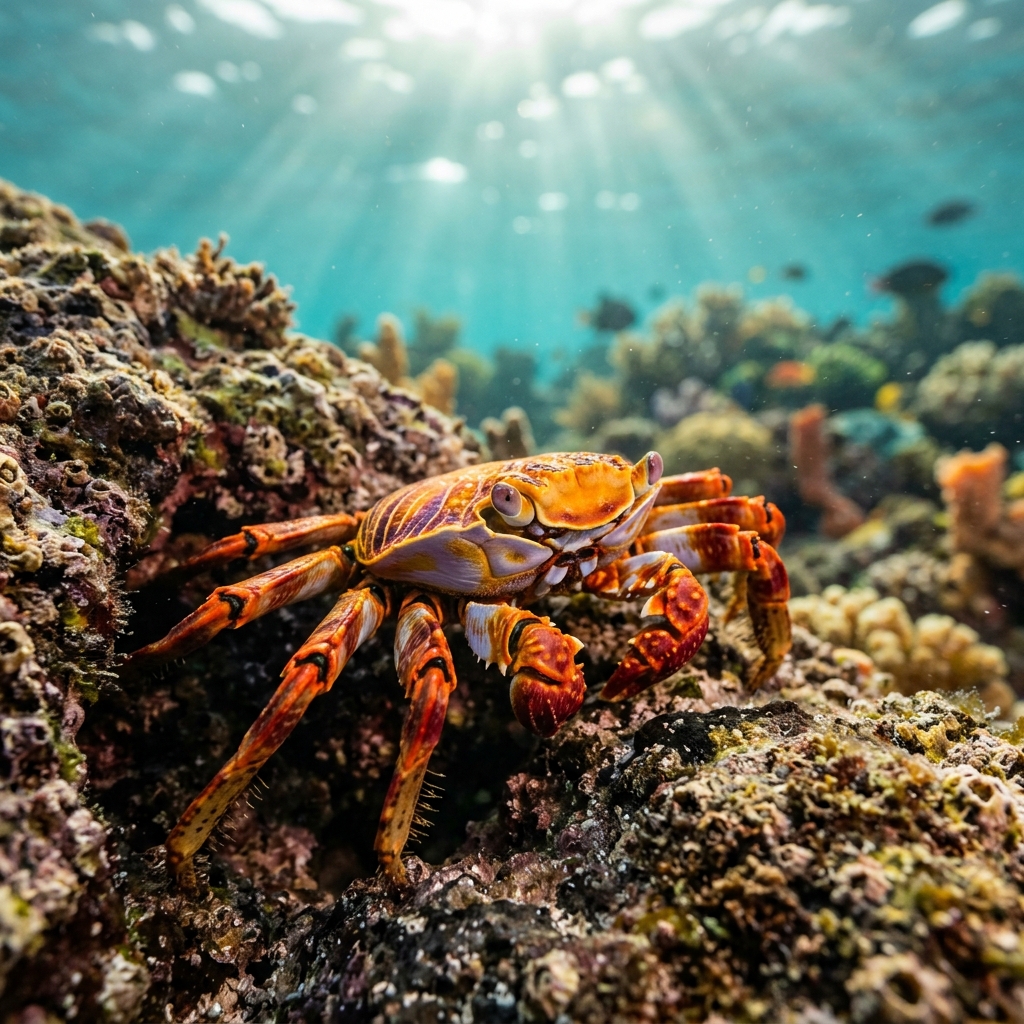
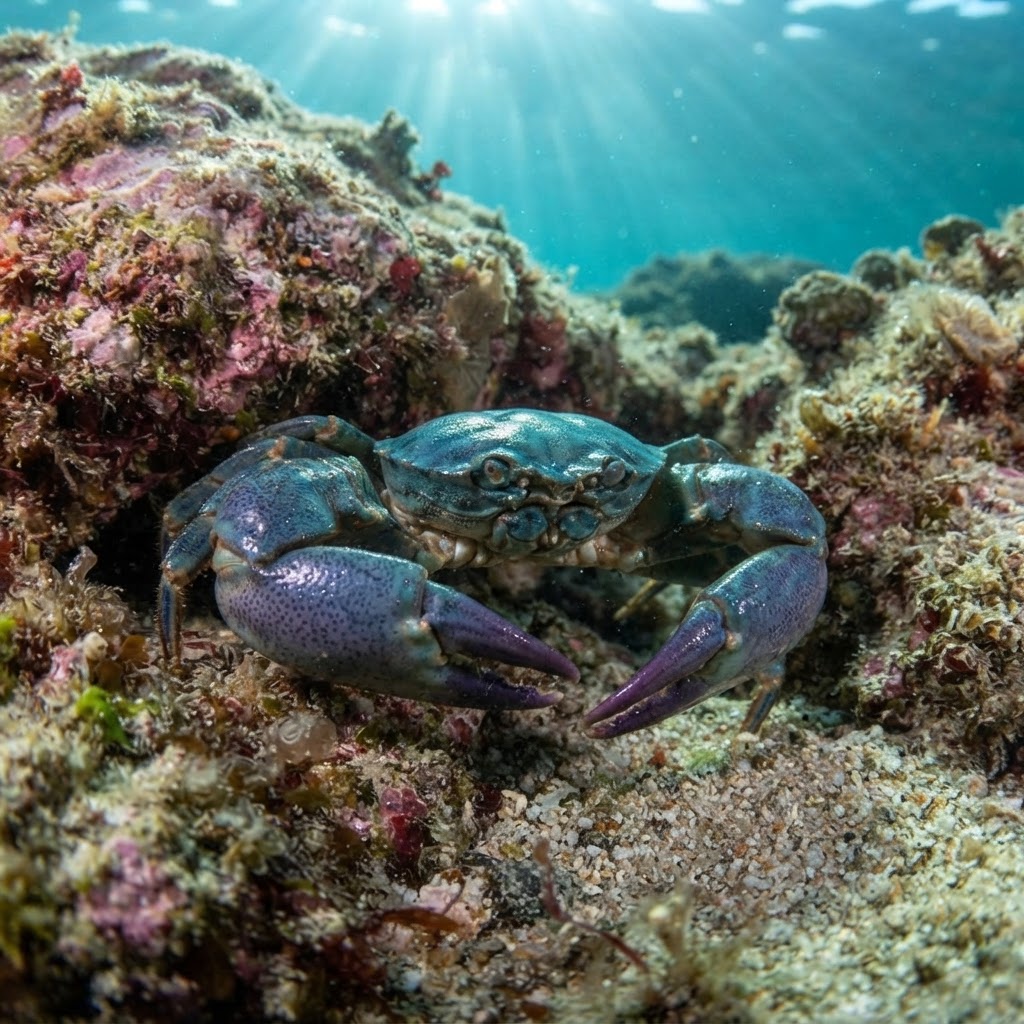
A small, flattened crab rarely bigger than a thumbnail, with a smooth, rounded shell in mottled greenish-brown to olive tones that blends against rock and shell rubble. The claws are broad and flat relative to body size, held tucked close, and the long, thread-like antennae are often the first thing divers notice waving from a crevice. It moves in quick sideways scuttles when disturbed and wedges itself flat into cracks rather than swimming off.
Found tucked under intertidal and shallow subtidal rocks and among shell rubble, where it stays wedged flat against the surface rather than out in the open. It is a filter feeder, using its feathery antennae-like appendages to sweep fine particles from the water rather than actively hunting. When a rock is lifted it usually scurries for the nearest crack rather than confronting the diver, and most sightings happen on shallow, calm-water dives rather than deep or exposed sites.
Despite the name, porcelain crabs like this one are not true crabs but belong to a family more closely related to squat lobsters, and they can shed a claw to escape a predator's grip and regrow it later.
There is no clear seasonal pattern in the sightings, and it sits comfortably in cool water from about 11.4 to 18.0C, so it is a year-round find rather than a seasonal one. Any dive or shore snorkel in its New Zealand range should give you a shot at turning one up under a rock.
This is very much a New Zealand species: divers log it most often in the North Island, with a solid secondary presence in the South Island, and it turns up as a rarer find across the Tasman in Tasmania, Australia. Look under rocks and in cobble or shell-rubble habitat on shallow, sheltered reef rather than open sand or deep wall.
Mapping where New Zealand Porcelain Crab is logged…
It is most commonly logged in New Zealand's North Island and South Island, with scattered sightings across the Tasman in Tasmania, Australia. Shallow, sheltered rocky reef and shell-rubble habitat are the places to search.
There is no strong season in the data, and it tolerates a fairly wide cool-water range from about 11 to 18C, so it can be found year-round rather than during a particular month.
Look for a small, flat, olive-brown crab wedged tight under a rock, with broad flattened claws held close to the body and long antennae sweeping the water. Its flattened shape and habit of hiding rather than fleeing openly are good giveaways.
It stays small, typically no larger than a thumbnail across the shell, making it easy to overlook unless you are deliberately checking under rocks.
No, despite its crab-like look it belongs to the porcelain crab family, which is more closely related to squat lobsters than to true crabs. It also feeds by filtering particles from the water with feathery mouthparts rather than scavenging like many true crabs.
Site and sighting data is aggregated from diver logs, iNaturalist and GBIF. For taxonomy and conservation status:
European Green Crab
2,469 sites