Pomacentrus coelestis
Electric-blue fish darting over Visayas rubble patches at 24-29 C, year-round and easy to find once you know the flash of blue to look for.
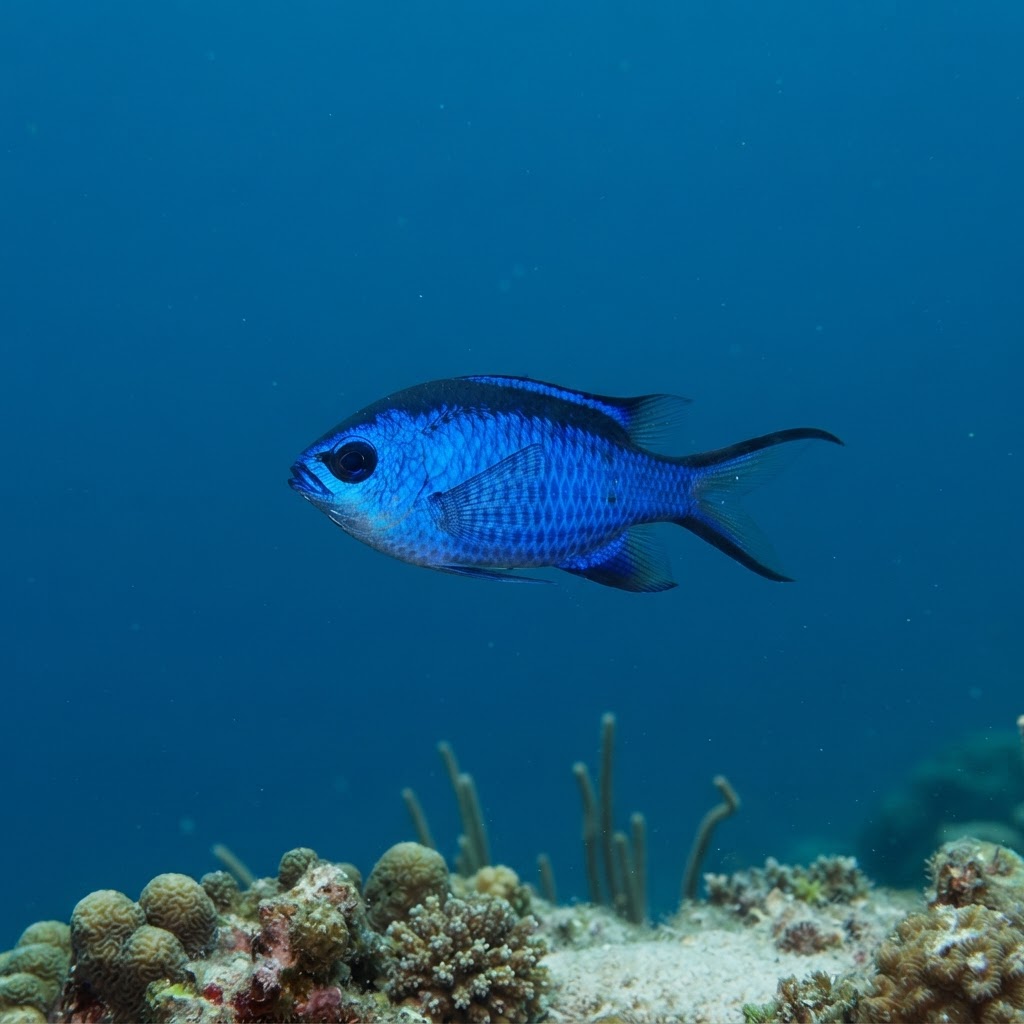
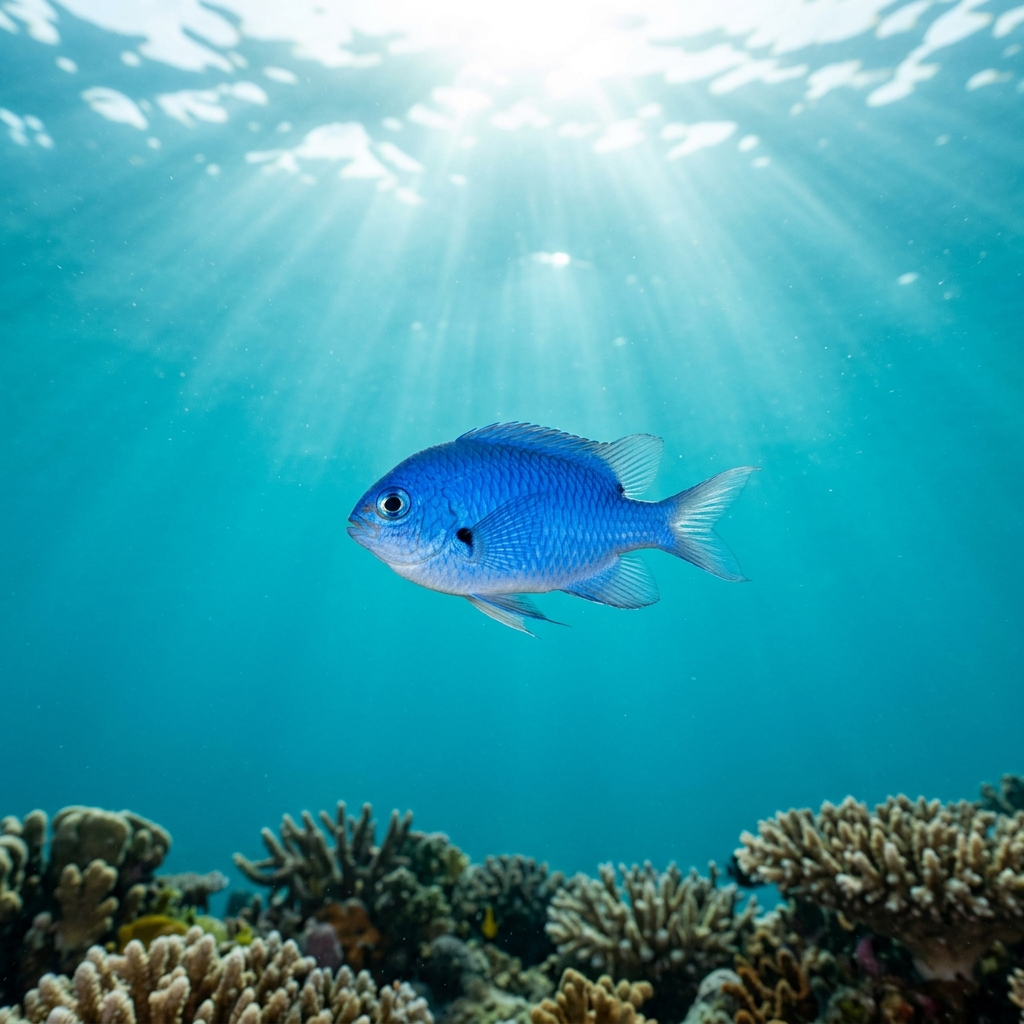
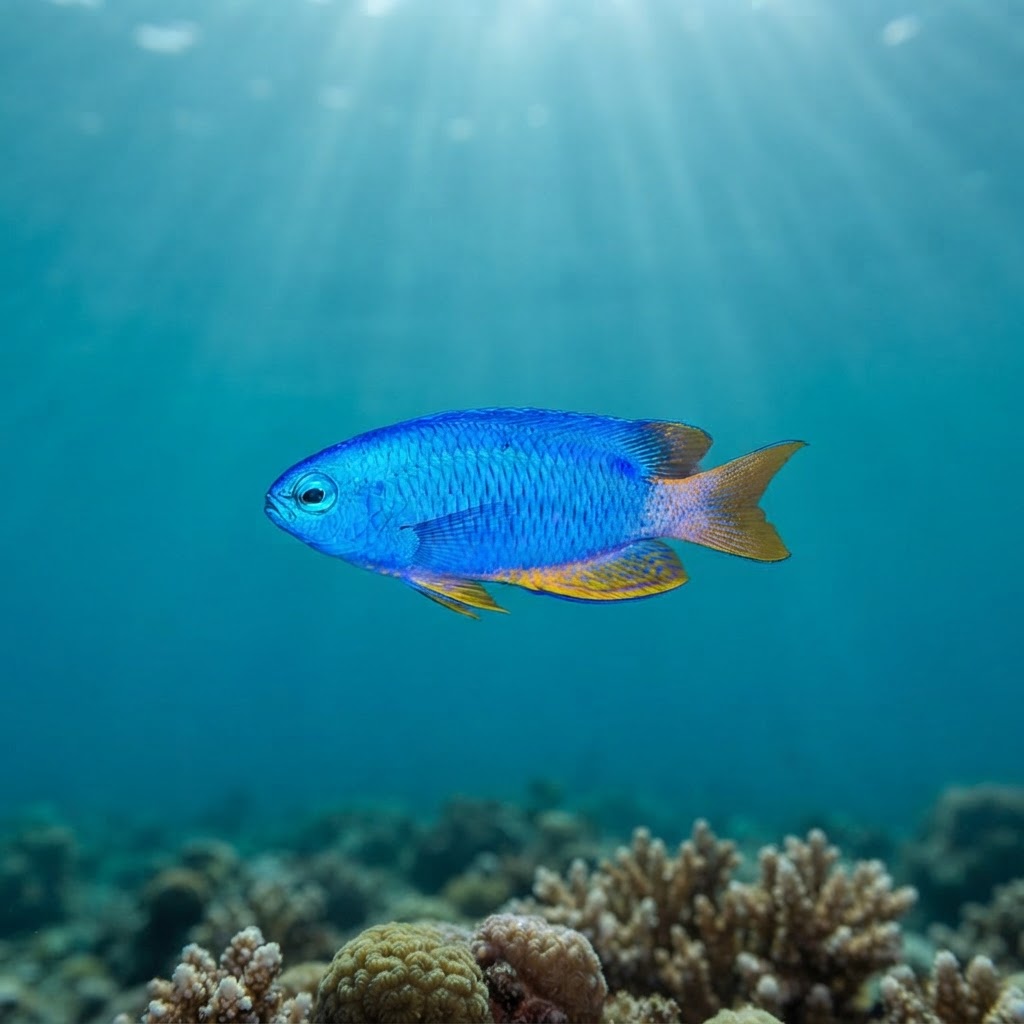
A small, torpedo-shaped fish about 6 cm long with an electric blue body that seems to glow against the reef, often fading to yellow around the tail. The blue runs the length of the body and catches the light as it turns, which is usually the first thing that catches a diver's eye. There's no bold pattern to search for, just that saturated, almost fluorescent blue on a fish too small to mistake for most other reef residents.
Look for it hovering in loose groups just above rubble patches, coral heads, or reef slopes, picking plankton out of the water column rather than grazing the substrate. It tends to stay close to a patch of shelter and dart back into cover if a diver gets too close, but generally holds its ground rather than fleeing far. Most sightings are on shallow to mid-depth reef, well within the 1 to 20 m range where it's most active during daylight hours.
Like most damselfish, it feeds mainly on plankton drifting past in the current, which is why you'll often see small groups hanging in open water just off the reef rather than tucked into crevices.
No clear seasonal pattern shows up in the sightings, and with a comfortable range of about 25 to 29 C, it's present on these reefs year-round rather than tied to a particular month.
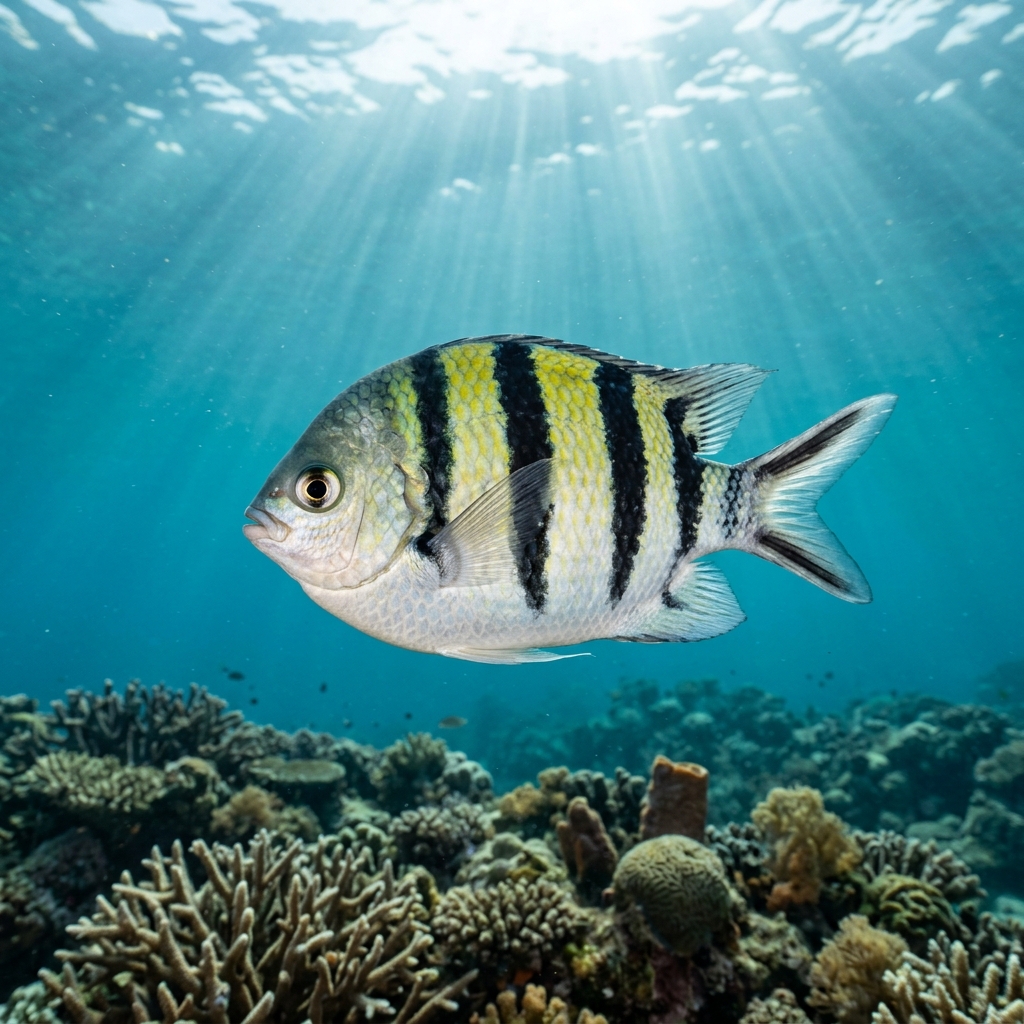
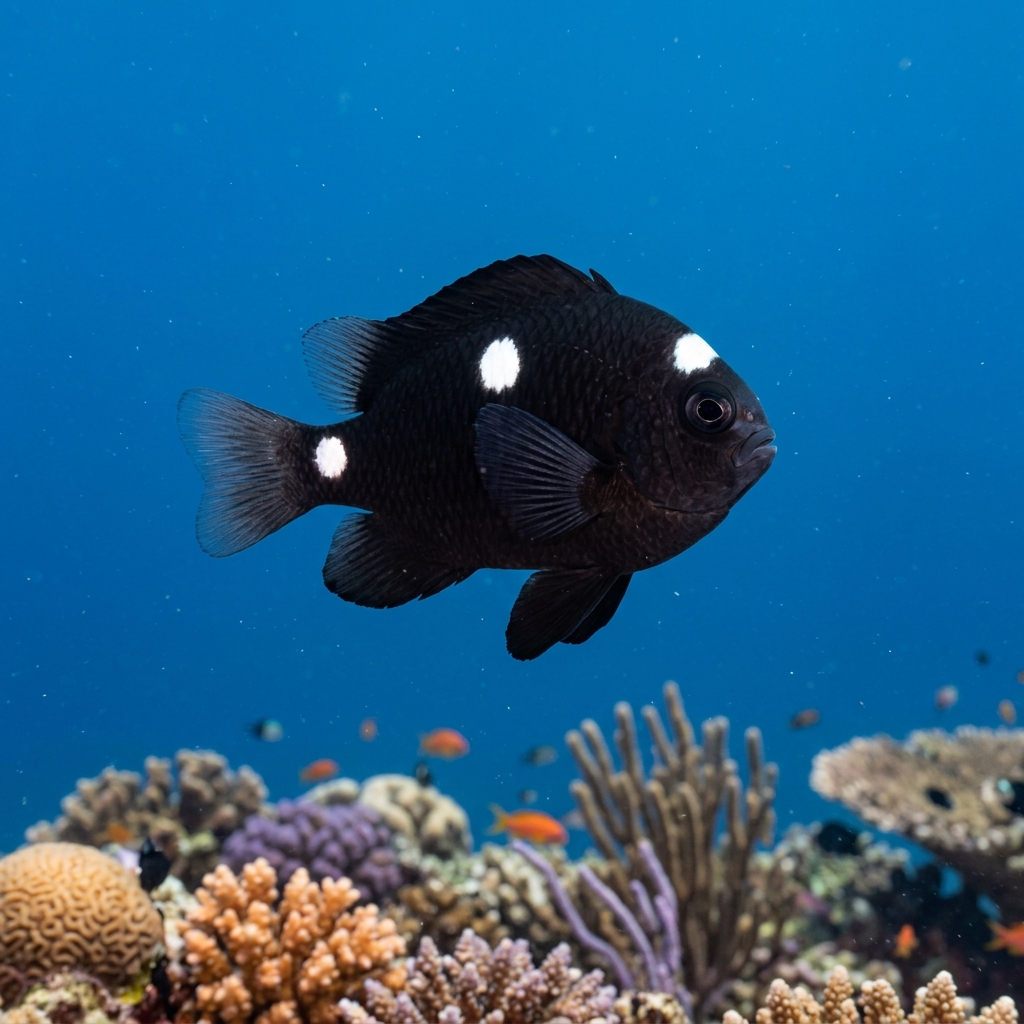
Reef neighbours a diver could mistake it for. Use the identification notes above to tell them apart.
This is a strong, reliable sighting across the Philippines, especially the Visayas, and across Australia in both New South Wales and Queensland. It also turns up consistently in Indonesia, particularly Bali and Nusa Tenggara, plus Thailand's Koh Tao, Fiji, Taiwan, Papua New Guinea, and Timor-Leste.
Mapping where Neon Damselfish is logged…
The Visayas in the Philippines is one of the most consistent places to find them, alongside New South Wales and Queensland in Australia. Bali and Nusa Tenggara in Indonesia, plus Koh Tao in Thailand, are also solid bets.
There's no strong seasonal pattern in the sightings, so they're a year-round find on tropical reefs within their comfortable temperature range of roughly 25 to 29 C.
Look for a small fish, around 6 cm, with a body that glows electric blue underwater, often with a paler or yellowish tail. They're usually seen hovering in small groups over rubble or reef structure rather than sitting still.
They stay small, topping out around 6 cm, which is typical for damselfish and part of why they're easy to overlook despite their bright colour.
No, they pose no danger to divers. They're a small plankton-feeder that will dart for cover if you approach too closely but won't threaten a diver in any way.
Site and sighting data is aggregated from diver logs, iNaturalist and GBIF. For taxonomy and conservation status:
Dascyllus
3,697 sites