Nemesignis banyulensis
Find Lady Godiva on Mediterranean and Atlantic reefs, most reliably logged in Catalonia and Andalusia in 14.6 to 20.6C water.
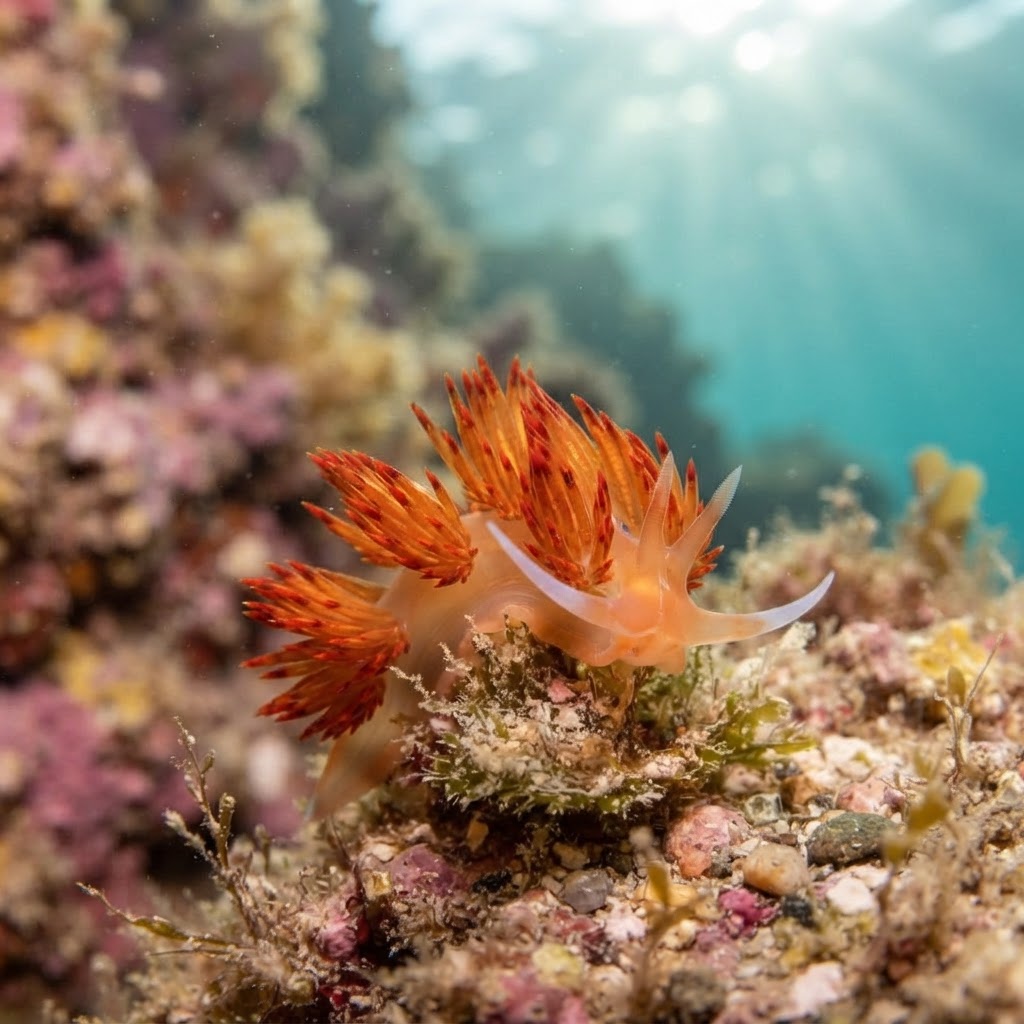
A small sea slug (nudibranch) best spotted by scanning rocky, algae-covered substrate rather than open water. Look for its slender, elongated body and the paired sensory tentacles (rhinophores) on the head, the usual giveaway for this group of slugs against a mottled reef background. Exact size isn't well documented, so treat any small, unfamiliar dorid-type nudibranch on Mediterranean or Atlantic rock as worth a closer look and a photo.
Divers typically find it slow-moving or stationary on rocky reef surfaces, tucked among algae and encrusting growth where it blends in easily. It shows no reaction to divers beyond the usual slug indifference, so a careful, close-focus look at rock crevices and ledges is the best way to pick one out. Most sightings come from macro-focused divers working slowly over hard substrate rather than mid-water swims.
Like other dorid nudibranchs, it almost certainly feeds on sponges or similar encrusting invertebrates, using diet to source the chemical defences that make most nudibranchs unpalatable to predators.
No clear seasonal peak shows up in the sighting data, so treat it as a year-round find within its 14.6 to 20.6C comfort range, which covers most of the diving season across the Mediterranean and nearby Atlantic coasts.
Reef neighbours a diver could mistake it for. Use the identification notes above to tell them apart.
Most commonly logged in Spain, especially Catalonia and Andalusia, with a strong showing along Portugal's Lisbon Coast and Algarve. It also turns up reliably on Croatia's Central Dalmatian coast and in smaller numbers in France's Occitanie region and Italy.
Mapping where Lady Godiva is logged…
It's most reliably found in Spain, particularly Catalonia and Andalusia, and along Portugal's Lisbon Coast and Algarve. Croatia's Central Dalmatian coast and pockets of France and Italy also have logged sightings.
There's no strong seasonal pattern in the data, so it's considered a year-round sighting wherever water temperatures sit between roughly 14.6 and 20.6C.
Look for a small, slow-moving dorid nudibranch on rocky substrate, identified by its rhinophores and elongated body shape rather than any single bold colour pattern. Close macro photos help confirm ID against similar small dorids.
Exact size isn't well documented for this species, but like most members of its family it stays small, in the centimetre range typical of dorid nudibranchs found on rocky Mediterranean and Atlantic reefs.
No. It poses no threat to divers and can be observed and photographed safely at close range without any special precautions.
As with related dorid nudibranchs, it most likely grazes on sponges or similar encrusting invertebrates, a diet that also supplies the chemical compounds many nudibranchs use for defence.
Site and sighting data is aggregated from diver logs, iNaturalist and GBIF. For taxonomy and conservation status:
Light-spotted Aegires
3,168 sites