Nembrotha lorosae
A slug hunter's target: this nudibranch turns up on macro-heavy sites across Nusa Tenggara and Bali, warm water, year-round, uncommon but findable.
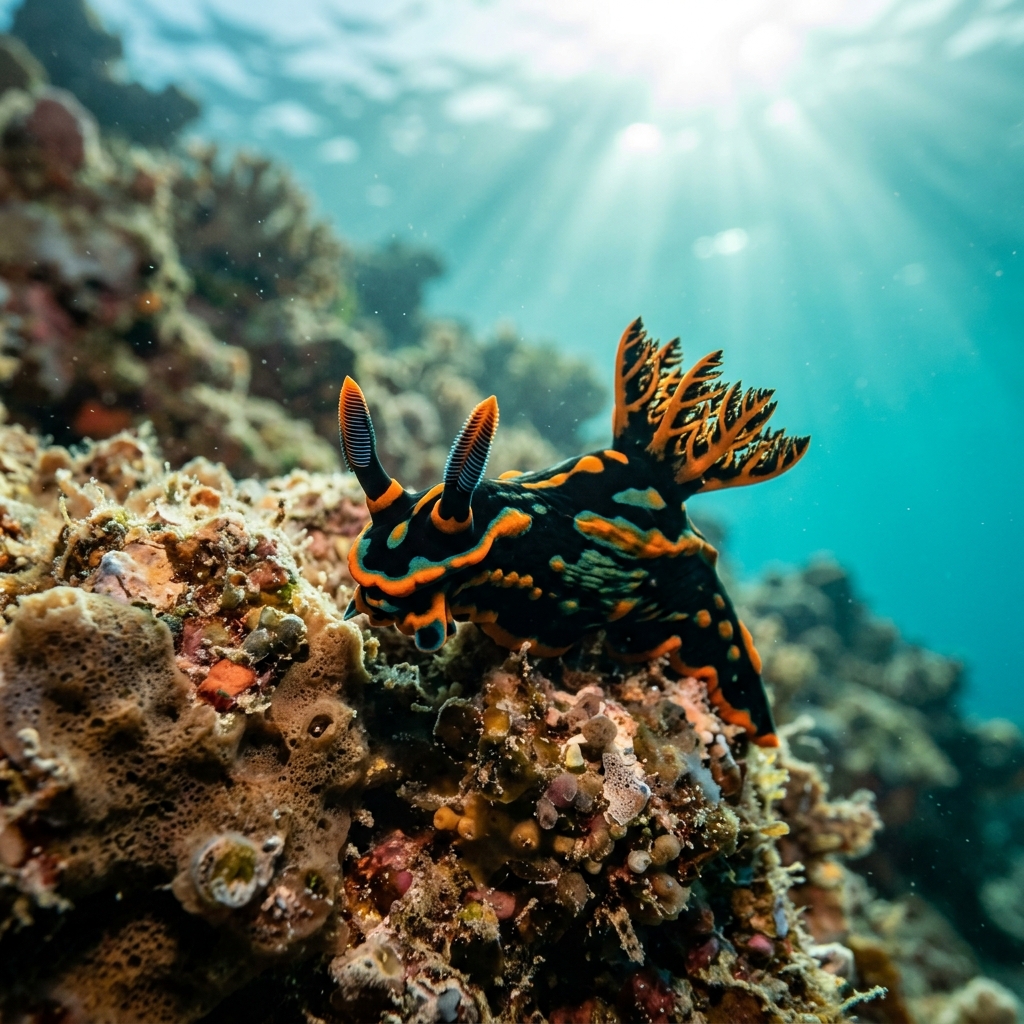
Look for a slender, elongated nudibranch with a dark green to blackish body carrying scattered pale spots along the mantle. The rhinophores (the paired sensory horns on the head) and the gills at the rear are tipped in bright orange, which is usually the first thing that catches a diver's torch beam. It sits low and moves slowly across the substrate, rarely more than a few centimetres long, so most sightings come from divers already in slug-hunting mode rather than casual reef scanning.
Divers find it grazing slowly over rubble and reef substrate, working its way across surfaces at a pace slow enough to photograph without any chase. It shows no reaction to divers beyond a slight pull-back if directly touched, and sightings tend to come from macro-focused dives where guides are actively scanning crevices and slopes rather than open water. Most logs describe single individuals rather than pairs or clusters.
Like other Nembrotha species, its diet is built around sea squirts (tunicates), and the orange and green colouring is thought to advertise the toxins it absorbs from that diet as a warning to would-be predators.
Comfortable across a wide 25.1 to 31.1C range, so it's a year-round find with no clear seasonal pulse in the data. Plan around Nusa Tenggara and Bali dive conditions generally rather than chasing a specific month.
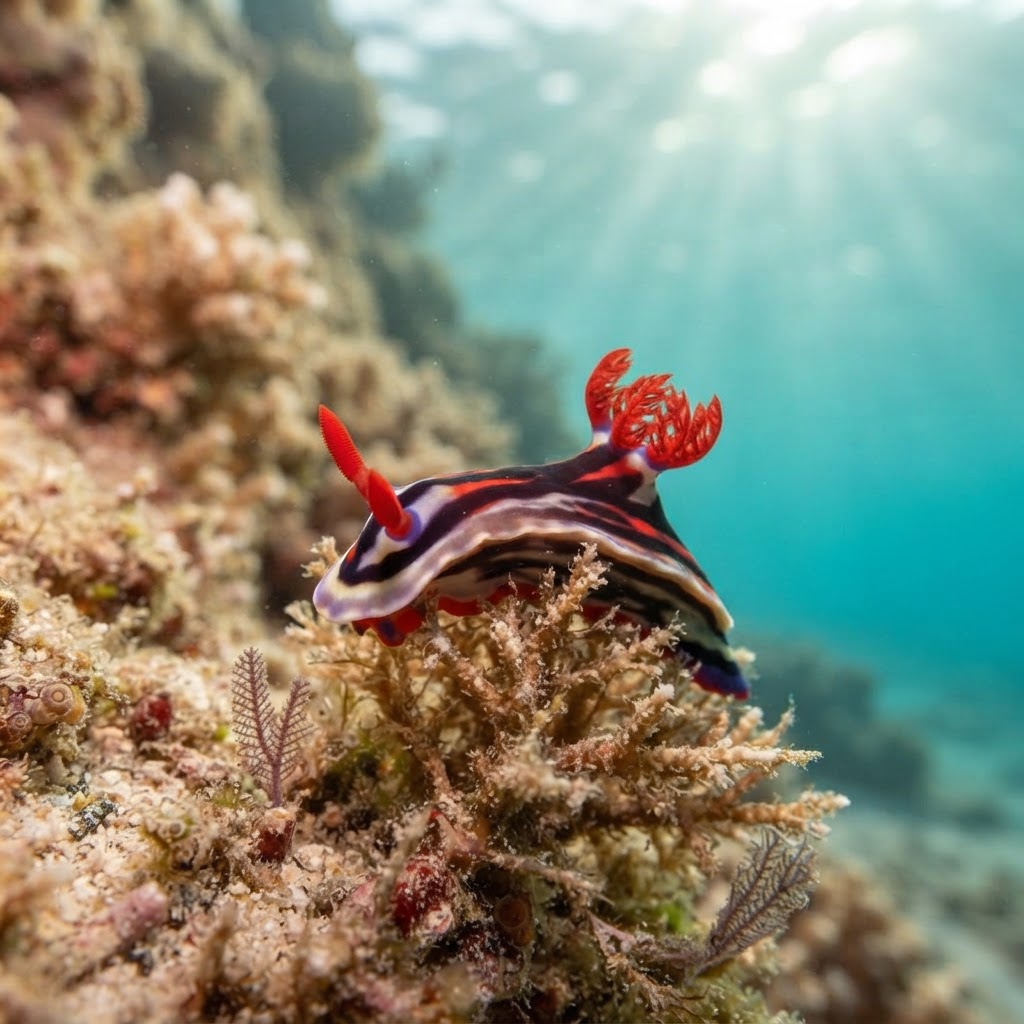
Reef neighbours a diver could mistake it for. Use the identification notes above to tell them apart.
Indonesia is the only country this species is consistently logged in, with Nusa Tenggara the strongest region by a wide margin and Bali a secondary but reliable spot. Muck and rubble-slope sites through these regions turn it up most often, usually as a solo find rather than in numbers.
Mapping where Timor Nembrotha is logged…
Indonesia is the reliable country for this species, with Nusa Tenggara producing the most sightings and Bali a secondary hotspot. Look on muck and rubble-slope sites where dive guides are actively hunting for macro life.
There's no detected seasonal pattern, and it tolerates a broad 25.1 to 31.1C range, so it's considered a year-round sighting in Nusa Tenggara and Bali.
Check for a dark green to black elongated body with pale spots and orange-tipped rhinophores and gills at the rear. It moves slowly over rubble and reef surfaces, staying small and easy to overlook without a careful eye.
Exact size data isn't confirmed, but like most Nembrotha species it stays small, typically only a few centimetres long, making it a macro photography target rather than a distant-spot species.
It feeds on tunicates (sea squirts), and its bold orange and green colouring likely signals the toxins it picks up from that diet to warn off predators.
Site and sighting data is aggregated from diver logs, iNaturalist and GBIF. For taxonomy and conservation status:
Light-spotted Aegires
3,168 sites