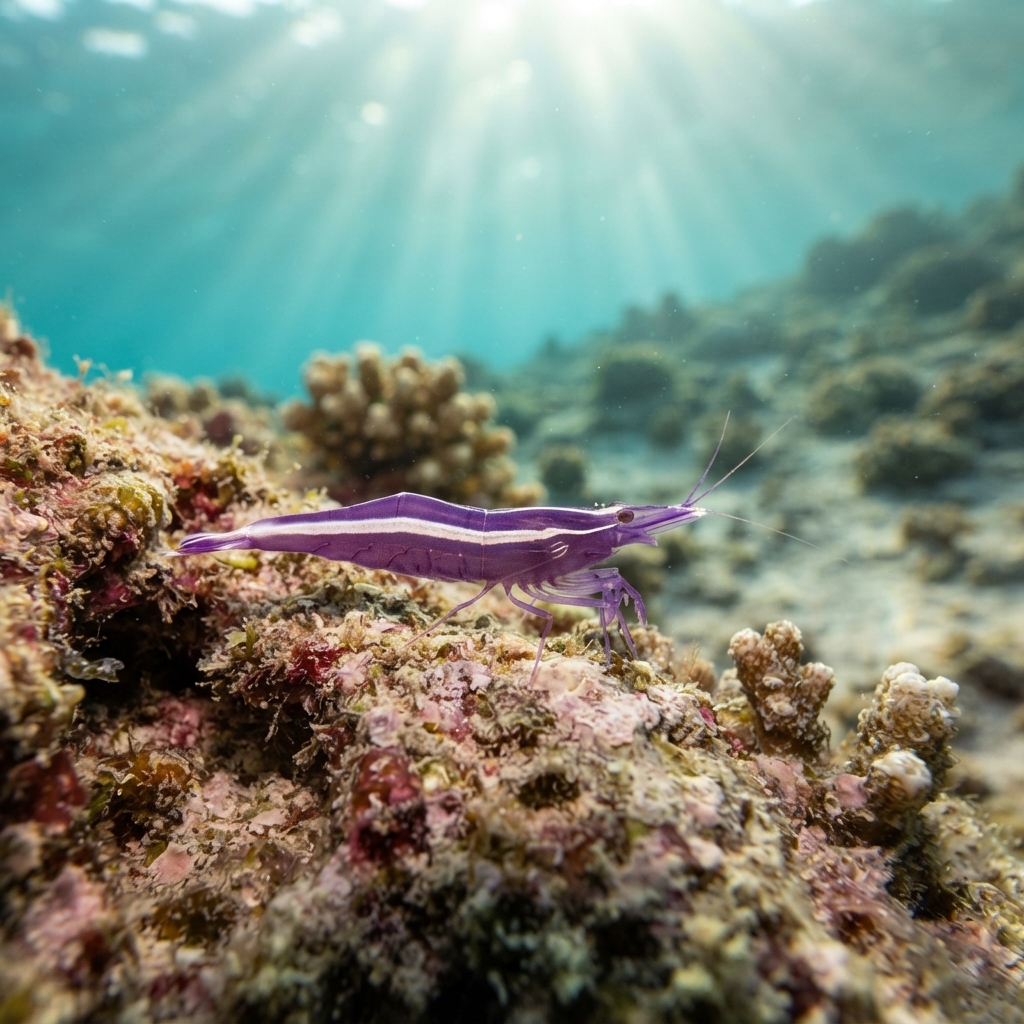
Stegopontonia commensalis
Look close at black long-spined sea urchins in Longdong, Taiwan and you may spot a needle-thin shrimp riding the spines, camouflaged in plain sight.
Long, thin, almost stick-like body that lies flat along the spines of its host sea urchin, running the same angle as the spine so it nearly disappears from view. Translucent to pale colouring with faint darker striping that breaks up its outline against the urchin's spines. Look for the shrimp's straight posture and narrow profile rather than a rounded shrimp shape; most divers spot the eyes or a faint stripe before they see the body.
Found riding motionless along the spines of its host sea urchin, aligned so closely with the spine that it takes a slow, careful pass to notice it at all. It rarely swims off when divers approach, relying on its camouflage rather than fleeing, so a steady light and a bit of patience usually gets a good look. Logged as uncommon at every site where it turns up, so finding one usually means checking several urchins rather than expecting one on the first try.
Its body shape and colouring are a close visual match to the spines of its host urchin, an example of camouflage built around a single, specific animal rather than the reef in general.
Sightings show no clear seasonal pattern, and with a water-temperature niche of 23.6 to 30 C it appears to be present on host urchins year-round wherever conditions stay in that range.
Most consistently logged around Longdong in Taiwan, which accounts for the bulk of recorded sightings, with additional records from Nusa Tenggara in Indonesia and a single site in Hawaii, United States. Divers targeting this species do best scanning urchin barrens on rocky or reef slopes in these regions rather than open coral reef.
Mapping where Needle Shrimp is logged…
The strongest records come from Longdong in Taiwan, with additional sightings in Nusa Tenggara, Indonesia, and one site in Hawaii, United States. Check urchin-covered rock and reef slopes rather than open coral in these areas.
There is no detected season in the sighting data, and it tolerates a wide temperature range of 23.6 to 30 C, so it is considered a year-round find wherever its host urchins are present.
Look for a long, narrow, almost stick-shaped body lying flat along the spines of a sea urchin, coloured to blend with the spine itself. It stays still rather than swimming, so slow, close scanning of urchins is the best way to spot one.
No, this is a tiny, harmless shrimp that poses no risk to divers. The only challenge is spotting it, not avoiding it.
It camouflages specifically to match the spines of its host sea urchin, lying flush along a single spine so its outline nearly vanishes rather than blending with the reef in general.
Site and sighting data is aggregated from diver logs, iNaturalist and GBIF. For taxonomy and conservation status:
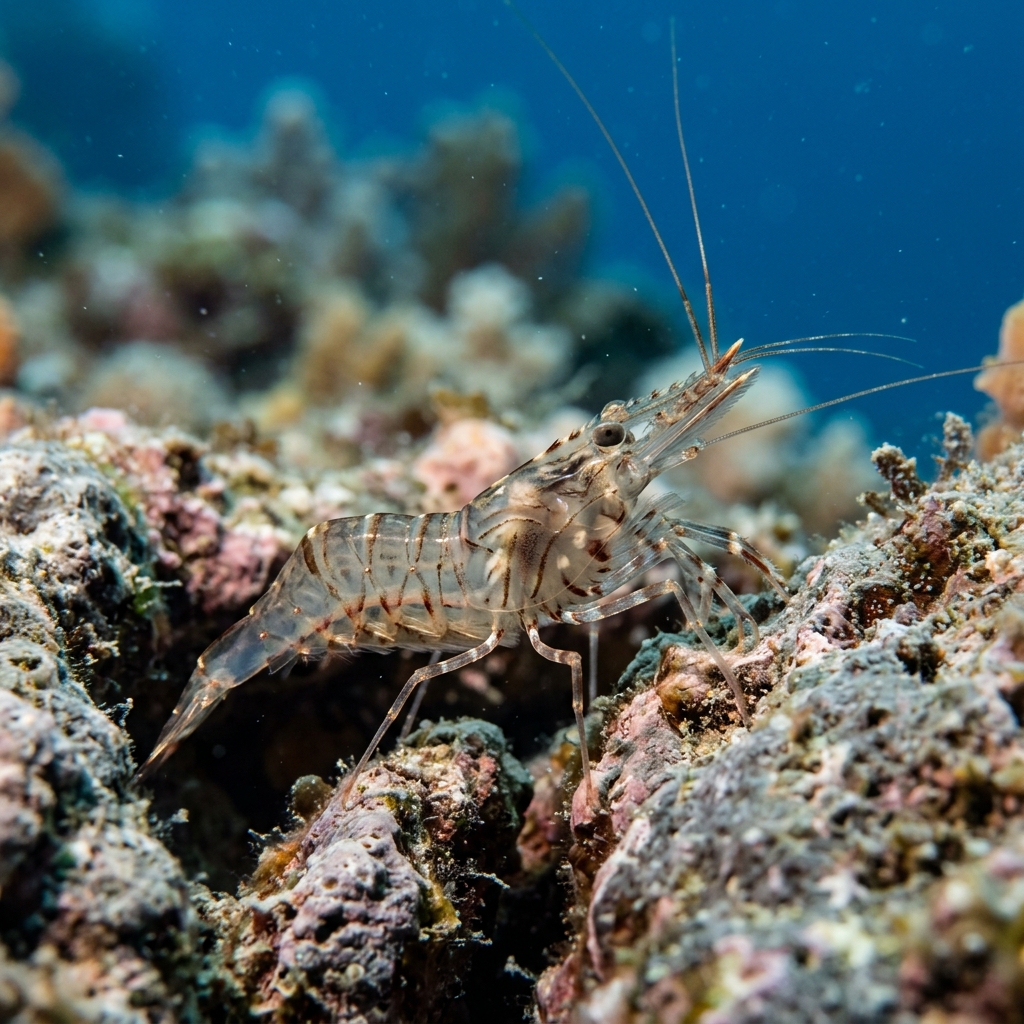
Rockpool Prawn
2,179 sites