Ophichthus bonaparti
Sandy-reef burrower most reliably found in the Visayas and Bali, active in warm 24-29C water year-round. Here's how to spot it.
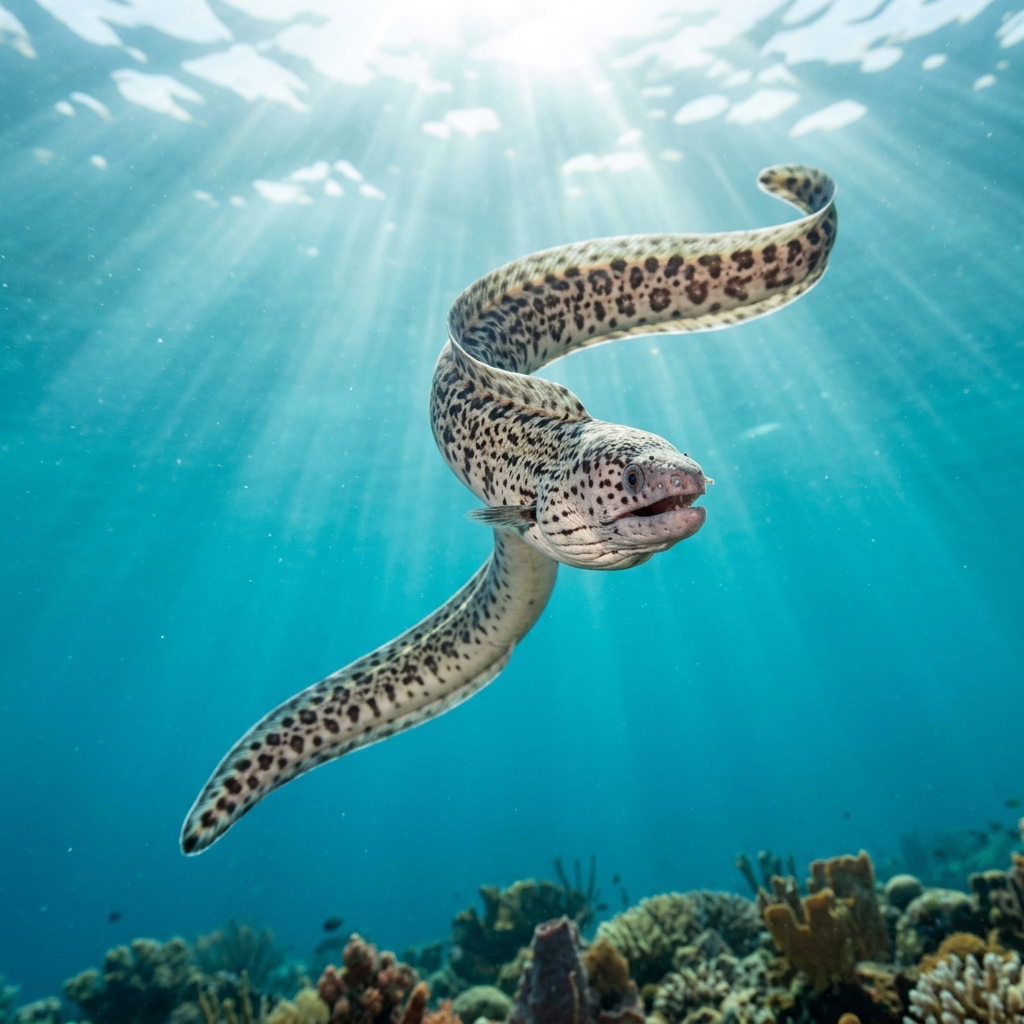
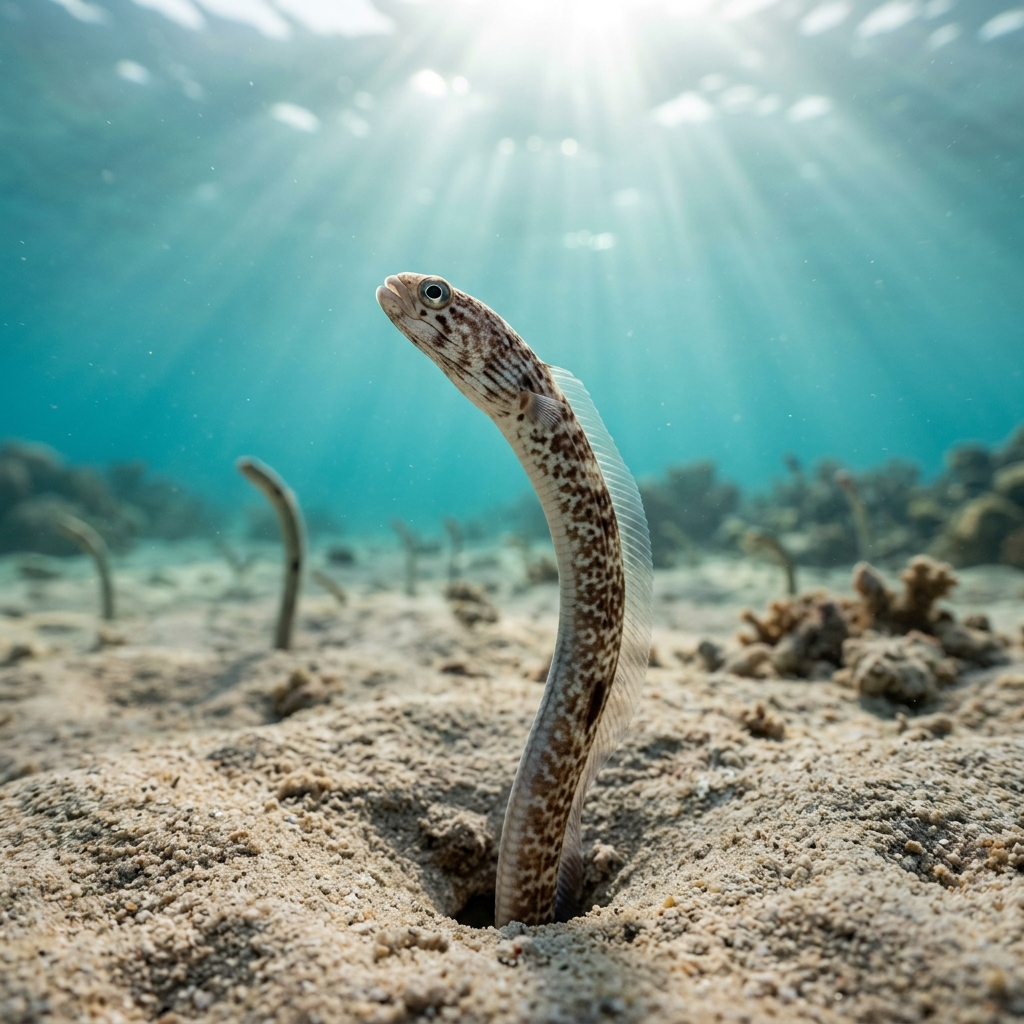
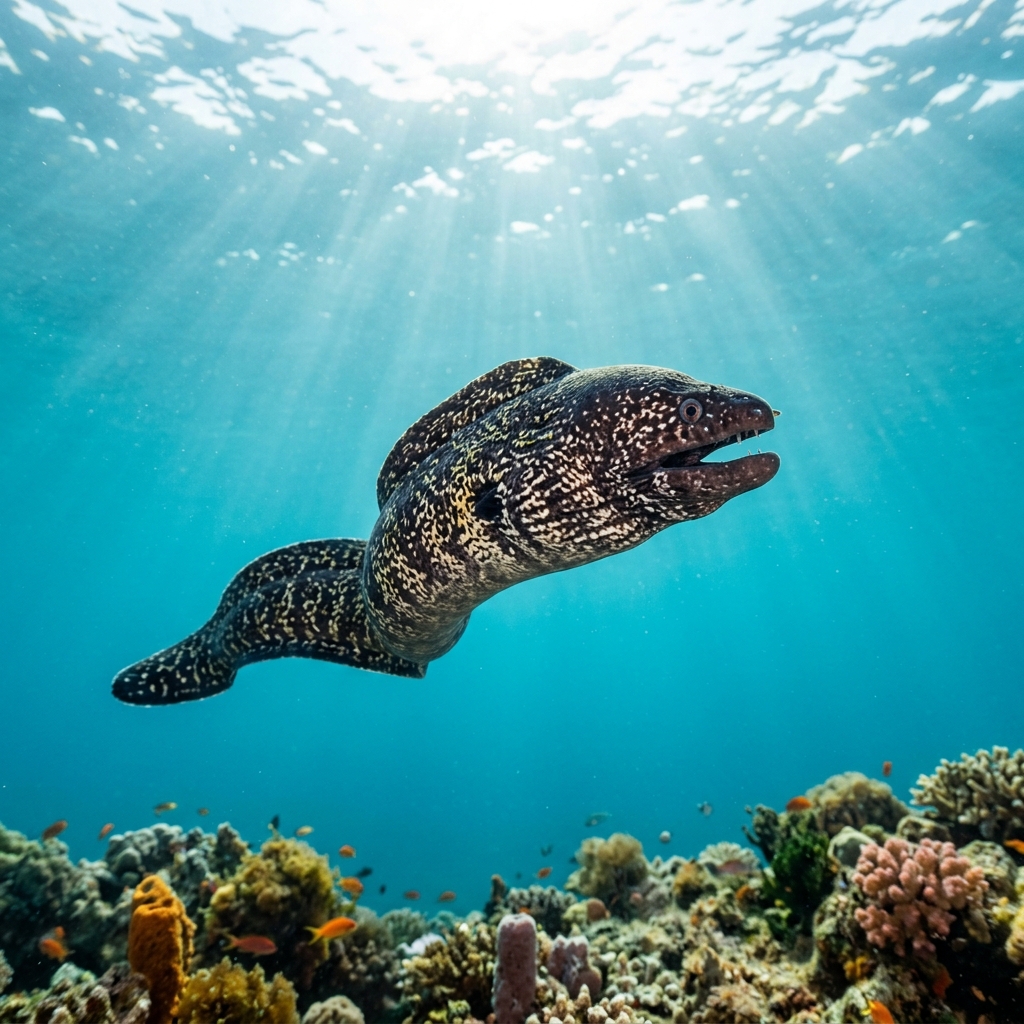
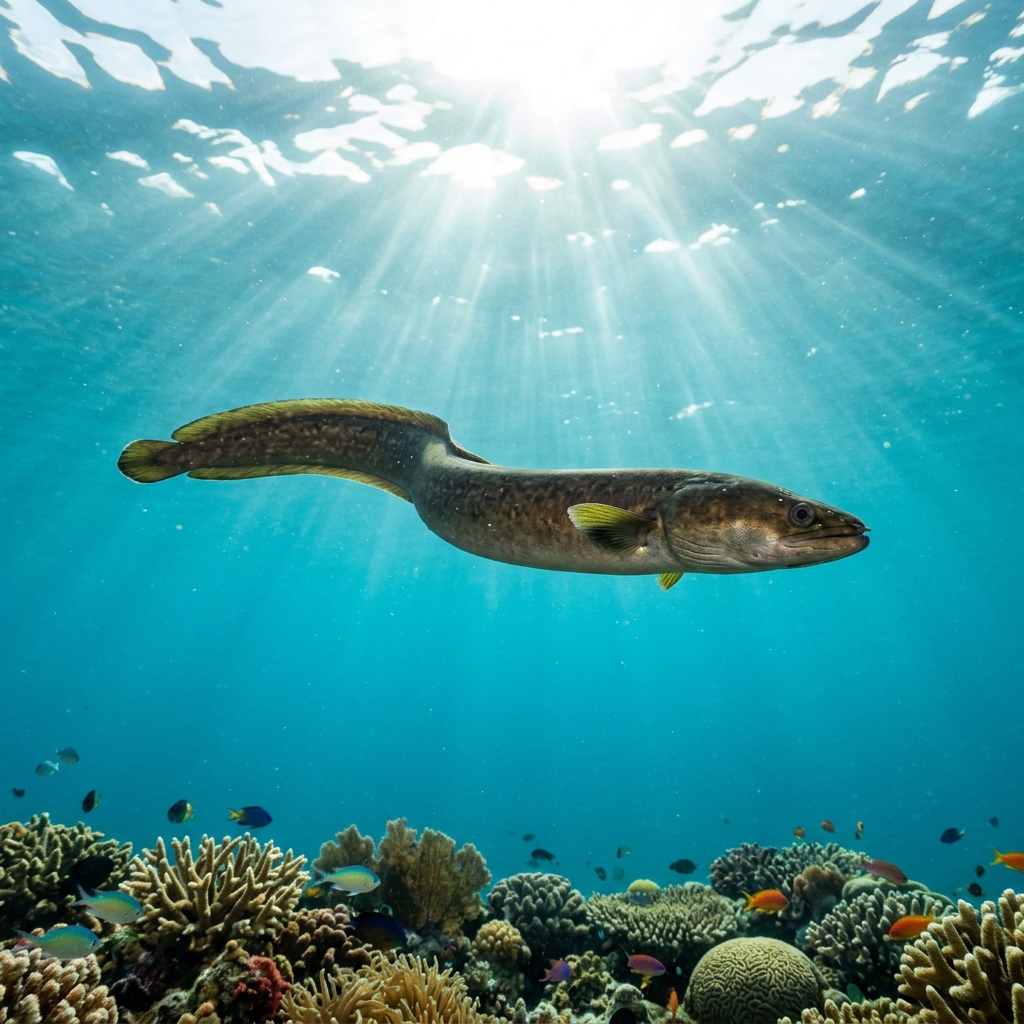
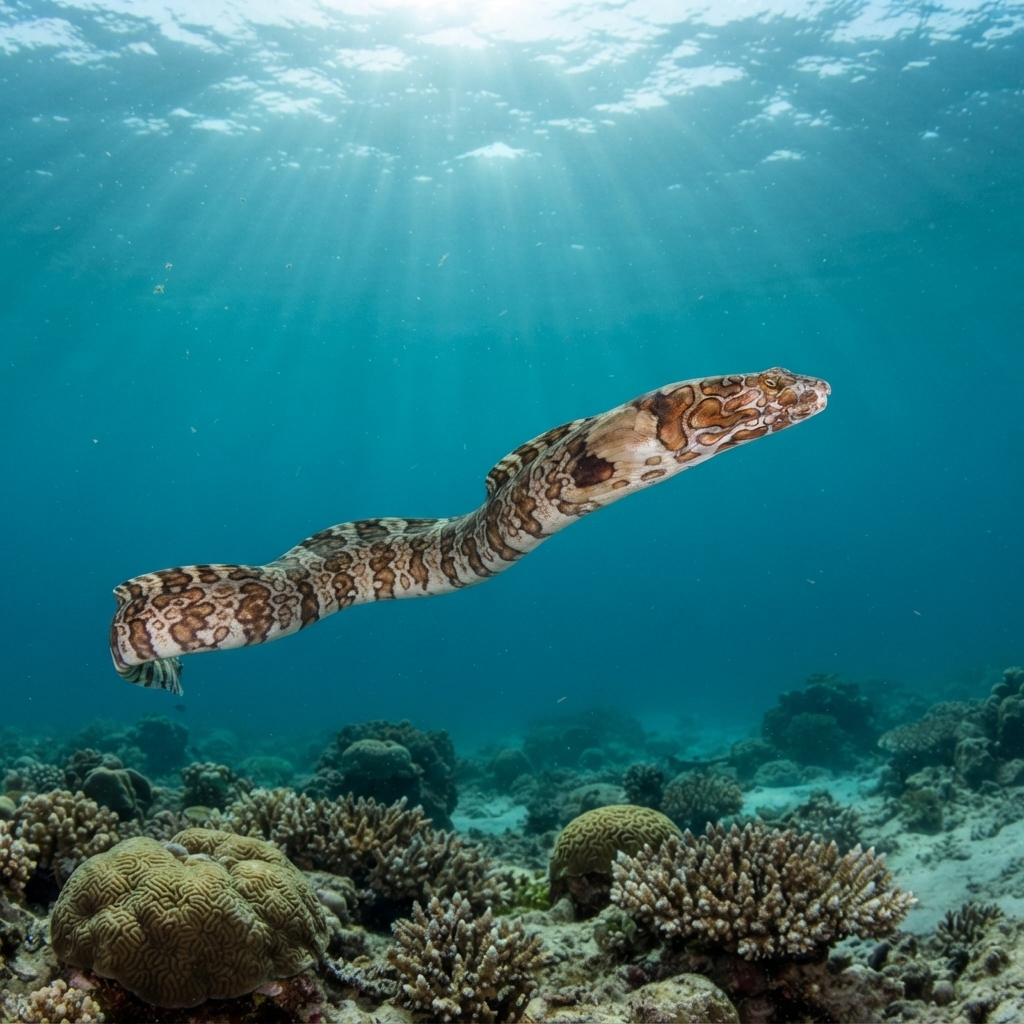
Slender, snake-like body reaching around 52 cm, with a pointed, tapering head built for burrowing nose-first into sand. Colouring runs mottled tan to brown with faint blotching, blending into rubble and sandy patches rather than standing out with bold pattern. Look for the tail end, often the only visible part, protruding from a burrow near reef edges, and the smooth scaleless skin typical of snake eels rather than the thicker, more muscular look of a moray.
Spends most of its time buried in sand or rubble with just its head or tail showing, ambushing small fish and invertebrates that pass close by. Divers typically spot it on sandy patches near reef bases or in muck-diving style habitat, often during slow, methodical scans rather than mid-water swims. It tends to withdraw into its burrow if approached too quickly, so a slow approach and a bit of patience gets the best look.
Like other snake eels, it can back into sand tail-first almost as easily as it can burrow head-first, which is why divers sometimes see just the tail sticking out with the head already hidden below.
No clear seasonal pattern shows up in the sightings, and with a comfortable range of about 24.7 to 29.3C on the reefs where it lives, it is present year-round rather than tied to a particular month.
Most reliably logged in the Philippines, especially across the Visayas, and in Indonesia, with strong numbers in Bali, Sulawesi, and Maluku. It also turns up in Timor-Leste, though far less often, making the Visayas and Bali the two best bets for a dedicated search.
Mapping where Napoleon Snake Eel is logged…
It is most commonly logged in the Philippines, particularly the Visayas, and across Indonesia in Bali, Sulawesi, and Maluku. Sightings in Timor-Leste are rarer, making the Visayas and Bali the strongest regions to look.
There is no strong season in the sightings data, and it lives comfortably in water from about 24.7 to 29.3C, so it can be found on tropical reefs any month of the year.
Look for a slender, pointed-headed eel around half a metre long, mottled tan or brown, usually seen with only its head or tail poking out of sand or rubble. Its scaleless, snake-like body and burrowing habit separate it from morays, which tend to sit exposed in reef crevices.
They typically reach around 52 cm in length, making them a modest-sized, slender eel compared to larger reef morays.
No, they are not considered dangerous to divers. They spend most of their time buried and retreat into the sand if disturbed rather than confronting anything nearby.
They can burrow backward into sand tail-first just as easily as head-first, so divers sometimes find only a tail visible with the rest of the eel already hidden below the surface.
Site and sighting data is aggregated from diver logs, iNaturalist and GBIF. For taxonomy and conservation status:
Garden Eel
2,448 sites