Myrichthys colubrinus
Spot the bold black-and-white banded harlequin snake-eel in El Hierro and Cape Verde. Tips on where, when, and how to identify this elusive species.
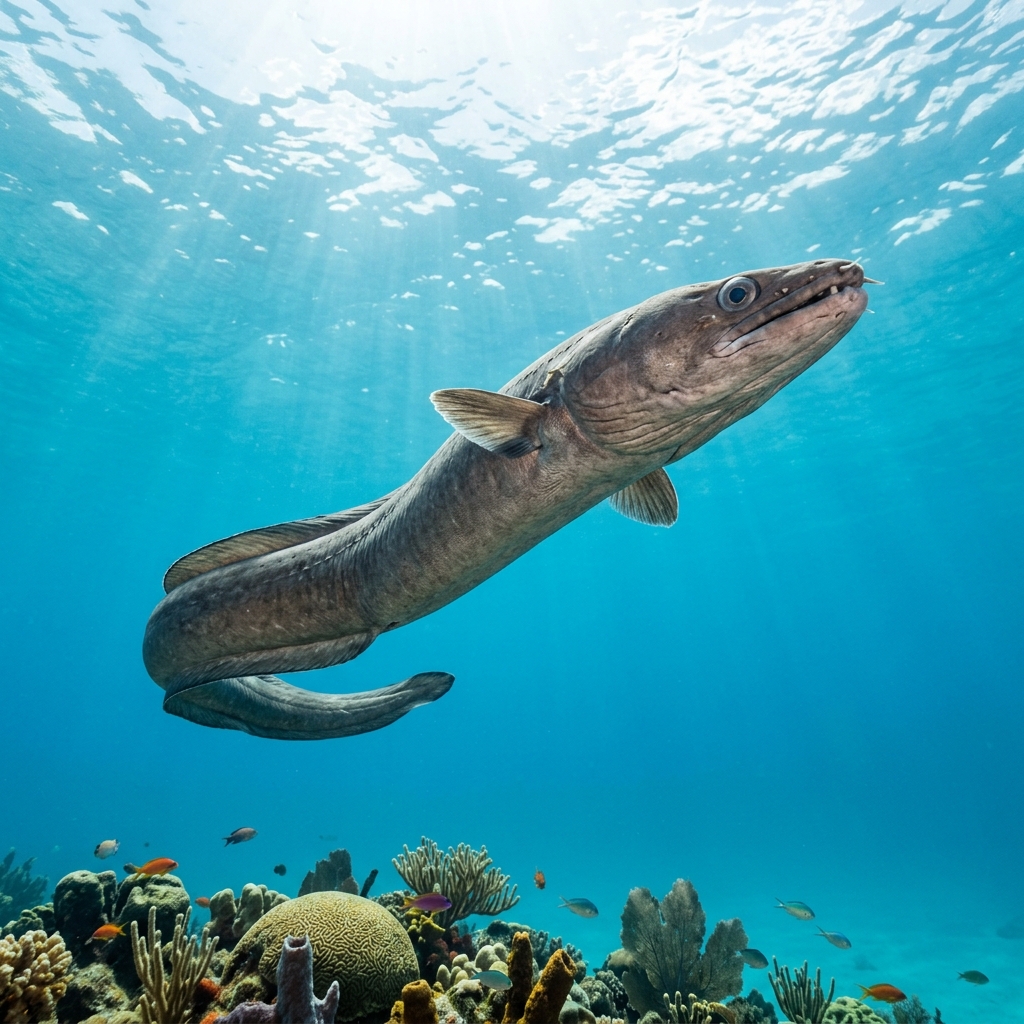
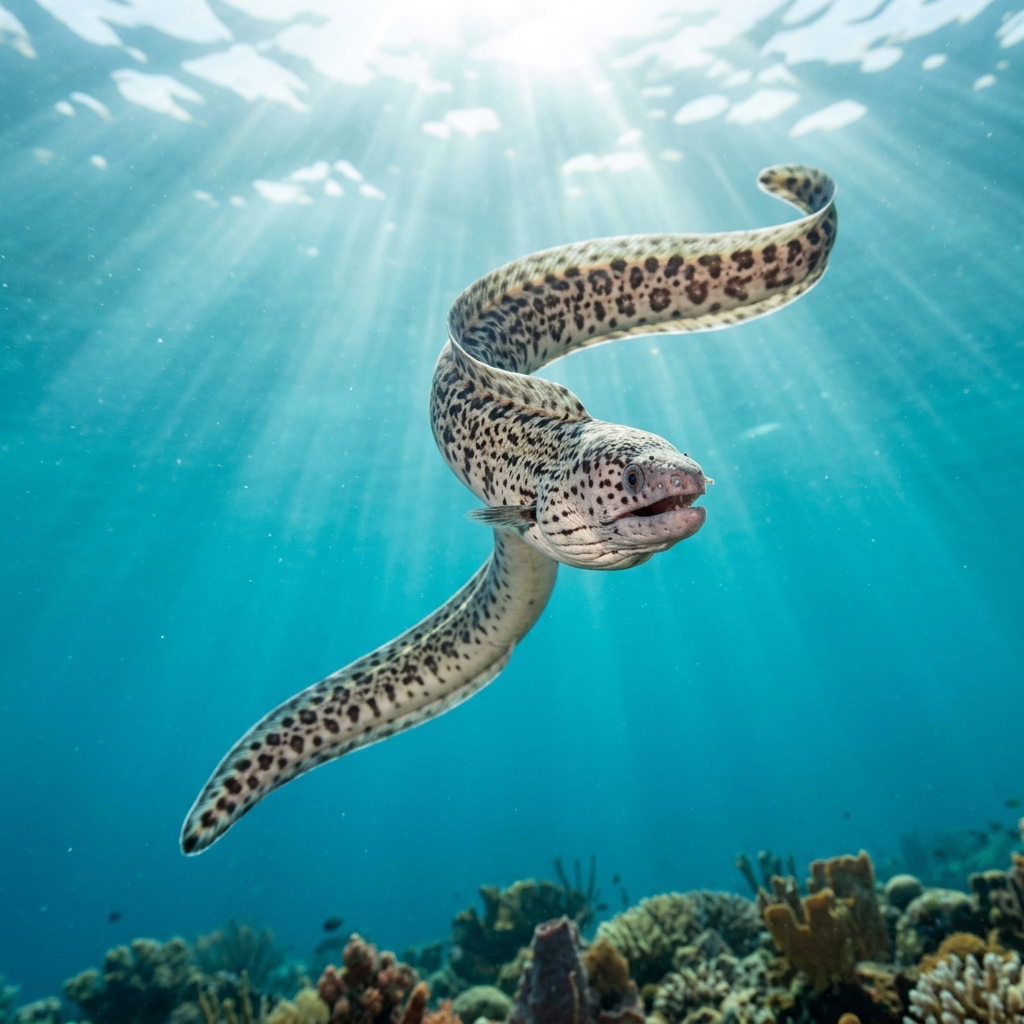
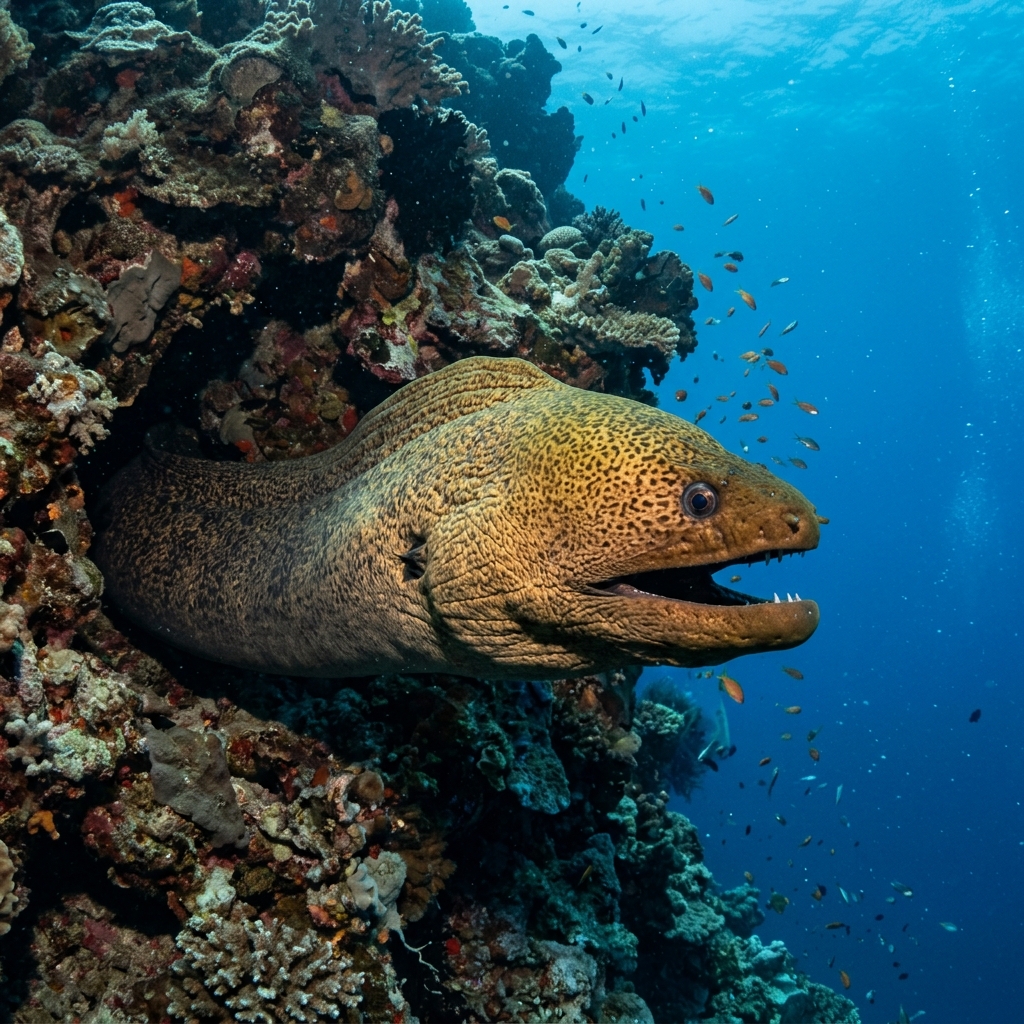
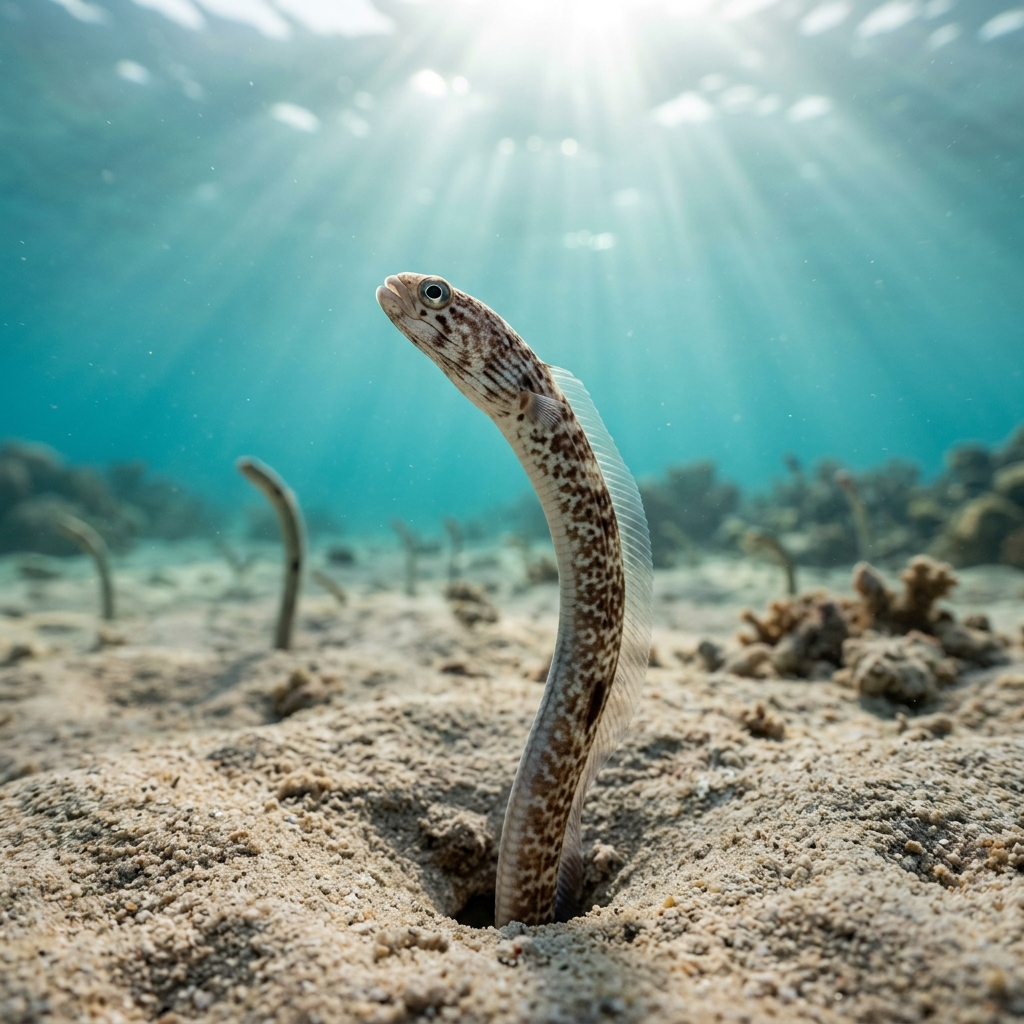
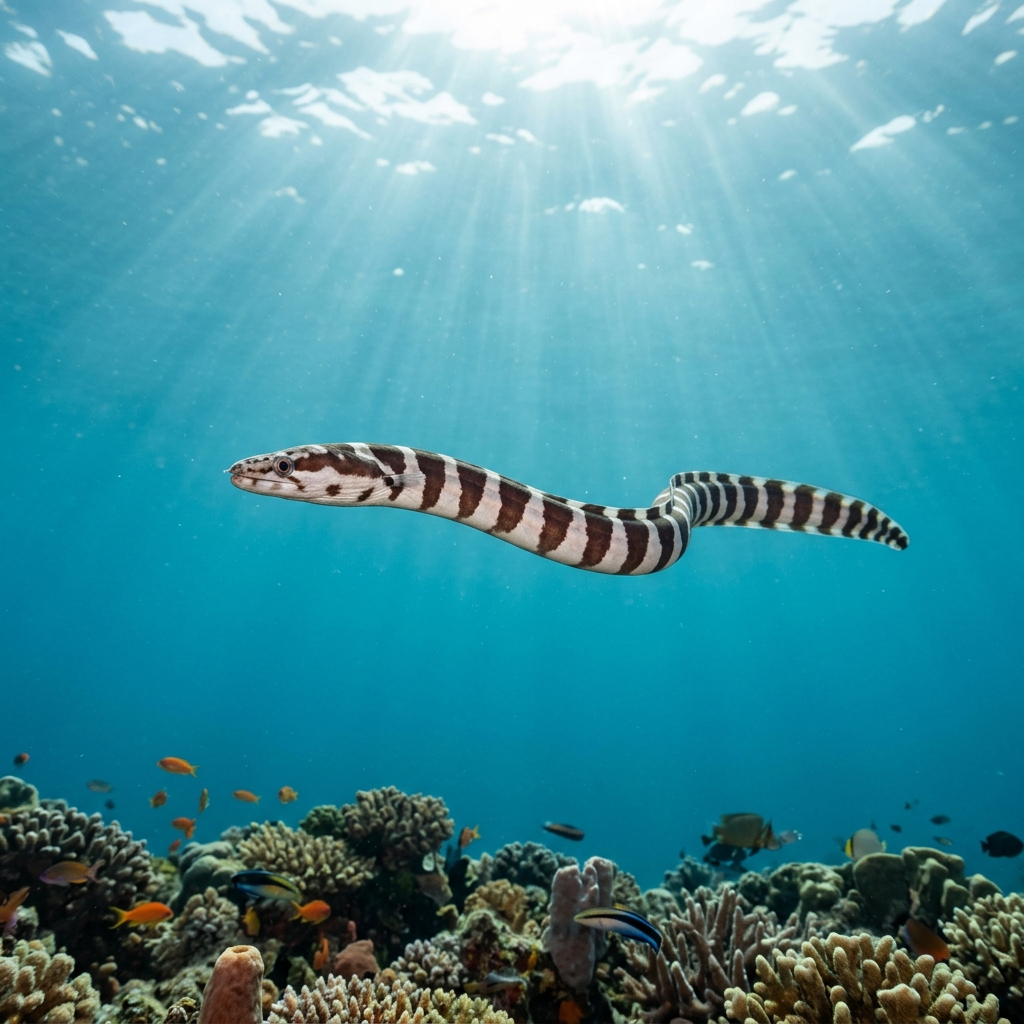
Bold, alternating black-and-white bands covering a long, cylindrical body make this eel look strikingly like a venomous sea snake, an effect that is almost certainly intentional mimicry. The snout is pointed and the body tapers to a narrow tail tip, giving it a smooth, sinuous silhouette with no obvious pectoral fins to key on. At typical reef depths it moves with a slow, wave-like undulation close to or partially buried in sandy substrate, which is usually how divers first notice it.
Divers typically encounter it moving slowly over sandy or rubble patches adjacent to reef, occasionally pausing with the front half of the body raised slightly off the bottom. It tends to ignore divers at close range rather than fleeing, which makes a calm, unhurried approach the most reliable tactic. Sightings are solitary; it is not an animal you find in groups.
Its striking banded pattern is thought to mimic venomous banded sea snakes, giving it a degree of protection from predators even though it is harmless itself, a strategy called Batesian mimicry.
Northern Hemisphere sightings concentrate between January and May, so the late-winter and spring months are the most productive time to look in the Canary Islands and Cape Verde. The observed water-temperature range of roughly 22 to 29 °C covers the cooler season in these eastern Atlantic locations, which aligns with that January-to-May window.
The overwhelming majority of logged sightings come from the eastern Atlantic, with El Hierro and Tenerife in the Canary Islands together making up the single strongest cluster, followed closely by Sal and Santiago in Cape Verde. Outside the Atlantic, the Andaman Islands of India and Bali in Indonesia account for most Indo-Pacific records, with a handful of sightings in Egypt's Red Sea and one logged in Australia.
Mapping where Harlequin Snake-eel is logged…
The best-documented diving for this species is in the Canary Islands, particularly El Hierro and Tenerife, and in Cape Verde, especially around Sal. Smaller populations are recorded in the Andaman Islands, Bali, and Egypt's Red Sea.
Based on logged diver sightings in the northern hemisphere, January through May is the peak window. In the Canary Islands and Cape Verde this coincides with the cooler end of the year, when water temperatures sit in the low-to-mid 20s Celsius.
Look for a long, slender, snake-like body covered in sharply contrasting black-and-white bands from head to tail. It lacks visible paired fins, moves in slow smooth undulations over sand, and is often partially buried. No other common reef fish in its range combines this exact banded pattern with an eel-shaped body.
No. It is not venomous and poses no threat to divers. Its dramatic banded colouration mimics venomous sea snakes, but the animal itself is harmless. A slow, non-threatening approach is all that is needed.
Its black-and-white banding closely resembles that of venomous banded sea snakes, a form of Batesian mimicry where a harmless species gains protection by resembling a dangerous one. Predators that have learned to avoid sea snakes tend to leave it alone as well.
Site and sighting data is aggregated from diver logs, iNaturalist and GBIF. For taxonomy and conservation status:
Garden Eel
2,448 sites