Alphestes afer
A stocky little grouper hiding in Basse-Terre and Les Anses-d'Arlet rubble, best spotted year-round in 26 to 28 C water.
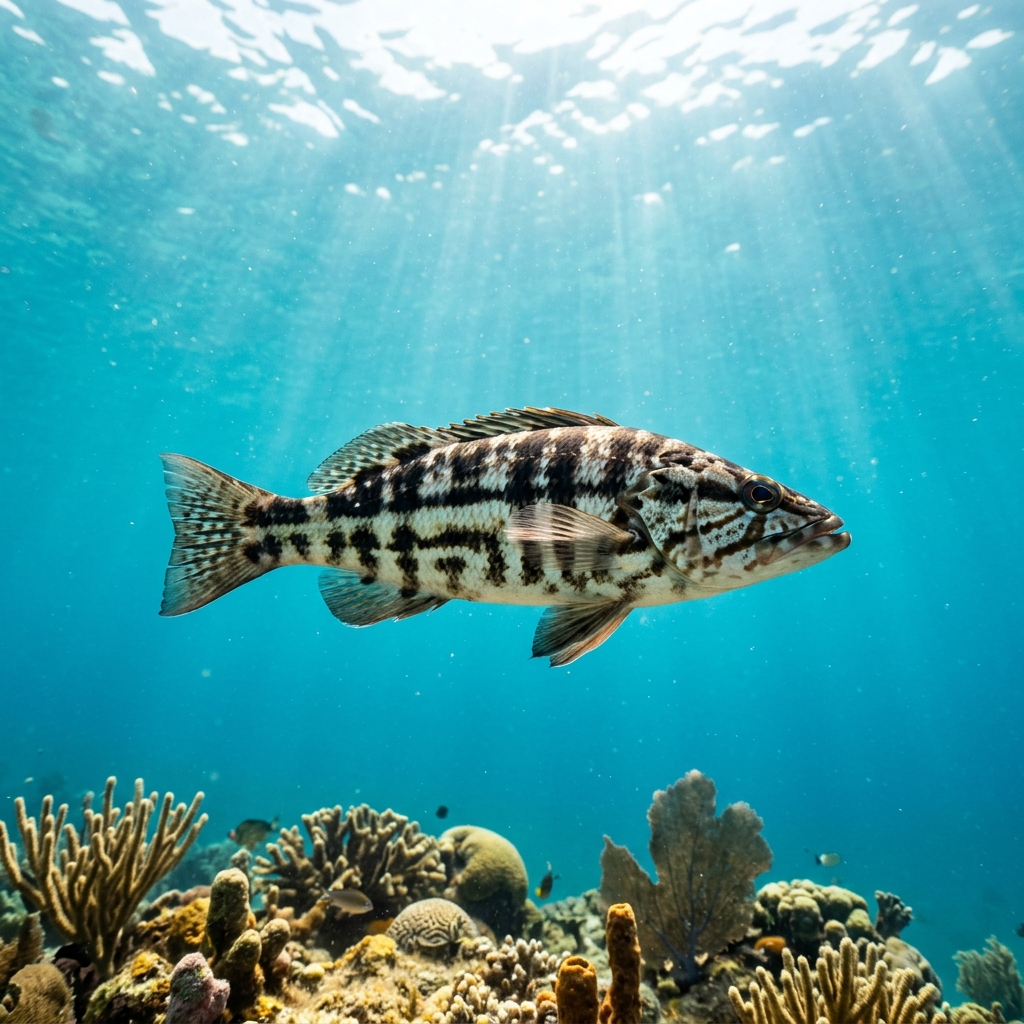
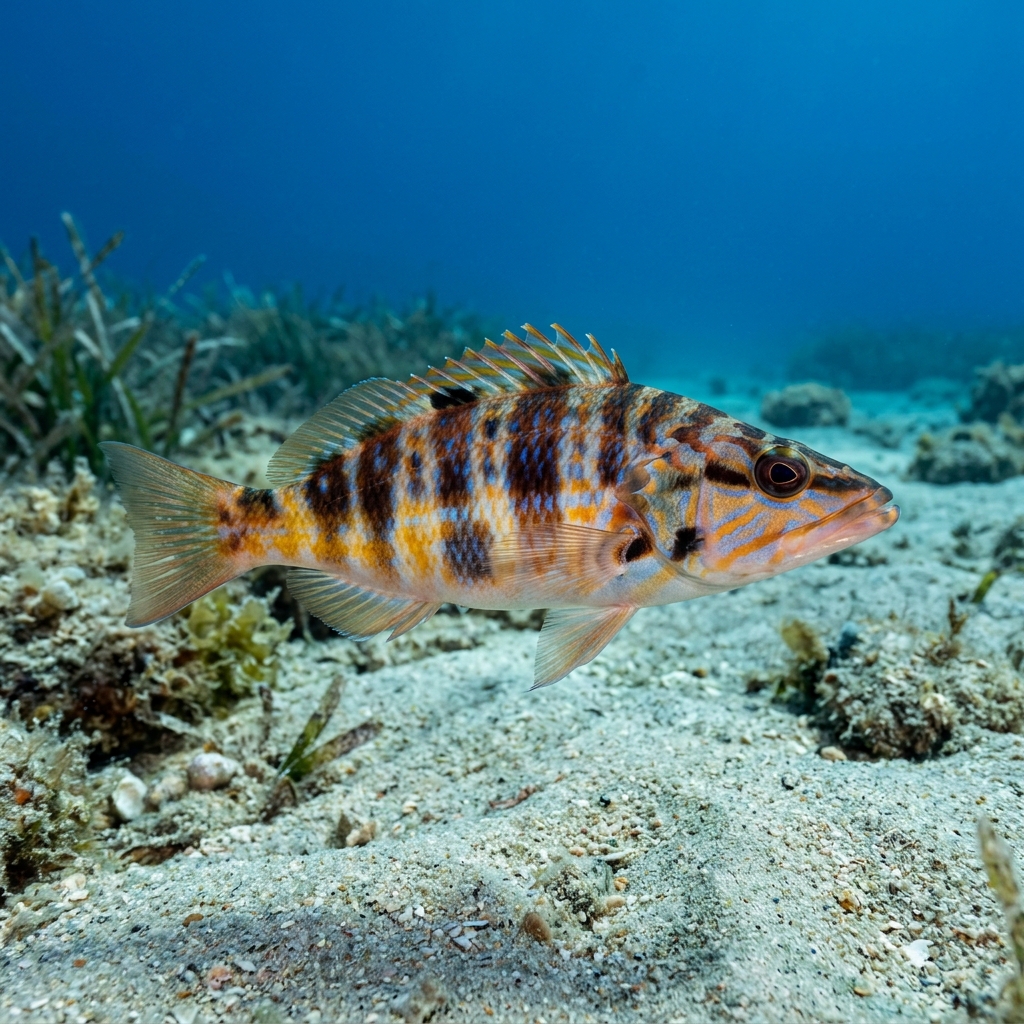
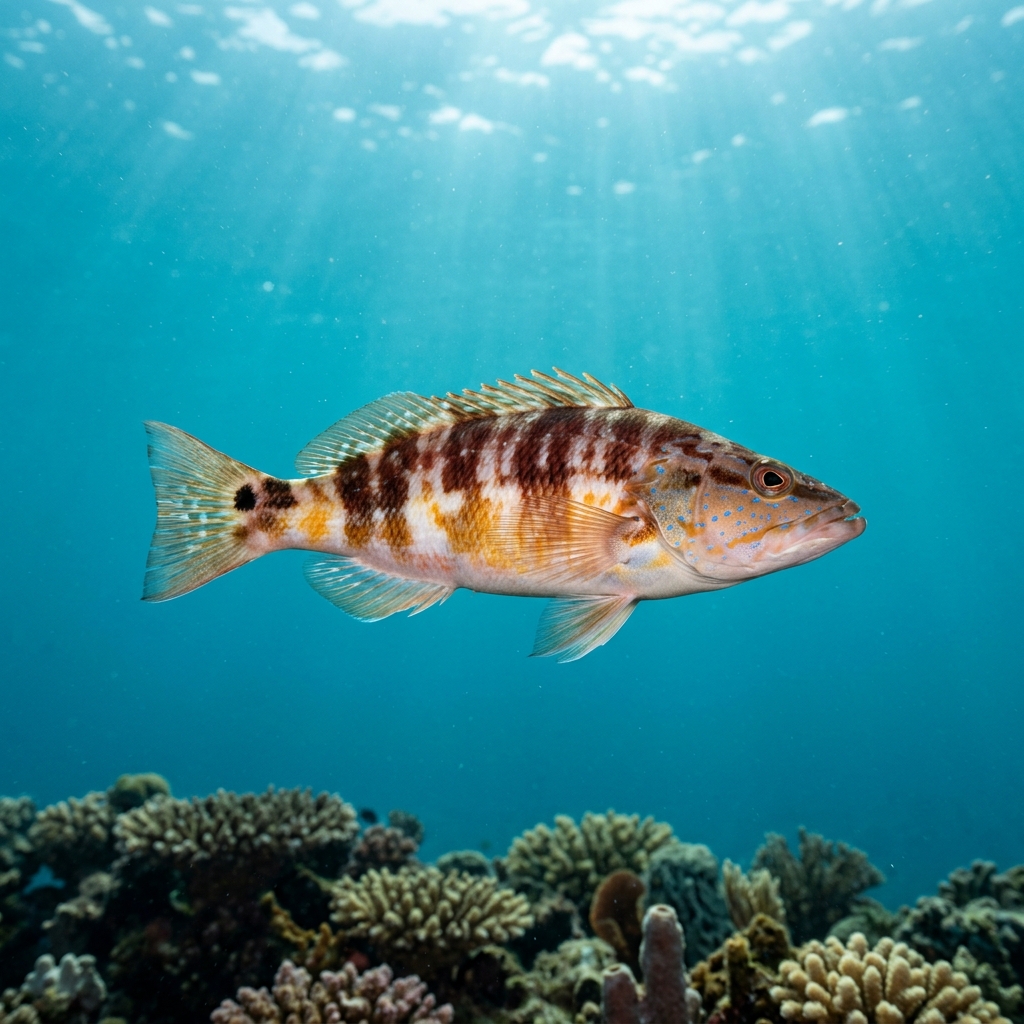
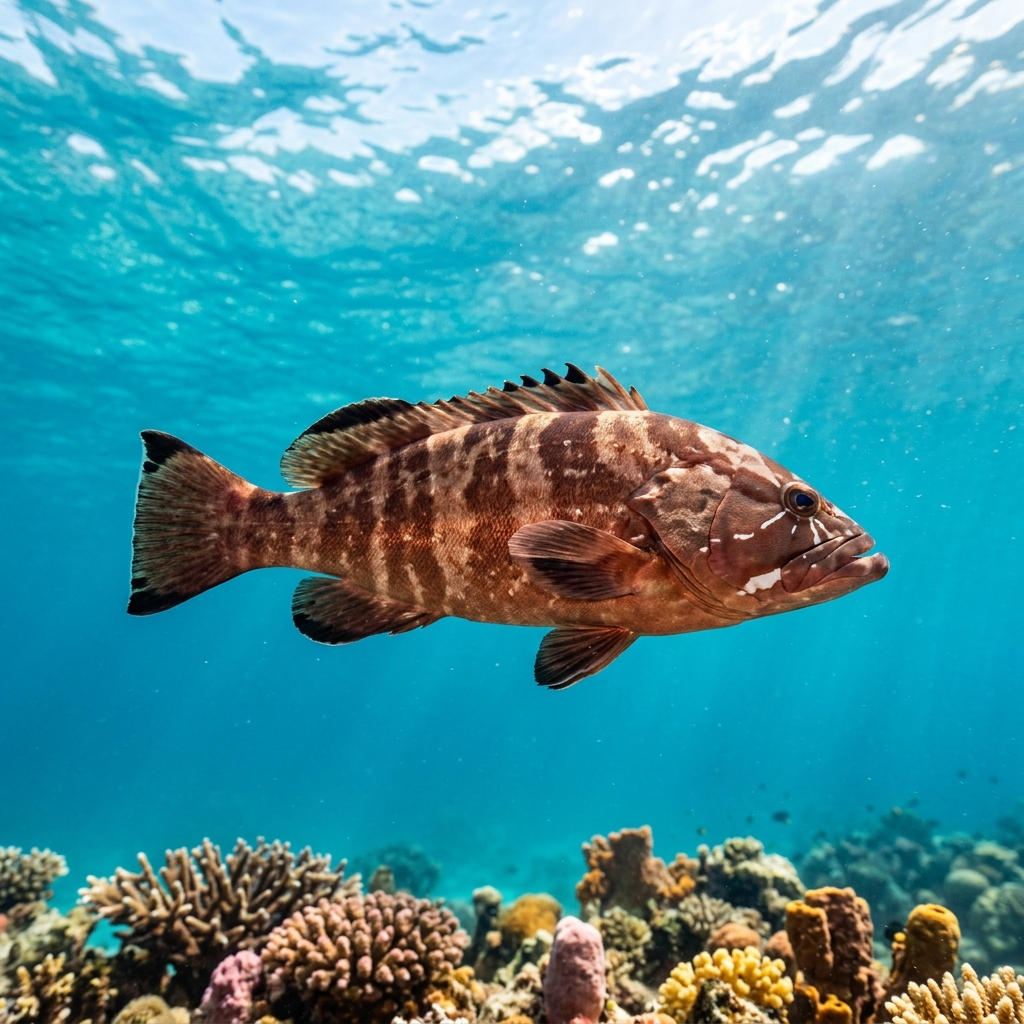
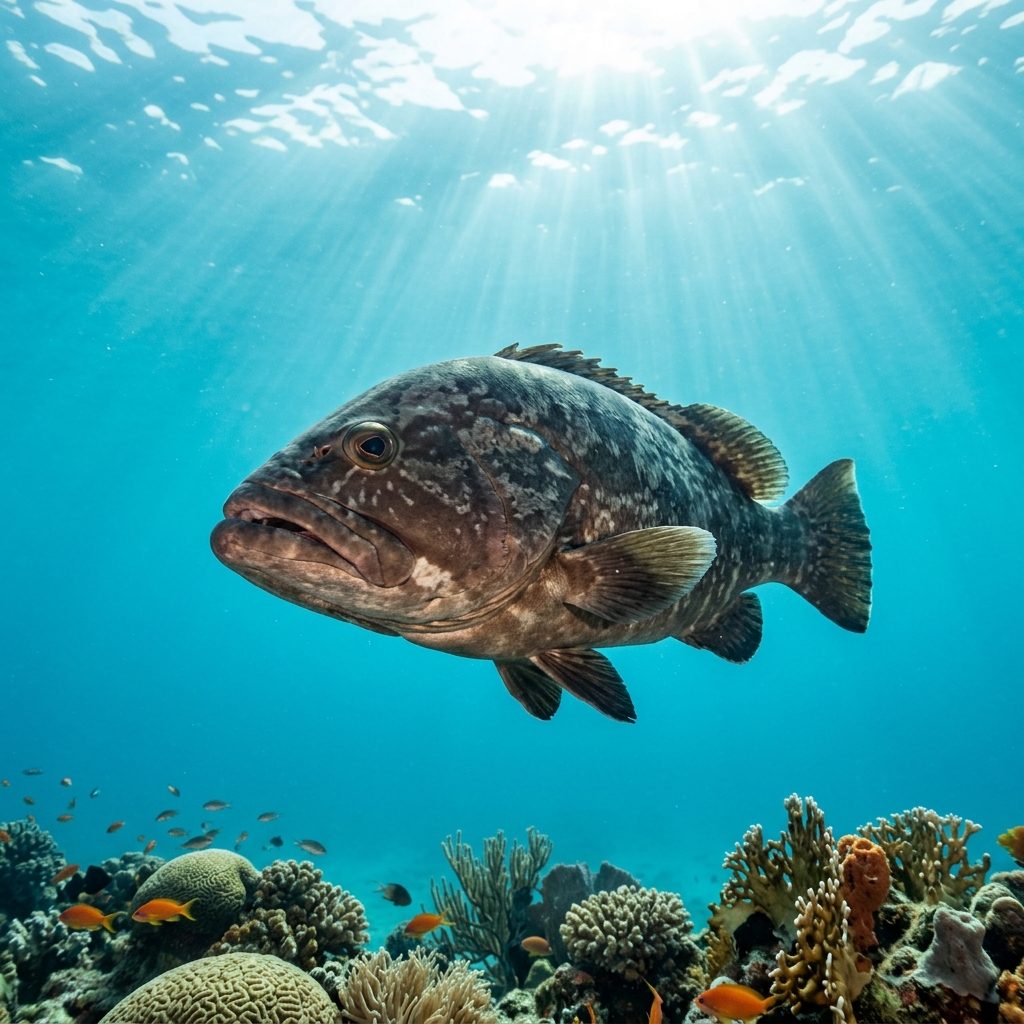
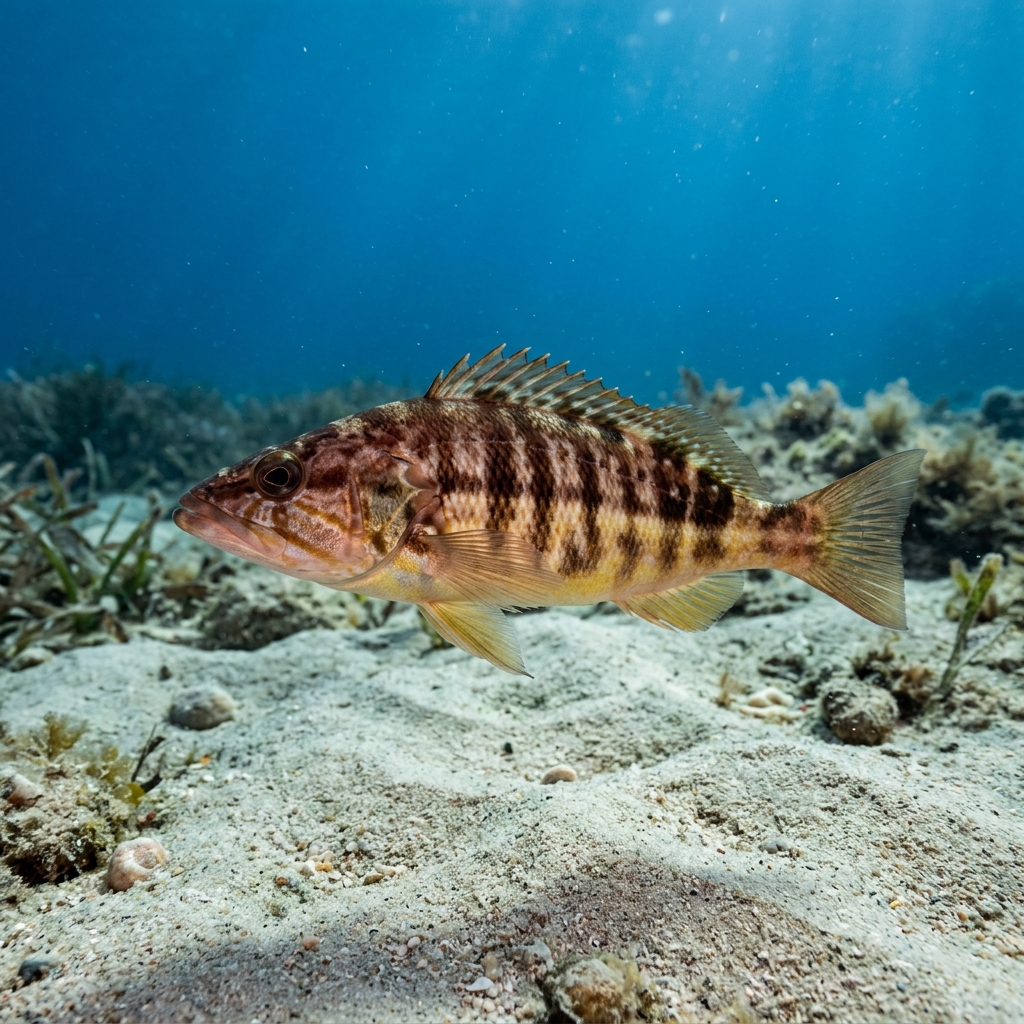
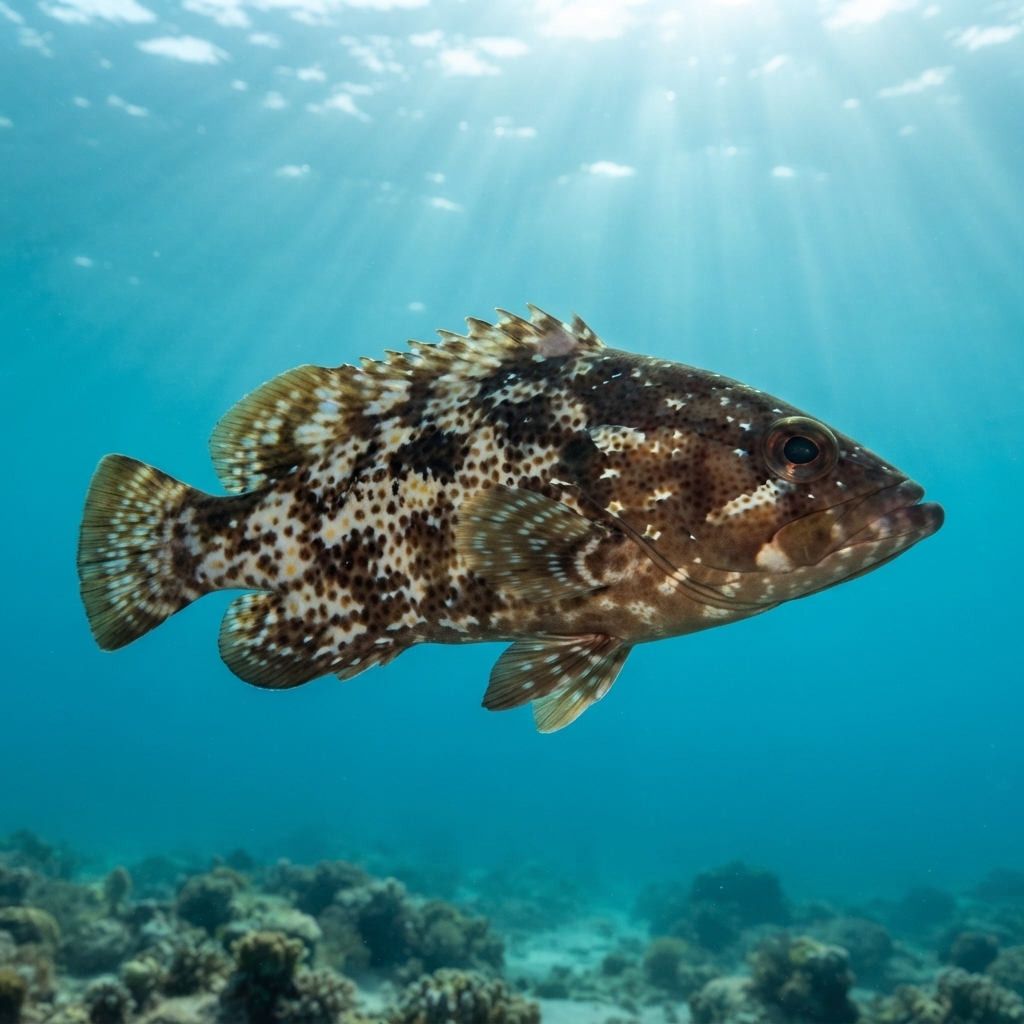
A stocky, small grouper that tops out around 23 cm, mottled in brown, cream and rust in a camouflage pattern that breaks up its outline against rock and rubble. Look for a big head relative to the body, a heavy-set jaw, and dark blotches scattered along the flanks rather than clean stripes or spots. It tends to sit low and still, so divers often notice the eye and gill movement before recognising the shape as a fish at all.
Divers usually find it parked motionless on rubble, ledges or broken coral rather than out swimming the reef face, relying on its blotchy camouflage to disappear against the substrate. It is not shy in the sense of bolting, but it is easy to swim straight past since it simply holds still and waits you out. Logged sightings describe it as uncommon even at the sites where it turns up, so finding one takes a slow, close look at structure rather than mid-water scanning.
Like several small groupers, it is an ambush predator that relies on sit-and-wait camouflage rather than speed, only lunging when prey wanders within range of that oversized jaw.
No clear seasonal pattern shows up in the sighting data, and it sits comfortably in 25.6 to 28.1 C water, so it is a year-round find on Caribbean reefs rather than a seasonal one.
Most reliably logged around Basse-Terre in Guadeloupe and Les Anses-d'Arlet in Martinique, with sightings spread across a handful of sites in both islands. Outside the eastern Caribbean, sightings in the data are sparse, so these two regions are the strongest bet for a dedicated look.
Mapping where Mutton Hamlet is logged…
The strongest sightings come from Basse-Terre in Guadeloupe and Les Anses-d'Arlet in Martinique, where it turns up on a handful of dive sites. It is logged as uncommon even in these areas, so treat any sighting as a bonus rather than a guarantee.
There is no detected season in the sighting data, and it is found in a narrow warm-water range of 25.6 to 28.1 C, so it can turn up on any dive trip to the eastern Caribbean throughout the year.
Look for a small, thickset grouper around 23 cm with a mottled brown and cream pattern that breaks up its outline against rock and rubble. It has a heavy head and jaw for its size and tends to sit motionless rather than swim in the open, so check ledges and broken substrate closely.
They stay small for a grouper, typically reaching around 23 cm, which along with their camouflage is a big reason they are easy to overlook on a dive.
No, they pose no danger to divers. They are a small, camouflaged ambush predator that hunts prey far smaller than a human and has no defensive behaviour toward divers.
It relies on sit-and-wait ambush hunting, staying motionless against rubble or broken coral using its blotchy camouflage rather than actively chasing prey around the reef.
Site and sighting data is aggregated from diver logs, iNaturalist and GBIF. For taxonomy and conservation status:
Blacktip Grouper
2,726 sites