Sparodon durbanensis
A chunky reef bream found off South Africa's Western and Eastern Cape, comfortable from 18 to 28 C and logged year-round.
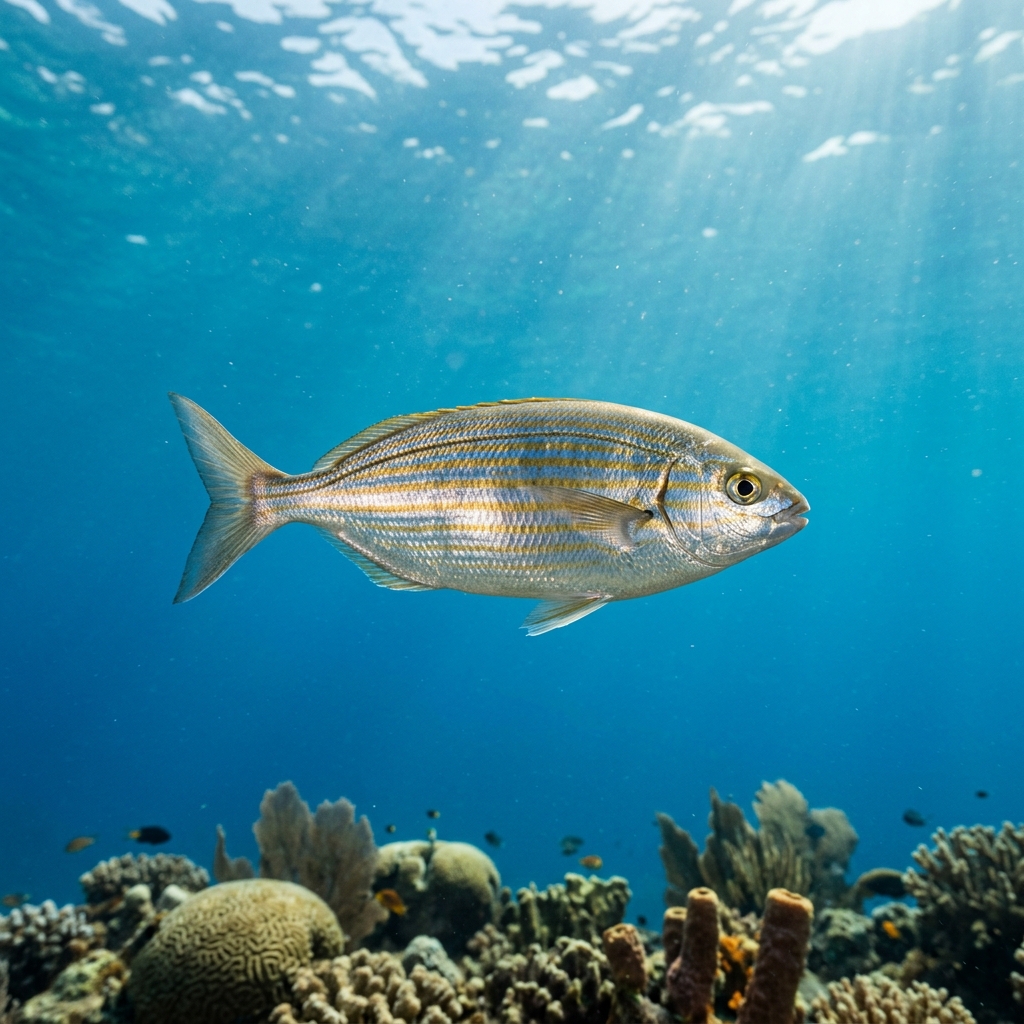
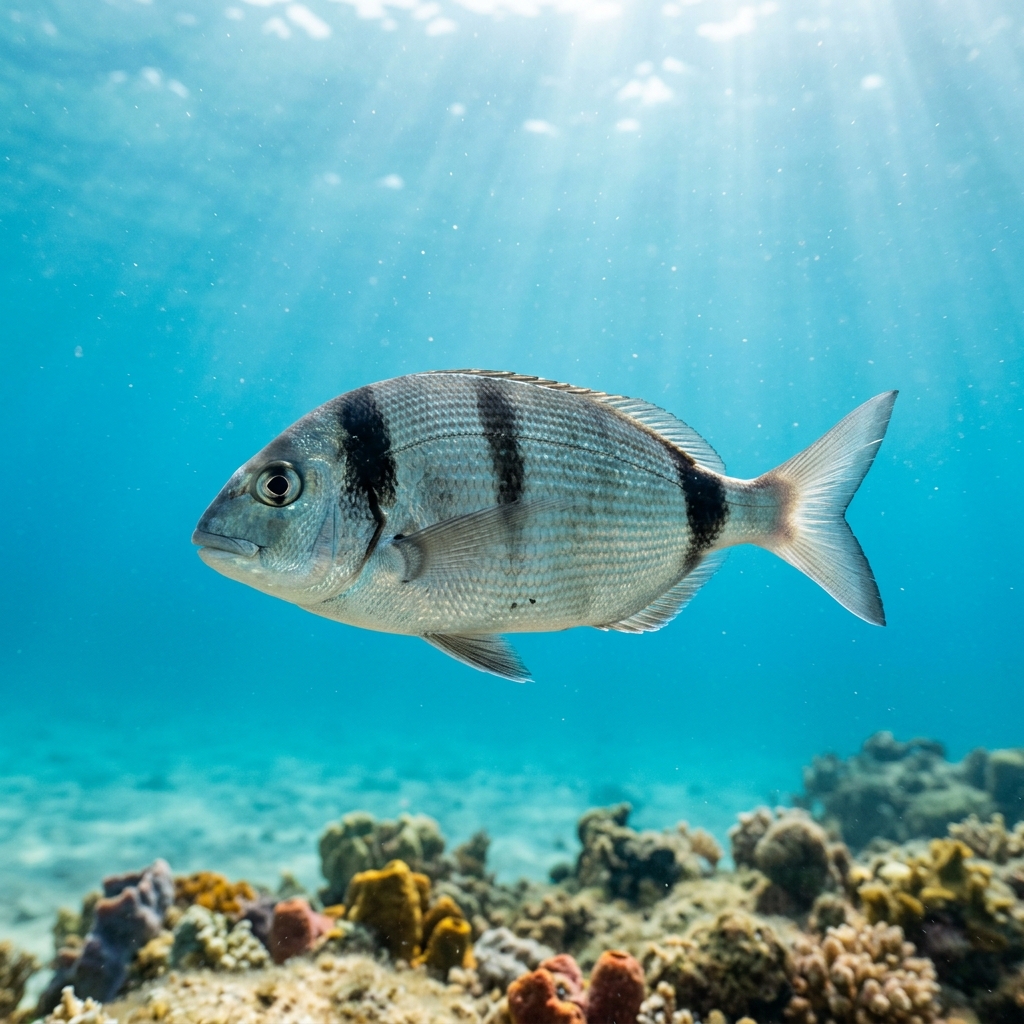
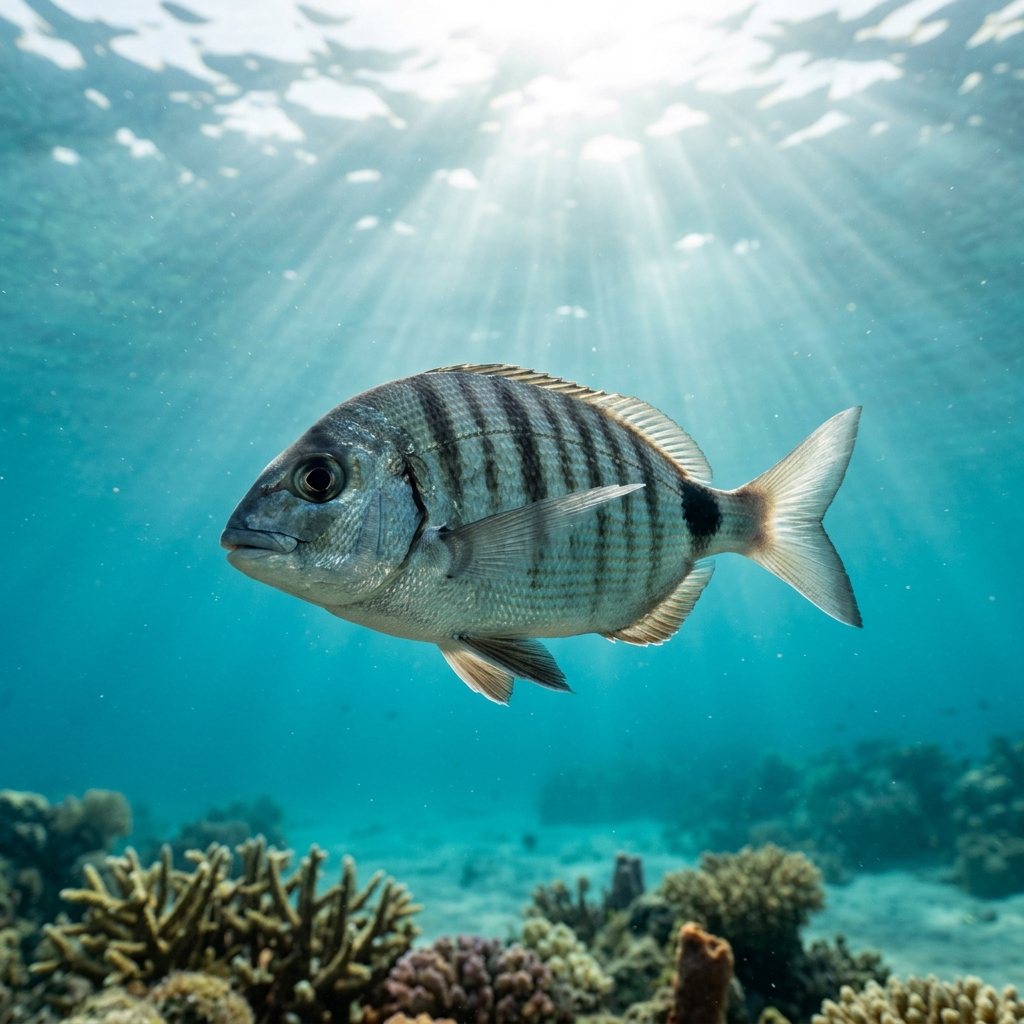
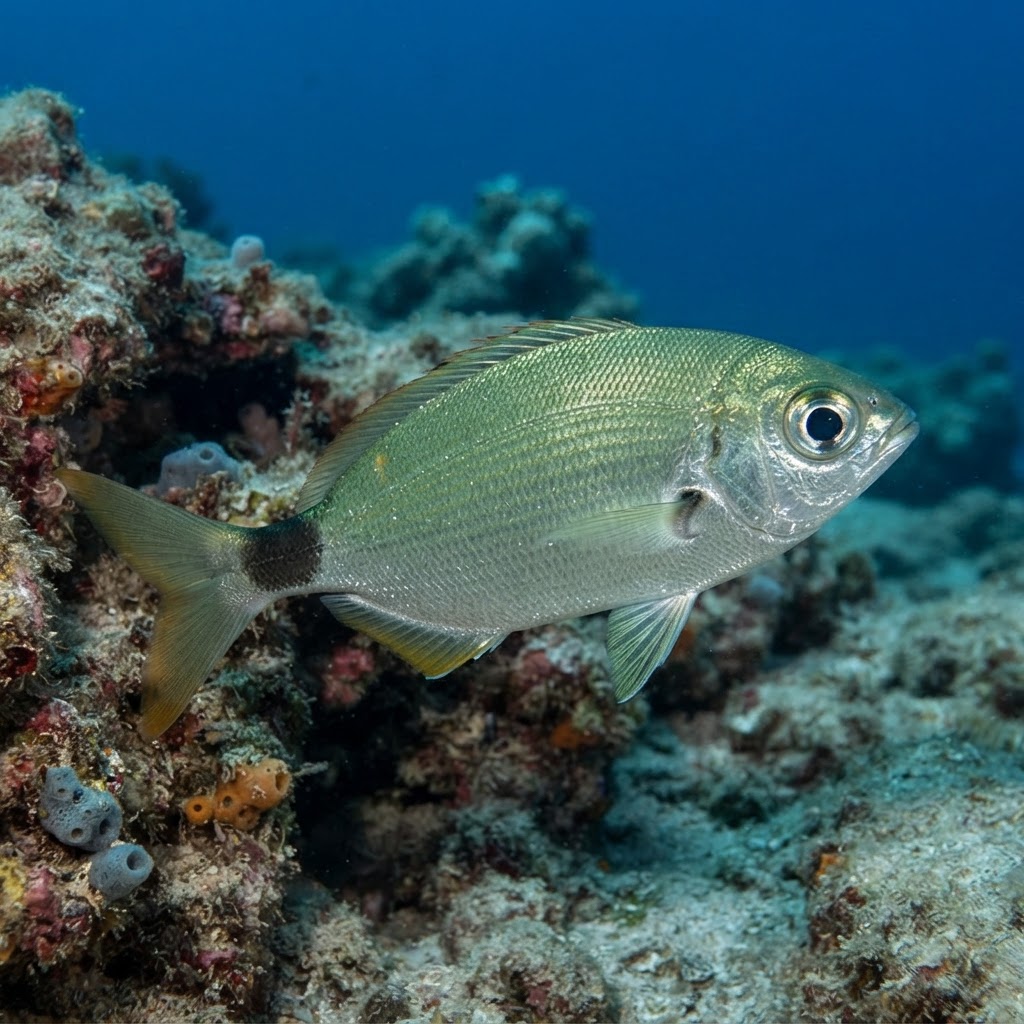
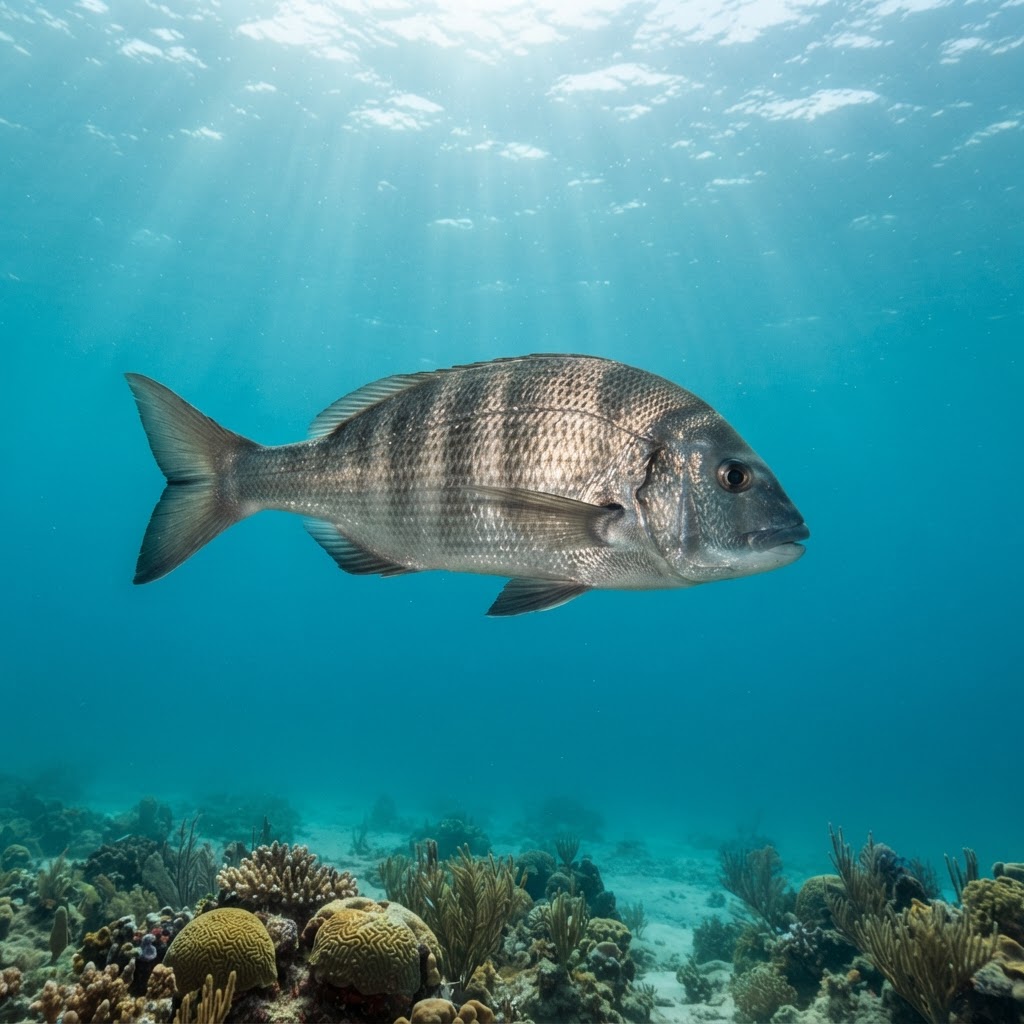
A heavy-bodied bream that can push past 80 cm, with a blunt, almost bulldog-like head and strong jaws built for crunching shellfish off rocks. Colouring runs silvery-grey to bronze, deepening toward the back, with no bold stripes or blotches to catch the eye. The stocky profile and thick lips are the giveaway against slimmer, more patterned sea breams.
Divers typically find it working over rocky reef and mixed ground, using its powerful jaws to crush mussels, barnacles and other hard-shelled prey off the substrate. It tends to keep a cautious distance rather than approach divers, and logged sightings mark it as uncommon rather than a guaranteed encounter, so a sighting feels earned rather than routine.
The jaws and dentition are built specifically for crushing shellfish, which is where both the common name and much of its rocky-reef foraging behaviour come from.
Sightings do not show a strong seasonal pattern, and the recorded temperature range of 18.1 to 28.3 C spans most of the South African diving calendar, so it turns up year-round. Plan your dive around the Western Cape's usual conditions rather than a specific month for this species.
This one is a Southern African speciality: every logged sighting comes from South Africa, concentrated in the Western Cape and, to a lesser extent, the Eastern Cape. If you are diving reef and rocky sites along that coastline, this is one of the resident sea breams to watch for rather than a species you would seek out elsewhere.
Mapping where Musselcracker Seabream is logged…
It is essentially a South African species for divers, most reliably logged along the Western Cape with additional sightings in the Eastern Cape. Outside South African waters it has not turned up in diver records.
There is no clear seasonal peak in the sighting data, and it tolerates a wide temperature range from about 18 to 28 C, so it can be encountered on Western Cape dives across the year.
Look for a large, heavy-bodied bream with a blunt head, thick crushing jaws and plain silvery-grey to bronze colouring rather than bold stripes or spots. Its stocky build over rocky reef helps separate it from slimmer sea bream species.
They typically reach around 84 cm, making them one of the larger sea breams a diver is likely to encounter on South African reefs.
Its name and heavy jaw structure come from a diet of hard-shelled prey like mussels and barnacles, which it crushes directly off rocky substrate.
No, they are not considered dangerous to divers and tend to keep their distance rather than approach.
Site and sighting data is aggregated from diver logs, iNaturalist and GBIF. For taxonomy and conservation status:
Saddled Bream
3,846 sites