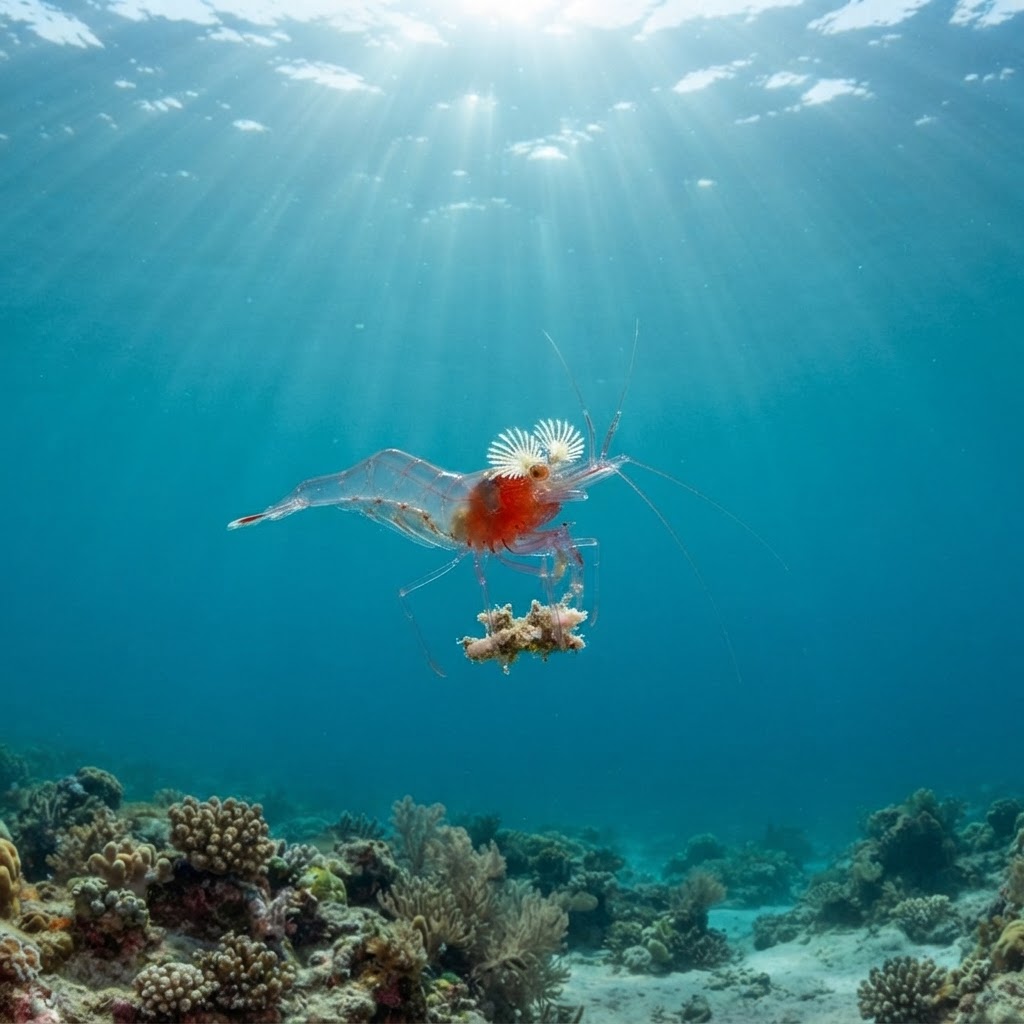
Cuapetes kororensis
Small reef shrimp logged across the Visayas, Sabah, and Palau's Koror waters, usually tucked into mushroom corals at 9-12m.
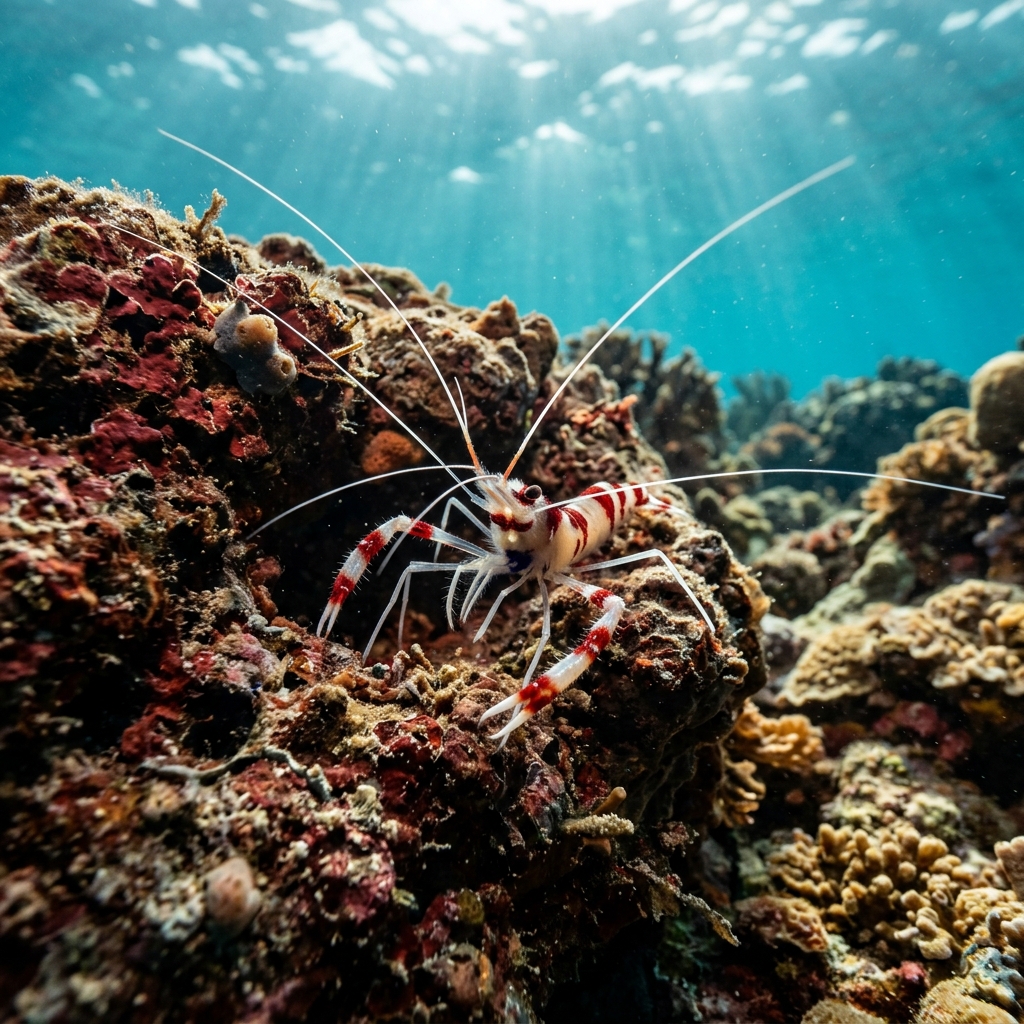
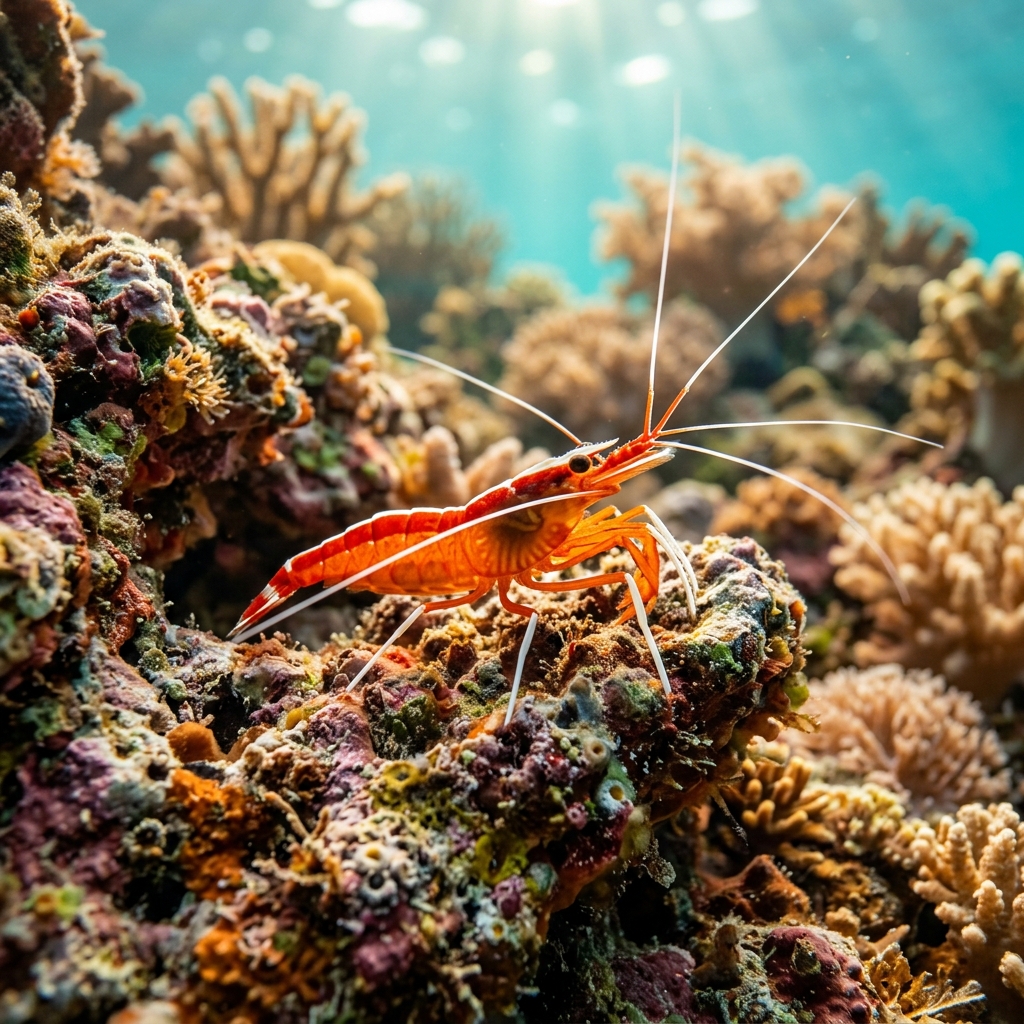
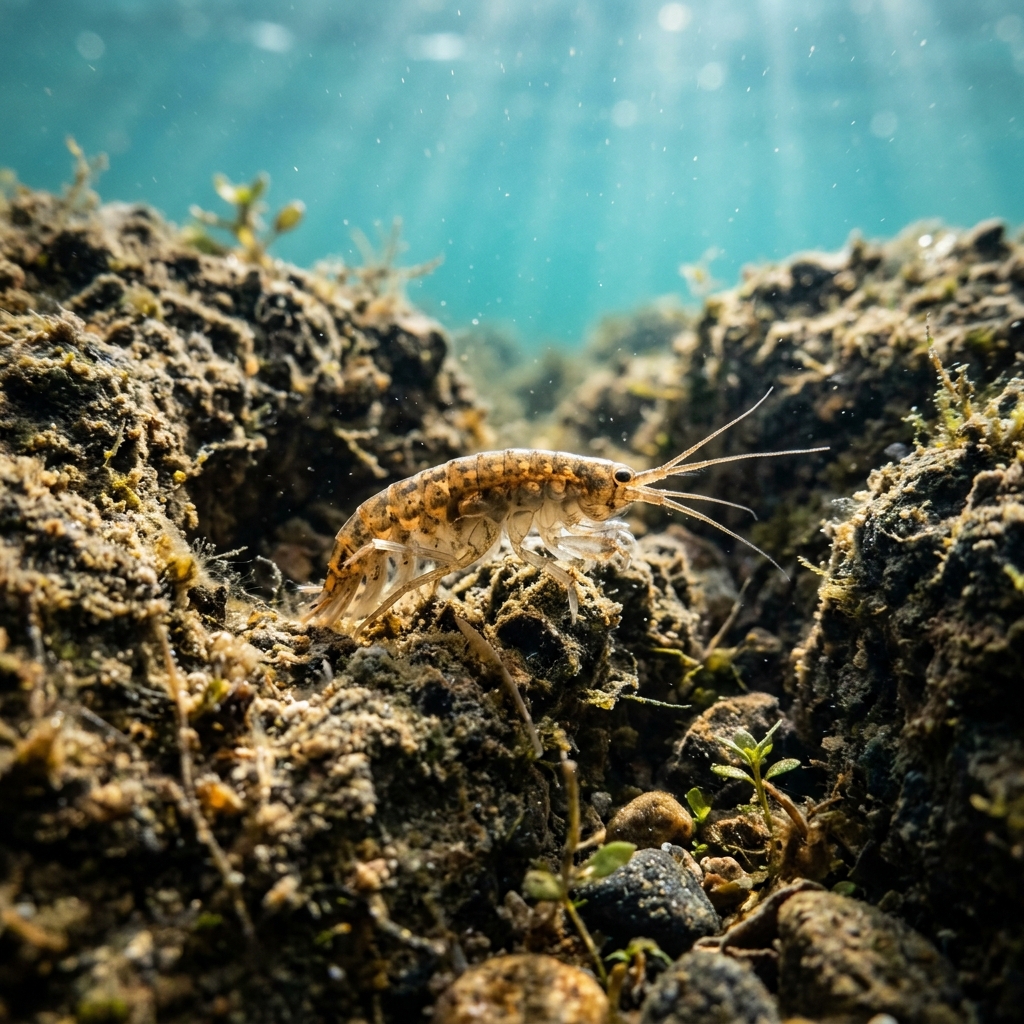
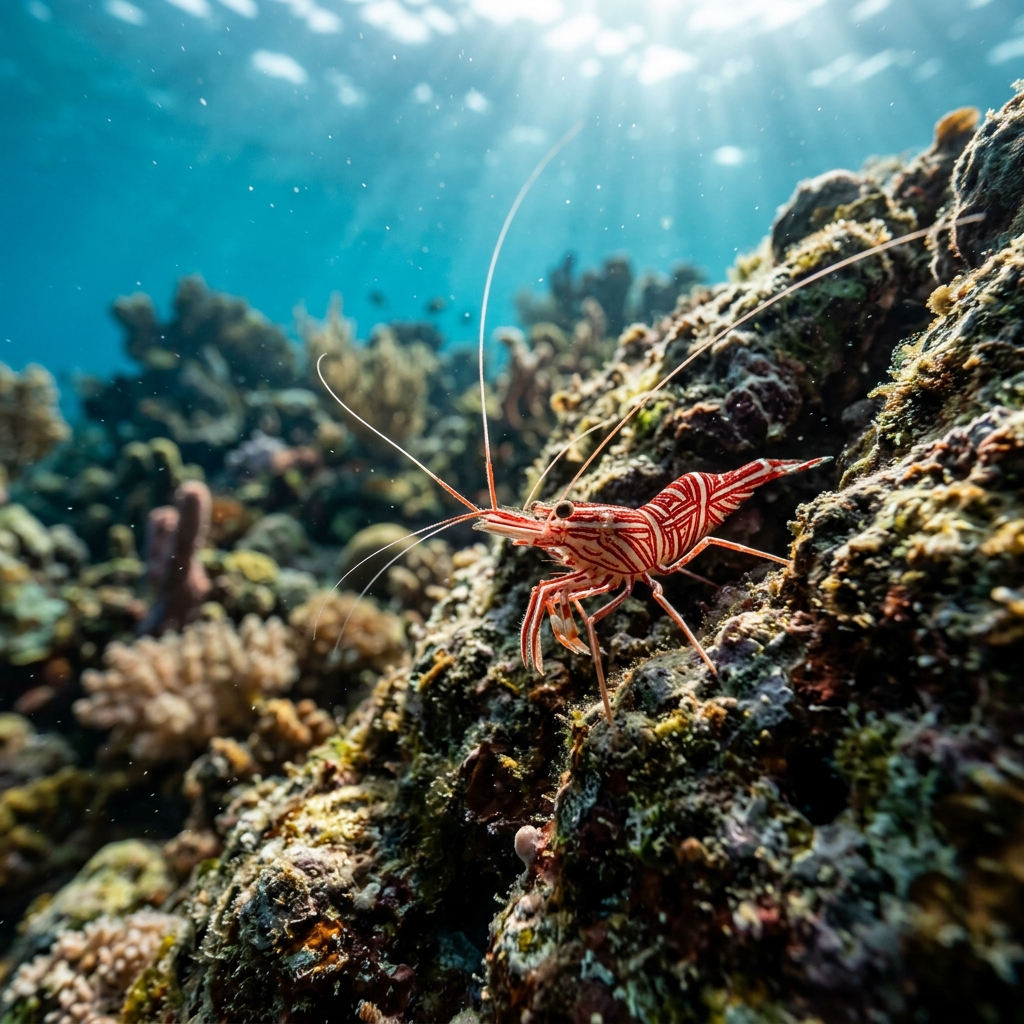
A small, slender shrimp with a mostly translucent body that takes on a faint patterned look depending on the light and the coral it's sitting on, making it easy to overlook against mushroom coral tissue. It has the typical elongated palaemonid shape with long, thin antennae and a slightly humped back near the head. There's no bold colour flash to key on here, so divers usually spot it by first finding a mushroom coral and then scanning its surface closely rather than the shrimp itself standing out.
Divers find it sitting still on or near its host mushroom coral, usually not doing much beyond holding position and occasionally picking at the coral surface. It doesn't dart off when a light passes over it, but its small size and translucent body mean most divers swim right past without noticing until they slow down and look closely at individual corals. Best found on a dedicated macro-style dive rather than while cruising a reef.
Living directly on a single mushroom coral host ties this shrimp's entire daily routine to that one animal, so finding it is really a matter of learning to spot and check mushroom corals rather than searching open reef.
There's no detected seasonal pattern in the sightings, and the observed temperature range of 25.6 to 31.6°C sits comfortably within year-round tropical reef conditions, so any month works as well as another. Plan around good visibility and calm conditions for the close-focus searching this species demands rather than around a season.
Most consistently logged in the Philippines, especially across the Visayas, with strong showings in Sabah, Malaysia and around Koror & Malakal in Palau. Smaller numbers turn up in Indonesia, including Sulawesi, Raja Ampat, Maluku, and Bali, so it's a realistic find anywhere in the Coral Triangle if you're checking mushroom corals at the right depth.
Mapping where Mushroom Coral Shrimp is logged…
The Visayas in the Philippines is the most reliable region, with good numbers also logged in Sabah, Malaysia and around Koror & Malakal in Palau. Smaller populations show up across Indonesia, including Sulawesi and Raja Ampat.
There's no clear season in the sighting data, and the warm 25.6 to 31.6°C water it's found in holds steady year-round across its range. Any month is a reasonable time to look.
Look for a small, mostly translucent shrimp sitting still on the surface of a mushroom coral rather than out on open reef. It has long thin antennae and lacks any bold colour pattern, so patient close-up scanning of mushroom corals is the best identification method.
Exact size figures aren't well documented for this species, but like most palaemonid reef shrimps it stays small, generally just a few centimetres long, easy to miss without close inspection.
No, they pose no threat to divers. They're tiny, host-associated shrimp with no venom or defensive behaviour that would concern a diver.
It lives closely associated with mushroom corals, spending its time perched directly on a single coral host rather than roaming the reef. That tight host relationship is why divers find it by searching individual corals rather than open reef scanning.
Site and sighting data is aggregated from diver logs, iNaturalist and GBIF. For taxonomy and conservation status:
Rockpool Prawn
2,179 sites