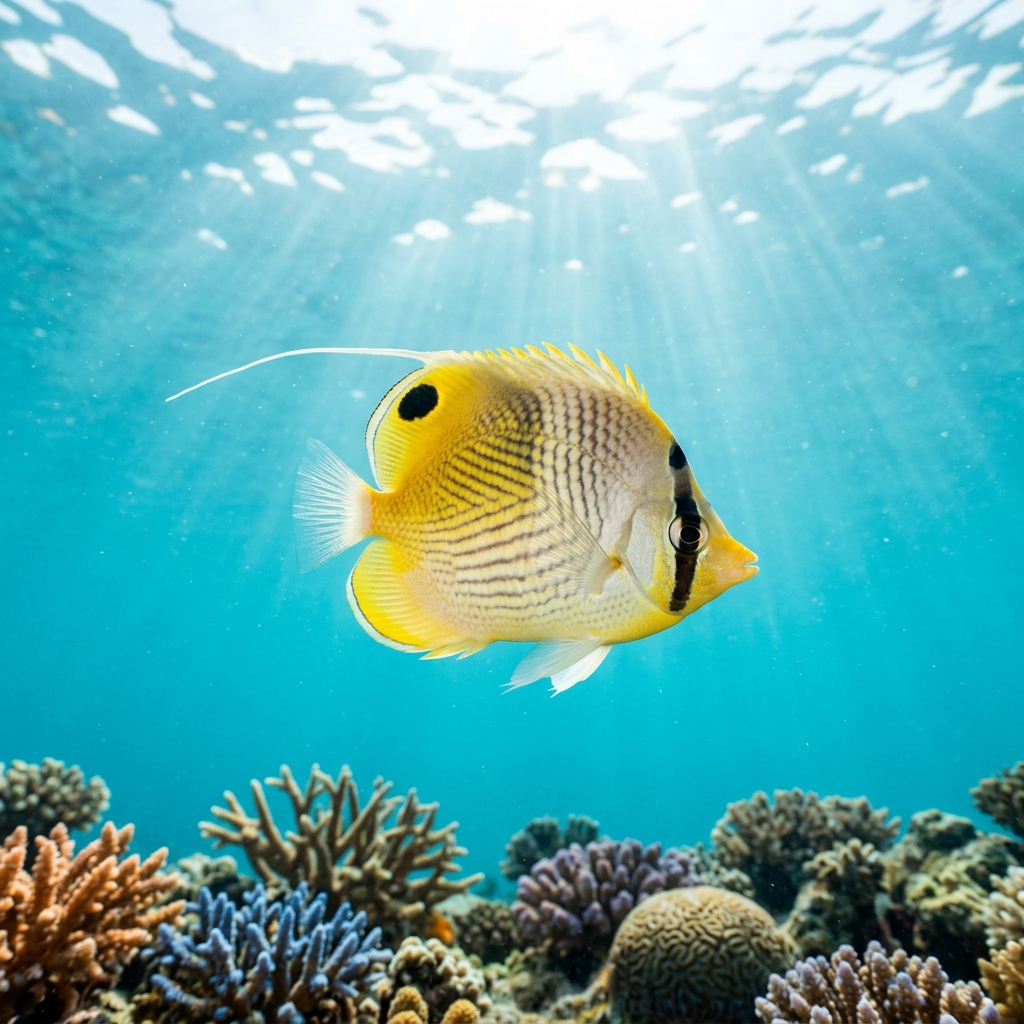
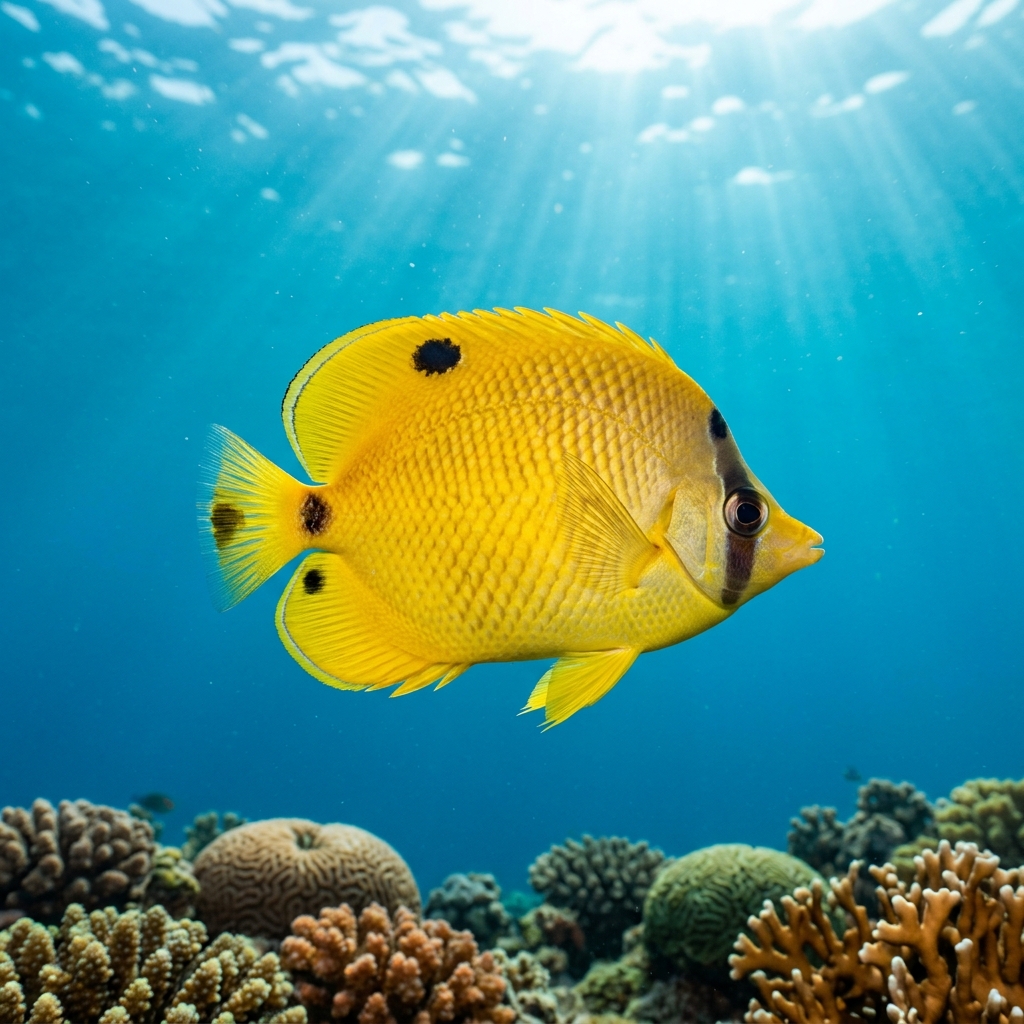
Chaetodon multicinctus
Endemic to Hawaii and logged at reef sites in 24-27C water year-round, look for its striped, arrow-marked face on lava reefs.
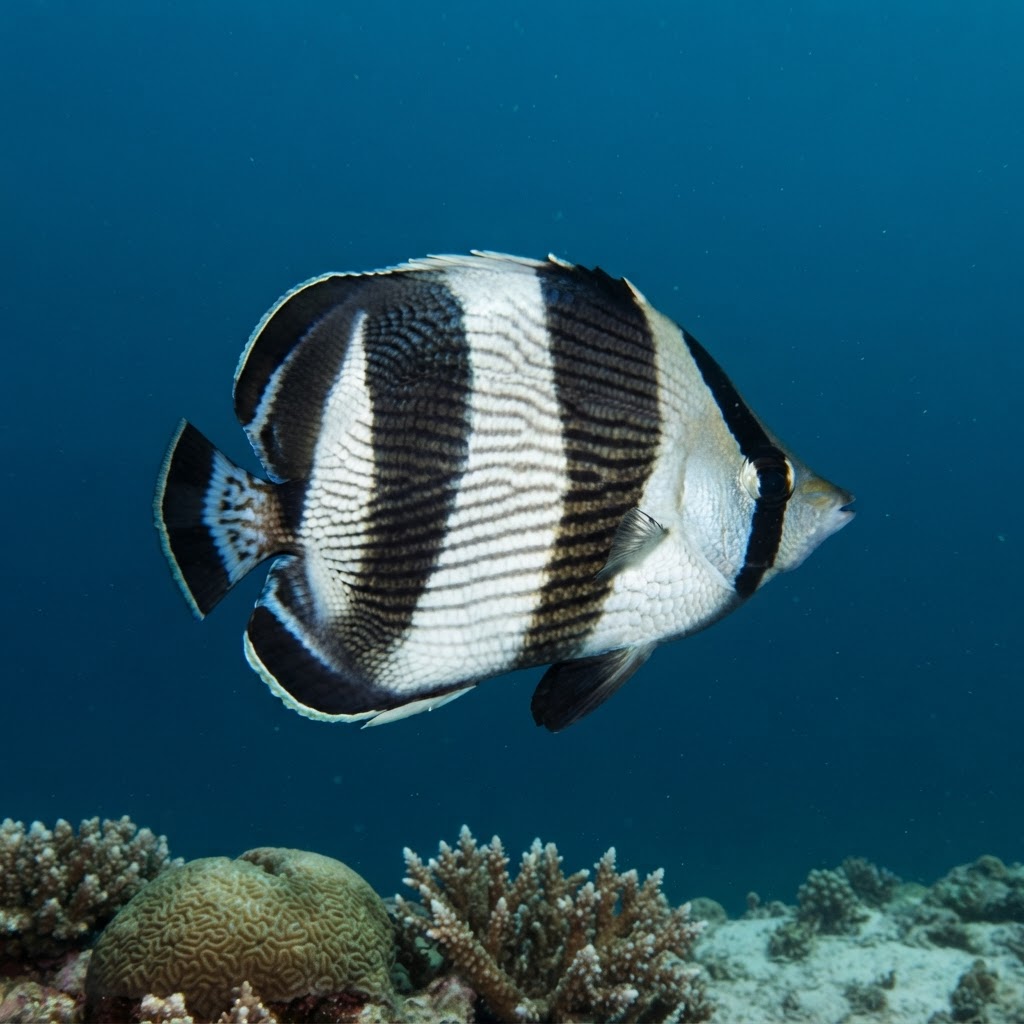
Small, disc-shaped butterflyfish about 8 cm long with a pale body crossed by several narrow black bars running down the flanks. The head carries a dark band through the eye plus a second dark mark near the gill cover that reads as a false eye, a combination that helps separate it from plainer-headed relatives. A black-edged tail and the tightly stacked body bars are the two things to lock onto at a glance underwater.
Divers most often find it picking at coral polyps and algae on hard reef structure, usually solo or in a loose pair rather than in the open. It tends to stay close to cover and moves off at a modest distance rather than bolting, so a slow approach along the reef face usually gets you a good look before it slips behind a coral head.
Pairs of this species are thought to be monogamous and will hold the same patch of reef together for extended periods, which is part of why divers who find one often find a matched partner nearby.
Sightings sit in the 24 to 27C range with no detected seasonal pattern, so it is present on Hawaiian reefs year-round rather than tied to a particular month.
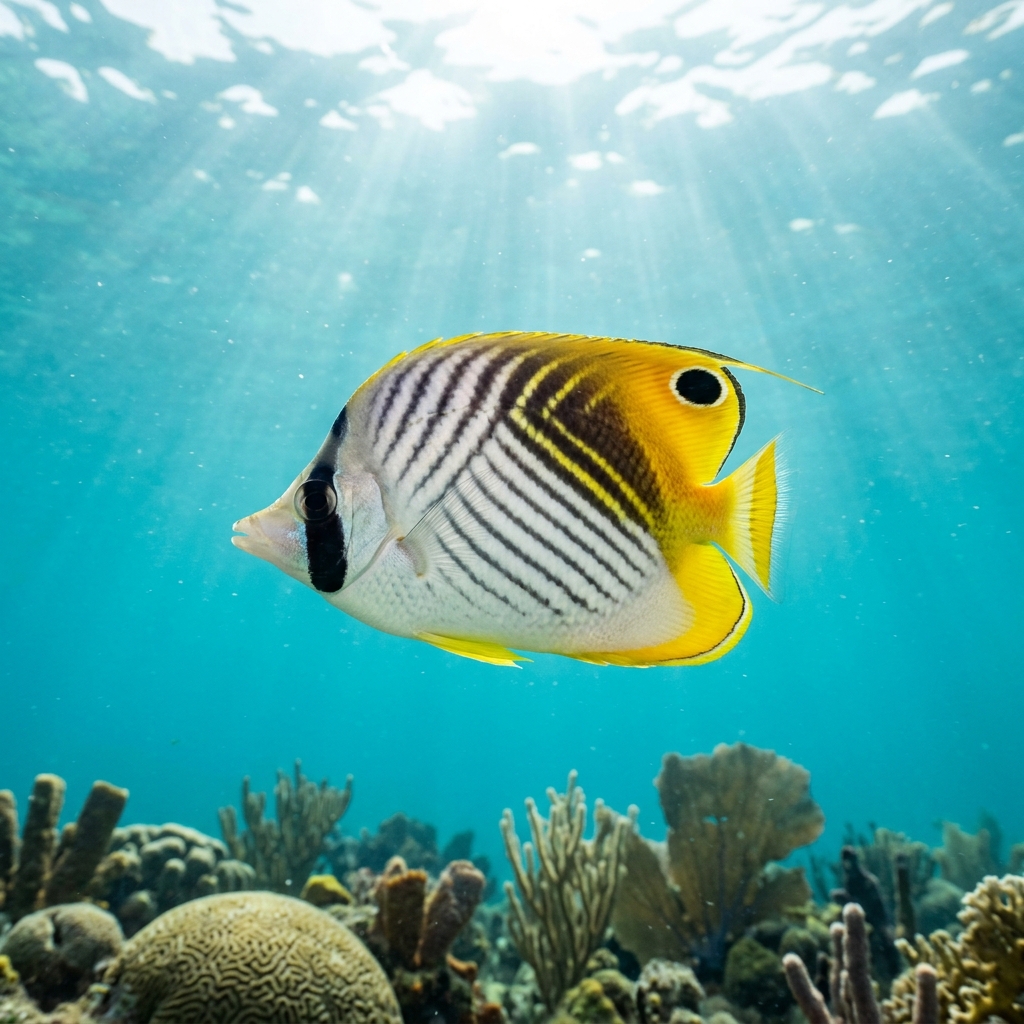
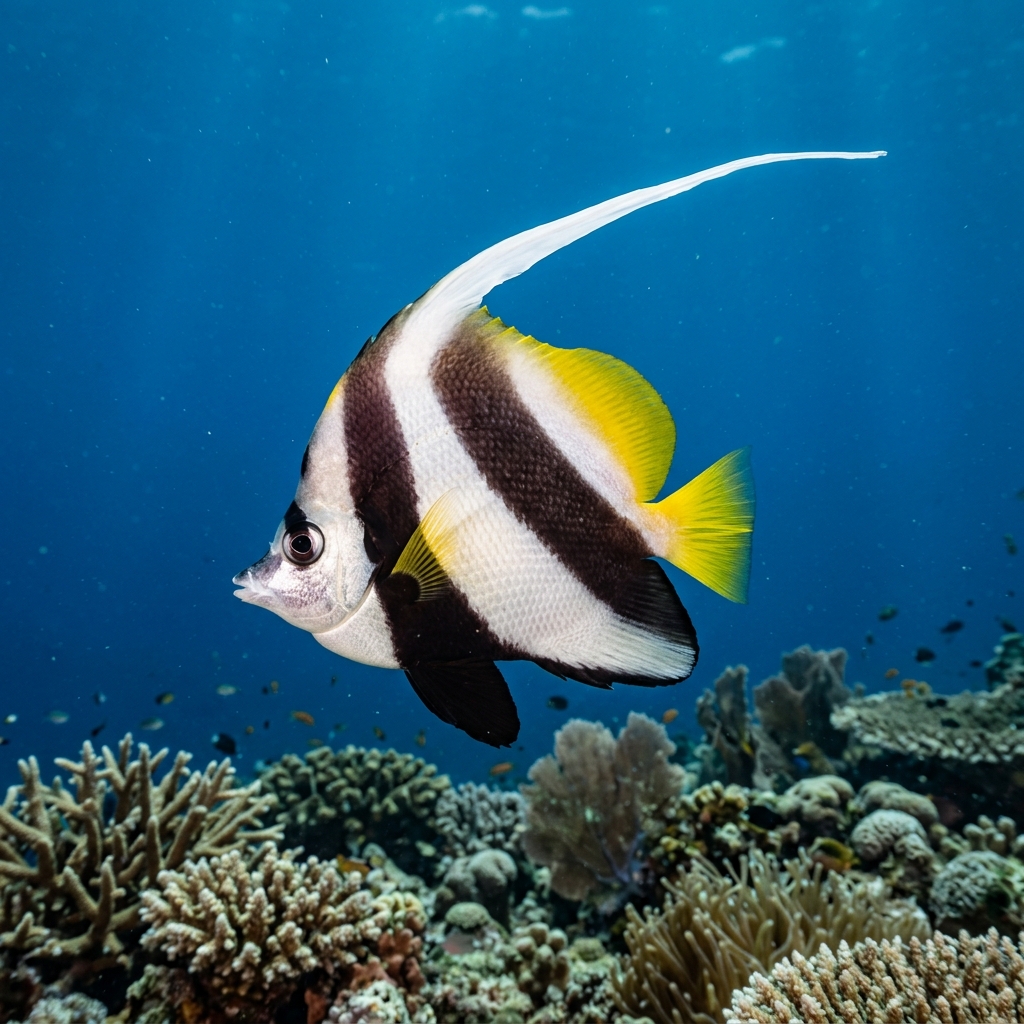
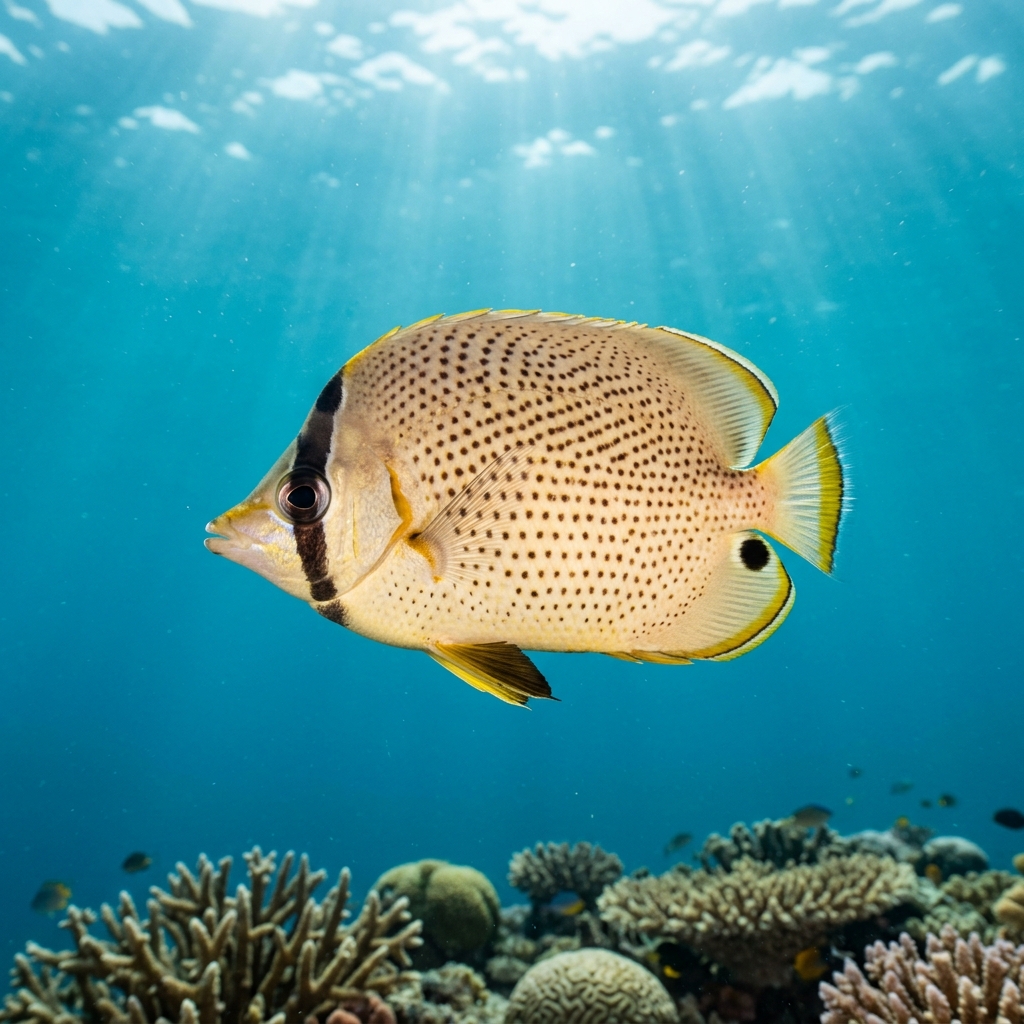
Reef neighbours a diver could mistake it for. Use the identification notes above to tell them apart.
This one is a Hawaii specialty: virtually every logged sighting comes from Hawaiian reef sites, making it one of the more reliable butterflyfish to target on a Hawaii trip specifically. It has not built up a real record elsewhere, so if you want to tick this species, Hawaii is the dive.
Mapping where Multiband Butterflyfish is logged…
Almost all logged sightings are from Hawaii, where it turns up across a wide spread of reef sites. It is considered an uncommon find at most of those sites rather than something you see on every dive.
There is no strong season in the data. Water temperature on the sites it favours stays a comfortable 24 to 27C most of the year, so it can turn up on any Hawaii dive regardless of month.
Look for a small, roughly 8 cm reef fish with narrow black bars across a pale body and a dark eye band paired with a second dark spot near the gills that mimics a false eye. The black-edged tail is a useful confirming detail.
They max out around 8 cm, putting them among the smaller butterflyfish you will find on a reef dive.
No. They are small reef carnivores with no venom or aggressive behaviour toward divers, and are safe to observe or photograph at close range.
Site and sighting data is aggregated from diver logs, iNaturalist and GBIF. For taxonomy and conservation status: