Rypticus bicolor
Mottled soapfish turn up as a reliable, low-key sighting in Guanacaste and Cocos Island, tucked under ledges year-round.
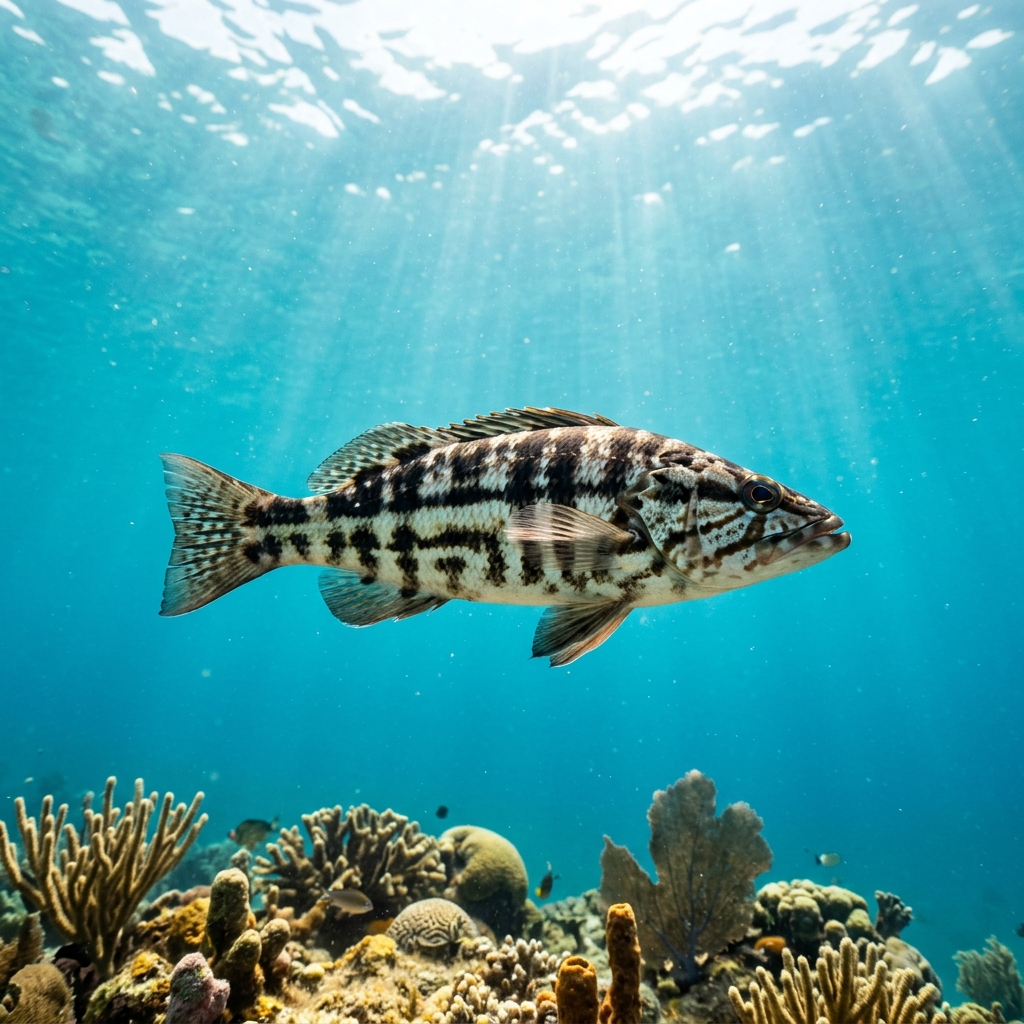
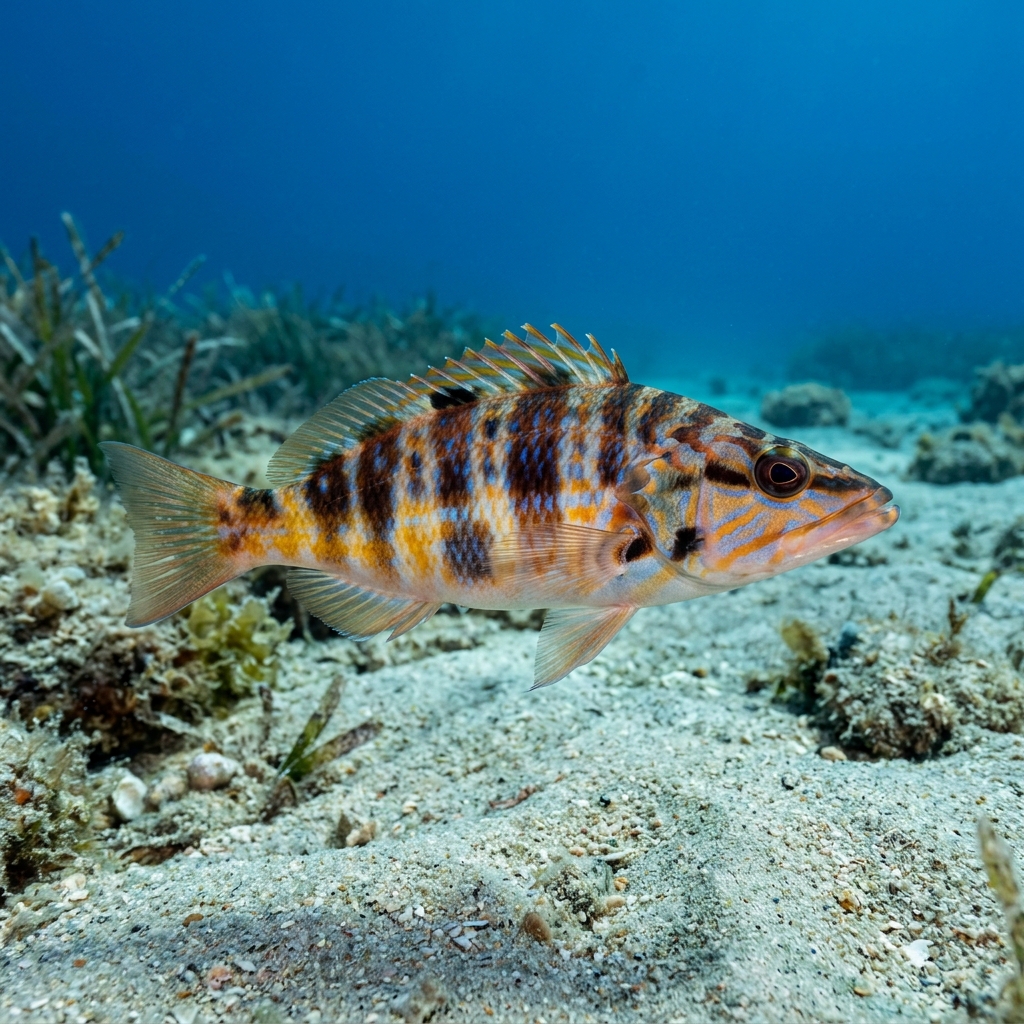
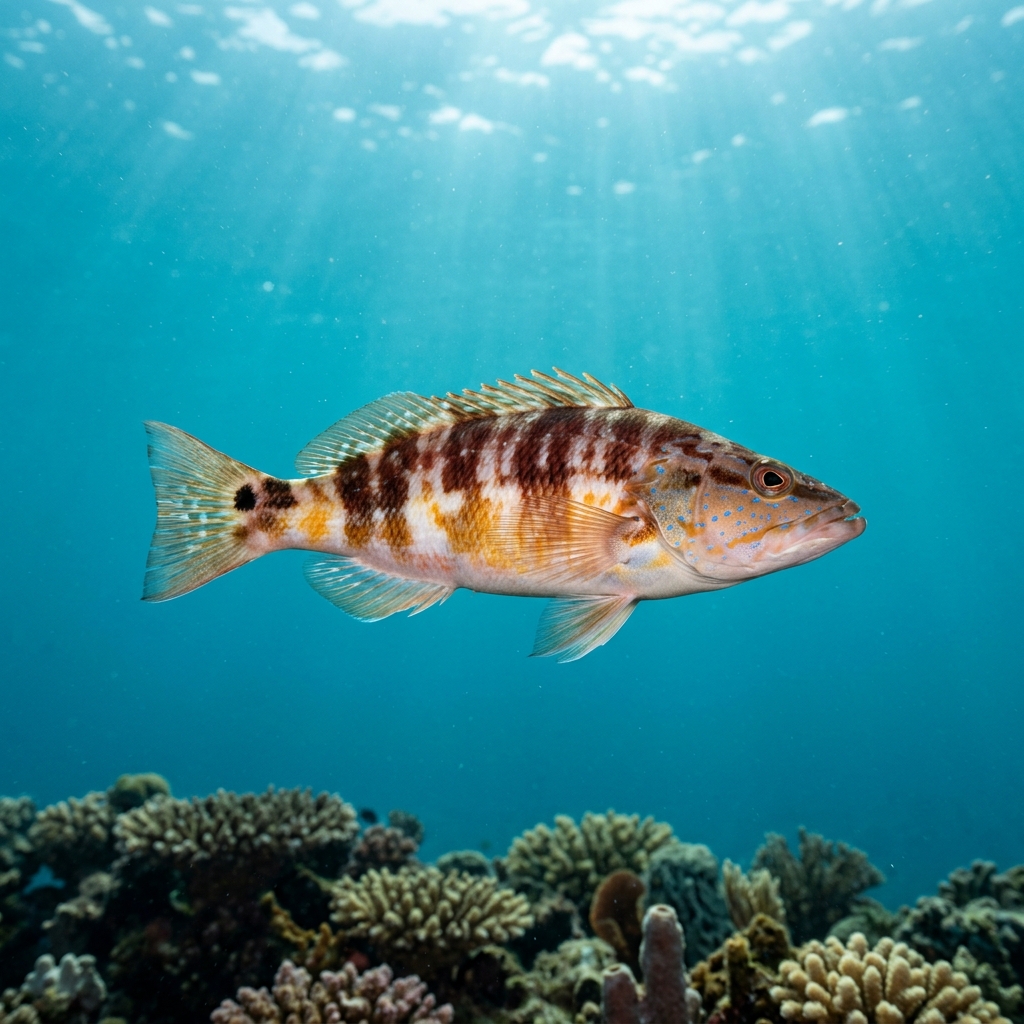
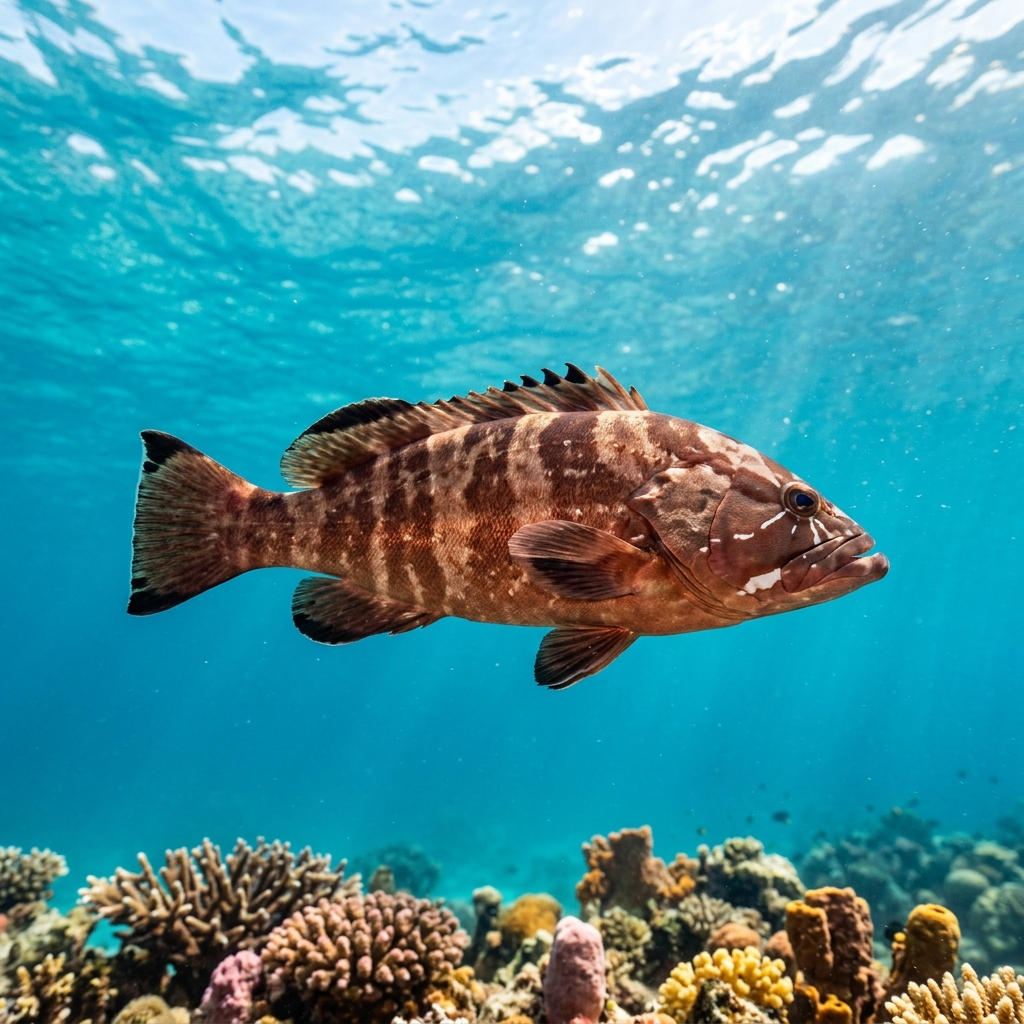
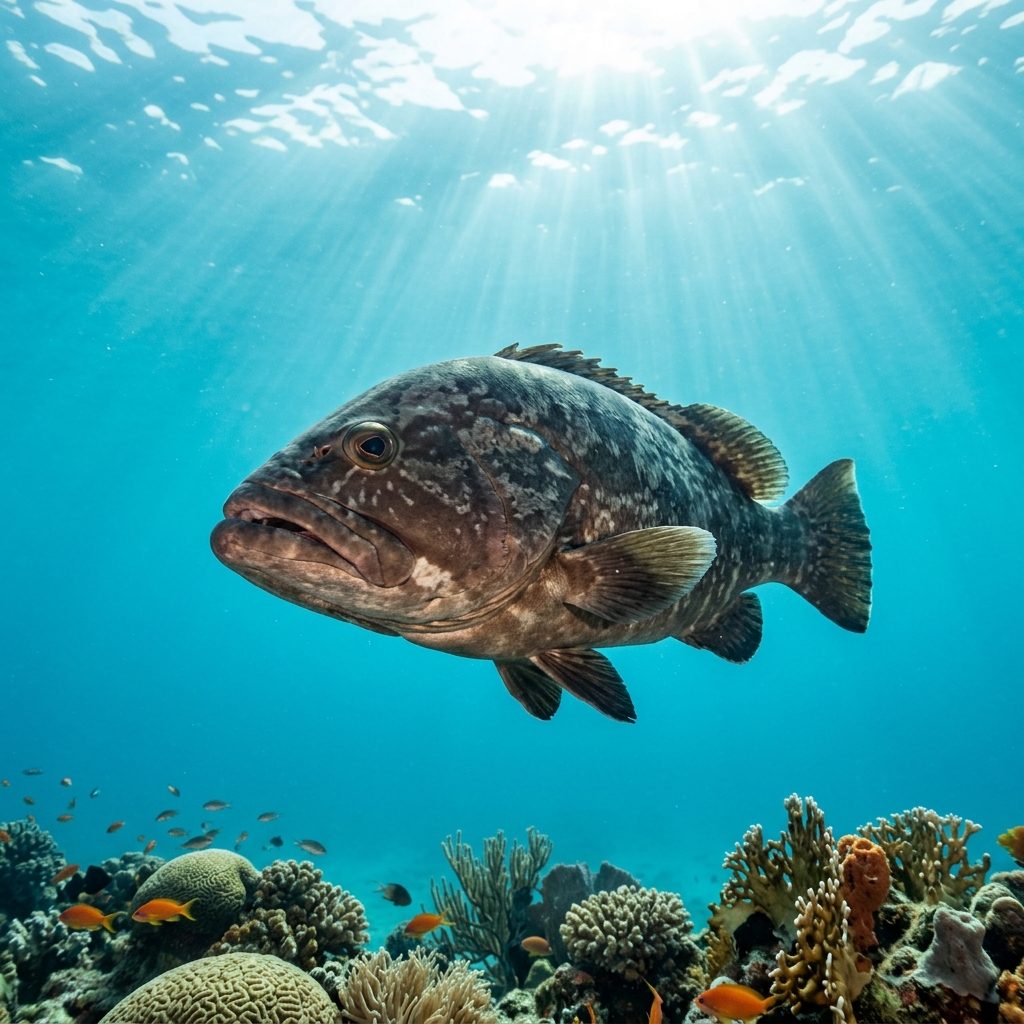
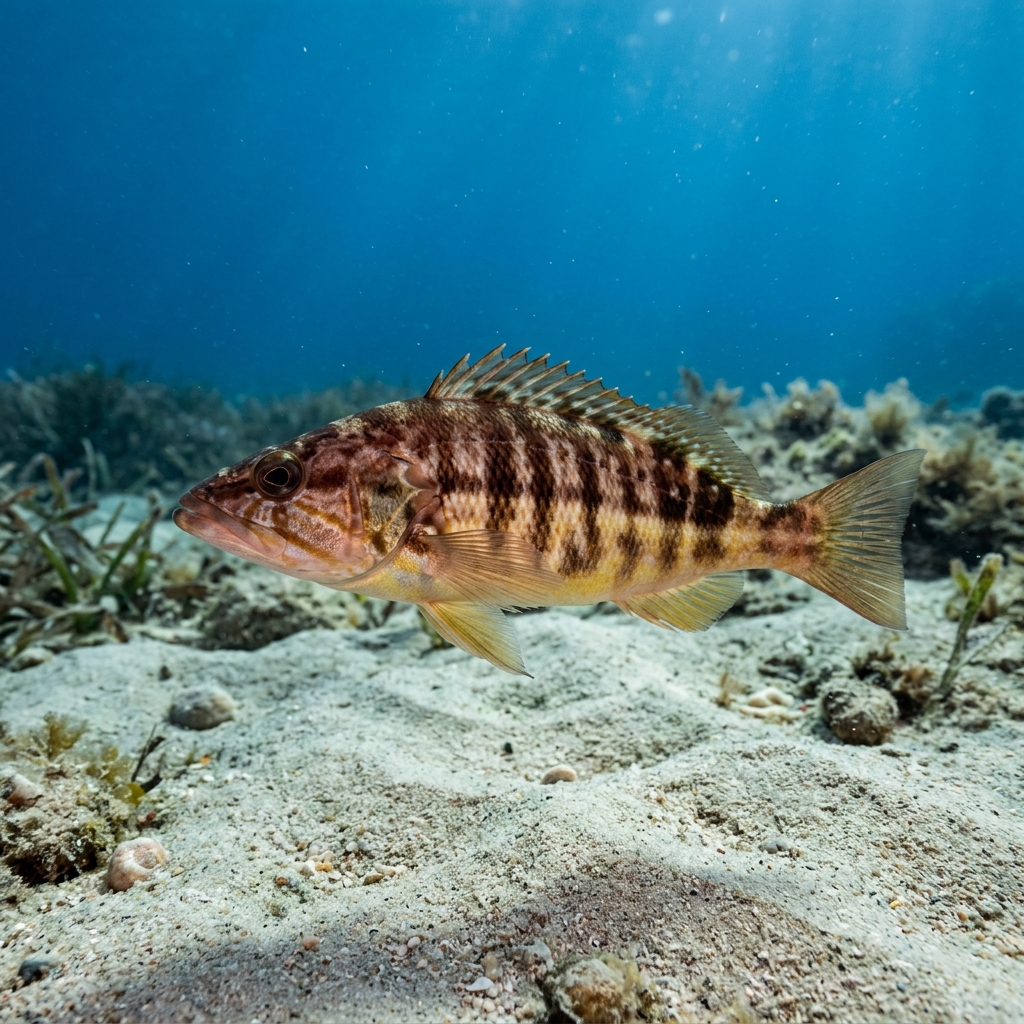
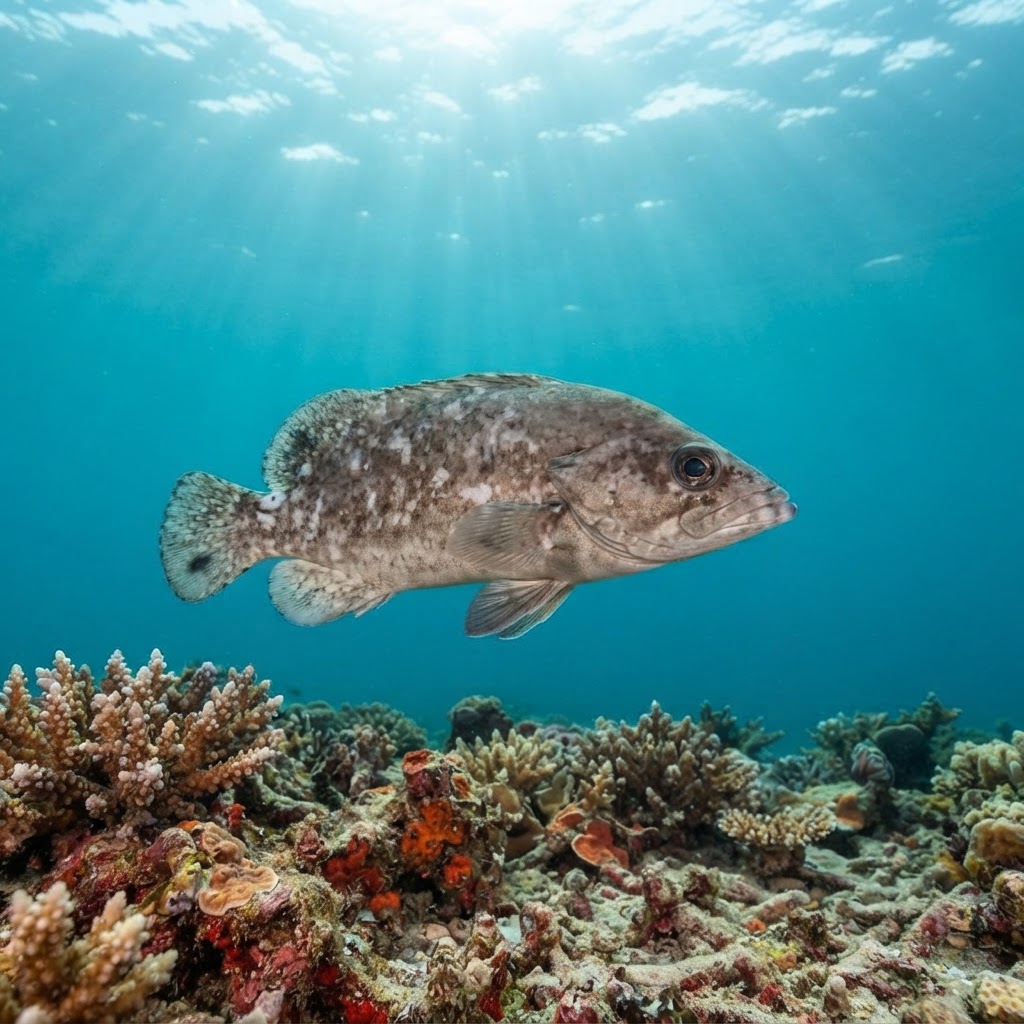
A stubby, thick-bodied fish around 20 cm long with a blotchy brown-and-cream mottled pattern that breaks up its outline against rock and rubble. It has a large head relative to its body, a slightly downturned mouth, and rounded fins that make it look almost sluggish in the water. Look for it wedged into a crevice or resting motionless on a ledge rather than swimming in the open, since its camouflage is the main giveaway.
Divers usually find this fish parked motionless under a ledge or wedged into a rocky crevice, relying on its mottled camouflage rather than speed to avoid attention. It's not shy exactly, more indifferent, and will often let a diver hover close for a good look before drifting a few centimetres deeper into cover. Most sightings happen on rocky or rubble-strewn bottoms rather than open coral, and it's logged as an uncommon rather than everyday find even at its best sites.
Soapfish get their name from a mucous skin secretion containing a toxin (grammistin) that can produce a soap-like froth in water and deters predators, so it's best appreciated by sight only, no handling.
Sightings show no clear seasonal pattern, so it's a year-round find on these Eastern Pacific reefs. Its comfort range of roughly 20.6 to 28.9 C spans the typical water temperatures divers encounter in Guanacaste and Cocos Island across the calendar, so timing your trip around this fish specifically isn't necessary.
This one is most reliably logged in Costa Rica, particularly around Guanacaste and Cocos Island, with a smaller but consistent presence at sites along Panama's Pacific coast and in Ecuador. Guanacaste alone accounts for the bulk of sightings, making it the strongest bet if you want to tick this species off.
Mapping where Mottled Soapfish is logged…
Guanacaste and Cocos Island in Costa Rica are the strongest spots, with additional sightings along Panama's Pacific coast and in Ecuador. Costa Rica overall accounts for the vast majority of logged encounters.
There's no strong season in the data, so it's considered a year-round sighting. Water temperatures at its known sites range from about 20.6 to 28.9 C, which covers most of the year on the Eastern Pacific coast.
Look for a chunky, roughly 20 cm fish with a brown-and-cream blotched pattern resting motionless under a ledge or in a crevice. Its stillness and camouflage are the main clues, since it rarely swims in open water.
They typically reach around 20 cm in length, a stocky, medium-small reef fish rather than anything sizeable.
No, they pose no threat to divers. Their defence is a toxic skin secretion aimed at predators, not something that affects people who simply observe without handling them.
They're named for a mucous coating that can froth like soap in water, containing a natural toxin called grammistin that discourages predators from taking a bite.
Site and sighting data is aggregated from diver logs, iNaturalist and GBIF. For taxonomy and conservation status:
Blacktip Grouper
2,726 sites