Chirolophis nugator
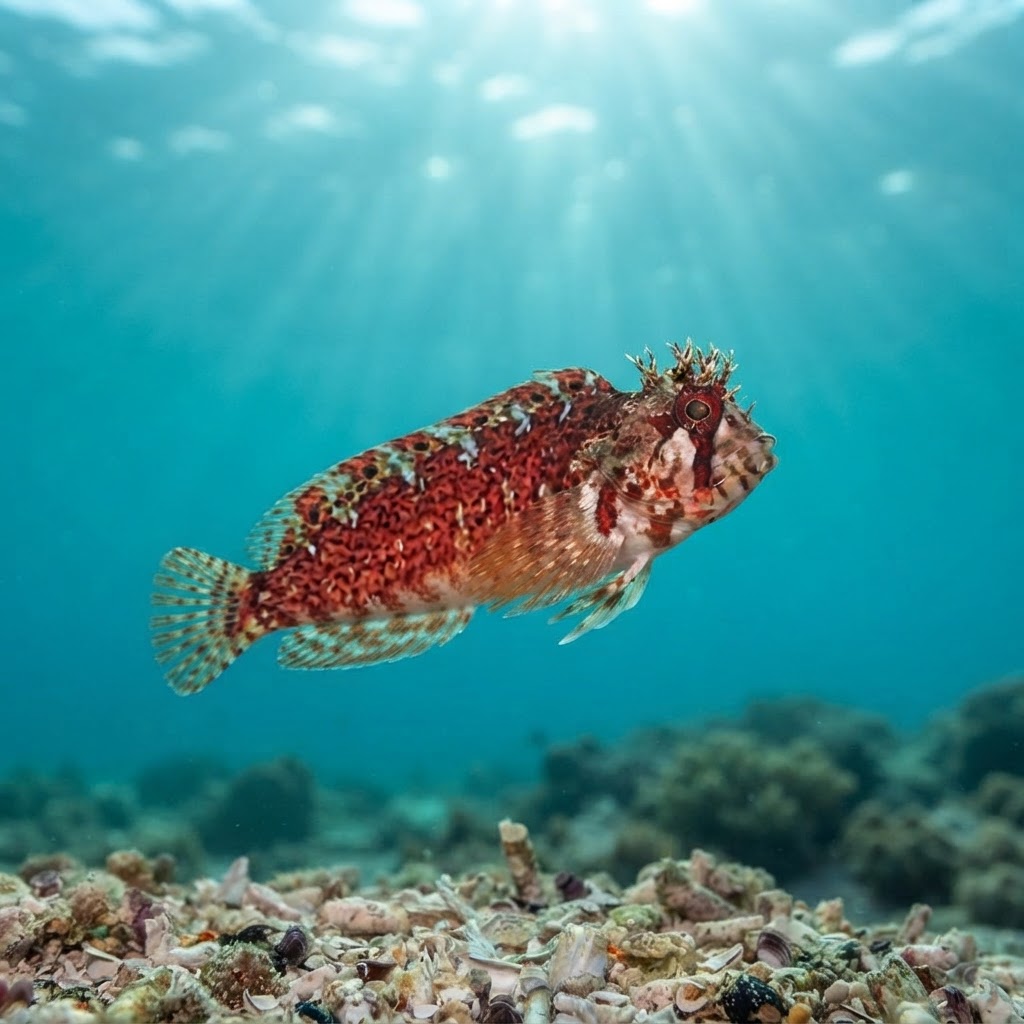
A 10cm fish with feathery head tufts, rare but logged across British Columbia and the Pacific Northwest in cold water down to 5C.
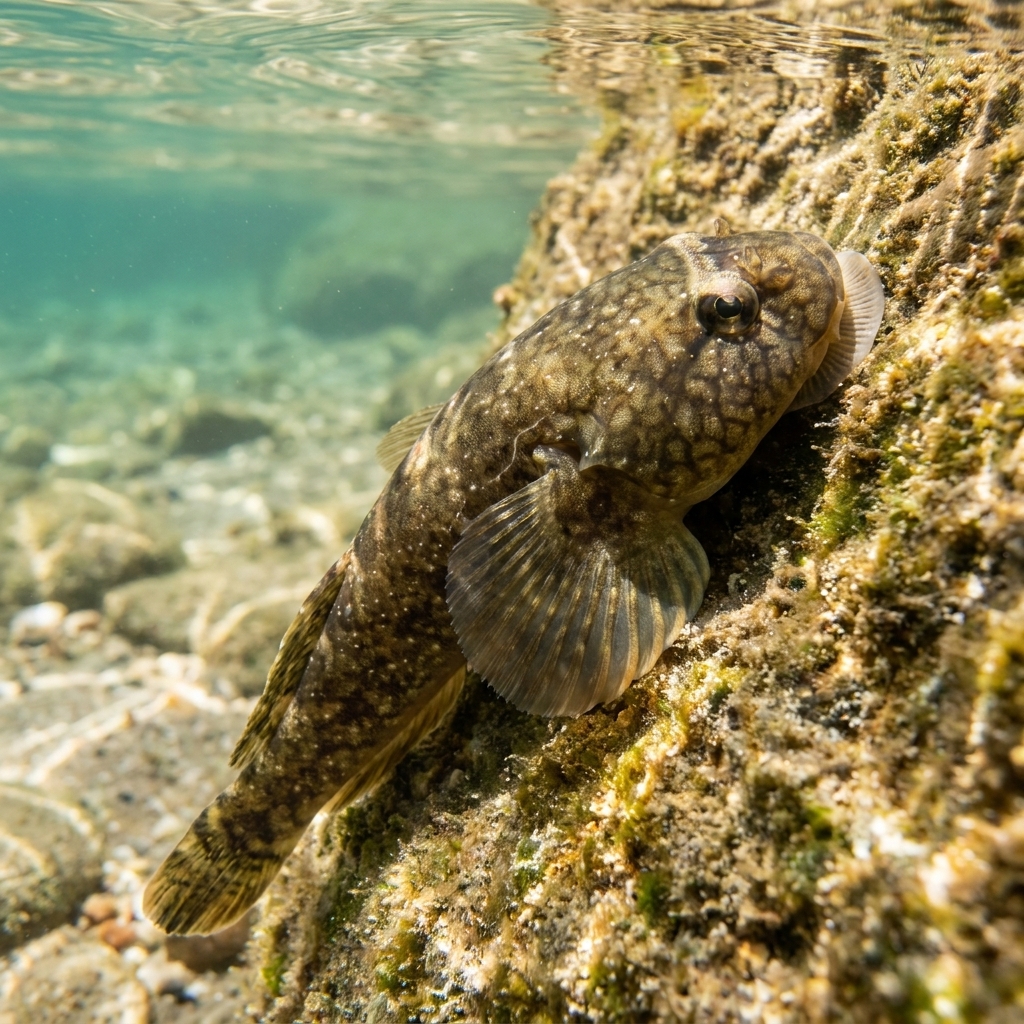
Tops out around 10cm, so you are looking for a small, blenny-like fish tucked head-out of a rocky crevice or old barnacle shell rather than swimming in open water. The giveaway is the tuft of branched, moss-like appendages (cirri) sprouting above each eye and along the head, which is where the name comes from. Body colour is mottled brown and cream, blending well against encrusted rock and rubble, and the dorsal fin runs long and low along the back.
Divers find it wedged into a crevice, empty barnacle shell, or small hole in rocky reef, with just its head and cirri visible. It sits still and relies on camouflage rather than fleeing, so a slow look along rubble and encrusted rock at these sites is more productive than searching mid-water. Most logs describe it as an uncommon to rare find, meaning you need to actively hunt small holes rather than expect it to swim into view.
Those feathery cirri above the eyes are not just decoration, they help break up the fish's outline against encrusted rock, making it far harder to spot than its size alone would suggest.
Sightings show no detected seasonal pattern, and the water-temperature niche of roughly 5 to 12C matches year-round conditions on BC and Pacific Northwest dive sites, so it is a possibility on any dive there. Do not plan a trip around a season for this one, plan around finding the right rocky habitat.
Most reliably logged in British Columbia, Canada, with a near-equal spread through the Pacific Northwest region of the United States. These are cold, rocky, temperate sites rather than tropical reefs, so this is a Pacific coast species through and through.
Mapping where Mosshead Warbonnet is logged…
British Columbia in Canada and the Pacific Northwest coast of the United States are the two regions where divers most consistently log this species, always on cold-water rocky reef.
There is no clear seasonal pattern in sightings, and its temperature range of roughly 5 to 12C is typical year-round for BC and Pacific Northwest waters, so any month can work.
Look for a small, roughly 10cm fish peeking out of a rocky crevice or old barnacle hole, with mottled brown camouflage and distinctive branched, moss-like tufts above its eyes.
They are small, typically reaching around 10cm in length, so they are easy to swim past unless you are checking crevices closely.
No, they pose no danger to divers. They are tiny, sedentary fish that hide in crevices and have no interest in interacting with divers.
Its head is covered in branched, cirri that resemble tufts of moss, giving it a shaggy, camouflaged look that helps it disappear against encrusted rocky reef.
Site and sighting data is aggregated from diver logs, iNaturalist and GBIF. For taxonomy and conservation status:
Soldierfish
3,612 sites